Department of Biology, University of Victoria, Victoria, Canada.
Elife. 2019 Feb 4;8:e42392. doi: 10.7554/eLife.42392.
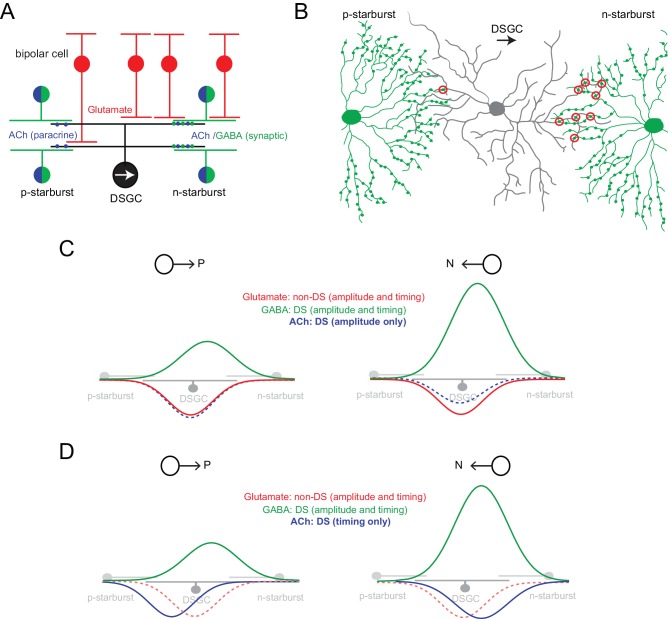
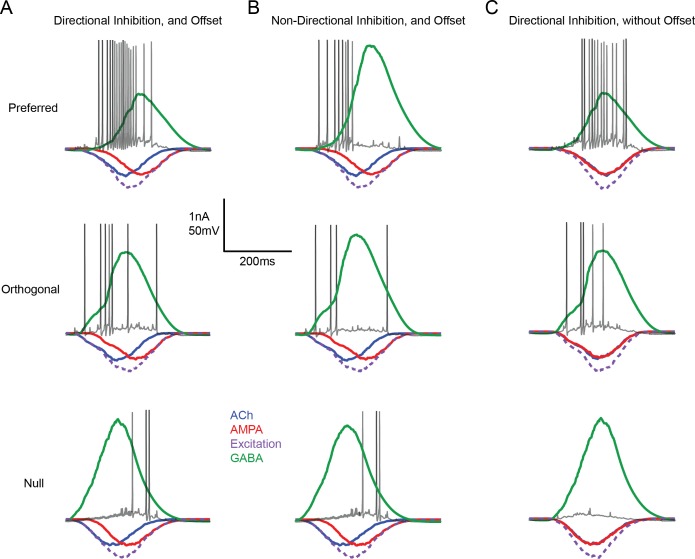
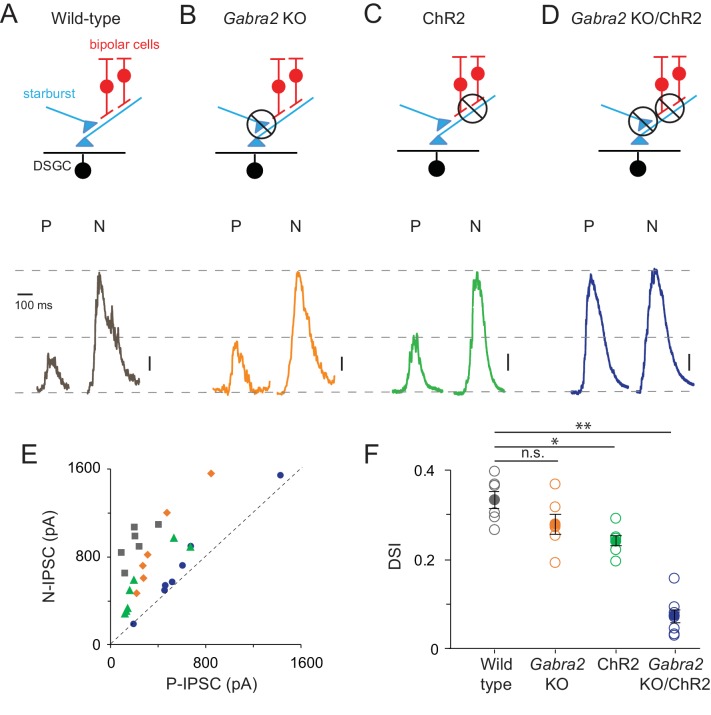
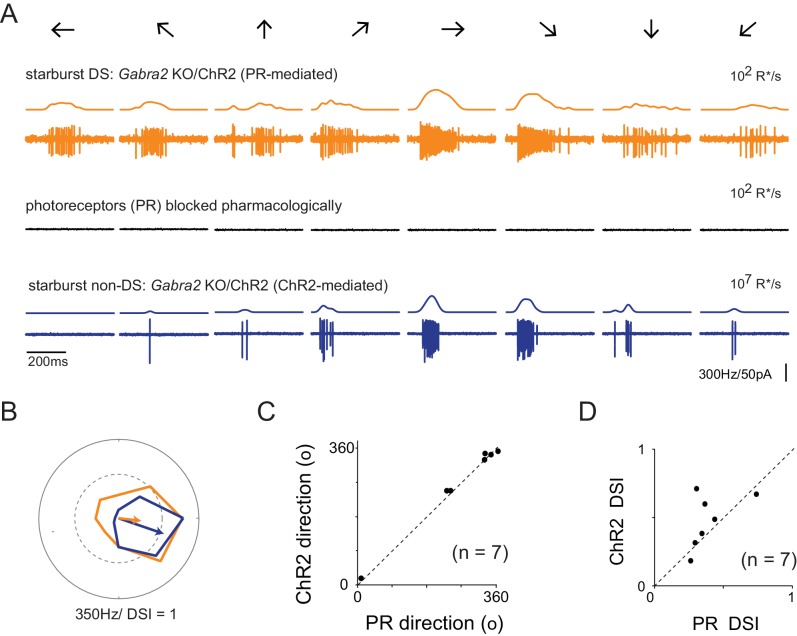
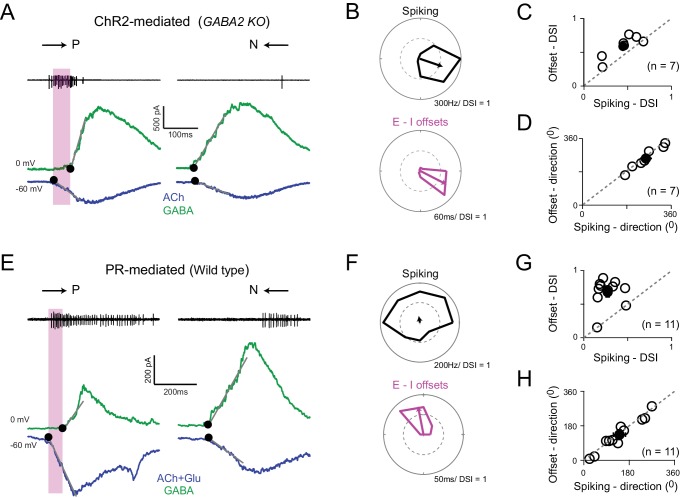
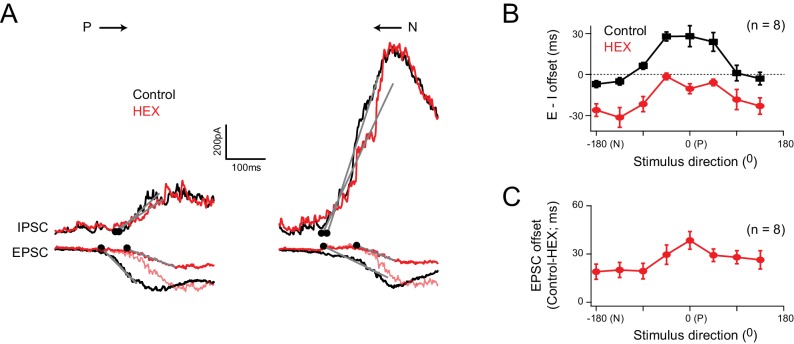
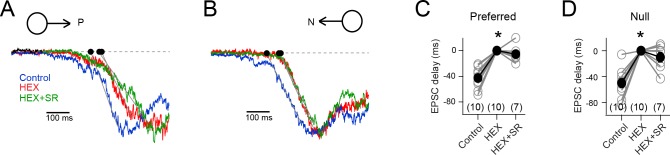
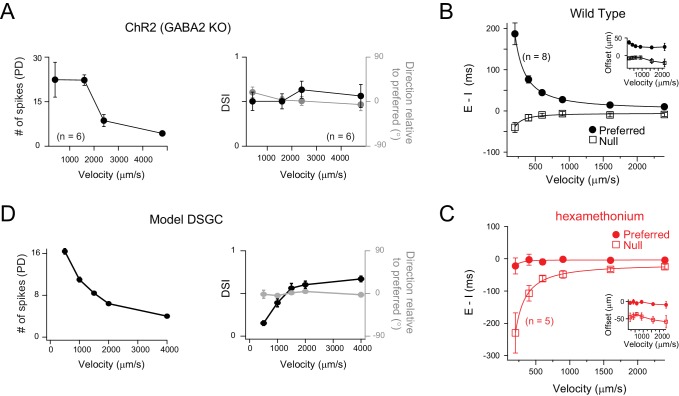
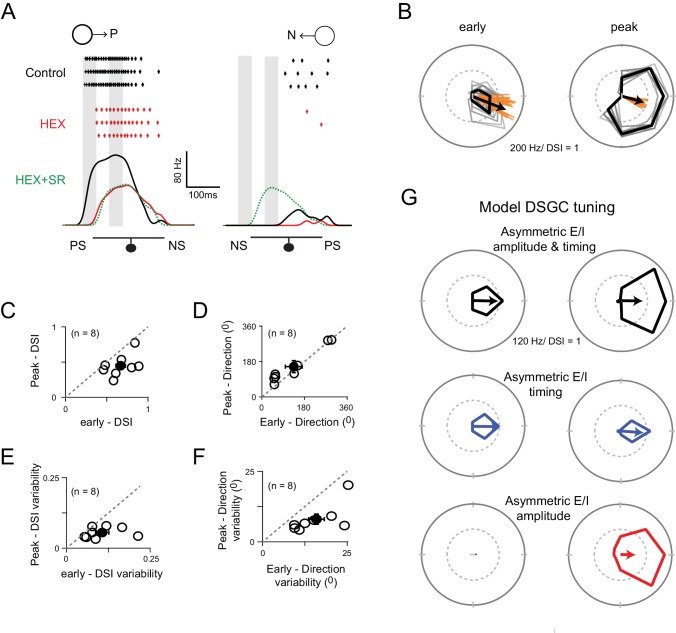
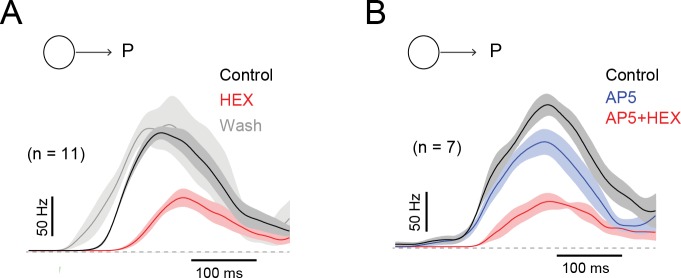
In the mammalian retina, direction-selectivity is thought to originate in the dendrites of GABAergic/cholinergic starburst amacrine cells, where it is first observed. However, here we demonstrate that direction selectivity in downstream ganglion cells remains remarkably unaffected when starburst dendrites are rendered non-directional, using a novel strategy combining a conditional GABA α2 receptor knockout mouse with optogenetics. We show that temporal asymmetries between excitation/inhibition, arising from the differential connectivity patterns of starburst cholinergic and GABAergic synapses to ganglion cells, form the basis for a parallel mechanism generating direction selectivity. We further demonstrate that these distinct mechanisms work in a coordinated way to refine direction selectivity as the stimulus crosses the ganglion cell's receptive field. Thus, precise spatiotemporal patterns of inhibition and excitation that determine directional responses in ganglion cells are shaped by two 'core' mechanisms, both arising from distinct specializations of the starburst network.
在哺乳动物的视网膜中,方向选择性被认为起源于 GABA 能/胆碱能星形爆发性无长突细胞的树突,在那里首先观察到了这种现象。然而,在这里,我们通过一种结合了条件性 GABA α2 受体敲除小鼠和光遗传学的新策略,证明了当星形爆发性树突变得无方向时,下游神经节细胞的方向选择性仍然惊人地不受影响。我们表明,来自星形爆发性胆碱能和 GABA 能突触到神经节细胞的不同连接模式产生的兴奋/抑制的时间不对称性,构成了产生方向选择性的平行机制的基础。我们进一步证明,这些不同的机制以协调的方式工作,以在刺激穿过神经节细胞的感受野时细化方向选择性。因此,决定神经节细胞方向反应的精确时空抑制和兴奋模式是由两种“核心”机制形成的,这两种机制都源于星形爆发网络的不同特化。