Avon Orthopaedic Centre, Southmead Hospital, North Bristol NHS Trust, Brunel Building, Southmead Road, Bristol, BS10 5NB, UK.
Musculoskeletal Research Unit, Translational Health Sciences, Bristol Medical School, Southmead Hospital, 1st Floor Learning and Research Building, Bristol, BS10 5NB, UK.
Arch Orthop Trauma Surg. 2019 Aug;139(8):1033-1038. doi: 10.1007/s00402-019-03129-3. Epub 2019 Feb 4.
Curettage with cement augmentation is a technique used in the treatment of bone tumours. Thermal energy released during the cement polymerisation process can damage surrounding tissues. This study aims to record temperature changes at various sites on and around bone during the cementing process. We hypothesised that adjacent structures, such as the radial nerve, may be threatened by this process in the clinical setting.
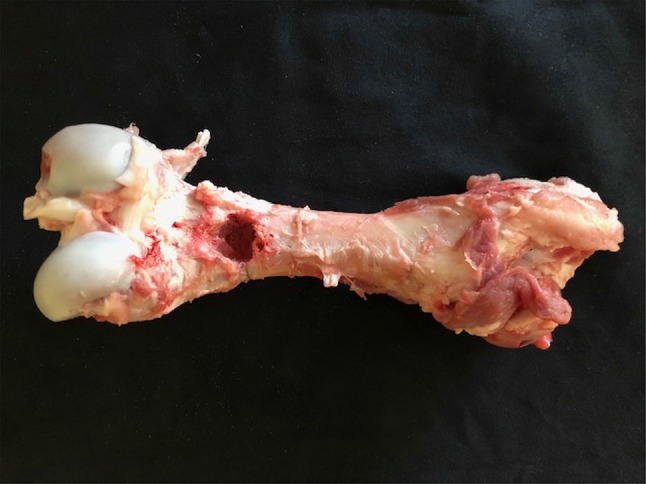
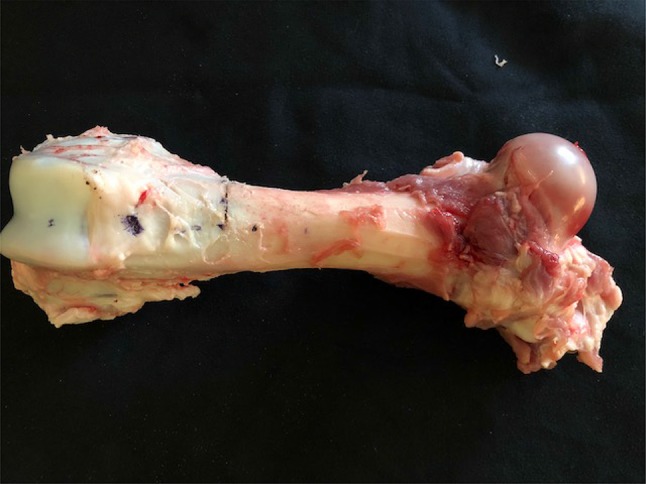
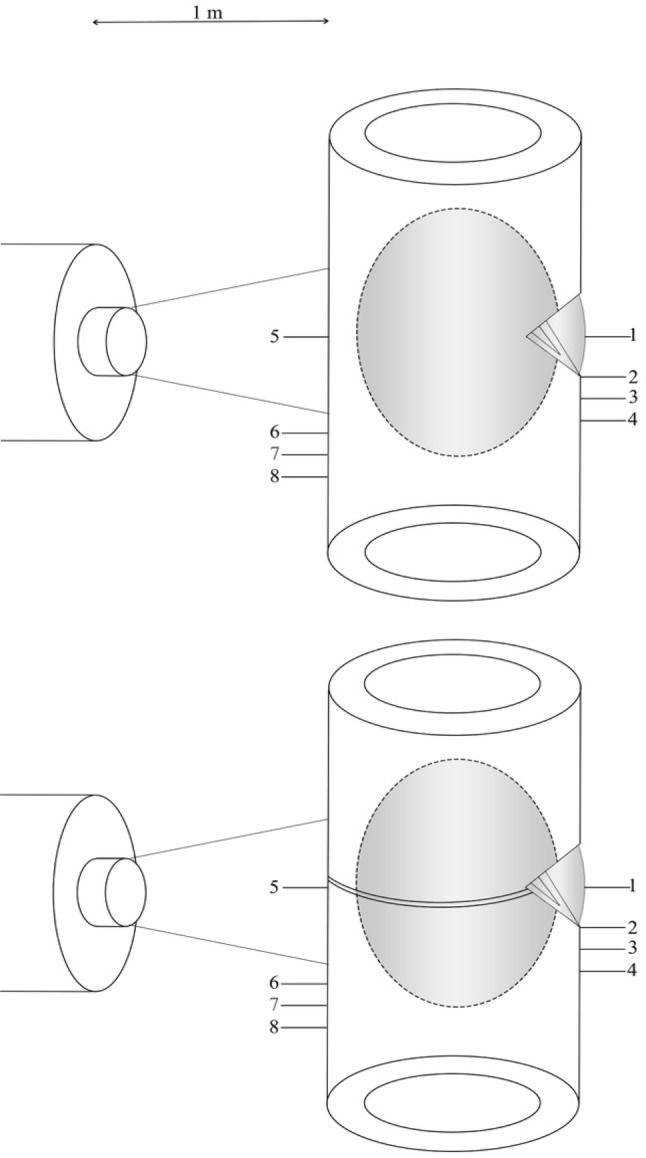
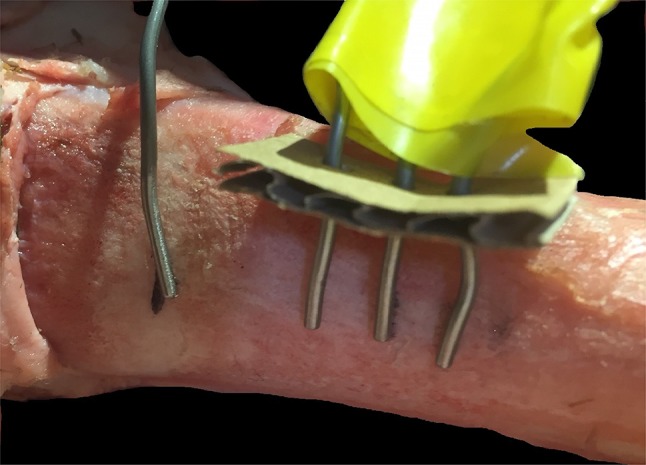
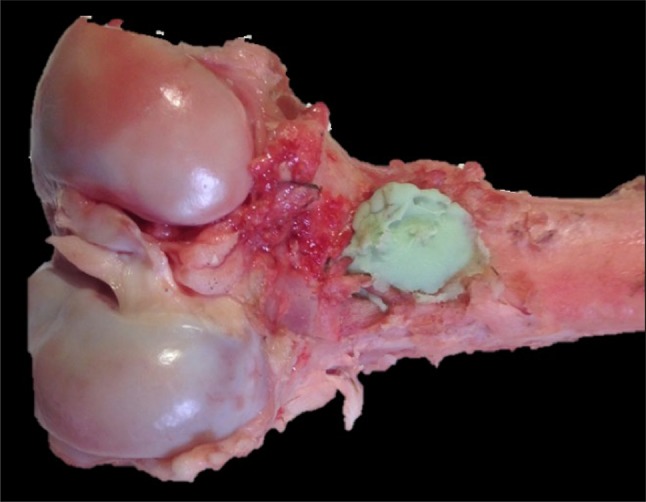
Using 18 porcine femurs as a model of the human humerus, we used thermocouples and a thermal imaging camera to measure changes in temperature during the cementing process. Fractures were created in nine samples to establish whether a discontinuity of the cortex had an effect on thermal conduction.
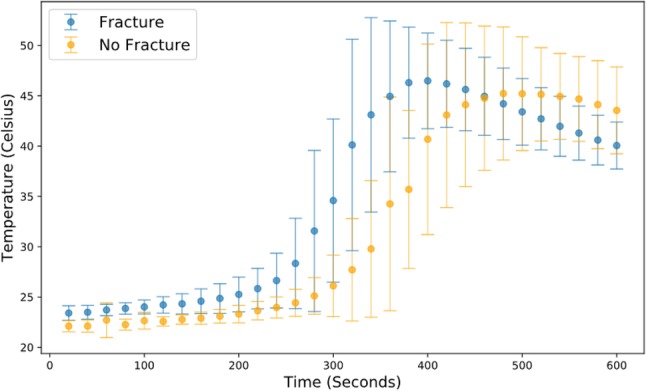
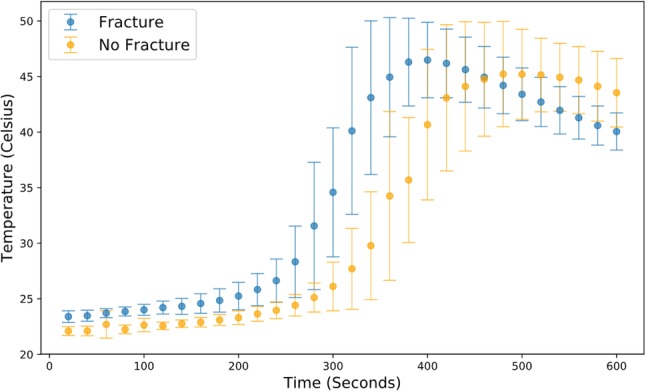
Significantly higher temperatures were recorded in samples with a fracture compared to those without a fracture. The site overlying the centre of the cement bolus (hypothetical site of the radial nerve) demonstrated higher temperatures than all other sites on the same cortex. When considering the radial nerve site, over half the samples demonstrated temperatures exceeding 47 °C for over a minute. When a threshold of 50 °C for more than 30 s was considered, three samples without a fracture exceeded this value compared to two with a fracture.
The temperatures recorded were sufficient to cause damage to neural tissue. Limiting thermal exposure to soft tissues is recommended. Increased attention is required when using larger cement boluses, or where bone quality is poor or a fracture, iatrogenic or preexisting, is present.
刮除术联合骨水泥强化是治疗骨肿瘤的一种技术。骨水泥聚合过程中释放的热能会损伤周围组织。本研究旨在记录骨水泥固定过程中骨表面和周围各部位的温度变化。我们假设在临床实践中,相邻结构(如桡神经)可能会受到该过程的威胁。
我们使用 18 根猪股骨作为人肱骨模型,使用热电偶和热成像摄像机测量骨水泥固定过程中的温度变化。在 9 个样本中制造骨折,以确定皮质中断是否会影响热传导。
与无骨折样本相比,骨折样本的温度记录明显更高。骨水泥团块中心上方的部位(桡神经的假设位置)的温度高于同一皮质上的所有其他部位。当考虑桡神经部位时,超过一半的样本的温度超过 47°C 持续超过 1 分钟。当考虑到 50°C 超过 30 秒的阈值时,与无骨折的 2 个样本相比,无骨折的 3 个样本超过了该值。
记录的温度足以导致神经组织损伤。建议限制对软组织的热暴露。在使用较大的骨水泥团块时,或在骨质量差或存在医源性或预先存在的骨折时,需要更加注意。