Department of Surgery (Pediatric Surgery Division), College of Medicine, Taibah University, Madinah, Saudi Arabia.
Department of Family and Community Medicine, College of Medicine, Taibah University, PO box 42317, Madinah, 41541, Saudi Arabia.
Ital J Pediatr. 2019 Feb 4;45(1):20. doi: 10.1186/s13052-019-0613-2.
The association between macrolides use and subsequent occurrence of infantile hypertrophic pyloric stenosis (IHPS) is still debatable. The aim of this study was to conduct a systematic review and meta-analysis of the association between perinatal exposure to macrolides, mainly erythromycin, and the development of pyloric stenosis.
Original studies were identified using MEDLINE, Web of Science, Scopus, Google Scholar, and the Cochrane Library databases. Studies investigating the association between perinatal exposure to macrolides and pyloric stenosis were included. The most adjusted effect estimates were pooled using random-effects meta-analysis. The I and Egger's tests were used to assess heterogeneity and publication bias, respectively.
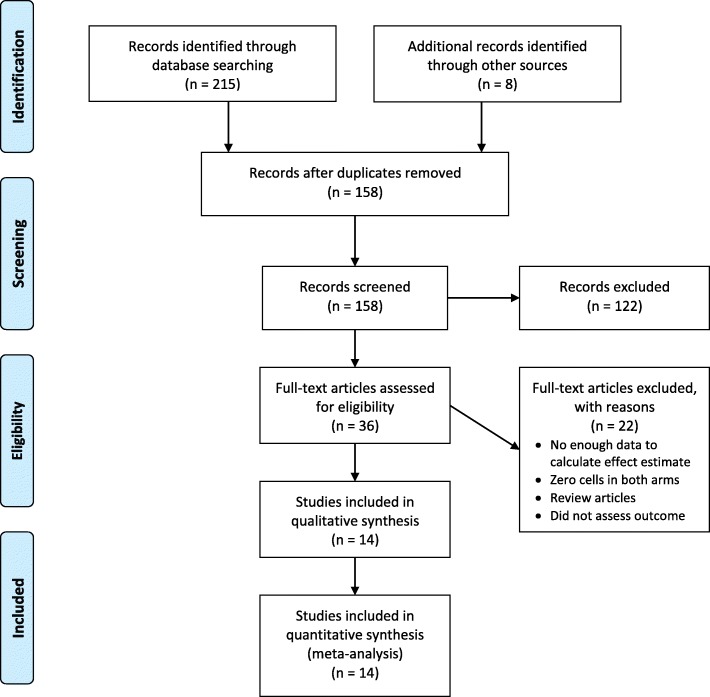
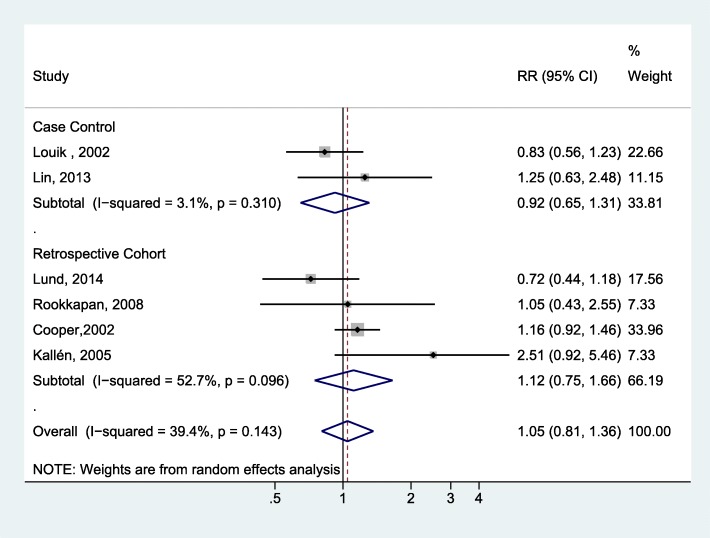
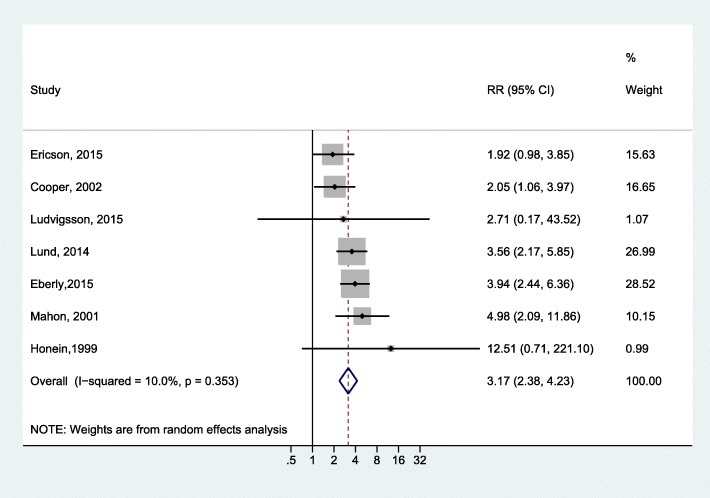
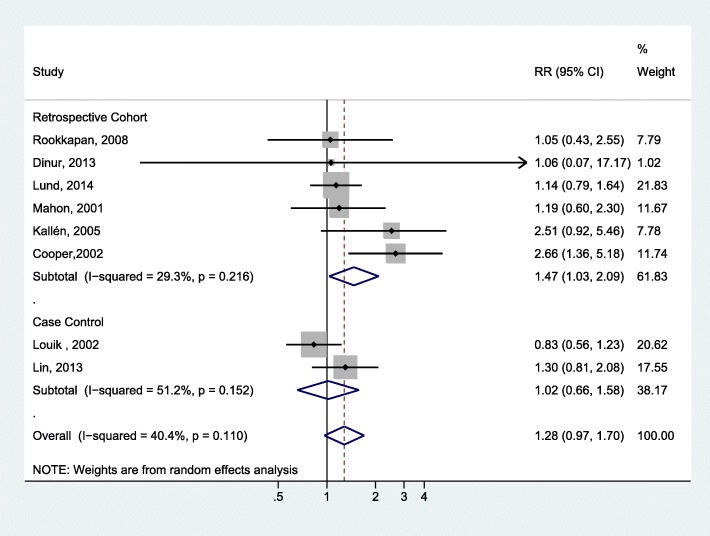
Fourteen papers (12 retrospective cohort studies and two case-control studies) were included. For postnatal exposure, the overall estimate of seven cohort studies indicated a statistically significant association (RR = 3.17, 95% CI: 2.38-4.23; I = 10.0%) with no evidence of publication bias (Egger P = 0.81). For prenatal exposure, six cohort studies and two case-control studies were included. Meta-analysis demonstrated a statistically significant association in the cohort studies (OR = 1.47, 95% CI: 1.03-2.09; I = 29.3%), but not in the case-control studies (OR = 1.02, 95% CI: 0.66-1.58; I = 51.2%). The overall pooled result was not statistically significant. Only two studies were included for exposure through breastfeeding, and the estimates did not show a statistically significant association (OR = 1.31; 95% CI: 0.42-4.1; I = 69.1%).
The study demonstrated good evidence of association between development of IHPS and direct postnatal exposure to macrolides. However, the evidence on the effects of prenatal exposure or postnatal maternal exposure (breastfeeding) is not conclusive.
大环内酯类药物的使用与婴儿肥厚性幽门狭窄(IHPS)的发生之间的关联仍存在争议。本研究的目的是对围产期接触大环内酯类药物(主要是红霉素)与幽门狭窄发展之间的关联进行系统评价和荟萃分析。
使用 MEDLINE、Web of Science、Scopus、Google Scholar 和 Cochrane 图书馆数据库检索原始研究。纳入研究围产期接触大环内酯类药物与肥厚性幽门狭窄之间的关系。使用随机效应荟萃分析汇总最调整的效应估计值。使用 I 和 Egger 检验分别评估异质性和发表偏倚。
纳入了 14 篇论文(12 项回顾性队列研究和 2 项病例对照研究)。对于产后暴露,7 项队列研究的总体估计表明存在统计学显著关联(RR=3.17,95%CI:2.38-4.23;I=10.0%),且无发表偏倚证据(Egger P=0.81)。对于产前暴露,纳入了 6 项队列研究和 2 项病例对照研究。荟萃分析显示,队列研究中存在统计学显著关联(OR=1.47,95%CI:1.03-2.09;I=29.3%),但病例对照研究中无关联(OR=1.02,95%CI:0.66-1.58;I=51.2%)。总体汇总结果无统计学意义。仅有两项研究纳入了通过母乳喂养的暴露情况,估计结果未显示出统计学显著关联(OR=1.31;95%CI:0.42-4.1;I=69.1%)。
本研究表明 IHPS 的发生与直接产后接触大环内酯类药物之间存在良好的关联证据。然而,关于产前暴露或产后(母乳喂养)母亲暴露的影响的证据尚不确定。