Department of Developmental Biology and Cancer Research, Institute for Medical Research-Israel-Canada, Hebrew University of Jerusalem, Jerusalem 91120, Israel.
Sharett Institute of Oncology, Hadassah Medical Center, Ein-Kerem, Jerusalem 91120, Israel.
Genome Res. 2019 Mar;29(3):439-448. doi: 10.1101/gr.241414.118. Epub 2019 Feb 4.
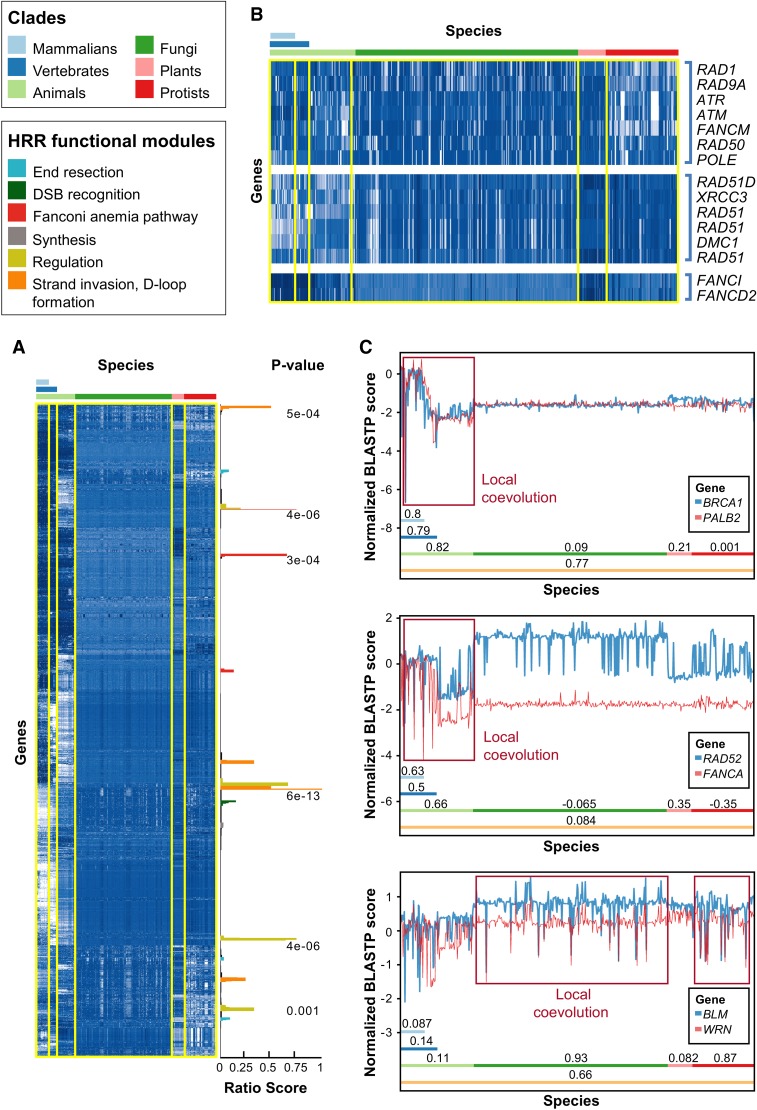
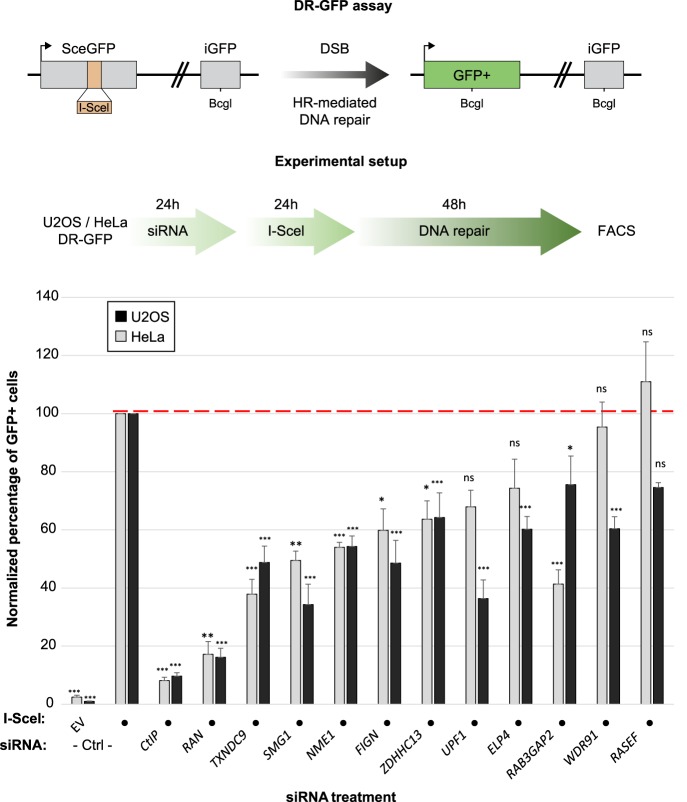
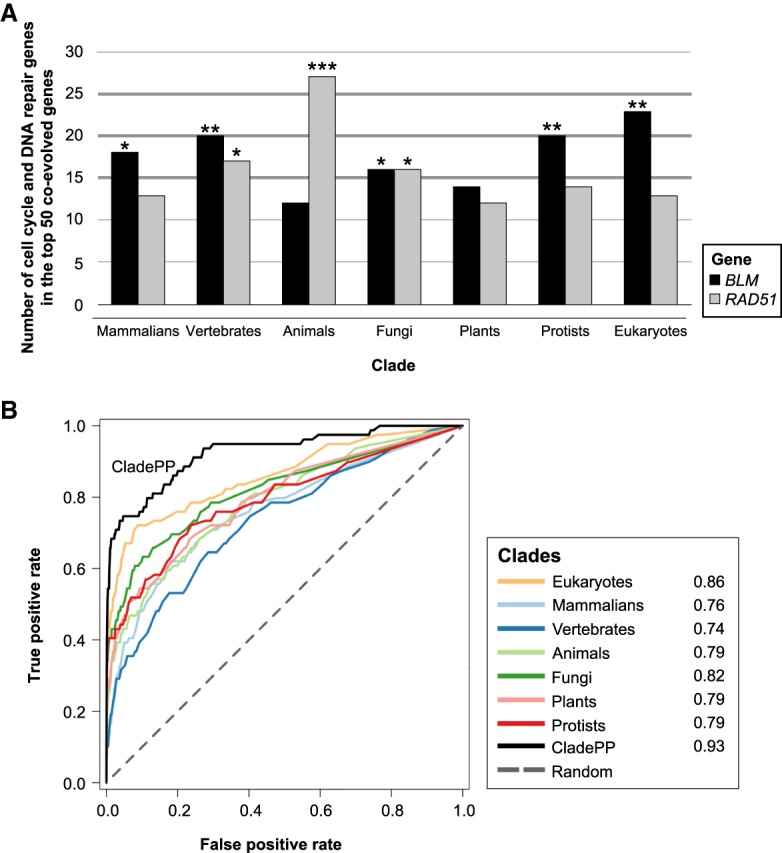
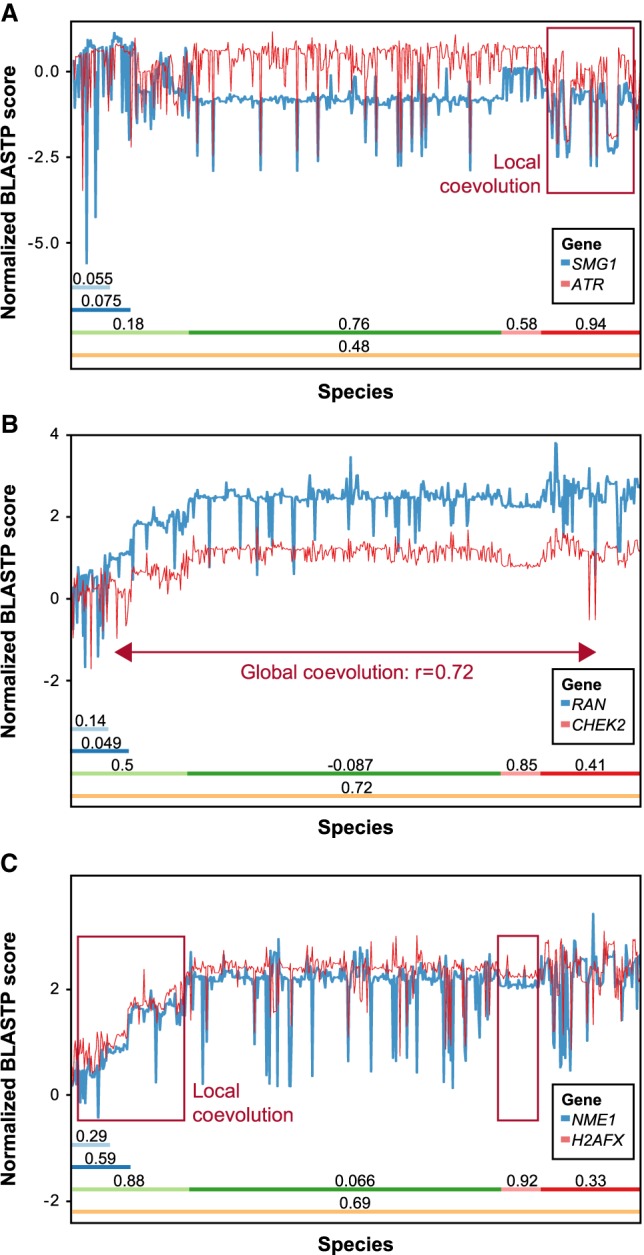
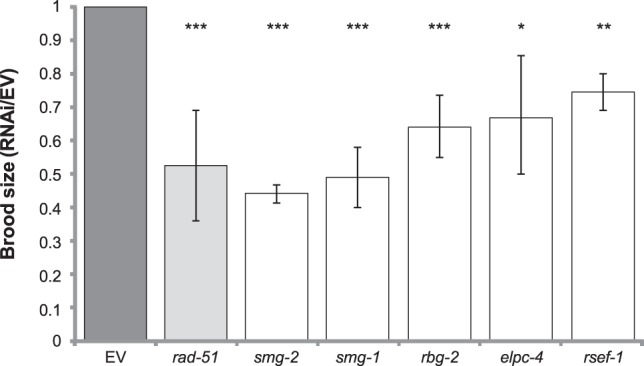
The homologous recombination repair (HRR) pathway repairs DNA double-strand breaks in an error-free manner. Mutations in HRR genes can result in increased mutation rate and genomic rearrangements, and are associated with numerous genetic disorders and cancer. Despite intensive research, the HRR pathway is not yet fully mapped. Phylogenetic profiling analysis, which detects functional linkage between genes using coevolution, is a powerful approach to identify factors in many pathways. Nevertheless, phylogenetic profiling has limited predictive power when analyzing pathways with complex evolutionary dynamics such as the HRR. To map novel HRR genes systematically, we developed clade phylogenetic profiling (CladePP). CladePP detects local coevolution across hundreds of genomes and points to the evolutionary scale (e.g., mammals, vertebrates, animals, plants) at which coevolution occurred. We found that multiscale coevolution analysis is significantly more biologically relevant and sensitive to detect gene function. By using CladePP, we identified dozens of unrecognized genes that coevolved with the HRR pathway, either globally across all eukaryotes or locally in different clades. We validated eight genes in functional biological assays to have a role in DNA repair at both the cellular and organismal levels. These genes are expected to play a role in the HRR pathway and might lead to a better understanding of missing heredity in HRR-associated cancers (e.g., heredity breast and ovarian cancer). Our platform presents an innovative approach to predict gene function, identify novel factors related to different diseases and pathways, and characterize gene evolution.
同源重组修复 (HRR) 途径以无错误的方式修复 DNA 双链断裂。HRR 基因的突变会导致突变率增加和基因组重排,并与许多遗传疾病和癌症有关。尽管进行了深入的研究,但 HRR 途径尚未完全阐明。系统发育分析是一种使用共进化检测基因之间功能联系的强大方法,可用于鉴定许多途径中的因素。然而,当分析具有复杂进化动态的途径(如 HRR)时,系统发育分析的预测能力有限。为了系统地绘制新的 HRR 基因图谱,我们开发了进化枝系统发育分析(CladePP)。CladePP 检测数百个基因组之间的局部共进化,并指出共进化发生的进化尺度(例如哺乳动物、脊椎动物、动物、植物)。我们发现,多尺度共进化分析在检测基因功能方面具有更显著的生物学相关性和敏感性。通过使用 CladePP,我们确定了数十个与 HRR 途径共进化的未被识别的基因,这些基因要么在所有真核生物中具有全球性,要么在不同进化枝中具有局部性。我们在功能生物学测定中验证了其中 8 个基因在细胞和机体水平上都具有 DNA 修复作用。这些基因有望在 HRR 途径中发挥作用,并可能有助于更好地理解与 HRR 相关癌症中的缺失遗传(例如遗传性乳腺癌和卵巢癌)。我们的平台提出了一种预测基因功能、识别与不同疾病和途径相关的新因素以及描述基因进化的创新方法。