Department of Anesthesiology, The First Affiliated Hospital of Chongqing Medical University, Chongqing 400016, P.R. China.
Department of Anesthesiology, Traditional Chinese Medicine Hospital Affiliated to Southwest Medical University, Luzhou, Sichuan 640000, P.R. China.
Int J Mol Med. 2019 Apr;43(4):1747-1757. doi: 10.3892/ijmm.2019.4080. Epub 2019 Jan 28.
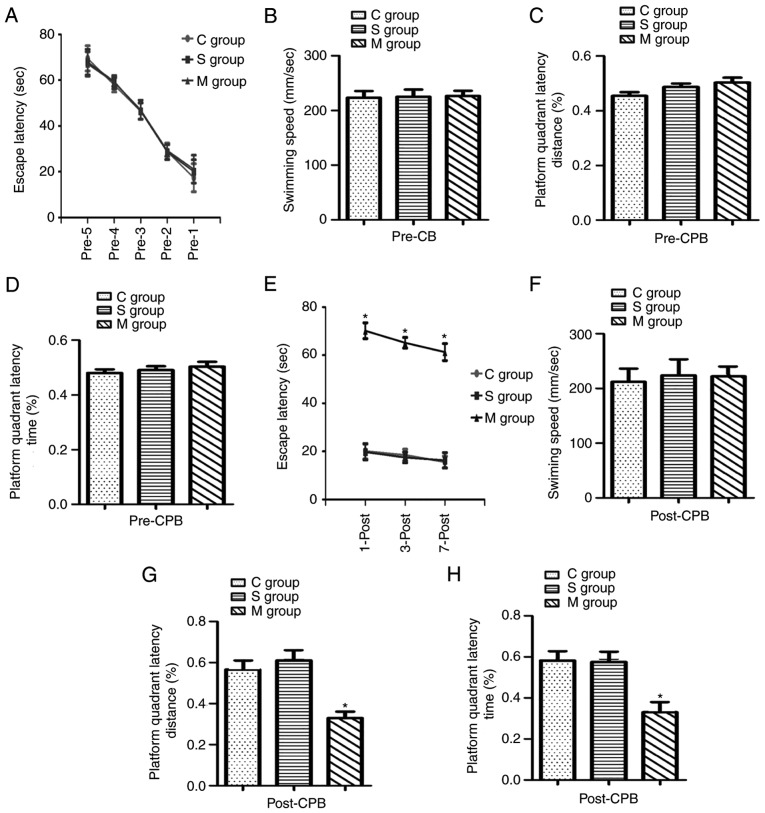
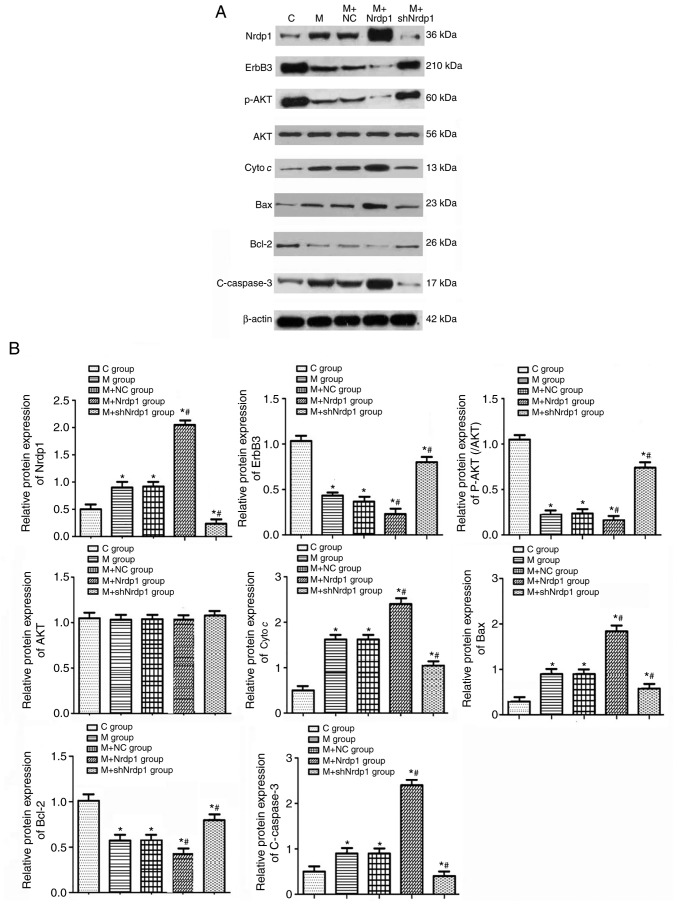
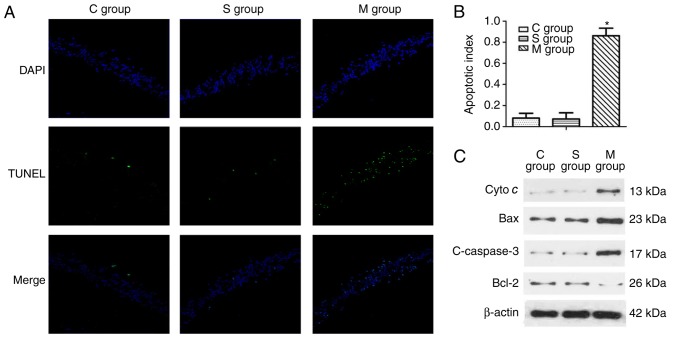
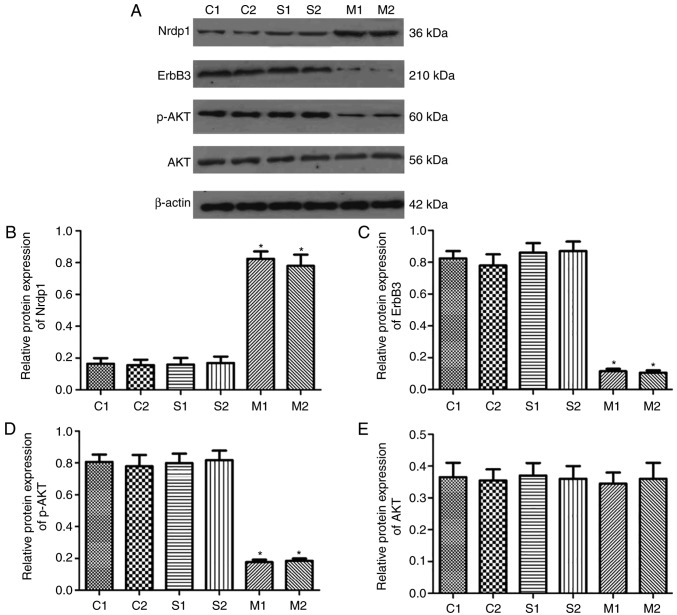
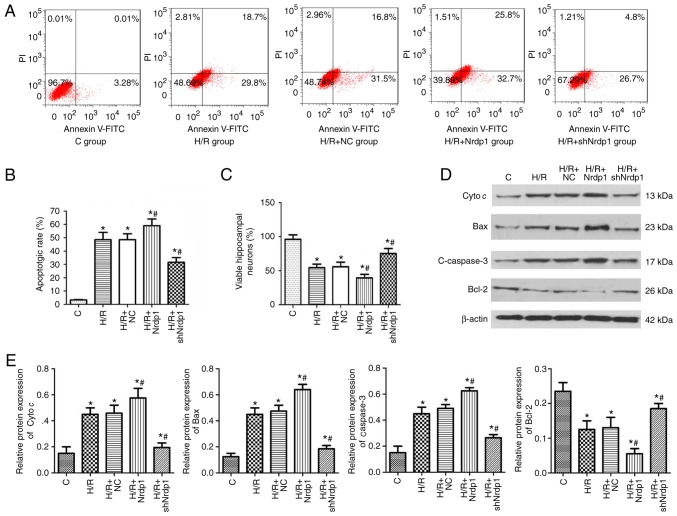
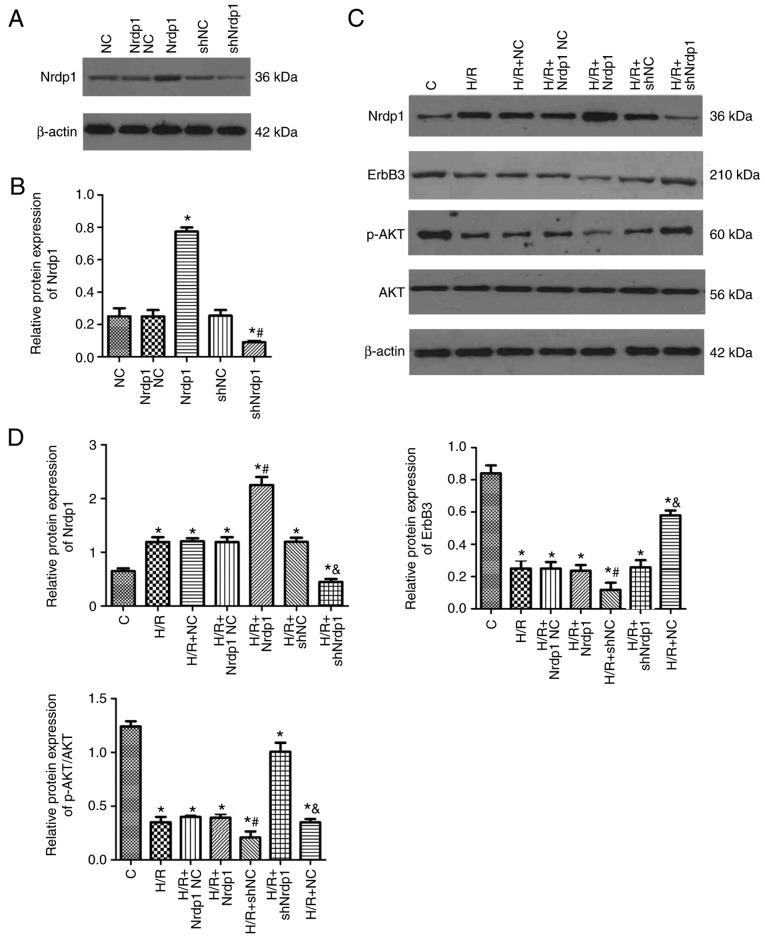
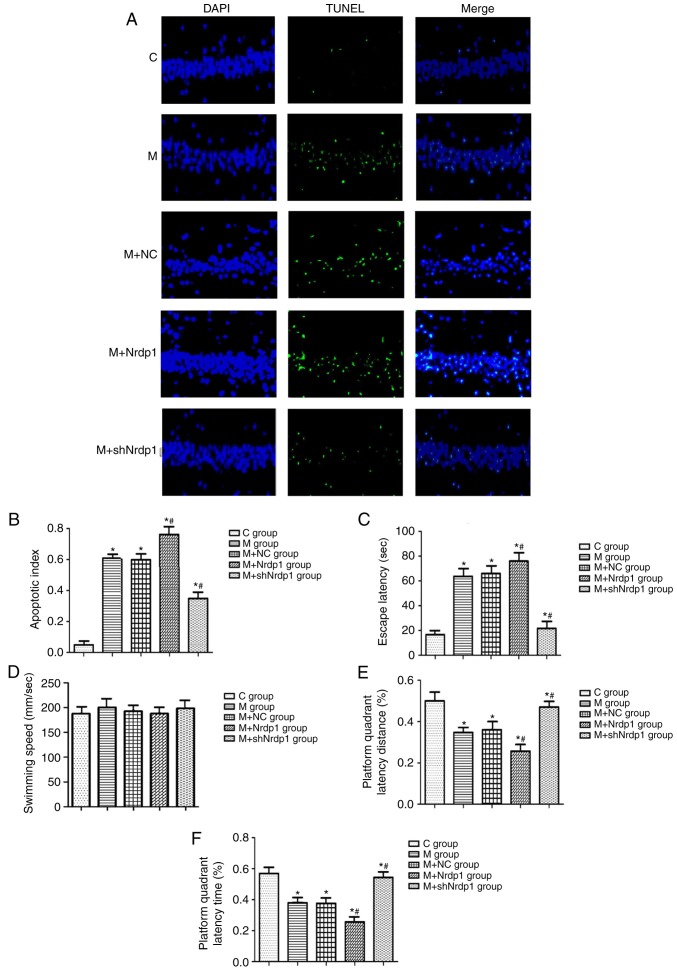
The cardiopulmonary bypass (CPB) is an important risk factor for the development of postoperative cognitive dysfunction (POCD). The pathological mechanism of the neuro‑modulation receptor degradation protein ring finger protein 41 (Nrdp1) in CPB‑induced cognitive dysfunction remains unclear. In the present study, aged Sprague‑Dawley male rats and CPB treatment were selected to duplicate the POCD model. A hypoxia/reoxygeneration (H/R) model was established to evaluate the effect of Nrdp1 in vitro. Apoptosis in the hippocampus regions were measured using a terminal deoxynucleotidyl‑transferase‑mediated dUTP nick end labelling assay, the viability and apoptosis level of the cells were measured via an MTT assay and flow cytometry, respectively, and the expression levels of Nrdp1, erb‑b2 receptor tyrosine kinase 3 (ErbB3), phosphorylated‑protein kinase B (p‑AKT) and cleaved (c‑) caspase‑3 were detected using western blot analysis. Then, Nrdp1 was upregulated and downregulated in vitro and in vivo through lentivirus infection to further investigate the effect of Nrdp1 in the rats following CPB. The results revealed that Nrdp1 is associated with hippocampus neuronal apoptosis and POCD following CPB in rats. The overexpression of Nrdp1 altered the cognitive function of the rats which was inhibited by CPB, and additionally inhibited the viability and increased the apoptosis of primary hippocampus neuron cells under H/R treatment. Furthermore, knockdown of Nrdp1 promoted the viability of primary hippocampus neuron cells and decreased the apoptosis of cells under H/R treatment. Further study indicated that Nrdp1 regulates the protein expression of ErbB3, p‑AKT, cytochrome c, BCL2-associated X, apoptosis regulator, BCL2, apoptosis regulator and c‑caspase‑3. The results of the present study suggested that CPB may induce apoptosis in the hippocampus of aged rats. Nrdp1 serves an important role in regulating the apoptosis induced by CPB in vivo and in vitro through regulating ErbB3 and p‑AKT protein levels.
体外建立缺氧/复氧(H/R)模型,观察 Nrdp1 对神经细胞凋亡的影响。
采用末端脱氧核苷酸转移酶介导的 dUTP 缺口末端标记法(TUNEL)检测海马区细胞凋亡,MTT 比色法检测细胞活力和凋亡水平,Western blot 法检测 Nrdp1、erb-b2 受体酪氨酸激酶 3(ErbB3)、磷酸化蛋白激酶 B(p-AKT)和 cleaved caspase-3(c-caspase-3)的表达水平。
然后通过慢病毒感染上调和下调 Nrdp1 表达,进一步探讨 Nrdp1 在 CPB 后大鼠中的作用。
结果表明,Nrdp1 与 CPB 后大鼠海马神经元凋亡和术后认知功能障碍(POCD)有关。
过表达 Nrdp1 改变了 CPB 大鼠的认知功能,抑制了 CPB 对大鼠认知功能的影响,同时抑制了原代海马神经元细胞在 H/R 处理下的活力,增加了细胞凋亡。
此外,敲低 Nrdp1 促进了原代海马神经元细胞的活力,减少了细胞在 H/R 处理下的凋亡。
进一步研究表明,Nrdp1 调节 ErbB3、p-AKT、细胞色素 c、BCL2 相关 X、凋亡调节因子、BCL2、凋亡调节因子和 c-caspase-3 的蛋白表达。
本研究结果表明,CPB 可诱导老年大鼠海马区细胞凋亡。
Nrdp1 通过调节 ErbB3 和 p-AKT 蛋白水平,在体内和体外调节 CPB 诱导的神经细胞凋亡。