School of Geography, Earth and Environmental Sciences, Plymouth University, Drake Circus, Plymouth, PL4 8AA, United Kingdom.
National Oceanography Centre, European Way, Southampton, SO14 3ZH, United Kingdom.
Sci Rep. 2019 Feb 5;9(1):1435. doi: 10.1038/s41598-018-37436-3.
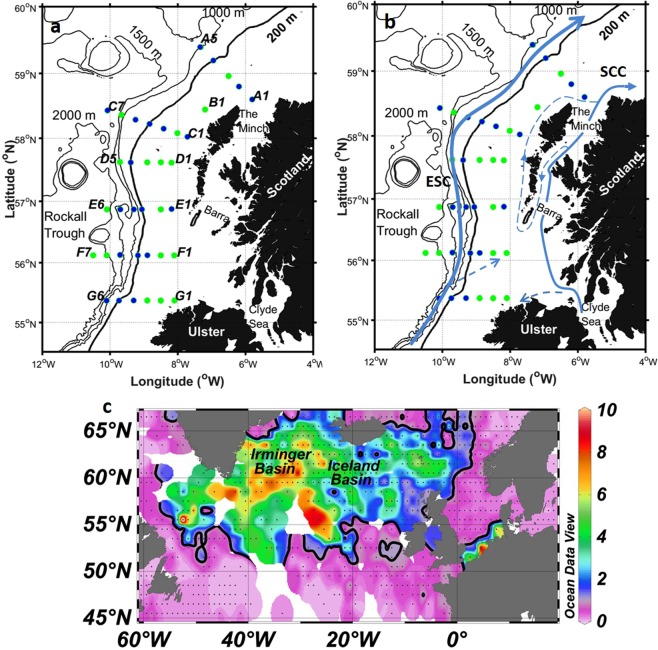
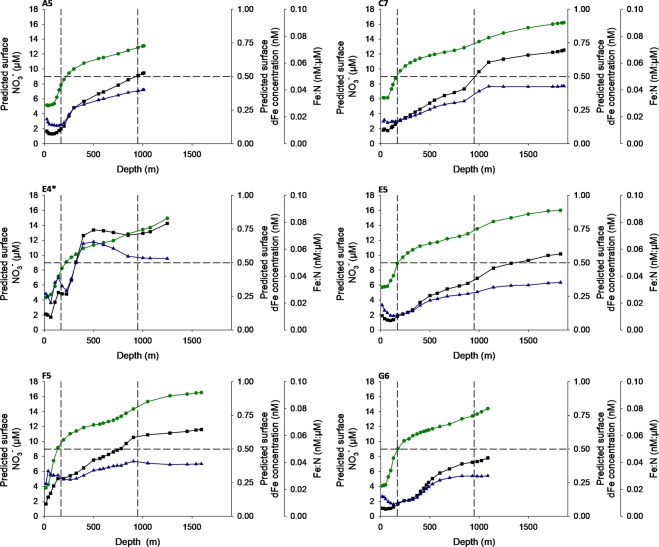
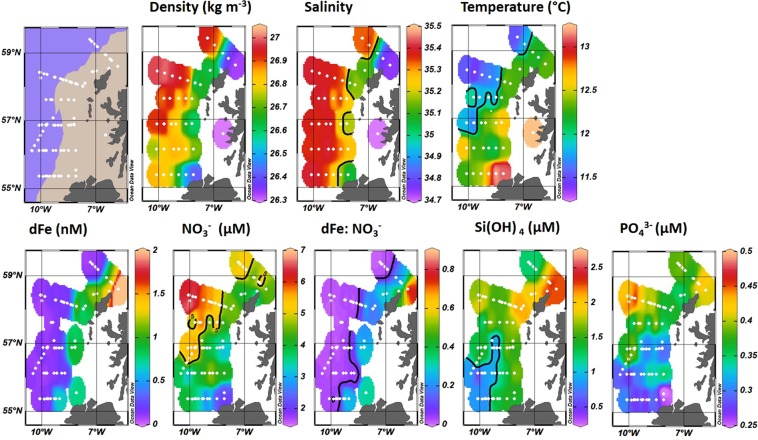
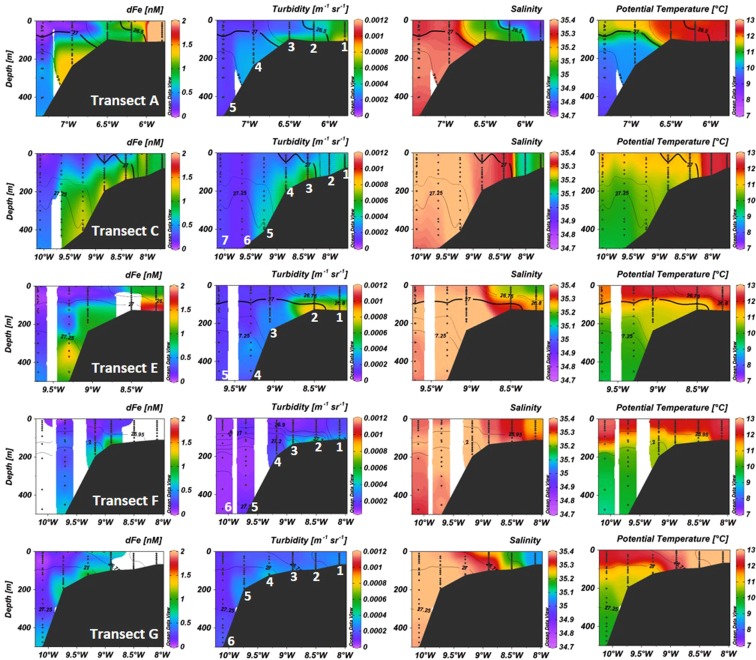
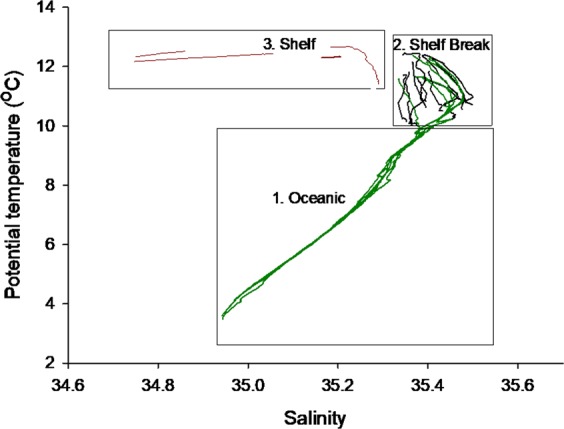
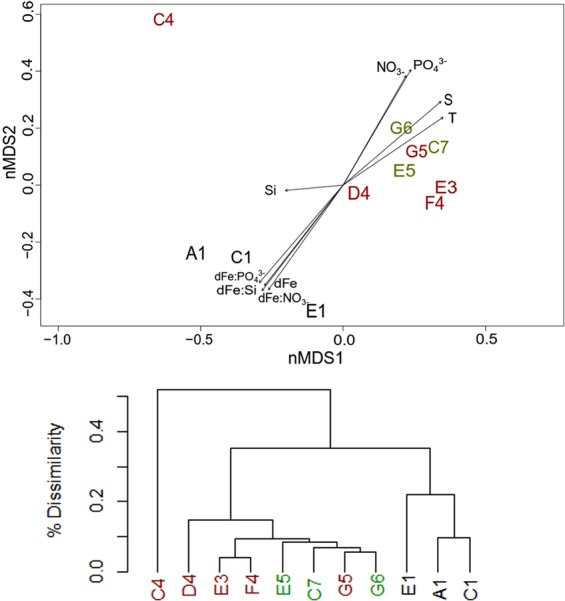
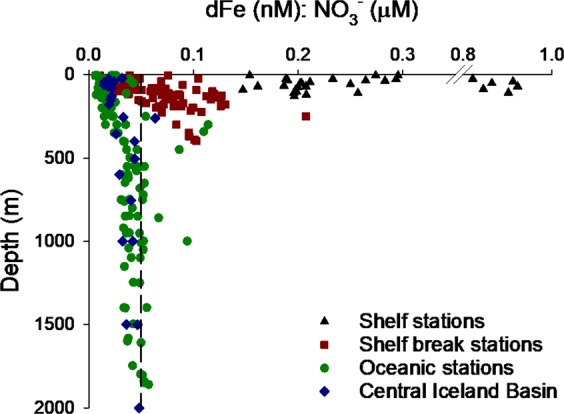
The availability of iron (Fe) can seasonally limit phytoplankton growth in the High Latitude North Atlantic (HLNA), greatly reducing the efficiency of the biological carbon pump. However, the spatial extent of seasonal iron limitation is not yet known. We present autumn nutrient and dissolved Fe measurements, combined with microphytoplankton distribution, of waters overlying the Hebridean (Scottish) shelf break. A distinct biogeochemical divide was observed, with Fe deficient surface waters present beyond the shelf break, much further eastwards than previously recognised. Due to along and on-shelf circulation, the Hebridean shelf represents a much-localised source of Fe, which does not fertilise the wider HLNA. Shelf sediments are generally thought to supply large quantities of Fe to overlying waters. However, for this Fe to influence upper-ocean biogeochemical cycling, efficient off-shelf transport mechanisms are required. This work challenges the view that the oceanic surface waters in close proximity to continental margins are iron replete with respect to marine primary production demands.
铁(Fe)的可利用性会季节性限制北大西洋高纬度地区(HLNA)浮游植物的生长,极大地降低了生物碳泵的效率。然而,季节性铁限制的空间范围尚不清楚。我们展示了赫布里底(苏格兰)陆架坡折上方水体的秋季营养物和溶解 Fe 测量值,以及微浮游植物的分布。观察到一个明显的生物地球化学分界线,在陆架坡折线之外存在 Fe 缺乏的表层水,比以前认为的向东延伸得更远。由于沿陆架和陆架上的环流,赫布里底陆架是一个非常局部的 Fe 源,不会给更广泛的 HLNA 施肥。一般认为陆架沉积物会向表层水大量供应 Fe。然而,为了使这些 Fe 影响上覆海洋的生物地球化学循环,需要有效的陆架外输运机制。这项工作挑战了这样一种观点,即靠近大陆边缘的海洋表层水在海洋初级生产需求方面是铁充足的。