School of GeoSciences, University of Edinburgh, James Hutton Road, Edinburgh EH9 3FE, UK.
Scottish Association for Marine Science, Oban, Argyll PA37 1QA, UK.
Philos Trans A Math Phys Eng Sci. 2020 Oct 2;378(2181):20190361. doi: 10.1098/rsta.2019.0361. Epub 2020 Aug 31.
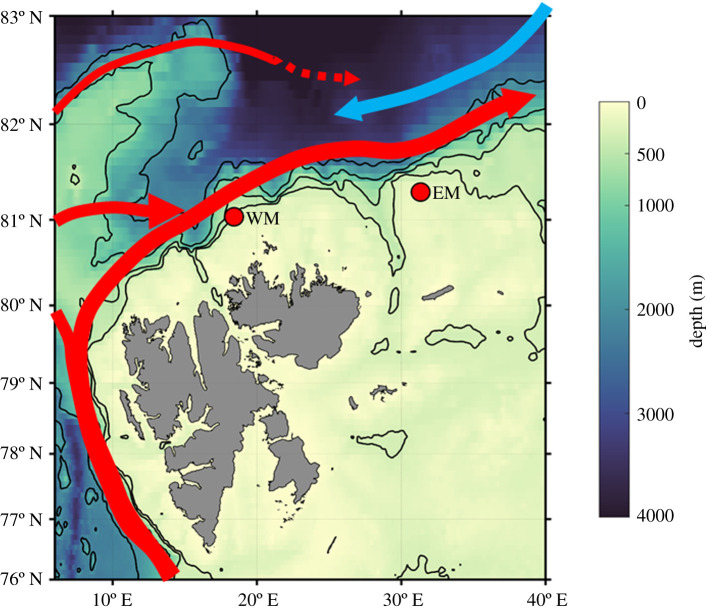
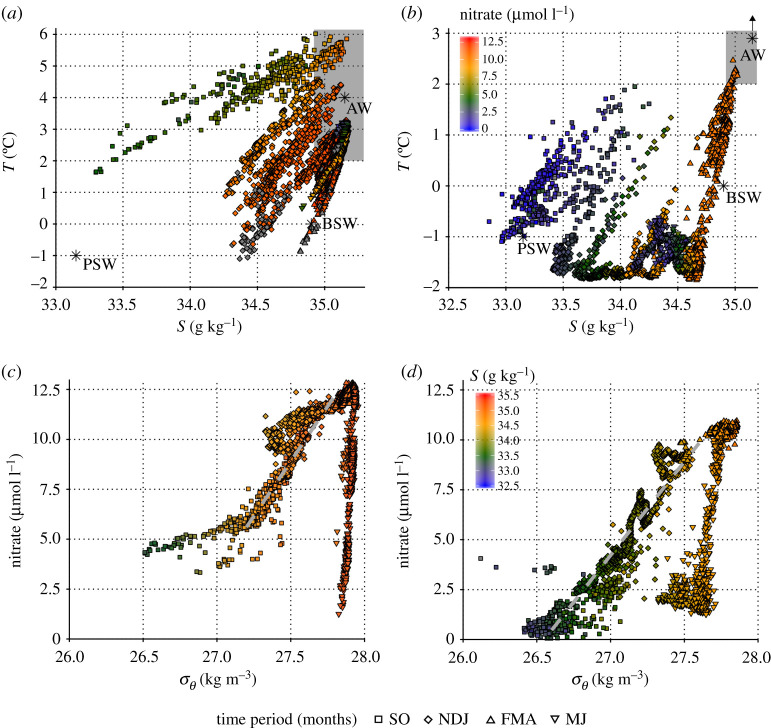
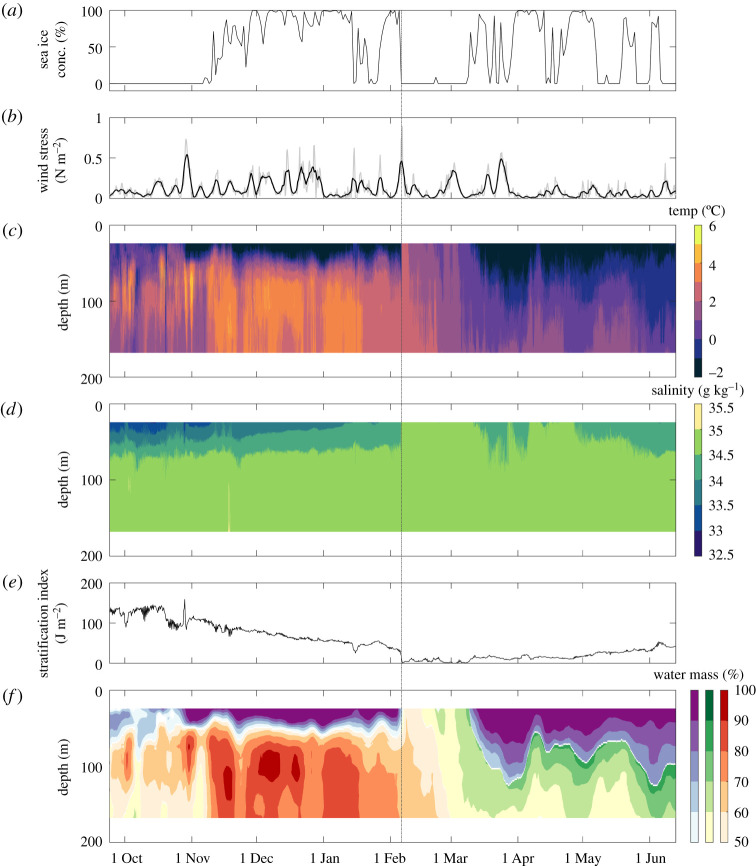
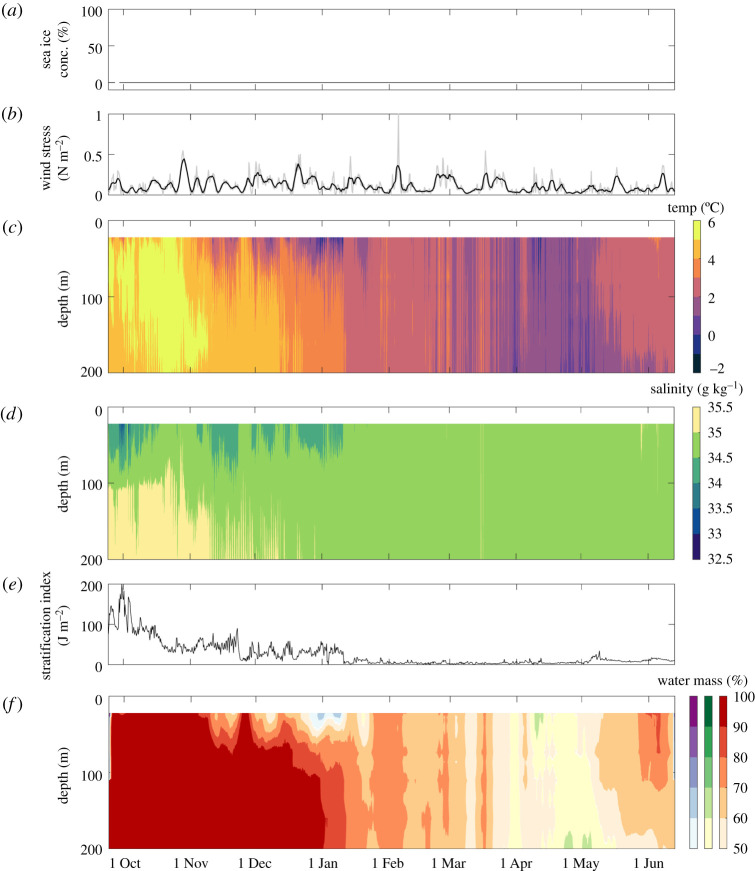
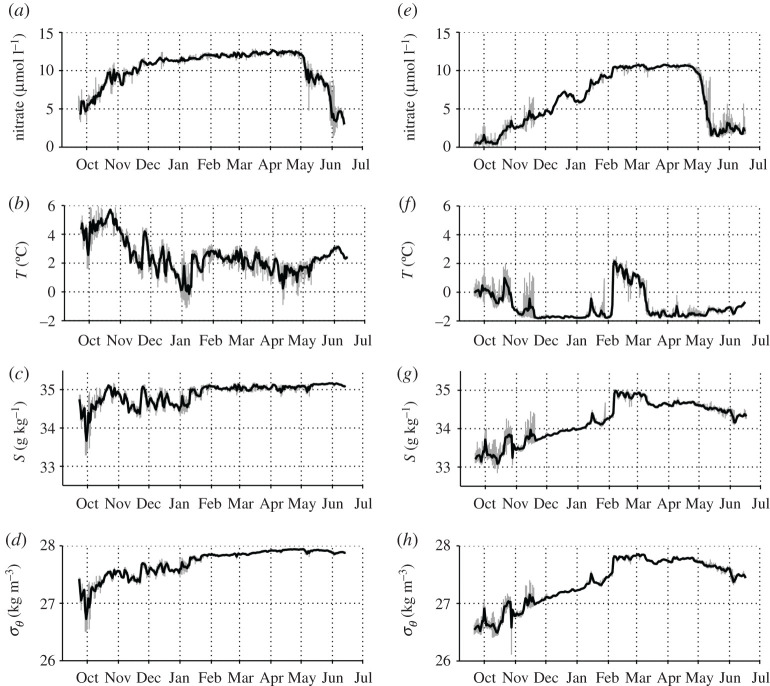
Nutrient supply to the surface ocean is a key factor regulating primary production in the Arctic Ocean under current conditions and with ongoing warming and sea ice losses. Here we present seasonal nitrate concentration and hydrographic data from two oceanographic moorings on the northern Barents shelf between autumn 2017 and summer 2018. The eastern mooring was sea ice-covered to varying degrees during autumn, winter and spring, and was characterized by more Arctic-like oceanographic conditions, while the western mooring was ice-free year-round and showed a greater influence of Atlantic water masses. The seasonal cycle in nitrate dynamics was similar under ice-influenced and ice-free conditions, with biological nitrate uptake beginning near-synchronously in early May, but important differences between the moorings were observed. Nitrate supply to the surface ocean preceding and during the period of rapid drawdown was greater at the ice-free more Atlantic-like western mooring, and nitrate drawdown occurred more slowly over a longer period of time. This suggests that with ongoing sea ice losses and Atlantification, the expected shift from more Arctic-like ice-influenced conditions to more Atlantic-like ice-free conditions is likely to increase nutrient availability and the duration of seasonal drawdown in this Arctic shelf region. The extent to which this increased nutrient availability and longer drawdown periods will lead to increases in total nitrate uptake, and support the projected increases in primary production, will depend on changes in upper ocean stratification and their effect on light availability to phytoplankton as changes in climate and the physical environment proceed. This article is part of the theme issue 'The changing Arctic Ocean: consequences for biological communities, biogeochemical processes and ecosystem functioning'.
营养物质供应是当前北极海洋初级生产力的关键调节因素,在持续变暖及海冰减少的情况下更是如此。本研究呈现了 2017 年秋至 2018 年夏期间,巴伦支海北部陆架两个海洋学系泊浮标上的季节性硝酸盐浓度和水文学数据。在秋季、冬季和春季,东部系泊浮标不同程度地被海冰覆盖,具有更典型的北极海洋条件,而西部系泊浮标全年无冰,受大西洋水团的影响更大。在有冰和无冰条件下,硝酸盐动态的季节性循环相似,生物硝酸盐吸收在 5 月初近同步开始,但在两个系泊浮标之间观察到了重要差异。在快速消耗之前和期间,无冰且更具大西洋特征的西部系泊浮标向海洋表面供应的硝酸盐更多,硝酸盐消耗过程更缓慢,持续时间更长。这表明,随着海冰的持续减少和大西洋化,预计从更典型的北极冰影响条件向更典型的无冰大西洋条件的转变,将增加营养物质的可利用性,并延长该北极陆架区域的季节性消耗时间。这种增加的营养物质可利用性和更长的消耗时间将在多大程度上导致总硝酸盐吸收的增加,并支持预期的初级生产力的增加,将取决于上覆海洋分层的变化及其对浮游植物光照的影响,因为气候和物理环境的变化仍在继续。本文是“变化的北极海洋:对生物群落、生物地球化学过程和生态系统功能的影响”主题问题的一部分。