Eastwood Justin R, Peacock Lee, Hall Michelle L, Roast Michael, Murphy Stephen A, Gonçalves da Silva Anders, Peters Anne
School of Biological Sciences, Monash University, 25 Rainforest Walk, Clayton, Victoria, 3800, Australia.
School of BioSciences, University of Melbourne, Melbourne, Parkville, Victoria, 3010, Australia.
Int J Parasitol Parasites Wildl. 2019 Jan 11;8:88-93. doi: 10.1016/j.ijppaw.2019.01.001. eCollection 2019 Apr.
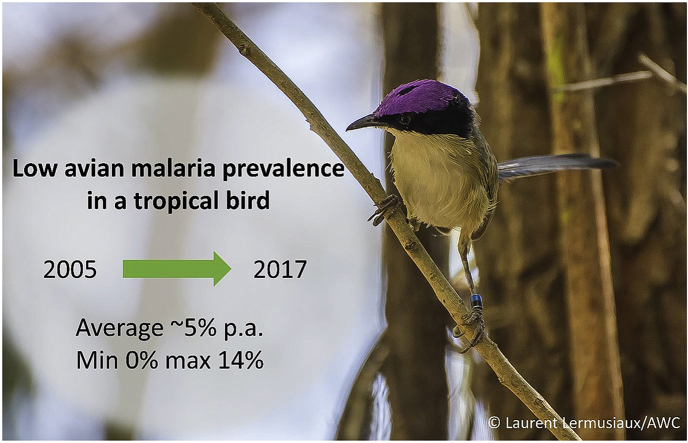
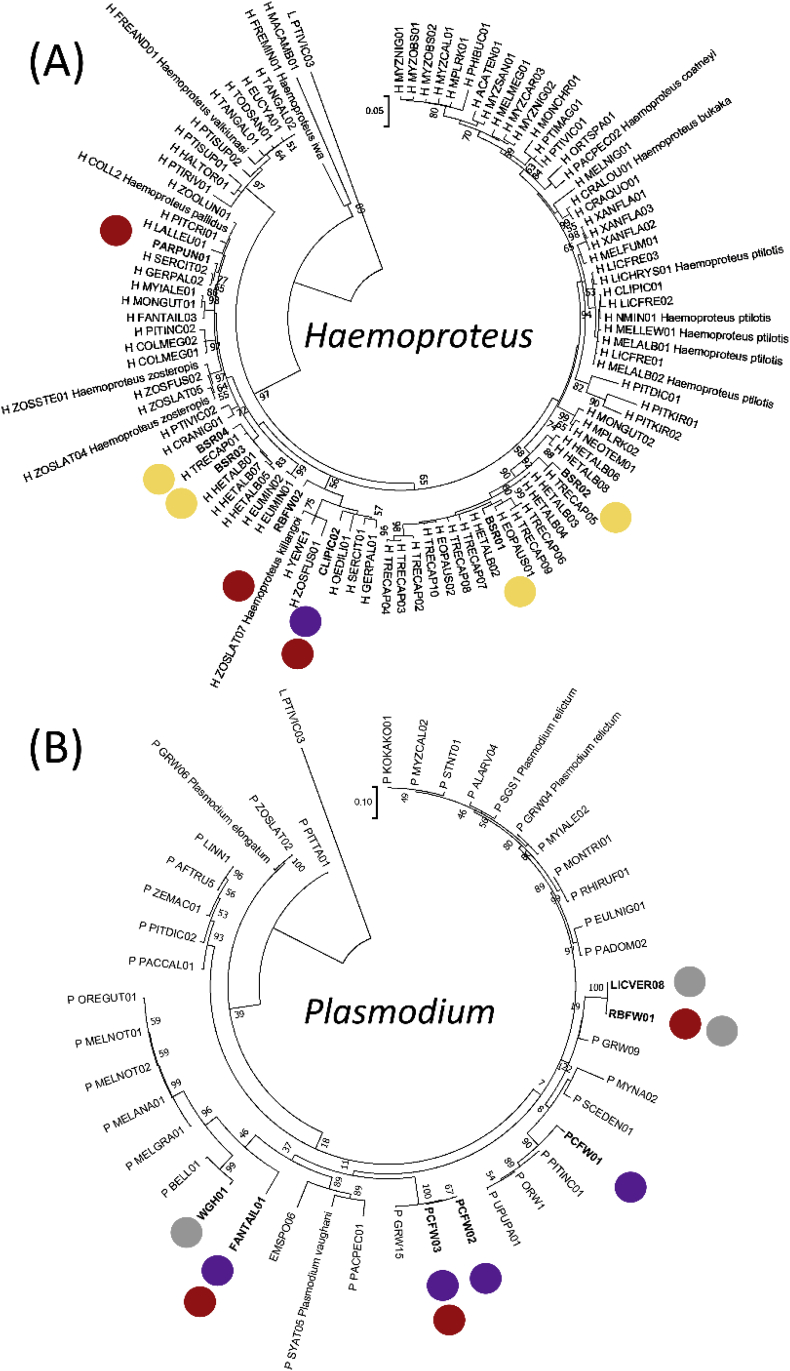
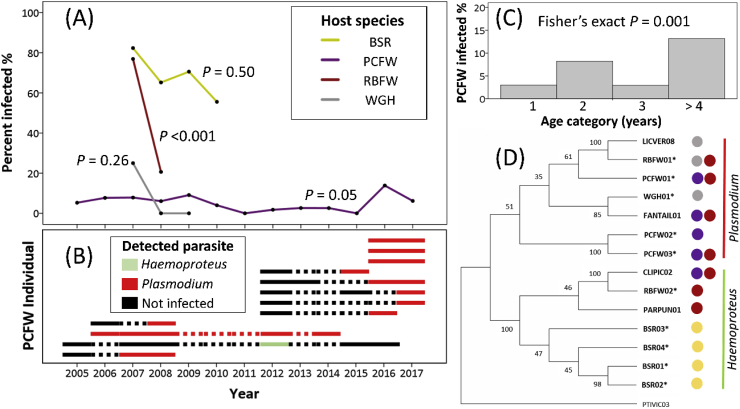
Malarial and other haemosporidian parasites are widespread; however, their temporal dynamics are ill-understood. Longitudinal sampling of a threatened riparian bird revealed a consistently very low prevalence over 13 years (∼5%) despite infections persisting and prevalence increasing with age. In contrast, three key species within this tropical community were highly infected (∼20-75% prevalence) and these differences were stable. Although we found novel lineages and phylogenetic structure at the local level, there was little geographic structuring within Australasia. This study suggests that malarial parasite susceptibility is determined by host factors and that species can maintain low levels despite high community prevalence.
疟原虫和其他血孢子虫寄生虫分布广泛;然而,它们的时间动态却鲜为人知。对一种受威胁的河岸鸟类进行的纵向抽样显示,尽管感染持续存在且患病率随年龄增长而增加,但在13年的时间里患病率一直非常低(约5%)。相比之下,这个热带群落中的三个关键物种感染率很高(患病率约为20%-75%),而且这些差异是稳定的。尽管我们在当地层面发现了新的谱系和系统发育结构,但在澳大拉西亚地区内几乎没有地理结构。这项研究表明,疟原虫易感性由宿主因素决定,尽管群落患病率很高,但某些物种仍能维持低感染水平。