Health Management Center, Yokohama City University, Yokohama, Japan.
Department of Dementia and Geriatric Internal Medicine, Kanagawa Dental University Hospital, Yokosuka, Japan.
Psychogeriatrics. 2019 Jul;19(4):310-319. doi: 10.1111/psyg.12399. Epub 2019 Feb 5.
Dementia with Lewy bodies (DLB) is a progressive form of dementia, accompanied by a range of behavioural and psychological symptoms. The aim of this study was to identify current clinical practice for the treatment of DLB in Japan.
We conducted a survey of medical doctors engaged in the management of dementia in Japan. Participants were divided into two groups: psychiatrists (Group P) and neurologists or neurosurgeons (Group NS). Doctors completed a questionnaire and we analysed their responses to compare the two groups with regard to diagnosis and treatment of DLB, and in particular the treatment of behavioural and psychological symptoms of dementia (BPSD).
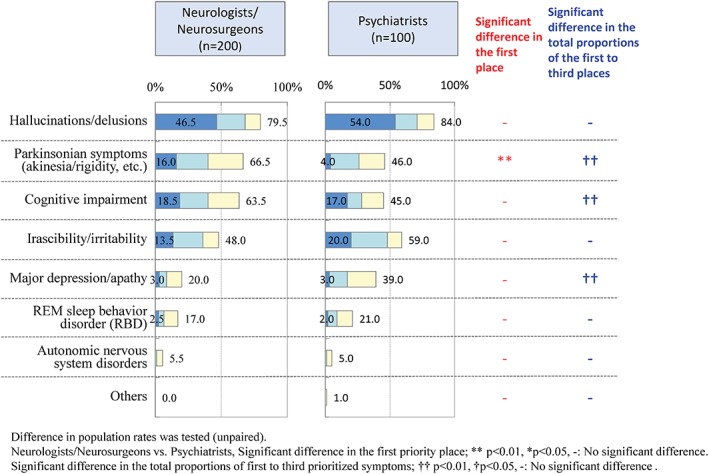
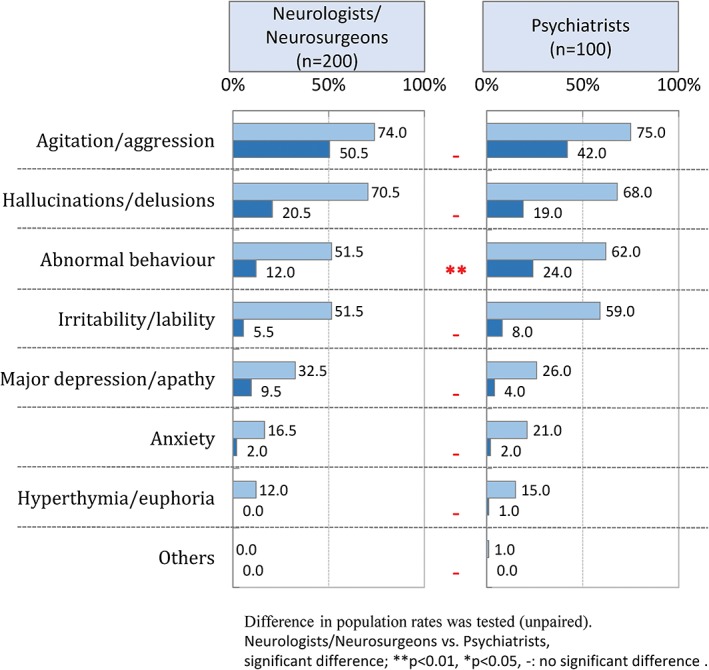
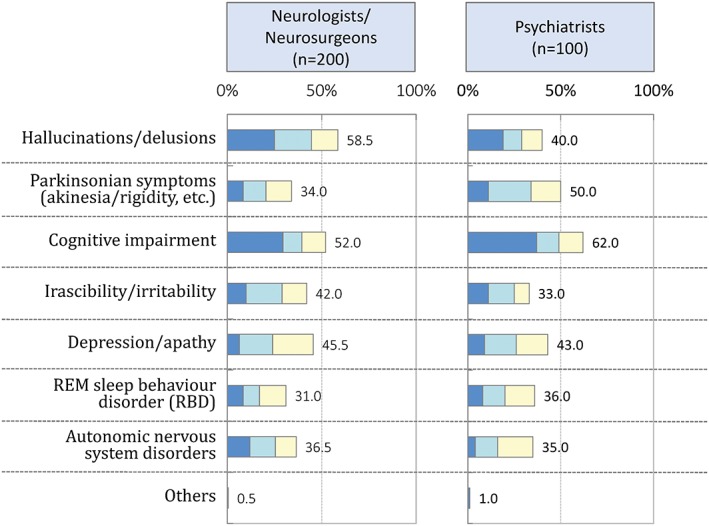
Responses suggested that Group P conducted biomarker examinations less frequently and decided on their own therapeutic strategies more frequently than did Group NS. Both groups most frequently selected hallucinations/delusions as the symptoms given highest treatment priority. More than 70% of respondents in both groups reported having difficulties in treating BPSD. Atypical antipsychotics were more frequently prescribed by Group P, but were also prescribed in 70% of patients in Group NS. A third of patients received atypical antipsychotics for more than 1 year.
The responses to this survey highlighted the difficulties faced by clinicians managing patients with DLB and identified the need to effectively treat BPSD in such patients.
路易体痴呆(DLB)是一种进行性痴呆,伴有一系列行为和心理症状。本研究旨在确定日本目前对 DLB 的治疗临床实践。
我们对日本从事痴呆症管理的医生进行了调查。参与者分为两组:精神科医生(组 P)和神经科医生或神经外科医生(组 NS)。医生填写了一份问卷,我们分析了他们的回答,以比较两组在 DLB 的诊断和治疗方面,特别是在治疗痴呆的行为和心理症状(BPSD)方面的差异。
结果表明,组 P 进行生物标志物检查的频率较低,而自行制定治疗策略的频率较高。两组最常选择幻觉/妄想作为治疗优先级最高的症状。两组超过 70%的受访者报告在治疗 BPSD 方面存在困难。组 P 更常开非典型抗精神病药,但组 NS 中也有 70%的患者开了这种药。三分之一的患者接受非典型抗精神病药治疗超过 1 年。
这项调查的回应强调了临床医生管理 DLB 患者所面临的困难,并确定了需要有效治疗此类患者的 BPSD。