Division of Nephrology, Department of Medicine, University of Rochester School of Medicine and Dentistry, Rochester, New York, USA,
Lunenfeld-Tanenbaum Research Institute, Mount Sinai Hospital, Toronto, Ontario, Canada.
Nephron. 2019;142(2):147-158. doi: 10.1159/000497117. Epub 2019 Feb 6.
Urine (u) calcium (Ca) excretion is directly dependent on dietary sodium (Na) intake leading to the recommendation for Na restriction in hypercalciuric kidney stone formers. However, there is no direct evidence that limiting Na intake will reduce recurrent stone formation.
We used genetic hypercalciuric stone-forming (GHS) rats, which universally form Ca phosphate (P) kidney stones, fed either a low Na (LNa, 0.05%) or normal Na (NNa, 0.4%) Na diet (D) for 18 weeks. Urine was collected at 6-week intervals. Radiographic analysis for stone formation and bone analyses were done at the conclusion of the study.
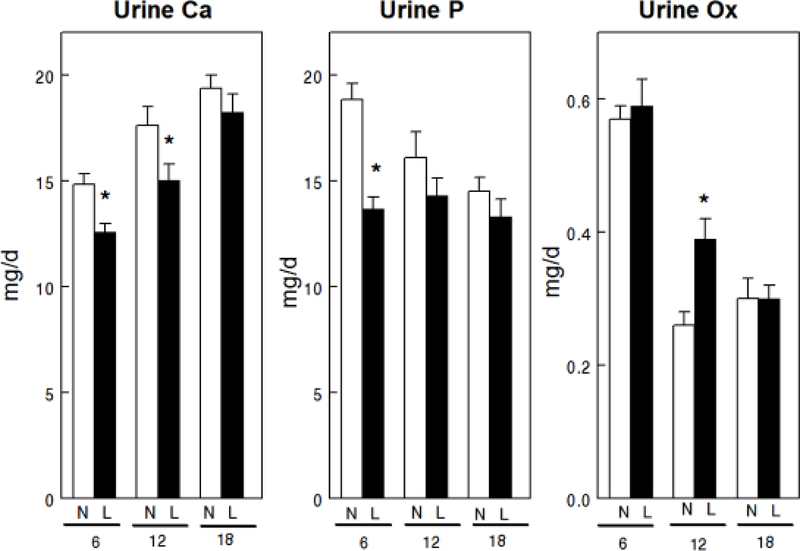
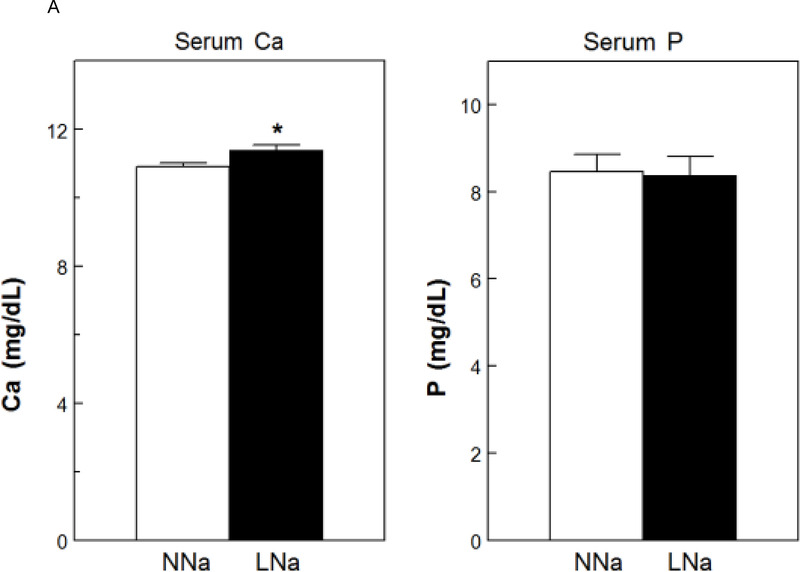
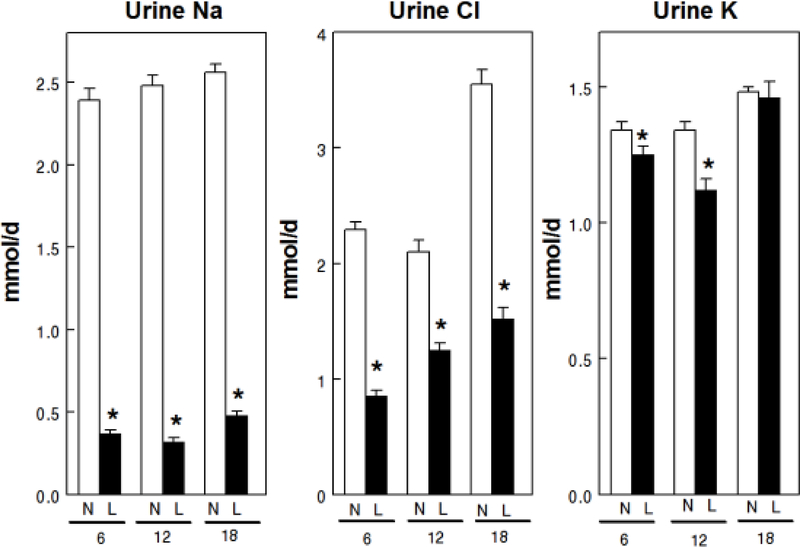
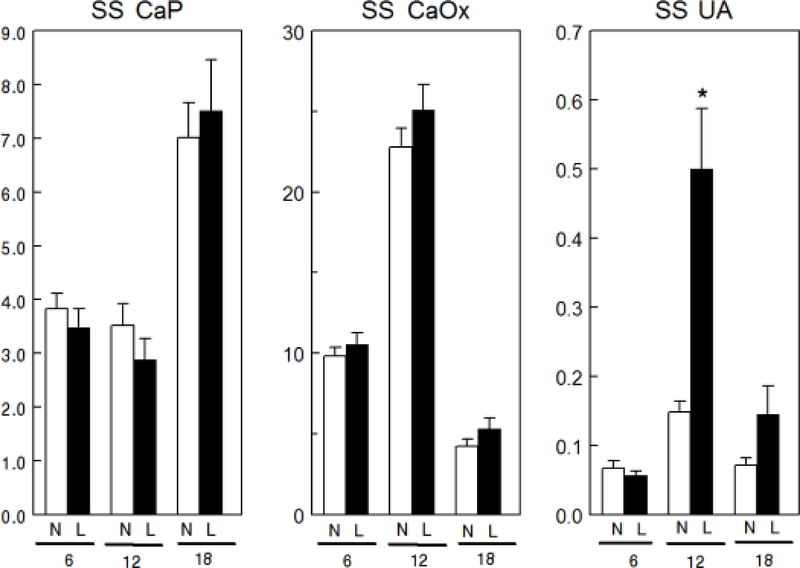
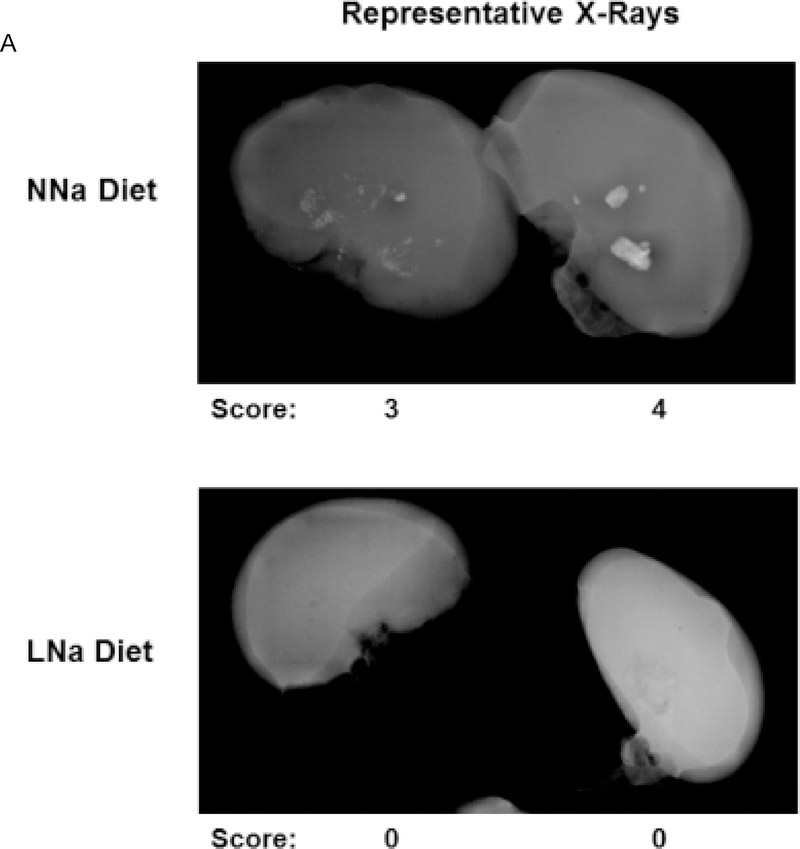
Mean uCa was lower with LNaD than NNaD as was uP and LNaD decreased mean uNa and uChloride. There were no differences in urine supersaturation (SS) with respect to calcium phosphate (CaP) or Ca oxalate (CaOx). However, stone formation was markedly decreased with LNaD by radiographic analysis. The LNaD group had significantly lower femoral anterior-posterior diameter and volumetric bone mineral density (vBMD), but no change in vertebral trabecular vBMD. There were no differences in the bone formation rate or osteoclastic bone resorption between groups. The LNaD group had significantly lower femoral stiffness; however, the ultimate load and energy to fail was not different.
Thus, a low Na diet reduced uCa and stone formation in GHS rats, even though SS with respect to CaP and CaOx was unchanged and effects on bone were modest. These data, if confirmed in humans, support dietary Na restriction to prevent recurrent Ca nephrolithiasis.
尿(u)钙(Ca)排泄直接依赖于饮食钠(Na)摄入,导致建议限制高钙尿结石形成者的 Na 摄入。然而,没有直接证据表明限制 Na 摄入会减少复发性结石形成。
我们使用遗传高钙尿结石形成(GHS)大鼠,这些大鼠普遍形成 Ca 磷酸盐(P)肾结石,分别用低 Na(LNa,0.05%)或正常 Na(NNa,0.4%)Na 饮食(D)喂养 18 周。每隔 6 周收集尿液。在研究结束时进行结石形成的放射分析和骨分析。
与 NNaD 相比,LNaD 时的平均 uCa 较低,uP 也较低,LNaD 降低了平均 uNa 和 uChloride。Ca 磷酸盐(CaP)或 Ca 草酸盐(CaOx)的尿液过饱和度(SS)没有差异。然而,通过放射分析,LNaD 显著减少了结石形成。LNaD 组股骨前后径和体积骨矿物质密度(vBMD)明显较低,但椎骨小梁 vBMD 无变化。两组之间骨形成率或破骨细胞骨吸收无差异。LNaD 组股骨刚度明显降低;然而,最终负荷和失效能量没有差异。
因此,低 Na 饮食可降低 GHS 大鼠的 uCa 和结石形成,尽管 CaP 和 CaOx 的 SS 不变,对骨骼的影响较小。如果这些数据在人类中得到证实,支持限制饮食 Na 以预防复发性 Ca 肾石症。