Section of Cellular Signaling, Department of Physiology and Biophysics, Rush University, Chicago, IL
Section of Cellular Signaling, Department of Physiology and Biophysics, Rush University, Chicago, IL.
J Gen Physiol. 2019 Apr 1;151(4):593-605. doi: 10.1085/jgp.201812268. Epub 2019 Feb 6.
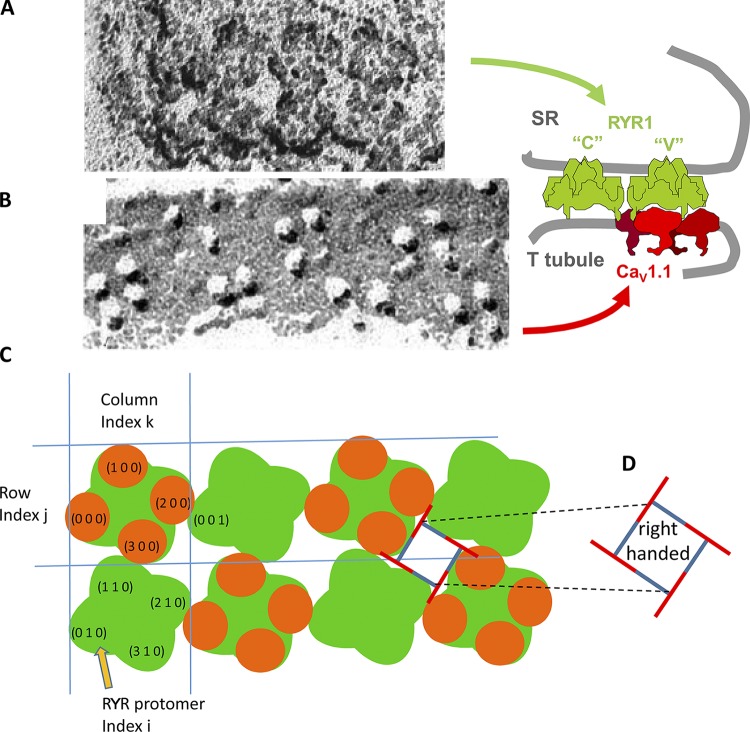
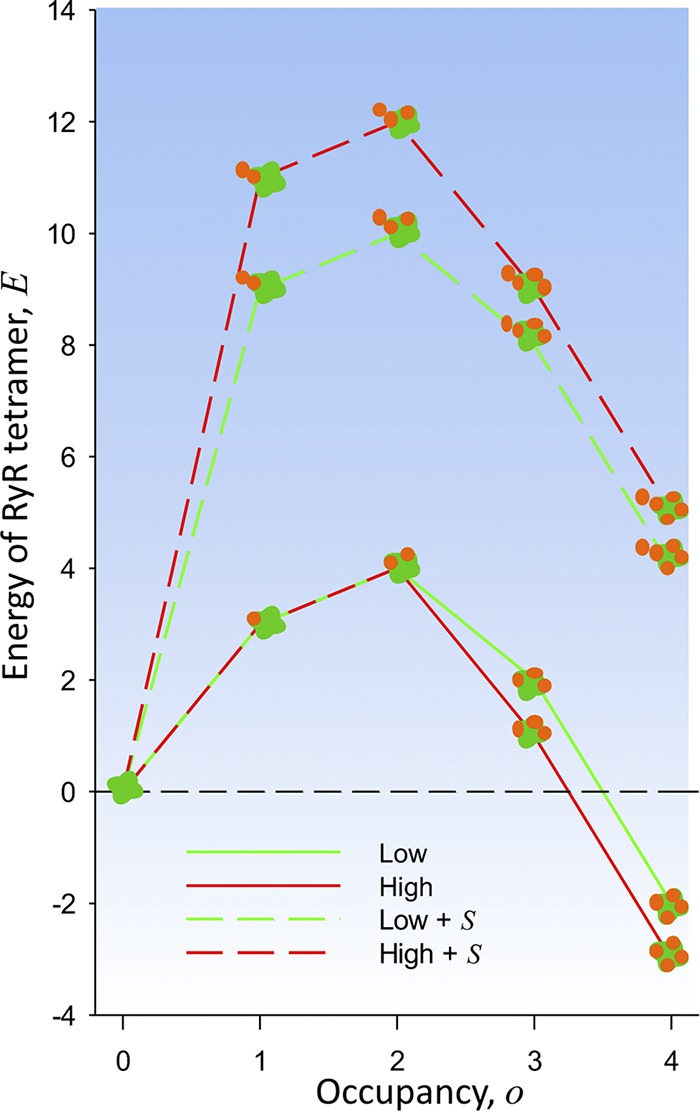
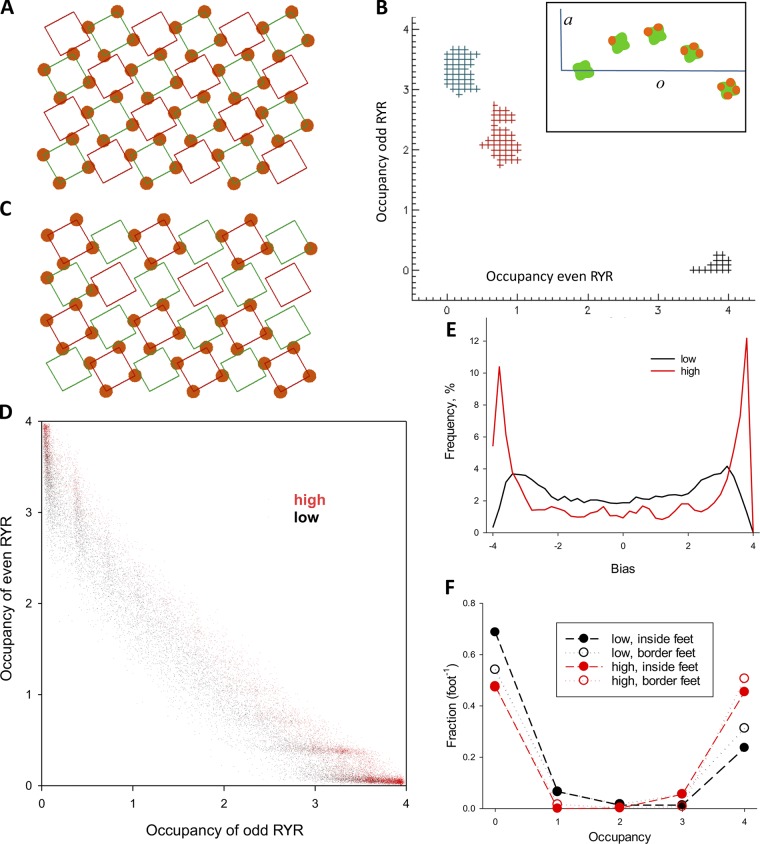
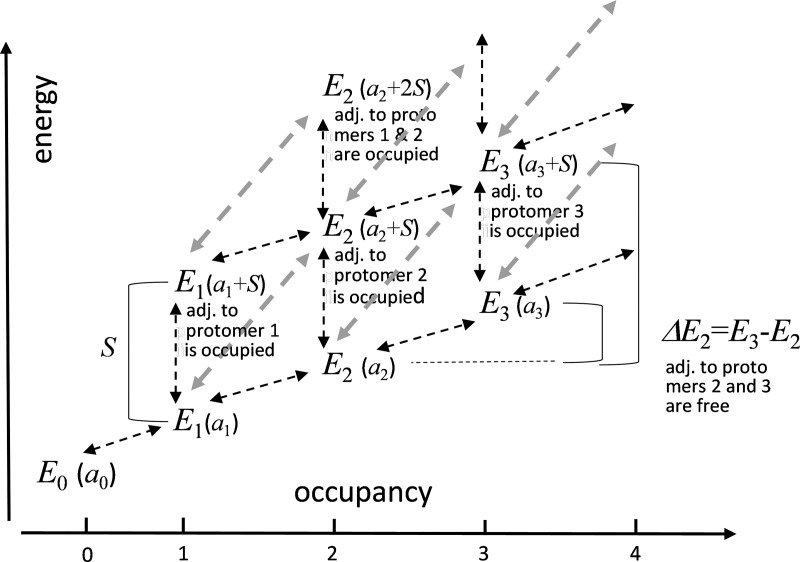
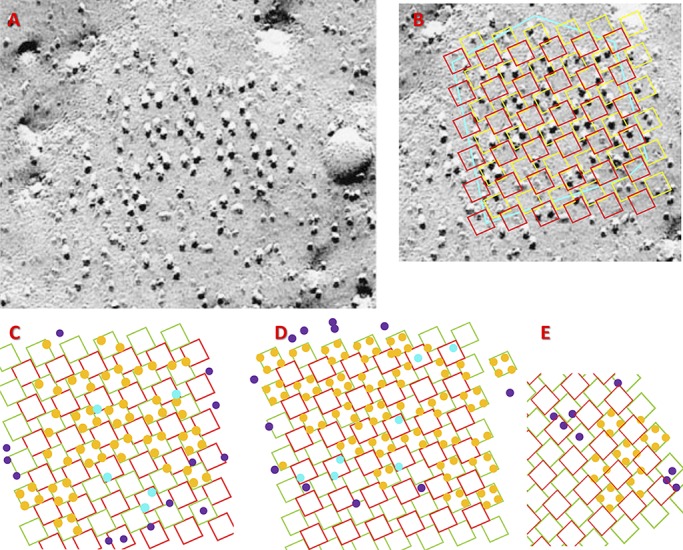
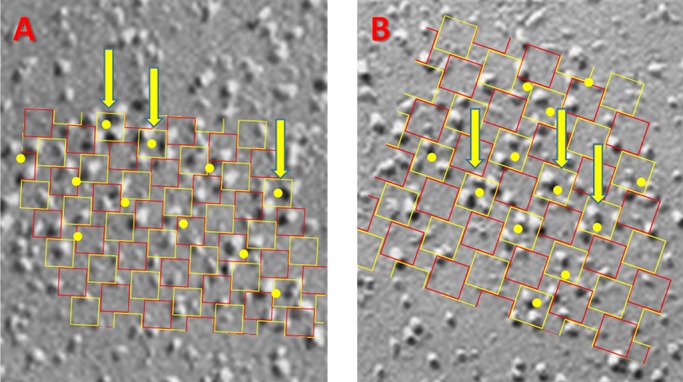
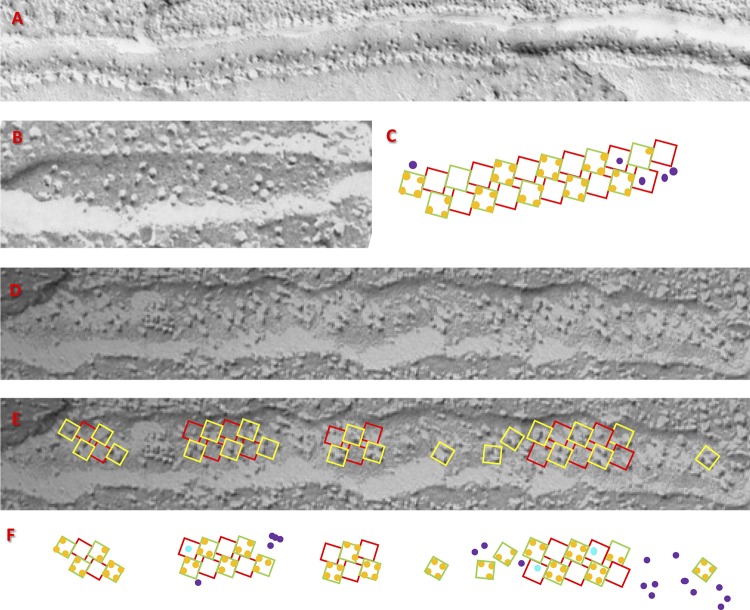
Calcium for contraction of skeletal muscles is released via tetrameric ryanodine receptor (RYR1) channels of the sarcoplasmic reticulum (SR), which are assembled in ordered arrays called couplons at junctions where the SR abuts T tubules or plasmalemma. Voltage-gated Ca (Ca1.1) channels, found in tubules or plasmalemma, form symmetric complexes called Ca tetrads that associate with and activate underlying RYR tetramers during membrane depolarization by conveying a conformational change. Intriguingly, Ca tetrads regularly skip every other RYR tetramer within the array; therefore, the RYRs underlying tetrads (named V), but not the voltage sensor-lacking (C) RYRs, should be activated by depolarization. Here we hypothesize that the checkerboard association is maintained solely by reversible binary interactions between Cas and RYRs and test this hypothesis using a quantitative model of the energies that govern Ca1.1-RYR1 binding, which are assumed to depend on number and location of bound Cas. A Monte Carlo simulation generates large statistical samples and distributions of state variables that can be compared with quantitative features in freeze-fracture images of couplons from various sources. This analysis reveals two necessary model features: (1) the energy of a tetramer must have wells at low and high occupation by Cas, so that Cas positively cooperate in binding RYR (an allosteric effect), and (2) a large energy penalty results when two Cas bind simultaneously to adjacent RYR protomers in adjacent tetramers (a steric clash). Under the hypothesis, V and C channels will eventually reverse roles. Role reversal justifies the presence of sensor-lacking C channels, as a structural and functional reserve for control of muscle contraction.
骨骼肌收缩所需的钙离子通过肌质网(SR)的四聚体兰尼碱受体(RYR1)通道释放,这些通道在 SR 与 T 小管或质膜相接的连接处以称为偶联的有序阵列组装。位于小管或质膜中的电压门控钙(Ca1.1)通道形成称为钙四联体的对称复合物,在膜去极化时通过传递构象变化与并激活下面的 RYR 四聚体,从而与下面的 RYR 四聚体(称为 V)形成偶联,但不与缺乏电压传感器的(C)RYR 形成偶联,因此,应该在去极化时激活。在这里,我们假设棋盘式偶联仅通过 Cas 和 RYR 之间的可逆二元相互作用维持,并使用控制 Ca1.1-RYR1 结合的能量的定量模型来检验该假设,这些能量被认为取决于 Cas 的数量和位置。蒙特卡罗模拟生成了大量的统计样本和状态变量分布,可以与来自不同来源的偶联体冷冻断裂图像中的定量特征进行比较。这项分析揭示了两个必要的模型特征:(1)四聚体的能量必须在 Cas 低和高占据时具有势阱,从而使 Cas 在结合 RYR 时产生正协同作用(变构效应);(2)当两个 Cas 同时结合到相邻四聚体中的相邻 RYR 原聚体上时,会产生较大的能量惩罚(空间冲突)。在假设下,V 和 C 通道最终会反转角色。角色反转证明了缺乏传感器的 C 通道的存在,因为它是控制肌肉收缩的结构和功能储备。