Li Weihao, Zhao Shurong, Yang Hefeng, Zhang Chao, Kang Qiang, Deng Jie, Xu Yanhua, Ding Yu, Li Song
Department of Dental Research, School of Stomatology, Kunming Medical University, Kunming, China.
School of Public Health, Kunming Medical University, Kunming, China.
Front Pharmacol. 2019 Jan 23;10:15. doi: 10.3389/fphar.2019.00015. eCollection 2019.
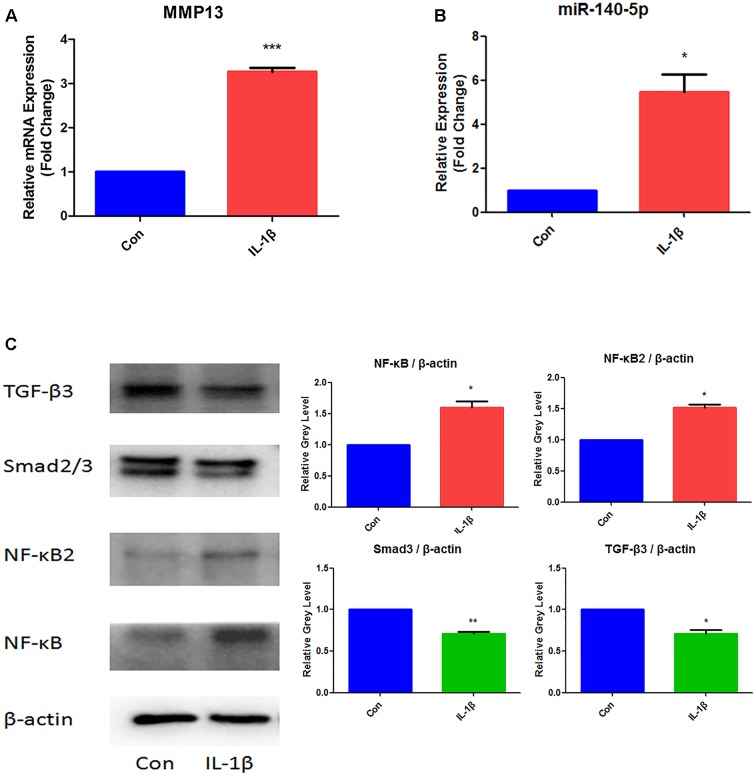
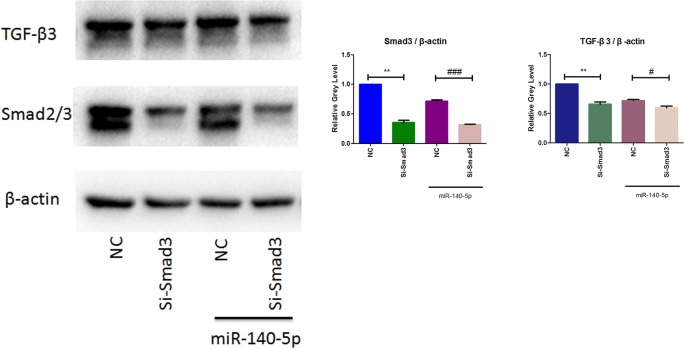
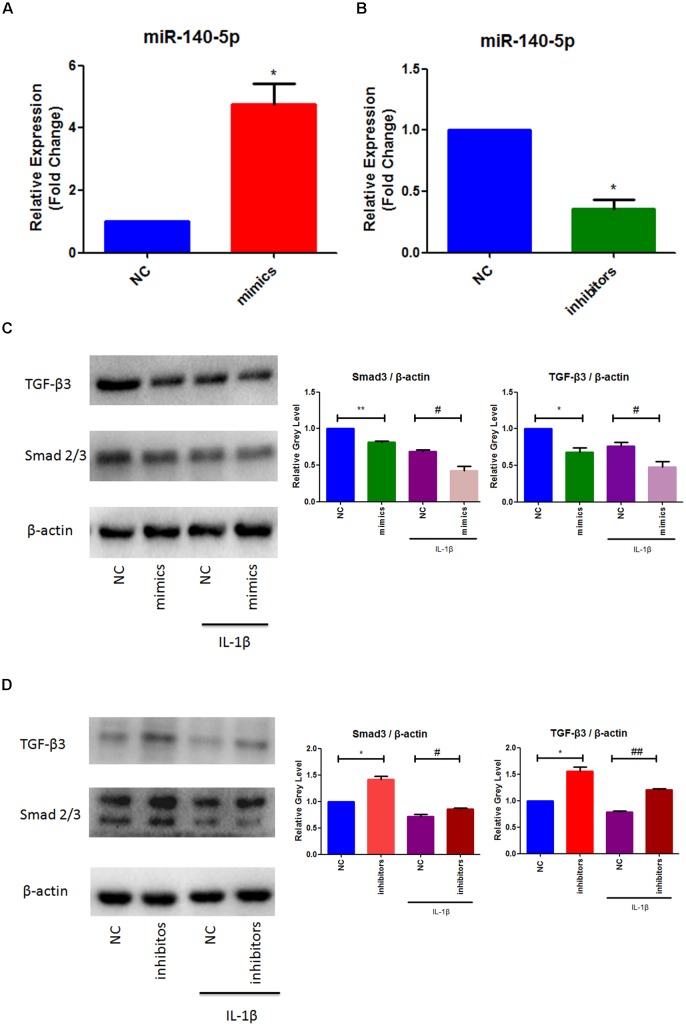
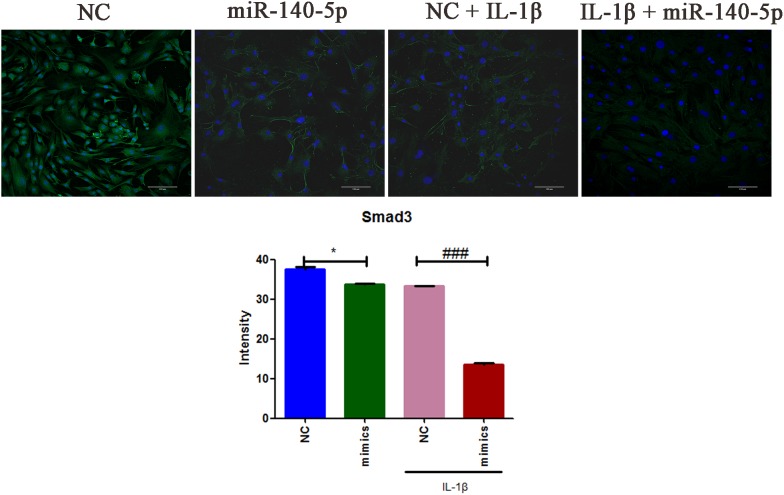
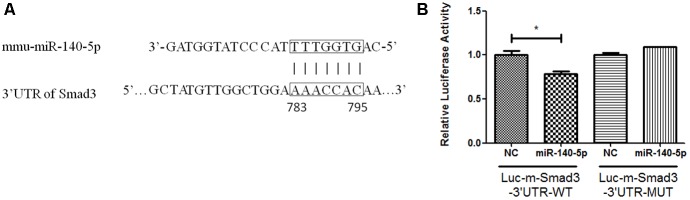
Temporomandibular joint osteoarthritis (TMJ-OA), mainly exhibit extracellular matrix loss and condylar cartilage degradation, is the most common chronic and degenerative maxillofacial osteoarthritis; however, no efficient therapy for TMJ-OA exists due to the poor understanding of its pathological progression. MicroRNA (miR)-140-5p is a novel non-coding microRNAs (miRNAs) that expressed in osteoarthritis specifically. To investigate the molecular mechanisms of miR-140-5p in TMJ-OA, primary mandibular condylar chondrocytes (MCCs) from C57BL/6N mice were treated with interleukins (IL)-1β or transfected with miR-140-5p mimics or inhibitors, respectively. The expression of matrix metallopeptidase (MMP)-13, miR-140-5p, nuclear factor (NF)-kB, Smad3 and transforming growth factor (TGF)-β3 were examined by western blotting or quantitative reverse-transcription polymerase chain reaction (qRT-PCR). The interaction between the potential binding sequence of miR-140-5p and the 3'-untranslated region (3'UTR) of Smad3 mRNA was testified by dual-luciferase assay. Small Interfering RNA of Smad3 (Si-Smad3) was utilized to further identify the role of Smad3 mediated by miR-140-5p. The data showed MMP13, miR-140-5p and NF-kB increased significantly in response to IL-1β inflammatory response in MCCs, meanwhile, Smad3 and TGF-β3 reduced markedly. Moreover, transfection of miR-140-5p mimics significantly suppressed the expression of Smad3 and TGF-β3 in MCCs, while miR-140-5p inhibitors acted in a converse manner. As the luciferase reporter of Smad3 mRNA observed active interaction with miR-140-5p, Smad3 was identified as a direct target of miR-140-5p. Additionally, the expression of TGF-β3 was regulated upon the activation of Smad3. Together, these data suggested that miR-140-5p may play a role in regulating mandibular condylar cartilage homeostasis and potentially serve as a novel prognostic factor of TMJ-OA-like pathology.
颞下颌关节骨关节炎(TMJ - OA)主要表现为细胞外基质丢失和髁突软骨降解,是最常见的慢性退行性颌面部骨关节炎;然而,由于对其病理进展了解不足,目前尚无针对TMJ - OA的有效治疗方法。微小RNA(miR)- 140 - 5p是一种在骨关节炎中特异性表达的新型非编码微小RNA(miRNA)。为了研究miR - 140 - 5p在TMJ - OA中的分子机制,分别用白细胞介素(IL)- 1β处理来自C57BL / 6N小鼠的原代下颌髁突软骨细胞(MCCs),或用miR - 140 - 5p模拟物或抑制剂转染。通过蛋白质印迹法或定量逆转录聚合酶链反应(qRT - PCR)检测基质金属蛋白酶(MMP)- 13、miR - 140 - 5p、核因子(NF)- kB、Smad3和转化生长因子(TGF)-β3的表达。通过双荧光素酶报告基因检测验证miR - 140 - 5p的潜在结合序列与Smad3 mRNA的3'非翻译区(3'UTR)之间的相互作用。利用Smad3的小干扰RNA(Si - Smad3)进一步确定miR - 140 - 5p介导的Smad3的作用。数据显示,在MCCs中,MMP13、miR - 140 - 5p和NF - kB在对IL - 1β炎症反应中显著增加,同时,Smad3和TGF -β3明显降低。此外,转染miR - 140 - 5p模拟物显著抑制了MCCs中Smad3和TGF -β3的表达,而miR - 140 - 5p抑制剂则起相反作用。由于观察到Smad3 mRNA的荧光素酶报告基因与miR - 140 - 5p有活性相互作用,因此Smad3被确定为miR - 140 - 5p的直接靶点。此外,TGF -β3的表达在Smad3激活后受到调节。总之,这些数据表明miR - 140 - 5p可能在调节下颌髁突软骨稳态中起作用,并可能作为TMJ - OA样病理的一种新的预后因素。