Ignacio Rosa Mistica C, Gibbs Carla R, Kim Soohyun, Lee Eun-Sook, Adunyah Samuel E, Son Deok-Soo
Department of Biochemistry, Cancer Biology, Neuroscience and Pharmacology, Meharry Medical College, Nashville, TN, USA.
Department of Veterinary Sciences, College of Veterinary Medicine, Kon-Kuk University, Seoul, Republic of Korea.
Oncotarget. 2019 Jan 11;10(4):511-526. doi: 10.18632/oncotarget.26566.
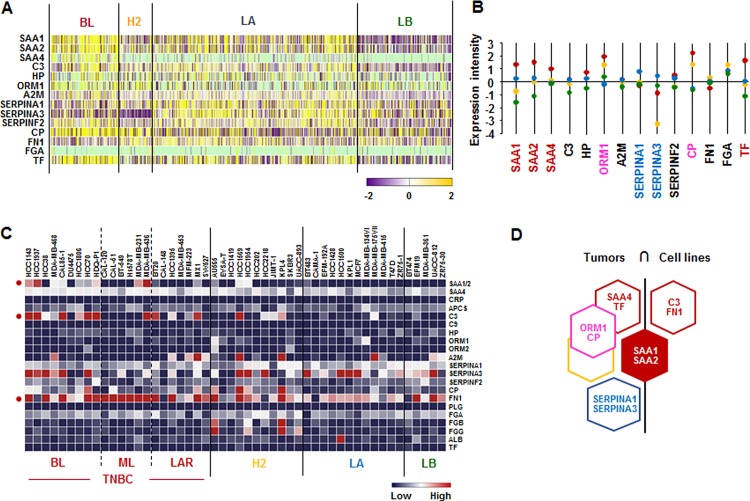
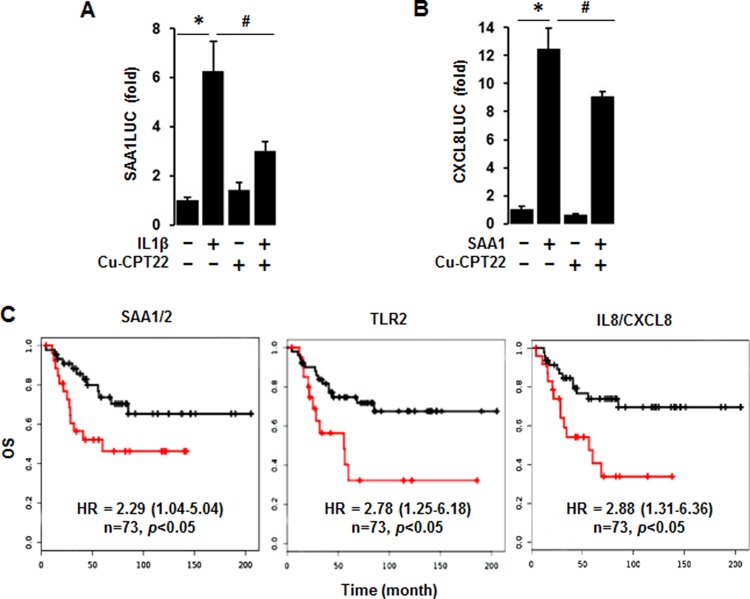
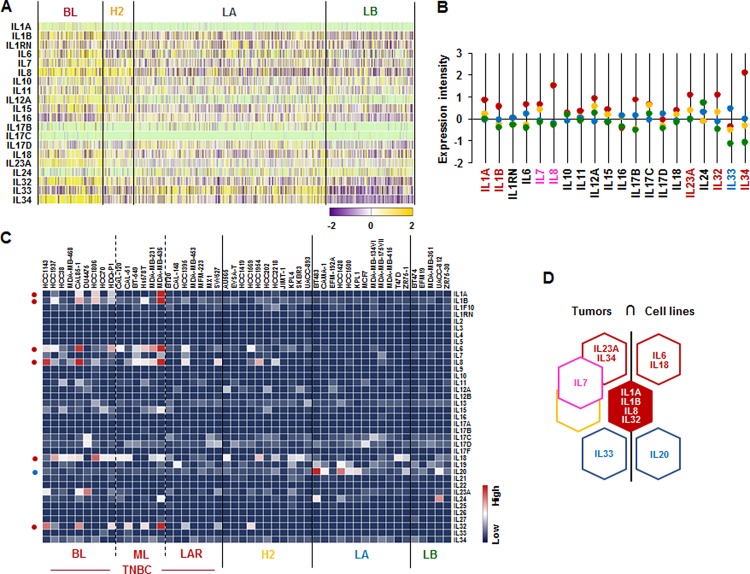
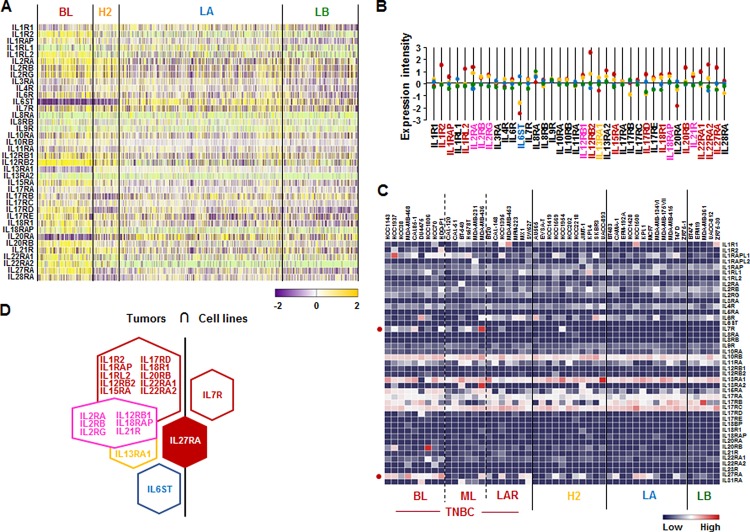
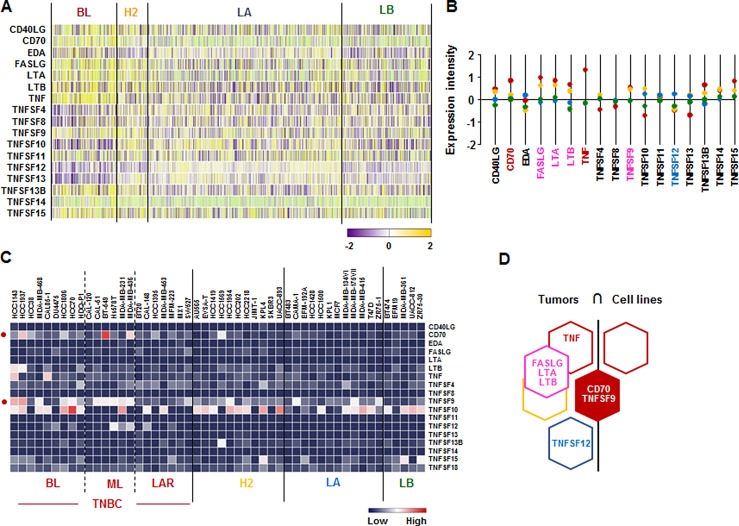
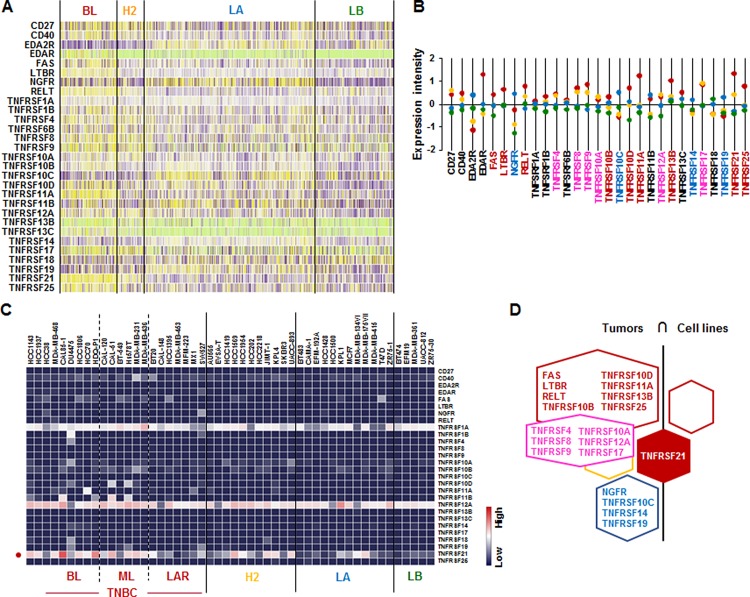
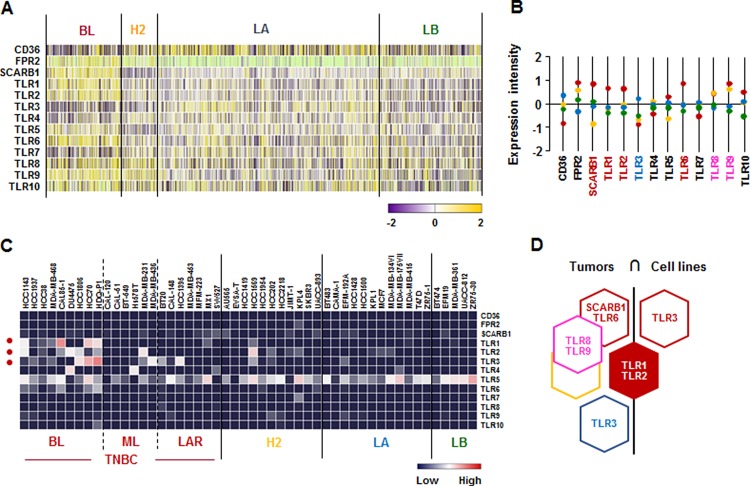
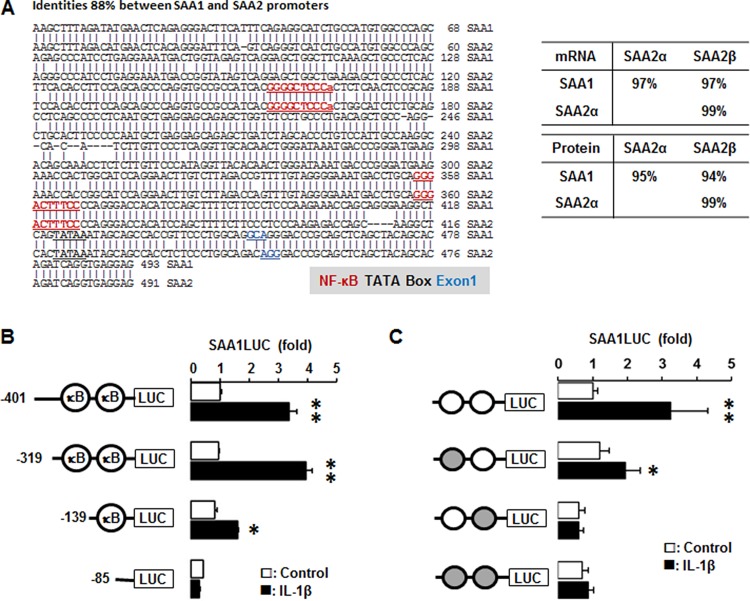
Acute-phase proteins (APPs) are associated with a variety of disorders such as infection, inflammatory diseases, and cancers. The signature profile of APPs in breast cancer (BC) is poorly understood. Here, we identified serum amyloid A (SAA) for proinflammatory predisposition in BC through the signature profiles of APPs, interleukin (IL) and tumor necrosis factor (TNF) superfamily using publicly available datasets of tumor samples and cell lines. Triple-negative breast cancer (TNBC) subtype highly expressed compared to HER2, luminal A (LA) and luminal B (LB) subtypes. , , /, and in IL superfamily and , and in TNF superfamily were highly expressed in TNBC compared to other subtypes. SAA is restrictedly regulated by nuclear factor (NF)-κB and IL-1β, an NF-κB activator highly expressed in TNBC, increased the promoter activity of SAA1 in human TNBC MDA-MB231 cells. Interestingly, two κB-sites contained in SAA1 promoter were involved, and the proximal region (-96/-87) was more critical than the distal site (-288/-279) in regulating IL-1β-induced SAA1. Among the SAA receptors, and were highly expressed in TNBC. Cu-CPT22, TLR1/2 antagonist, abrogated IL-1β-induced SAA1 promoter activity. In addition, SAA1 induced IL8/CXCL8 promoter activity, which was partially reduced by Cu-CPT22. Notably, , and were associated with a poor overall survival in mesenchymal-like TNBC. Taken together, IL-1-induced SAA via NF-κB-mediated signaling could potentiate an inflammatory burden, leading to cancer progression and high mortality in TNBC patients.
急性期蛋白(APPs)与多种疾病相关,如感染、炎症性疾病和癌症。乳腺癌(BC)中APPs的特征谱了解甚少。在此,我们通过使用肿瘤样本和细胞系的公开可用数据集,通过APPs、白细胞介素(IL)和肿瘤坏死因子(TNF)超家族的特征谱,鉴定了BC中促炎易感性的血清淀粉样蛋白A(SAA)。与HER2、管腔A型(LA)和管腔B型(LB)亚型相比,三阴性乳腺癌(TNBC)亚型高表达。与其他亚型相比,IL超家族中的 、 、 / 、 和TNF超家族中的 、 和 在TNBC中高表达。SAA受核因子(NF)-κB和IL-1β的严格调控,IL-1β是一种在TNBC中高表达的NF-κB激活剂,可增加人TNBC MDA-MB231细胞中SAA1的启动子活性。有趣的是,SAA1启动子中包含的两个κB位点参与其中,近端区域(-96/-87)在调节IL-1β诱导的SAA1方面比远端位点(-288/-279)更关键。在SAA受体中, 和 在TNBC中高表达。Cu-CPT22,TLR1/2拮抗剂,消除了IL-1β诱导的SAA1启动子活性。此外,SAA1诱导IL8/CXCL8启动子活性,Cu-CPT22可部分降低该活性。值得注意的是, 、 和 与间充质样TNBC的总体生存率差有关。综上所述,IL-1通过NF-κB介导的信号传导诱导SAA,可能会增强炎症负担,导致TNBC患者的癌症进展和高死亡率。