Bao Fei, Ding Anqi, Zhang Tengxun, Luo Le, Wang Jia, Cheng Tangren, Zhang Qixiang
1Beijing Key Laboratory of Ornamental Plants Germplasm Innovation & Molecular Breeding, National Engineering Research Center for Floriculture, Beijing Laboratory of Urban and Rural Ecological Environment, Engineering Research Center of Landscape Environment of Ministry of Education, Key Laboratory of Genetics and Breeding in Forest Trees and Ornamental Plants of Ministry of Education, School of Landscape Architecture, Beijing Forestry University, Beijing, 100083 China.
2Beijing Advanced Innovation Center for Tree Breeding by Molecular Design, Beijing Forestry University, Beijing, 100083 China.
Hortic Res. 2019 Feb 1;6:24. doi: 10.1038/s41438-018-0104-4. eCollection 2019.
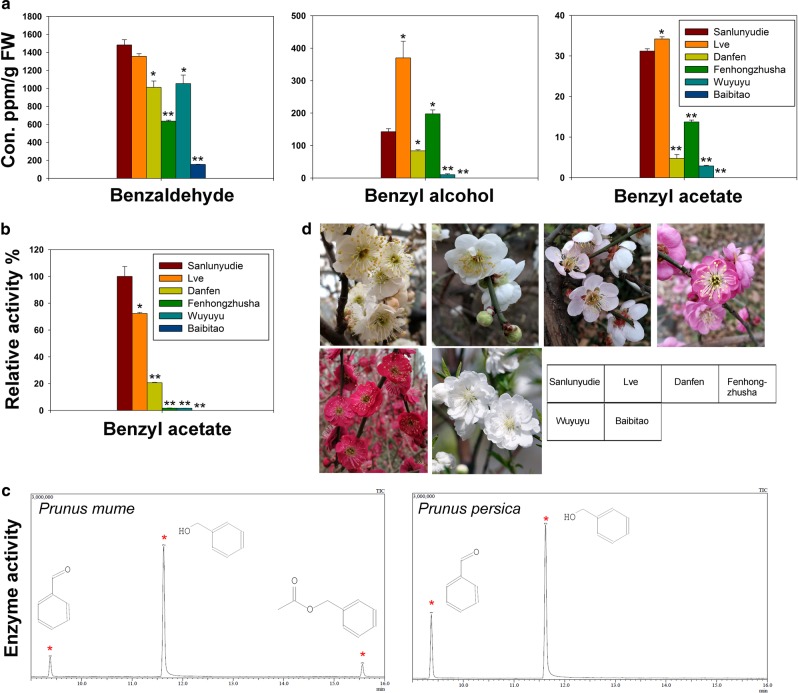
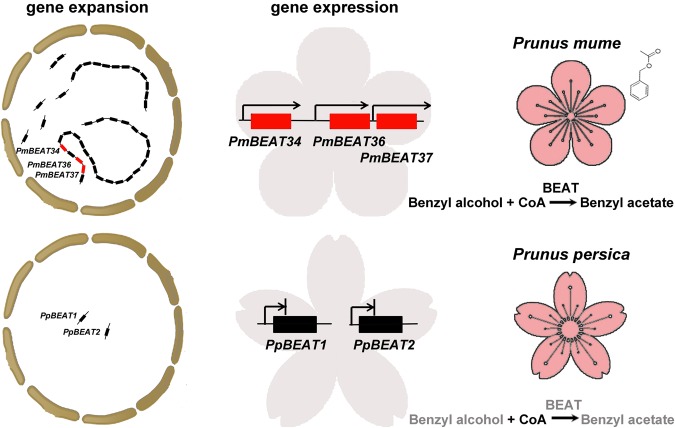
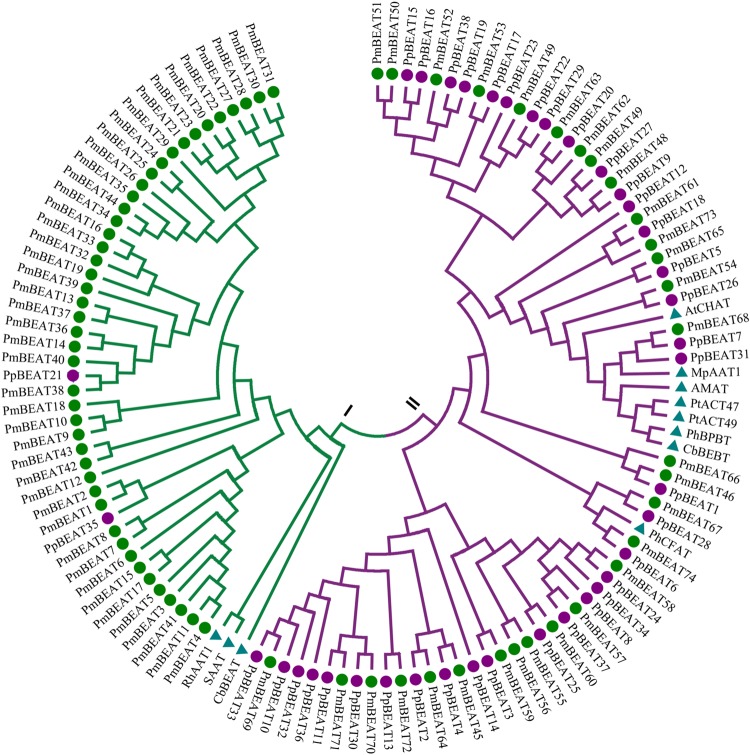
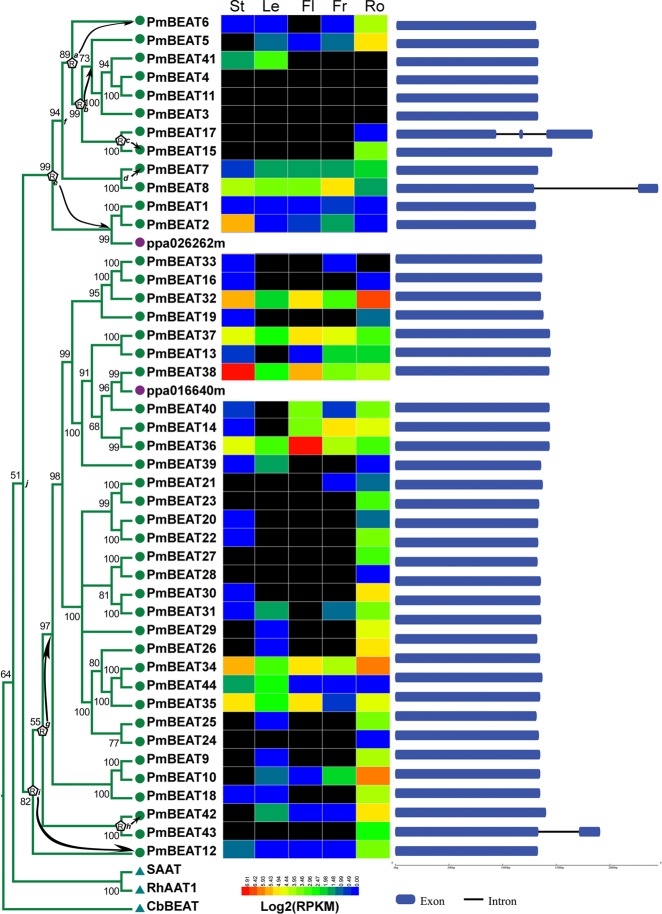
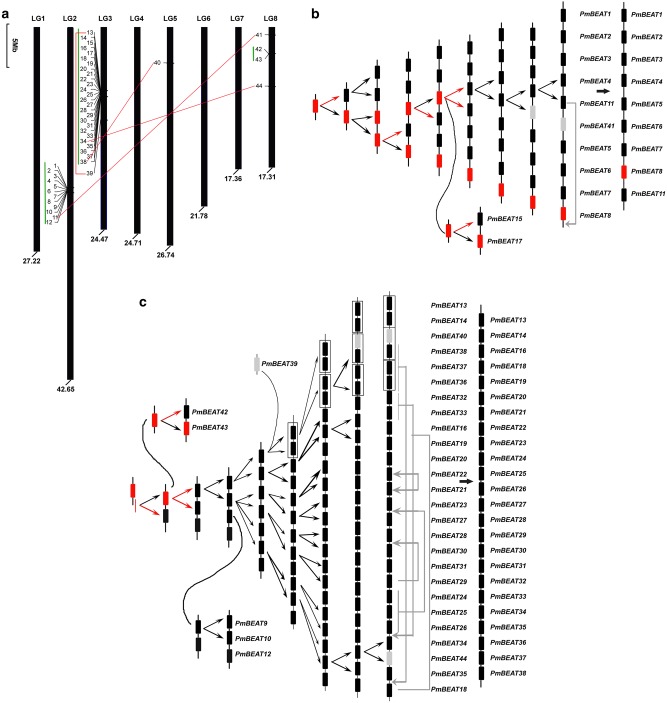
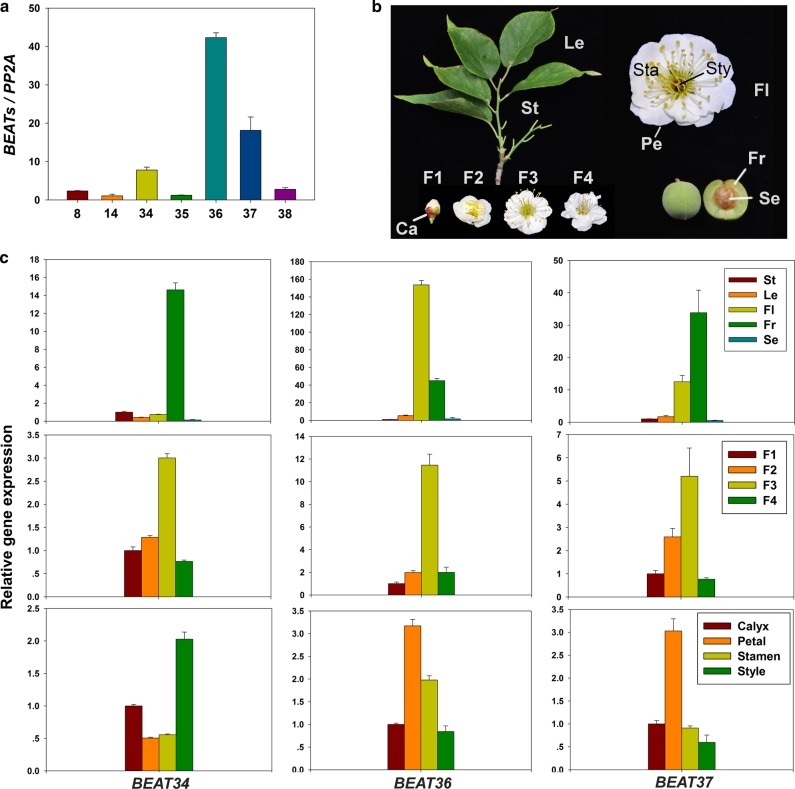
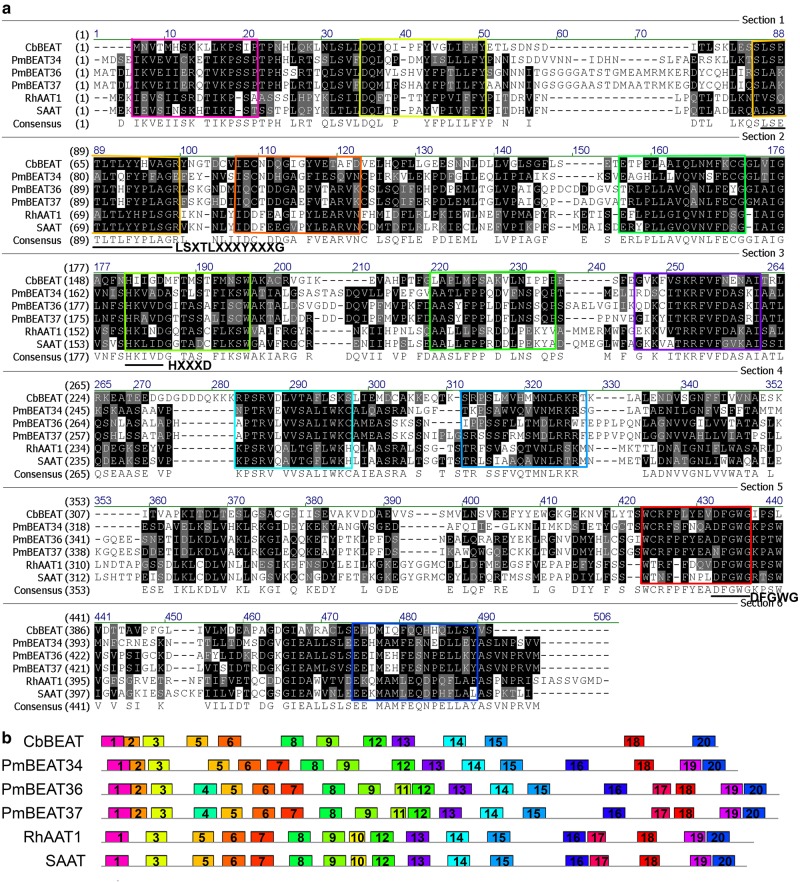
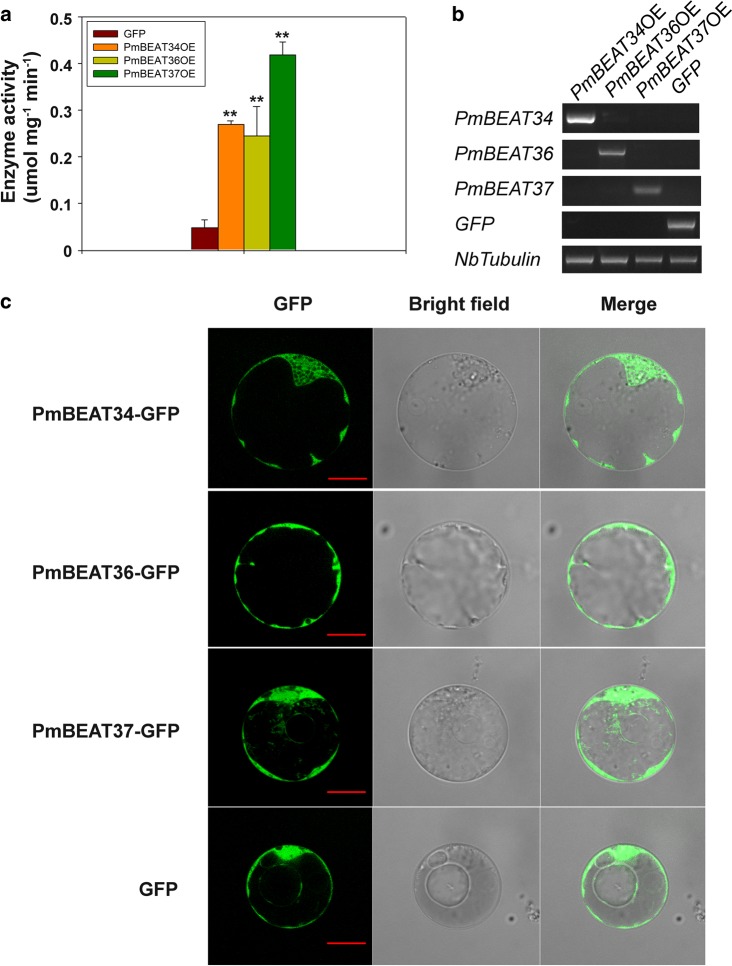
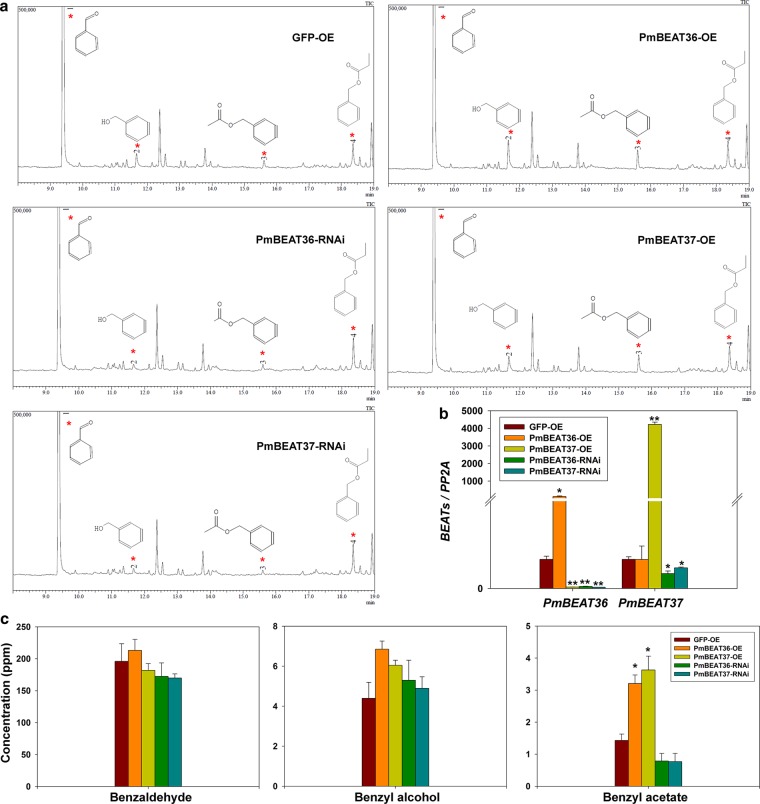
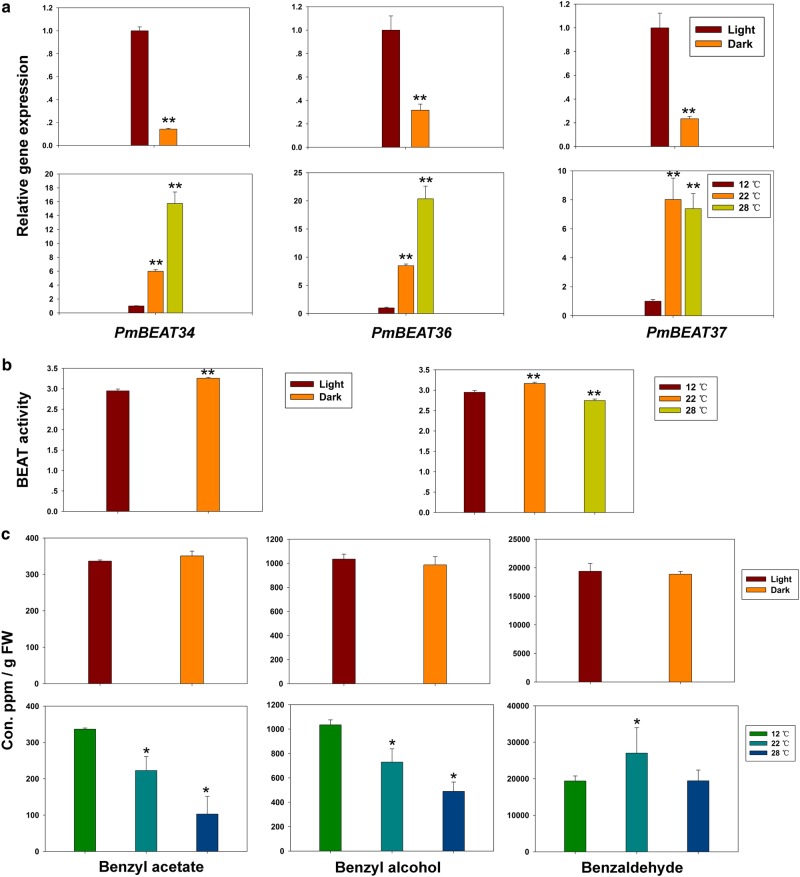
is the only plant in the genus of the Rosaceae family with a characteristic floral scent, and the main component of this scent is benzyl acetate. By contrast, benzyl acetate is not synthesized in flowers. Here, we searched for () genes based on genomic data from and and found 44 unique in . These genes, which were mainly detected in clusters on chromosomes, originated from gene duplication events during the species evolution of , and retroduplication and tandem duplication were the two dominant duplication patterns. The genes , and , which were generated by tandem duplication, were highly expressed in flowers, and their highest levels were detected during the blooming stage. In vitro, PmBEAT34, PmBEAT3, and PmBEAT37 all had benzyl alcohol acetyltransferase activity that was localized in the cytoplasm. Overexpression of the or genes increased benzyl acetate production in the petal protoplasts of , and interference in the expression of these genes slightly decreased the benzyl acetate content. In addition, light and temperature regulated the expression of the , and genes. According to these results, we hypothesize that the expansion of the genes in the genome induce the characteristic floral scent of .
是蔷薇科该属中唯一具有独特花香的植物,这种花香的主要成分是乙酸苄酯。相比之下,乙酸苄酯不在花中合成。在此,我们基于[植物名称1]和[植物名称2]的基因组数据搜索了()基因,并在[植物名称1]中发现了44个独特的[基因名称]。这些基因主要在染色体上的簇中被检测到,起源于[植物名称1]物种进化过程中的基因复制事件,反转复制和串联复制是两种主要的复制模式。由串联复制产生的PmBEAT34、PmBEAT3和PmBEAT37基因在花中高度表达,且在开花阶段检测到其最高表达水平。在体外,PmBEAT34、PmBEAT3和PmBEAT37都具有定位于细胞质的苄醇乙酰转移酶活性。[基因名称1]或[基因名称2]基因的过表达增加了[植物名称1]花瓣原生质体中乙酸苄酯的产生,而对这些基因表达的干扰略微降低了乙酸苄酯含量。此外,光照和温度调节PmBEAT34、PmBEAT3和PmBEAT37基因的表达。根据这些结果,我们推测基因组中[基因名称]基因的扩增诱导了[植物名称1]的特征花香。