Department of Hematology and Blood Banking, School of Allied Medical Sciences, Tehran University of Medical Sciences (TUMS), Tehran, Iran.
Molecular Immunology Research Center, Tehran University of Medical Sciences(TUMS), Tehran, Iran.
PLoS One. 2019 Feb 7;14(2):e0211146. doi: 10.1371/journal.pone.0211146. eCollection 2019.
TIM-family proteins are expressed on different immune cells such as dendritic cells, macrophages, type 1 and 2 T helper (Th) cells. Therefore, they have the ability to contribute to the various intracellular signals and immune responses, importantly the regulation of Th1 and Th17 cell differentiation, which plays a remarked role in fight against inflammatory and autoimmune diseases. Association of TIM family gene polymorphisms with rheumatoid arthritis (RA) has been frequently investigated. The findings however are not entirely consistent. Therefore, we carried out the present meta-analysis to examine the association between RA and the following TIM family gene polymorphisms: rs41297579, rs1036199, rs10515746, and rs7700944.
A systematic search of Scopus, PubMed, and Web of Science databases was conducted through December 2018. Combined odds ratios (OR) with their corresponding 95% confidence intervals (CI) were calculated under different possible genetic models.
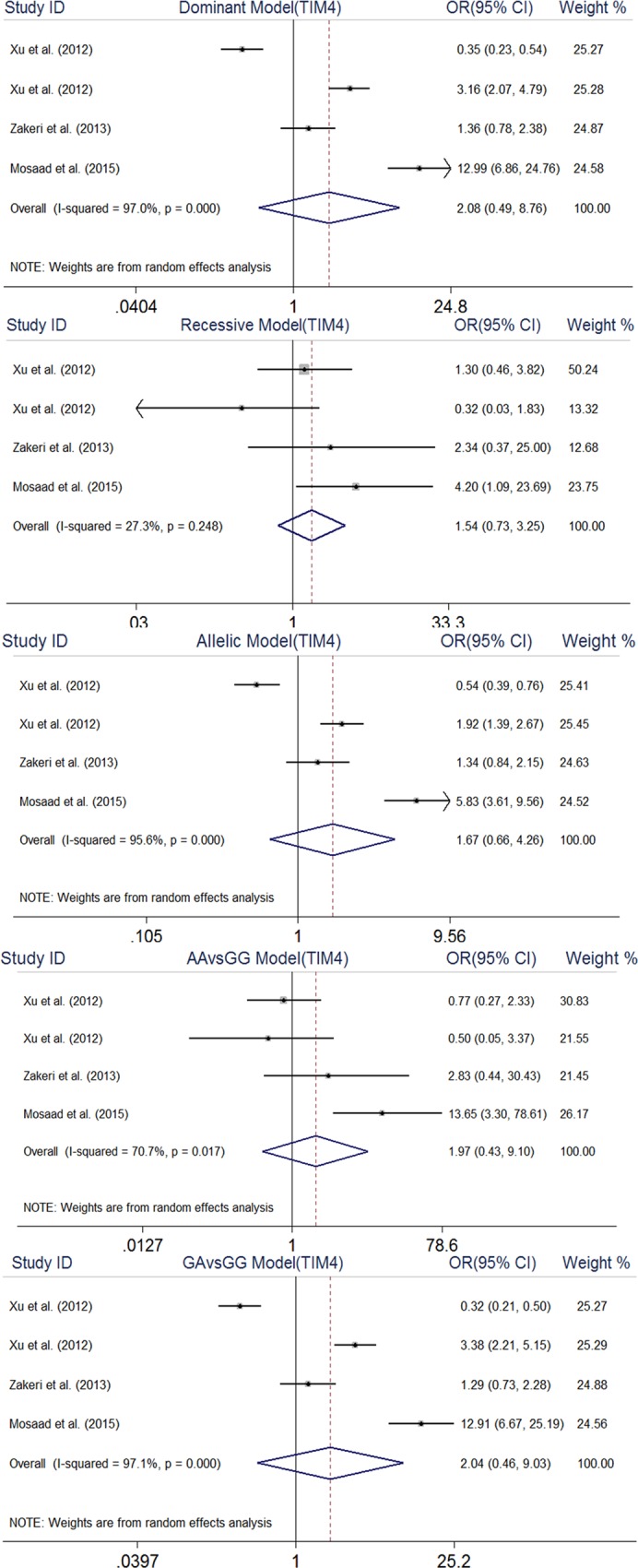
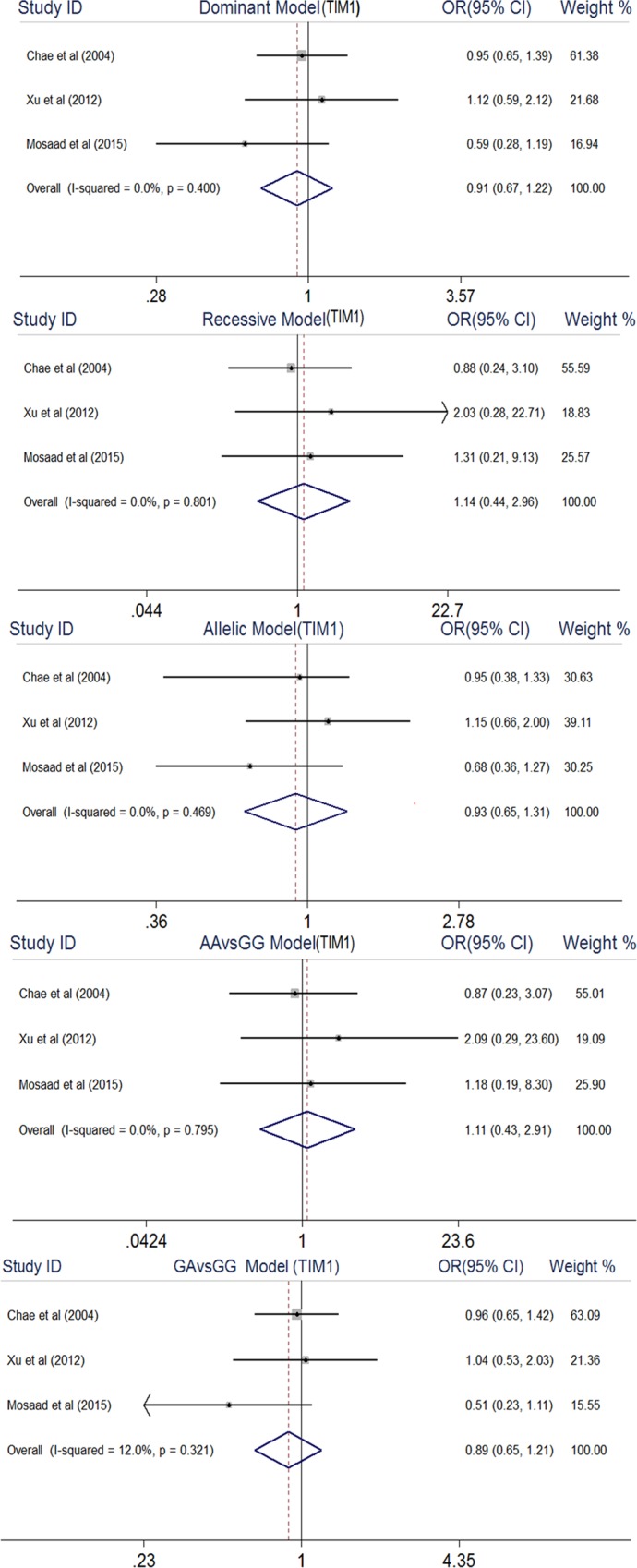
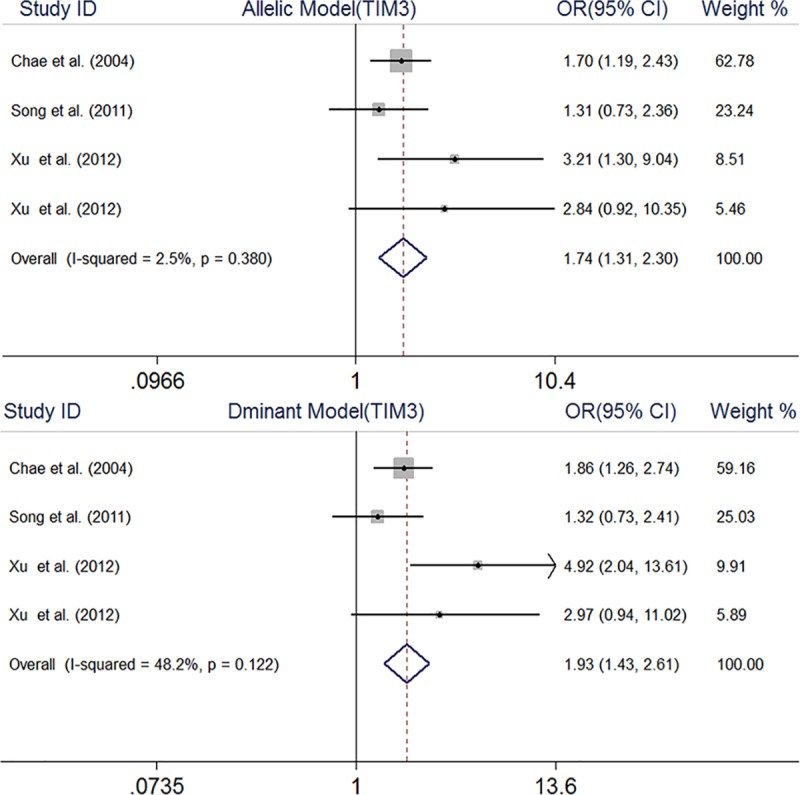
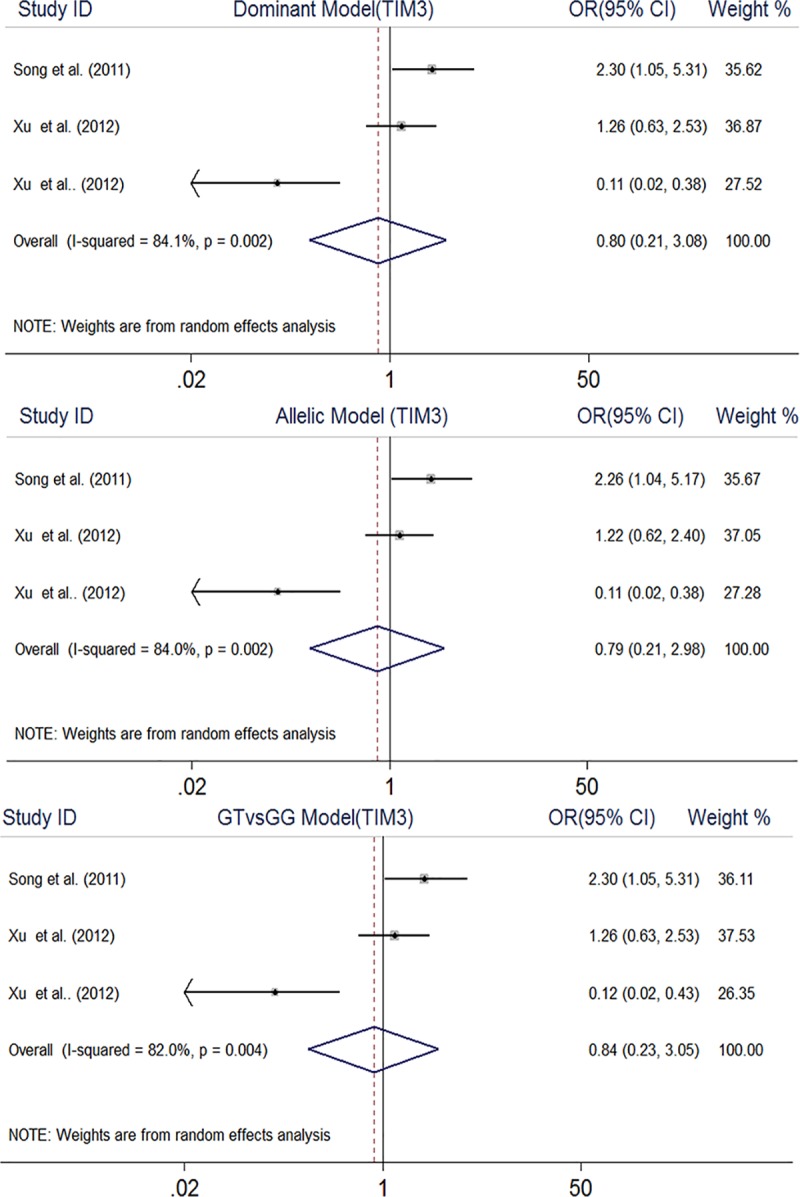
A total of eight case-control studies were included in the present meta-analysis. The results demonstrated significant association of RA with TIM-3 rs1036199 polymorphism under dominant (OR, 1.93, 95% CI, 1.43-2.61) and allelic models (OR, 1.74, 95% CI, 1.31-2.30). None of the other examined polymorphisms indicated significant association with RA.
The present meta-analysis revealed that the TIM-3 rs1036199 polymorphism might confer susceptibility to RA. Further studies are required to reassert our findings.
TIM 家族蛋白在不同的免疫细胞上表达,如树突状细胞、巨噬细胞、1 型和 2 型辅助性 T 细胞(Th)。因此,它们能够有助于各种细胞内信号和免疫反应,重要的是调节 Th1 和 Th17 细胞分化,这在对抗炎症和自身免疫性疾病方面发挥了显著作用。TIM 家族基因多态性与类风湿关节炎(RA)的关联已被频繁研究。然而,研究结果并不完全一致。因此,我们进行了本次荟萃分析,以检查 RA 与以下 TIM 家族基因多态性之间的关联:rs41297579、rs1036199、rs10515746 和 rs7700944。
通过 Scopus、PubMed 和 Web of Science 数据库进行了系统搜索,检索时间截至 2018 年 12 月。在不同的可能遗传模型下,计算了合并的比值比(OR)及其相应的 95%置信区间(CI)。
本荟萃分析共纳入了八项病例对照研究。结果表明,TIM-3 rs1036199 多态性在显性(OR,1.93,95%CI,1.43-2.61)和等位基因模型(OR,1.74,95%CI,1.31-2.30)下与 RA 显著相关。其他检查的多态性均与 RA 无显著相关性。
本荟萃分析显示,TIM-3 rs1036199 多态性可能与 RA 易感性相关。需要进一步的研究来证实我们的发现。