Bu Ning, Zhao Enfa, Gao Yuan, Zhao Sha, Bo Wang, Kong Zhidong, Wang Qiang, Gao Wei
Department of Anesthesiology.
Department of Structural Heart Disease, The First Affiliated Hospital of Xi'an Jiaotong University, Xi'an, Shaanxi, China.
Medicine (Baltimore). 2019 Feb;98(6):e14392. doi: 10.1097/MD.0000000000014392.
A majority of reports in the past decade have demonstrated that perioperative hypothermia increases susceptibility to surgical site infection (SSI). However, in recent years, an increasing number of studies did not find an association between hypothermia and the risk of SSI. These contradictory results have given rise to a conflicting issue on whether perioperative hypothermia is associated with SSI risk in surgical patients.
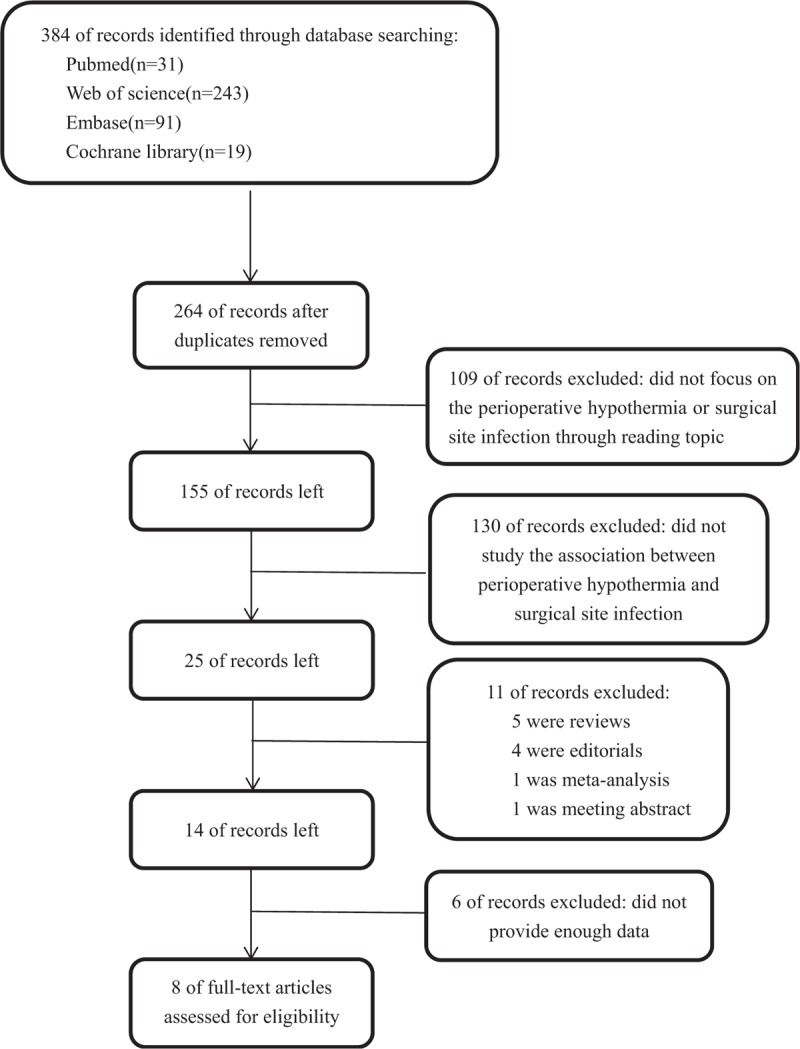
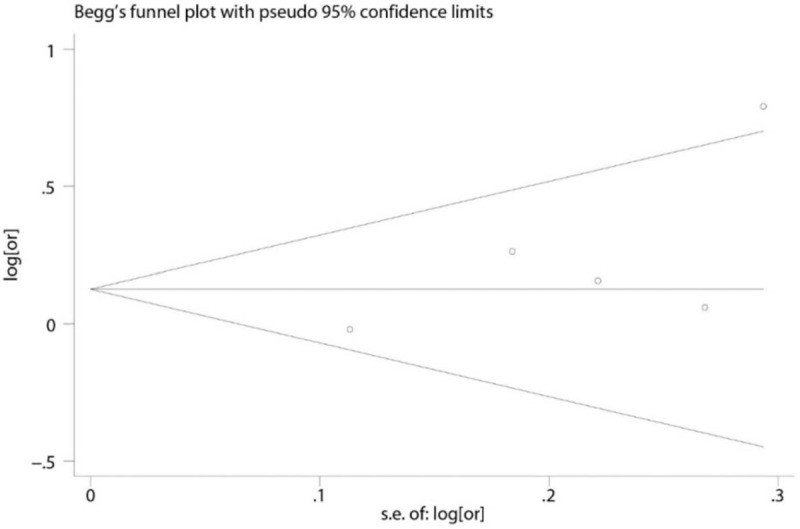
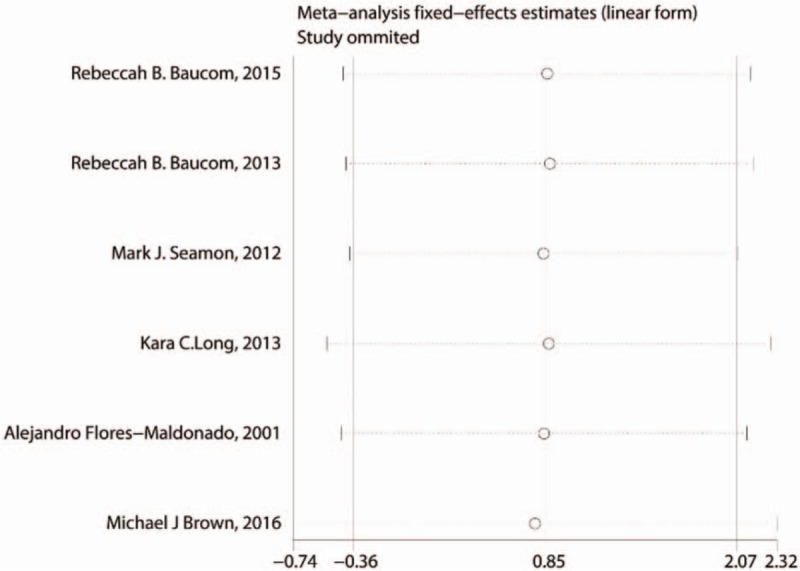
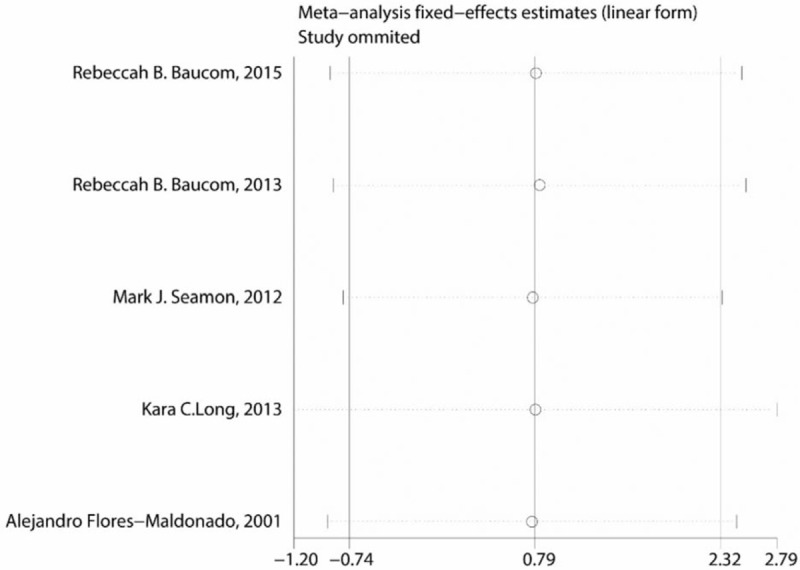
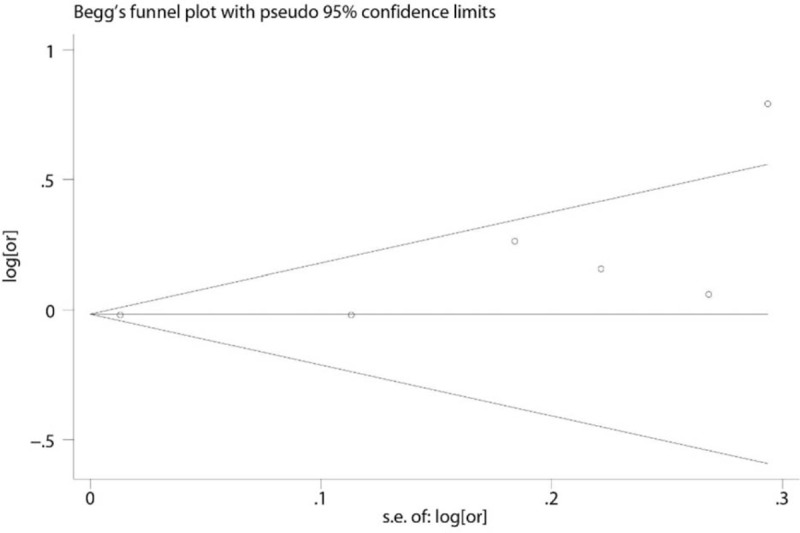
We examined the association between perioperative hypothermia and SSI incidence and then integrated available evidence by searching the databases, such as PubMed, Web of Science, Embase, and Cochrane library for potential papers from inception to April 2018. We included studies that reported original data or odds ratio (OR) with 95% confidence intervals (CIs) of the associations. Using fixed-effects models combined the OR with 95% CIs, randomized controlled trials and observational studies were analyzed, respectively, and cohort studies were further analyzed. Sensitivity analyses were performed by omitting each study iteratively, and publication bias was detected using Begg's tests.
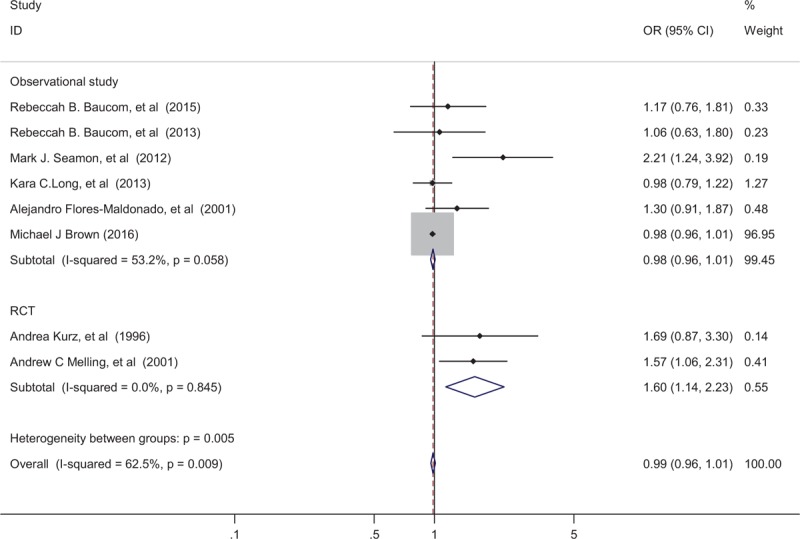
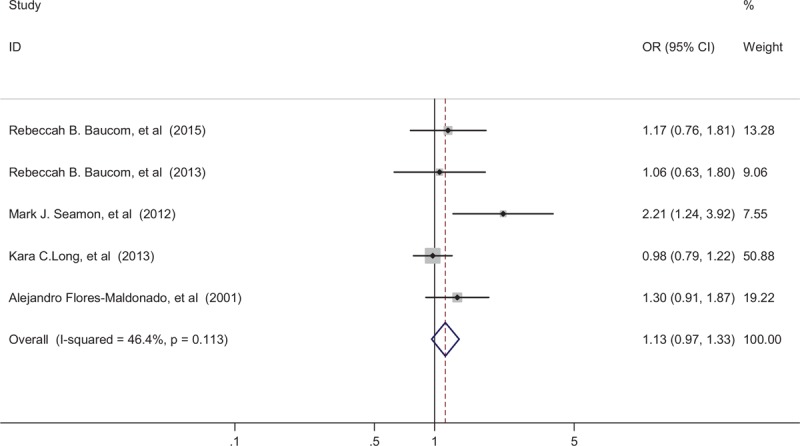
We screened 384 studies, and identified 8 eligible studies, including 2 randomized controlled trials and 6 observational studies (1 case-control study and 5 cohort studies). The pooled OR results in the randomized controlled studies showed that perioperative hypothermia could increase the risk of SSI without heterogeneity (OR, 1.60; 95% CI, 1.14-2.23; I = 0.0%, P = .845). The fixed-effect meta-analysis indicated no association between perioperative hypothermia and SSI risk in observational studies (OR, 0.98; 95% CI, 0.96-1.01; I = 53.2%, P = .058). Furthermore, cohort studies were performed to pool OR by using the fixed-effect model, and the incorporated results also suggested a similar relationship (OR, 1.13; 95% CI, 0.97-1.33; I = 46.4%, P = .113).
The meta-analysis suggests that perioperative hypothermia is not associated with SSI in surgical patients. However, the 8 eligible studies were mostly cohort studies. Thus, further randomized controlled trials are required to confirm this finding.
过去十年中的大多数报告表明,围手术期体温过低会增加手术部位感染(SSI)的易感性。然而,近年来,越来越多的研究未发现体温过低与SSI风险之间存在关联。这些相互矛盾的结果引发了一个有争议的问题,即围手术期体温过低是否与手术患者的SSI风险相关。
我们研究了围手术期体温过低与SSI发生率之间的关联,然后通过检索数据库(如PubMed、Web of Science、Embase和Cochrane图书馆),查找从开始到2018年4月的潜在论文,整合现有证据。我们纳入了报告原始数据或关联的比值比(OR)及95%置信区间(CI)的研究。分别使用固定效应模型将OR与95%CI相结合,对随机对照试验和观察性研究进行分析,并对队列研究进行进一步分析。通过逐一排除每项研究进行敏感性分析,并使用Begg检验检测发表偏倚。
我们筛选了384项研究,确定了8项符合条件的研究,包括2项随机对照试验和6项观察性研究(1项病例对照研究和5项队列研究)。随机对照研究中的汇总OR结果表明,围手术期体温过低会增加SSI风险,且无异质性(OR,1.60;95%CI,1.14 - 2.23;I = 0.0%,P = .845)。固定效应荟萃分析表明,在观察性研究中围手术期体温过低与SSI风险之间无关联(OR,0.98;95%CI,0.96 - 1.01;I = 53.2%,P = .058)。此外,使用固定效应模型对队列研究进行OR汇总,纳入结果也显示出类似的关系(OR,1.13;95%CI,0.97 - 1.33;I = 46.4%,P = .113)。
荟萃分析表明,围手术期体温过低与手术患者的SSI无关。然而,这8项符合条件的研究大多为队列研究。因此,需要进一步的随机对照试验来证实这一发现。