Infectious Diseases Department, Mater Misericordiae University Hospital, Dublin, Ireland.
UCD School of Medicine, University College Dublin, Dublin, Ireland.
BMC Infect Dis. 2019 Feb 7;19(1):128. doi: 10.1186/s12879-019-3748-2.
Hepatitis C virus (HCV) is one of the main causes of chronic liver disease worldwide. Prevalence of HCV in homeless populations ranges from 3.9 to 36.2%. The HepCheck study sought to investigate and establish the characterisation of HCV burden among individuals who attended an intensified screening programme for HCV in homeless services in Dublin, Ireland.
The HepCheck study was conducted as part of a larger European wide initiative called HepCare Europe. The study consisted of three phases; 1) all subjects completed a short survey and were offered a rapid oral HCV test; 2) a convenience sample of HCV positive participants from phase 1 were selected to complete a survey on health and social risk factors and 3) subjects were tracked along the referral pathway to identify whether they were referred to a specialist clinic, attended the specialist clinic, were assessed for cirrhosis by transient elastography (Fibroscan) and were treated for HCV.
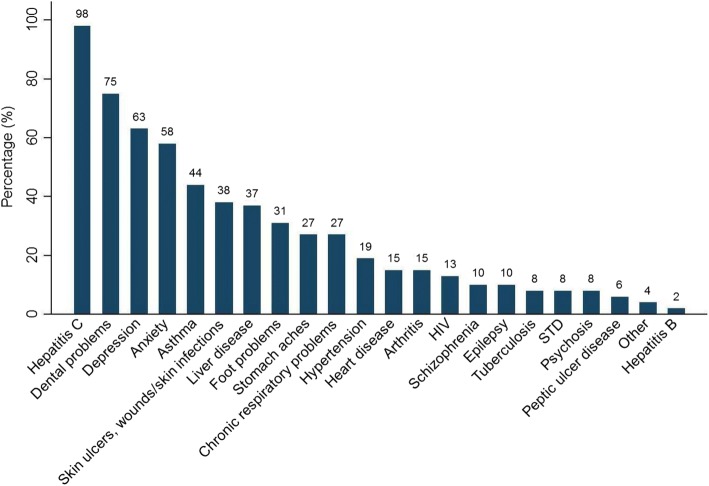
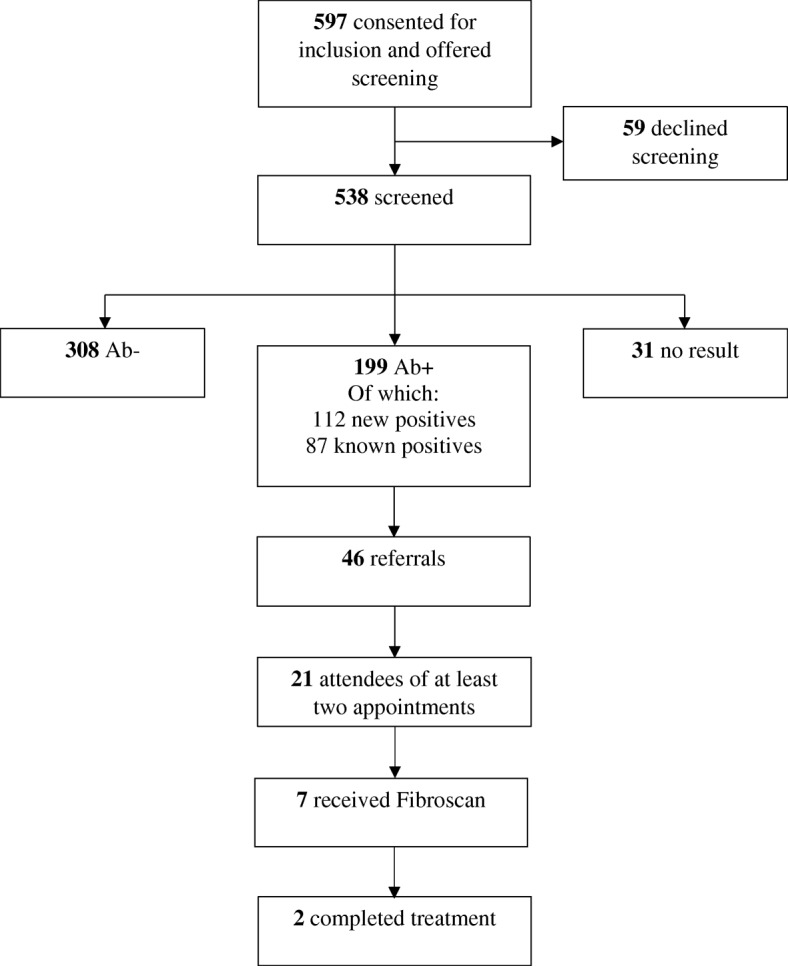
Five hundred ninety-seven individuals were offered HCV screening, 73% were male and 63% reported having had a previous HCV screening. We screened 538 (90%) of those offered screening, with 37% testing positive. Among those who tested positive, 112 (56%) were 'new positives' and 44% were 'known positives'. Undiagnosed HCV was prevalent in 19% of the study sample. Active past 30-day drug use was common, along with attendance for drug treatment. Unstable accommodation was the most common barrier to attending specialist appointments and accessing treatment. Depression and anxiety, dental problems and respiratory conditions were common reported health problems. Forty-six subjects were referred to specialised services and two subjects completed HCV treatment.
This study demonstrates that the current hospital-based model of care is inadequate in addressing the specific needs of a homeless population and emphasises the need for a community-based treatment approach. Findings are intended to inform HepCare Europe in their development of a community-based model of care in order to engage with homeless individuals with multiple co-morbidities including substance abuse, who are affected by or infected with HCV.
丙型肝炎病毒(HCV)是全球慢性肝病的主要病因之一。无家可归人群中 HCV 的患病率为 3.9%至 36.2%。HepCheck 研究旨在调查和确定爱尔兰都柏林无家可归者服务机构加强 HCV 筛查计划中接受 HCV 筛查的个体的 HCV 负担特征。
HepCheck 研究是欧洲范围内名为 HepCare Europe 的更大倡议的一部分。该研究包括三个阶段;1)所有受试者完成一份简短的调查问卷,并接受快速口服 HCV 检测;2)从第 1 阶段中选择方便样本的 HCV 阳性参与者完成关于健康和社会风险因素的调查;3)跟踪受试者的转诊途径,以确定他们是否被转诊到专科诊所、是否就诊于专科诊所、是否通过瞬时弹性成像(Fibroscan)评估肝硬化以及是否接受 HCV 治疗。
597 人接受了 HCV 筛查,73%为男性,63%报告曾接受过 HCV 筛查。我们对提供筛查的 538 人(90%)进行了筛查,其中 37%呈阳性。在阳性者中,112 人(56%)为“新阳性”,44%为“已知阳性”。研究样本中未确诊的 HCV 患病率为 19%。过去 30 天内药物滥用较为常见,同时也参加了药物治疗。不稳定的住宿是参加专科预约和获得治疗的最常见障碍。抑郁和焦虑、牙齿问题和呼吸道疾病是常见的报告健康问题。46 名受试者被转介至专科服务机构,2 名受试者完成 HCV 治疗。
本研究表明,当前基于医院的护理模式不足以满足无家可归人群的特殊需求,并强调需要采取基于社区的治疗方法。研究结果旨在为 HepCare Europe 提供信息,以制定基于社区的护理模式,从而接触到受 HCV 感染或影响的、患有多种合并症(包括药物滥用)的无家可归者。