Institute of Cardiovascular Sciences, College of Medical and Dental Sciences, University of Birmingham, Birmingham, UK.
Department of Pharmacology, Faculty of Pharmacy, Mahidol University, Bangkok, Thailand.
Haematologica. 2019 Aug;104(8):1648-1660. doi: 10.3324/haematol.2018.208363. Epub 2019 Feb 7.
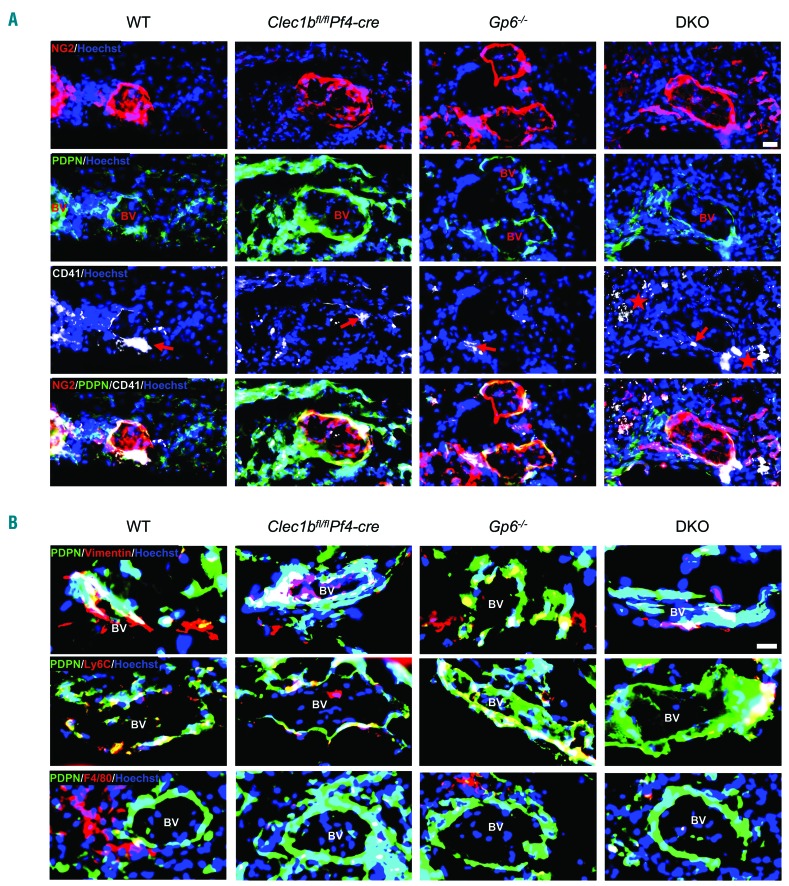
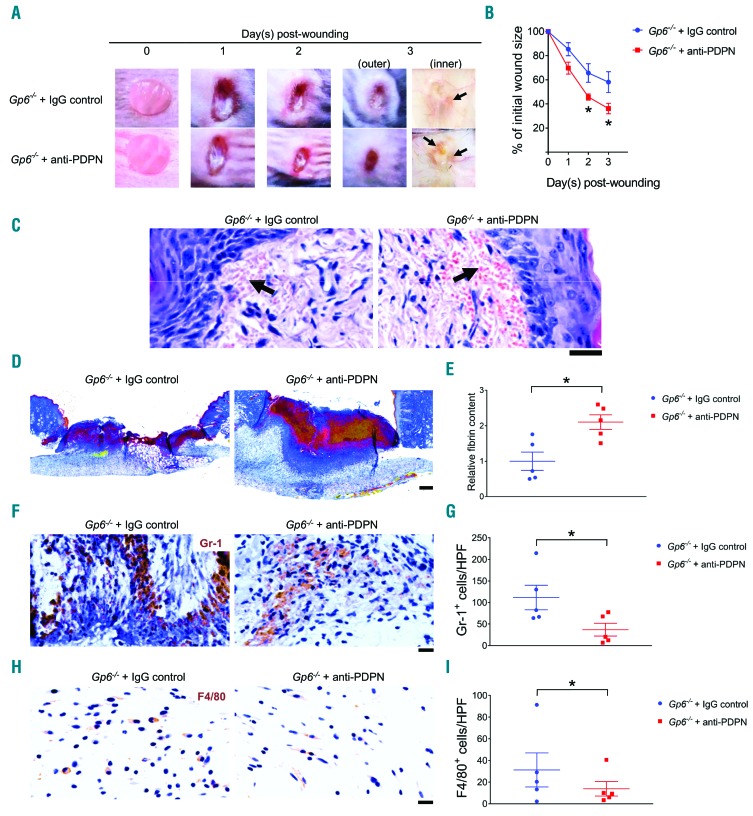
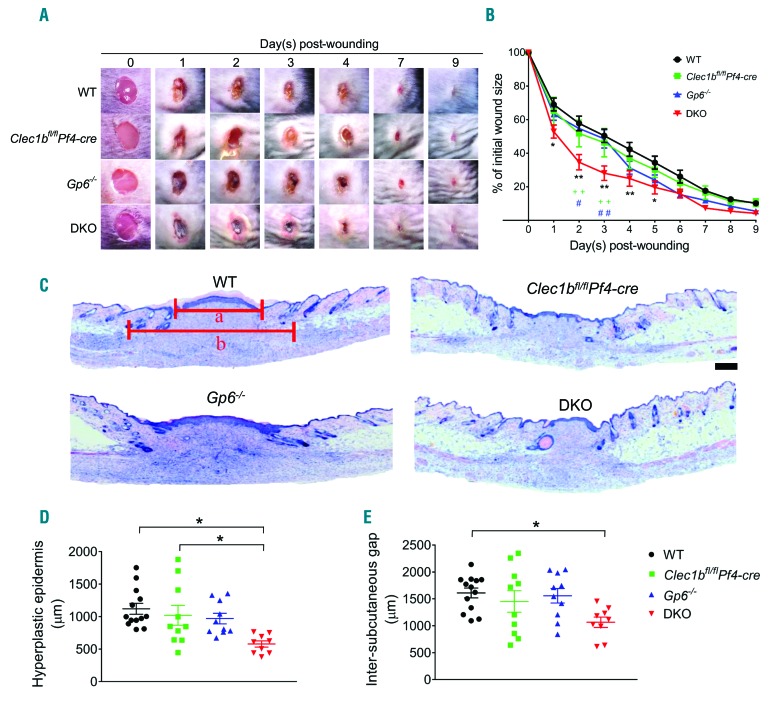
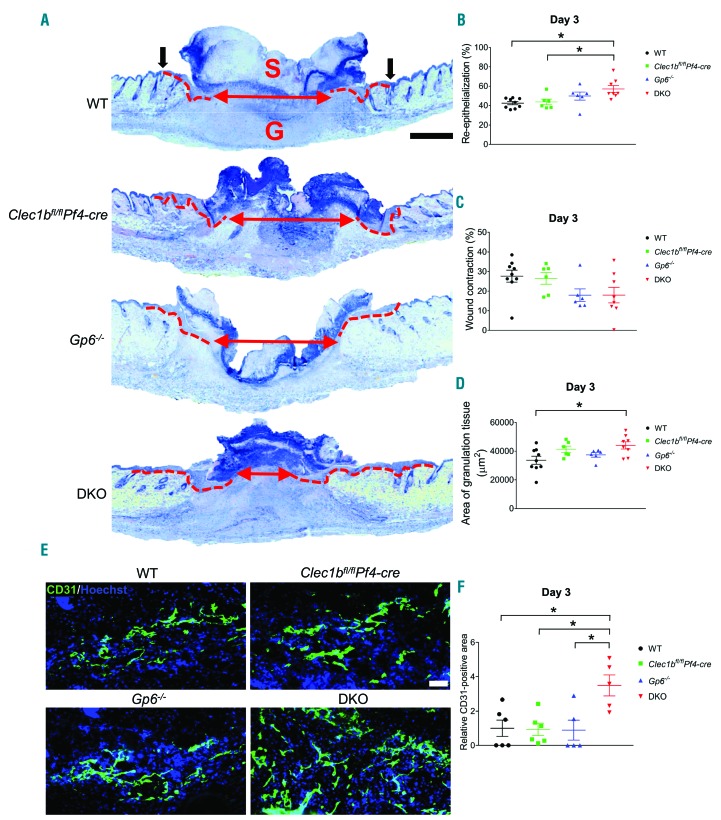
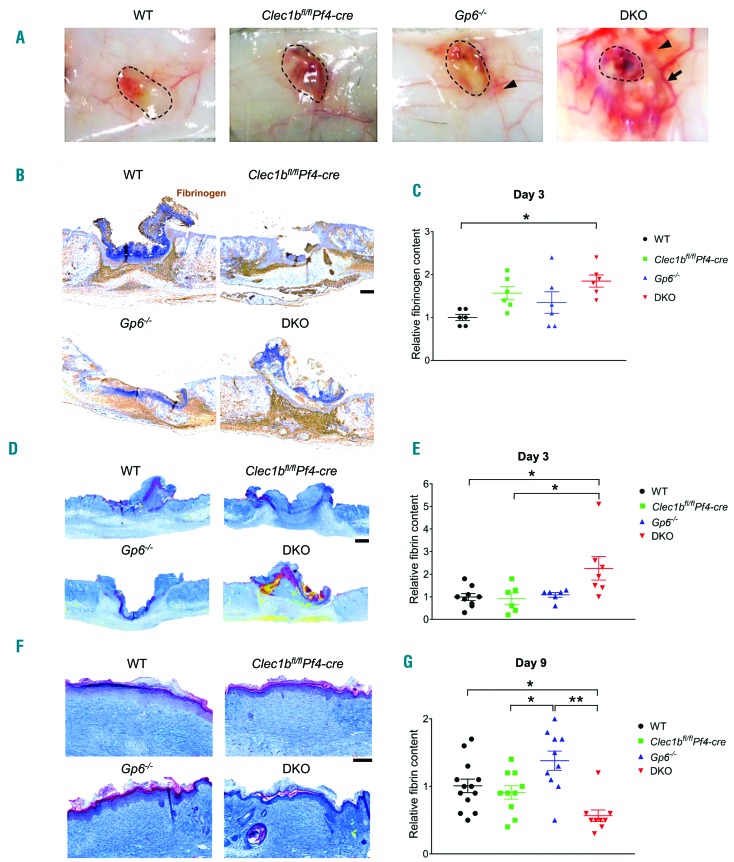
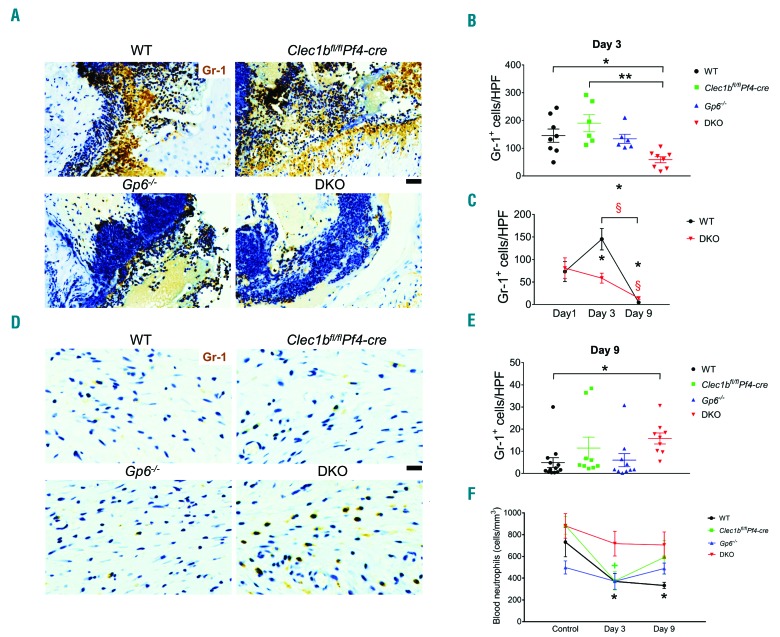
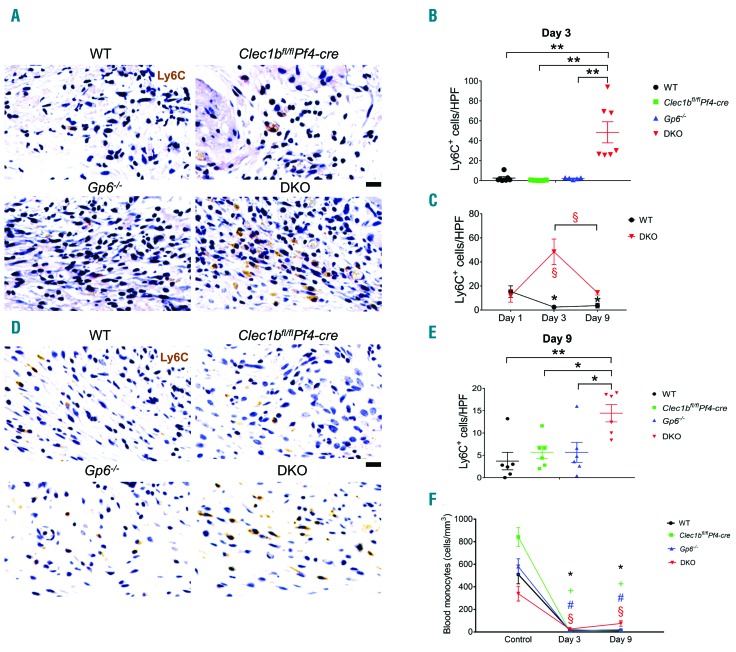
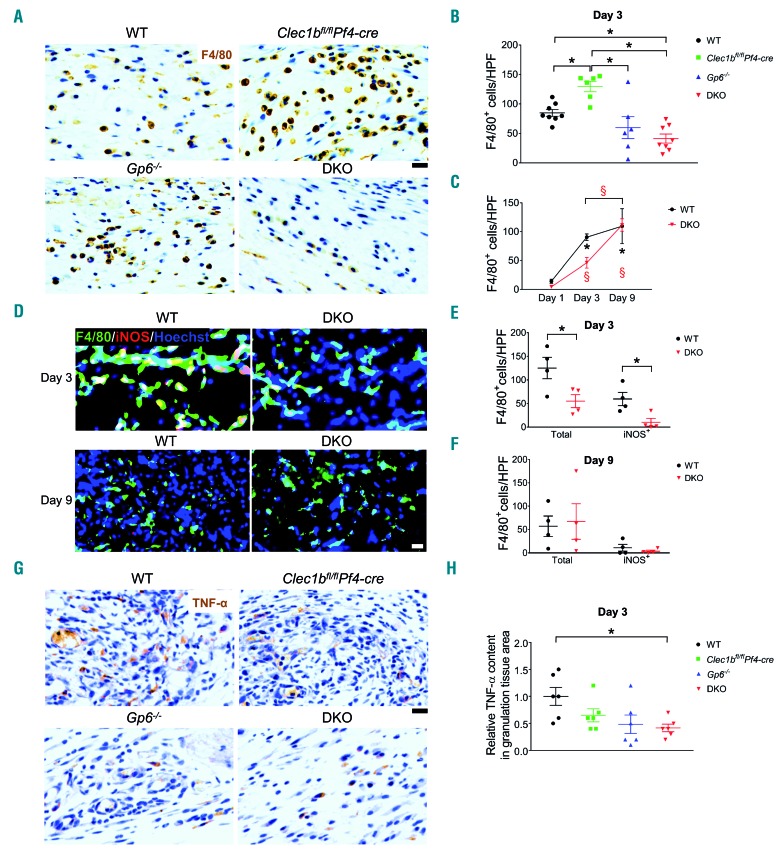
Platelets promote wound healing by forming a vascular plug and by secreting growth factors and cytokines. Glycoprotein (GP)VI and C-type lectin-like receptor (CLEC)-2 signal through a (hem)-immunoreceptor tyrosine-based activation motif, which induces platelet activation. GPVI and CLEC-2 support vascular integrity during inflammation in the skin through regulation of leukocyte migration and function, and by sealing sites of vascular damage. In this study, we investigated the role of impaired vascular integrity due to GPVI and/or CLEC-2 deficiency in wound repair using a full-thickness excisional skin wound model in mice. Transgenic mice deficient in both GPVI and CLEC-2 exhibited accelerated skin wound healing, despite a marked impairment in vascular integrity. The local and temporal bleeding in the skin led to greater plasma protein entry, including fibrinogen and clotting factors, was associated with increased fibrin generation, reduction in wound neutrophils and M1 macrophages, decreased level of tumor necrosis factor (TNF)-α, and enhanced angiogenesis at day 3 after injury. Accelerated wound healing was not due to developmental defects in CLEC-2 and GPVI double-deficient mice as similar results were observed in GPVI-deficient mice treated with a podoplanin-blocking antibody. The rate of wound healing was not altered in mice deficient in either GPVI or CLEC-2. Our results show that, contrary to defects in coagulation, bleeding following a loss of vascular integrity caused by platelet CLEC-2 and GPVI deficiency facilitates wound repair by increasing fibrin(ogen) deposition, reducing inflammation, and promoting angiogenesis.
血小板通过形成血管塞并分泌生长因子和细胞因子来促进伤口愈合。糖蛋白 (GP)VI 和 C 型凝集素样受体 (CLEC)-2 通过 (hem)-免疫受体酪氨酸激活基序信号传导,诱导血小板活化。GPVI 和 CLEC-2 通过调节白细胞迁移和功能以及封闭血管损伤部位,在皮肤炎症期间支持血管完整性。在这项研究中,我们使用小鼠全层切除皮肤伤口模型研究了由于 GPVI 和/或 CLEC-2 缺陷导致血管完整性受损在伤口修复中的作用。缺乏 GPVI 和 CLEC-2 的转基因小鼠表现出加速的皮肤伤口愈合,尽管血管完整性明显受损。皮肤的局部和暂时出血导致更多的血浆蛋白进入,包括纤维蛋白原和凝血因子,与纤维生成增加、伤口中性粒细胞和 M1 巨噬细胞减少、肿瘤坏死因子 (TNF)-α 水平降低以及损伤后第 3 天血管生成增强有关。加速的伤口愈合不是由于 CLEC-2 和 GPVI 双缺陷小鼠的发育缺陷引起的,因为在用 podoplanin 阻断抗体治疗的 GPVI 缺陷小鼠中观察到了类似的结果。在缺乏 GPVI 或 CLEC-2 的小鼠中,伤口愈合的速度没有改变。我们的研究结果表明,与凝血缺陷相反,由于血小板 CLEC-2 和 GPVI 缺陷导致的血管完整性丧失引起的出血通过增加纤维蛋白原 (ogen) 沉积、减少炎症和促进血管生成,促进伤口修复。