Bruni Antonella, Martino Iolanda, Caligiuri Maria Eugenia, Vaccaro Maria Grazia, Trimboli Michele, Segura Garcia Cristina, De Fazio Pasquale, Gambardella Antonio, Labate Angelo
Neurology Unit, Department of Medical and Surgical Sciences, University Magna Graecia, Catanzaro, Italy.
Psychiatric Unit, Department of Health Sciences, University Magna Graecia, Catanzaro, Italy.
Behav Neurol. 2019 Jan 14;2019:4139404. doi: 10.1155/2019/4139404. eCollection 2019.
The findings of previous studies focused on personality disorders in epileptic patients are difficult to interpret due to nonhomogeneous samples and noncomparable methods. Here, we aimed at studying the personality profile in patients with mild temporal lobe epilepsy (mTLE) with psychiatric comorbidity.
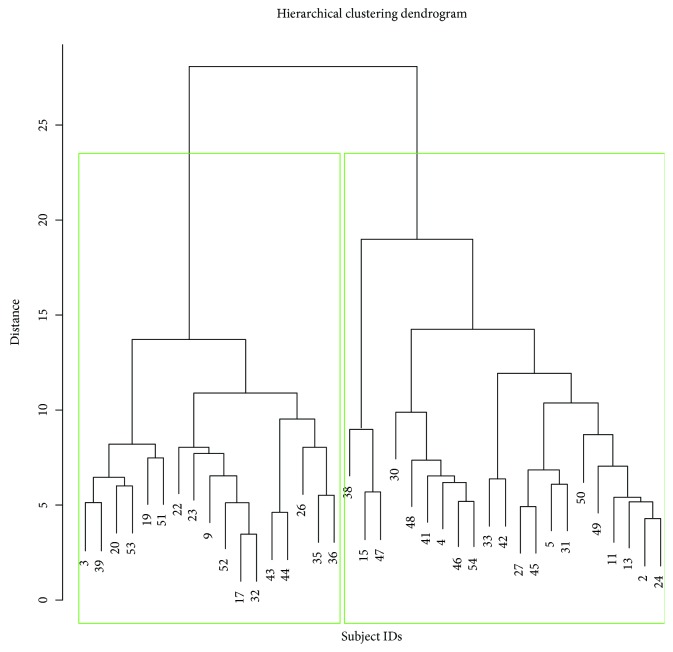
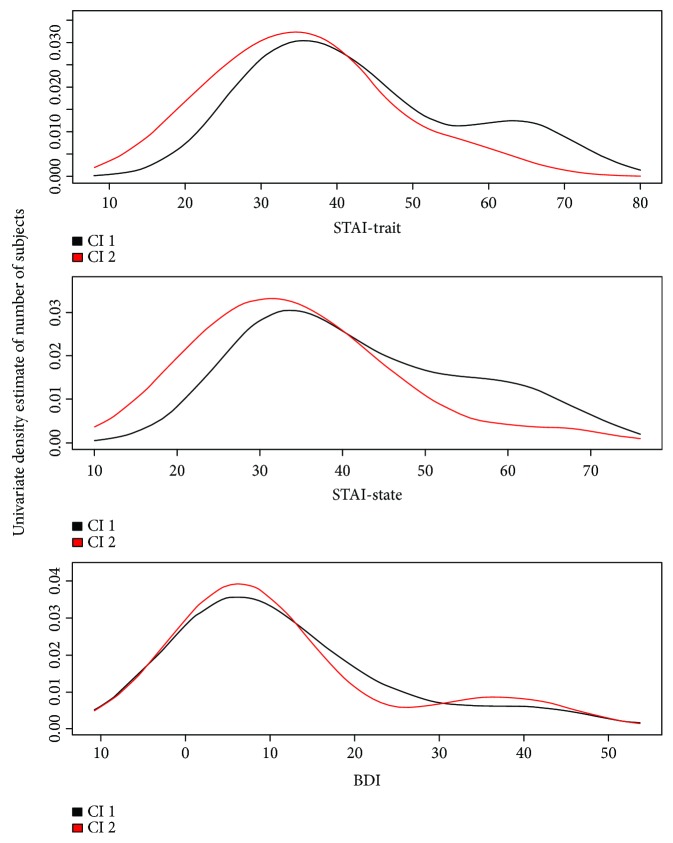
Thirty-five patients with mTLE (22 males, mean age 40.7 ± 12.1) underwent awake and sleep EEG, 3T brain MRI, and an extensive standardized diagnostic neuropsychiatric battery: Temperament and Character Inventory-Revised (TCI-R), Beck Depression Inventory-2, and State-Trait Anxiety Inventory. Drug history was collected in detail. Hierarchical Cluster Analysis was performed on TCI-R data, while all other clinical and psychological variables were compared across the resulting clusters.
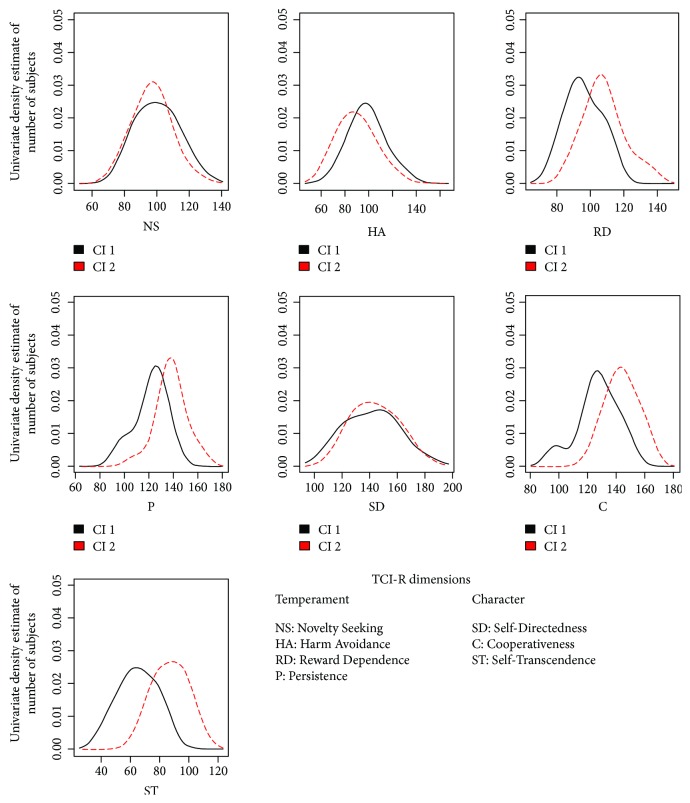
Scores of Harm Avoidance (HA), Reward Dependence (RD), Persistence (P), Cooperativeness (C), and Self-Transcendence (ST) allowed the identification of two clusters, describing different personality subtypes. Cluster 1 was characterized by an early onset, more severe anxiety traits, and combined drug therapy (antiepileptic drug and Benzodiazepine/Selective Serotonin Reuptake Inhibitors) compared to Cluster 2.
Our findings suggest that different personality traits may play a role in determining the clinical outcome in patients with mTLE. Specifically, lower scores of HA, RD, P, C, and ST were associated with worse clinical outcome. Thus, personality assessment could serve as an early indicator of greater disease severity, improving the management of mTLE.
由于样本不具有同质性且方法不可比,以往关于癫痫患者人格障碍的研究结果难以解释。在此,我们旨在研究合并精神疾病的轻度颞叶癫痫(mTLE)患者的人格特征。
35例mTLE患者(22例男性,平均年龄40.7±12.1岁)接受了清醒和睡眠脑电图、3T脑磁共振成像检查,以及一套广泛的标准化诊断神经精神测试:修订版气质与性格量表(TCI-R)、贝克抑郁量表第二版和状态-特质焦虑量表。详细收集了用药史。对TCI-R数据进行分层聚类分析,同时对所有其他临床和心理变量在所得聚类之间进行比较。
回避伤害(HA)、奖赏依赖(RD)、坚持性(P)、合作性(C)和自我超越(ST)得分可识别出两个聚类,描述了不同人格亚型。与聚类2相比,聚类1的特点是起病早、焦虑特质更严重且采用联合药物治疗(抗癫痫药物和苯二氮䓬类/选择性5-羟色胺再摄取抑制剂)。
我们的研究结果表明,不同人格特质可能在决定mTLE患者的临床结局中起作用。具体而言,HA、RD、P、C和ST得分较低与较差的临床结局相关。因此,人格评估可作为疾病严重程度更高的早期指标,改善mTLE的管理。