Bremer Vincent, Funk Burkhardt, Riper Heleen
Institute of Information Systems, Leuphana University, Lueneburg, Germany.
Department of Clinical, Neuro- & Developmental Psychology, Vrije University, Amsterdam, Netherlands.
Depress Res Treat. 2019 Jan 13;2019:3481624. doi: 10.1155/2019/3481624. eCollection 2019.
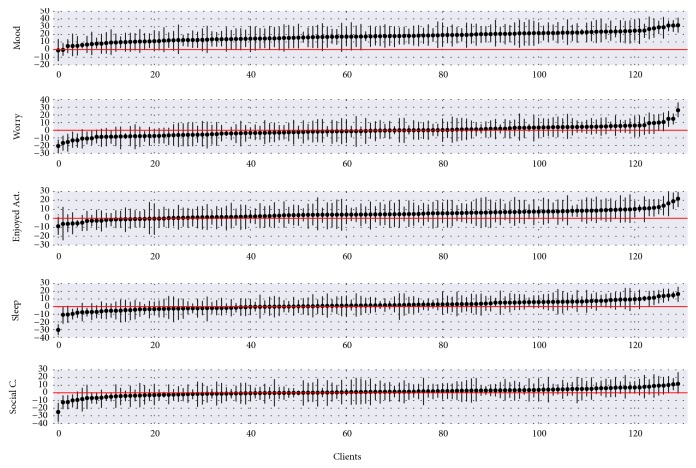
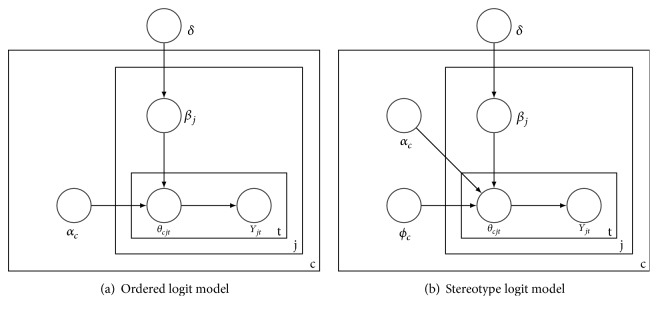
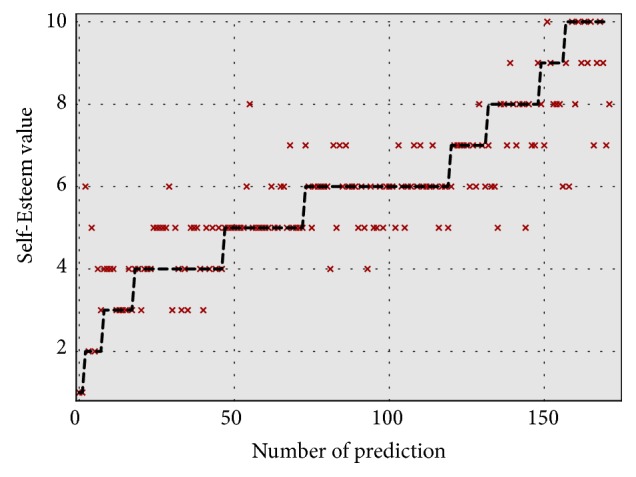
Self-esteem is a crucial factor for an individual's well-being and mental health. Low self-esteem is associated with depression and anxiety. Data about self-esteem is oftentimes collected in Internet-based interventions through Ecological Momentary Assessments and is usually provided on an ordinal scale. We applied models for ordinal outcomes in order to predict the self-esteem of 130 patients based on diary data of an online depression treatment and thereby illustrated a path of how to analyze EMA data in Internet-based interventions. Specifically, we analyzed the relationship between mood, worries, sleep, enjoyed activities, social contact, and the self-esteem of patients. We explored several ordinal models with varying degrees of heterogeneity and estimated them using Bayesian statistics. Thereby, we demonstrated how accounting for patient-heterogeneity influences the prediction performance of self-esteem. Our results show that models that allow for more heterogeneity performed better regarding various performance measures. We also found that higher mood levels and enjoyed activities are associated with higher self-esteem. Sleep, social contact, and worries were significant predictors for only some individuals. Patient-individual parameters enable us to better understand the relationships between the variables on a patient-individual level. The analysis of relationships between self-esteem and other psychological factors on an individual level can therefore lead to valuable information for therapists and practitioners.
自尊是个人幸福和心理健康的关键因素。低自尊与抑郁和焦虑相关。关于自尊的数据通常通过生态瞬时评估在基于互联网的干预中收集,并且通常以有序尺度提供。我们应用了有序结果模型,以便根据在线抑郁症治疗的日记数据预测130名患者的自尊,从而说明了在基于互联网的干预中分析生态瞬时评估(EMA)数据的方法。具体而言,我们分析了情绪、担忧、睡眠、喜爱的活动、社交接触与患者自尊之间的关系。我们探索了几种具有不同程度异质性的有序模型,并使用贝叶斯统计对其进行估计。由此,我们展示了考虑患者异质性如何影响自尊的预测性能。我们的结果表明,允许更多异质性的模型在各种性能指标方面表现更好。我们还发现,较高的情绪水平和喜爱的活动与较高的自尊相关。睡眠、社交接触和担忧仅对某些个体是显著的预测因素。患者个体参数使我们能够在患者个体层面更好地理解变量之间的关系。因此,在个体层面分析自尊与其他心理因素之间的关系可以为治疗师和从业者提供有价值的信息。