Department of Internal Medicine Ward 5, Guangdong Provincial Corps Hospital of Chinese People's Armed Police Forces, Guangzhou Medical University, Guangzhou, Guangdong, 510507, People's Republic of China.
Department of Pulmonary and Critical Care Medicine, The People Hospital of Yuxi City, Yuxi, China.
Inflammation. 2019 Apr;42(2):471-484. doi: 10.1007/s10753-018-00956-1.
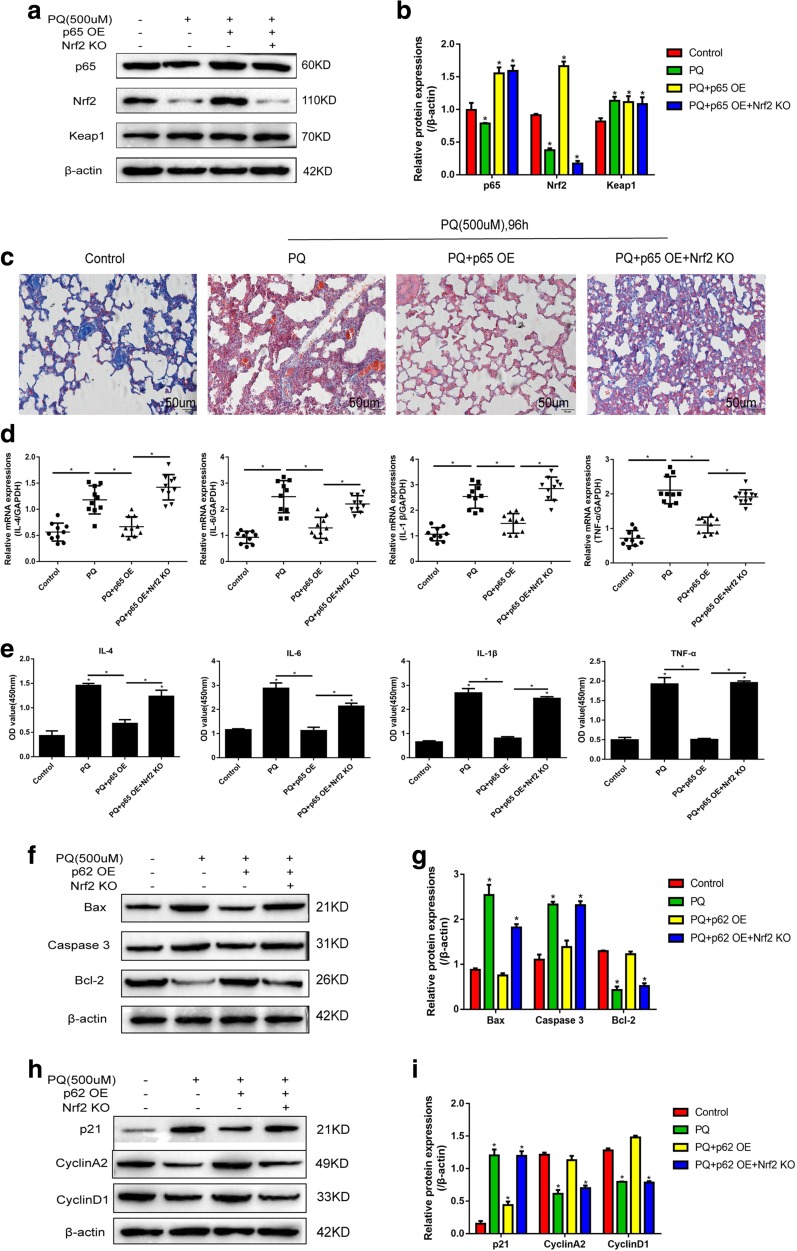
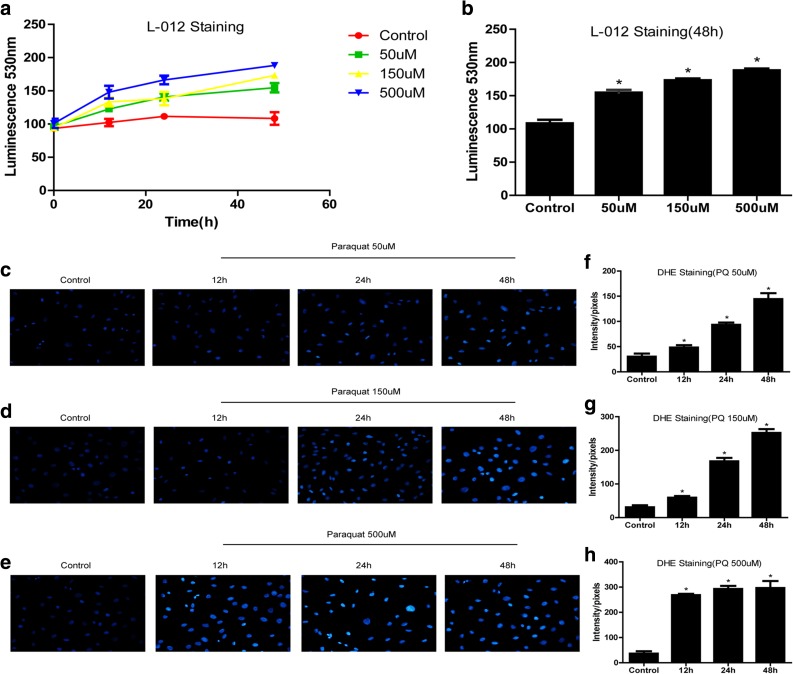
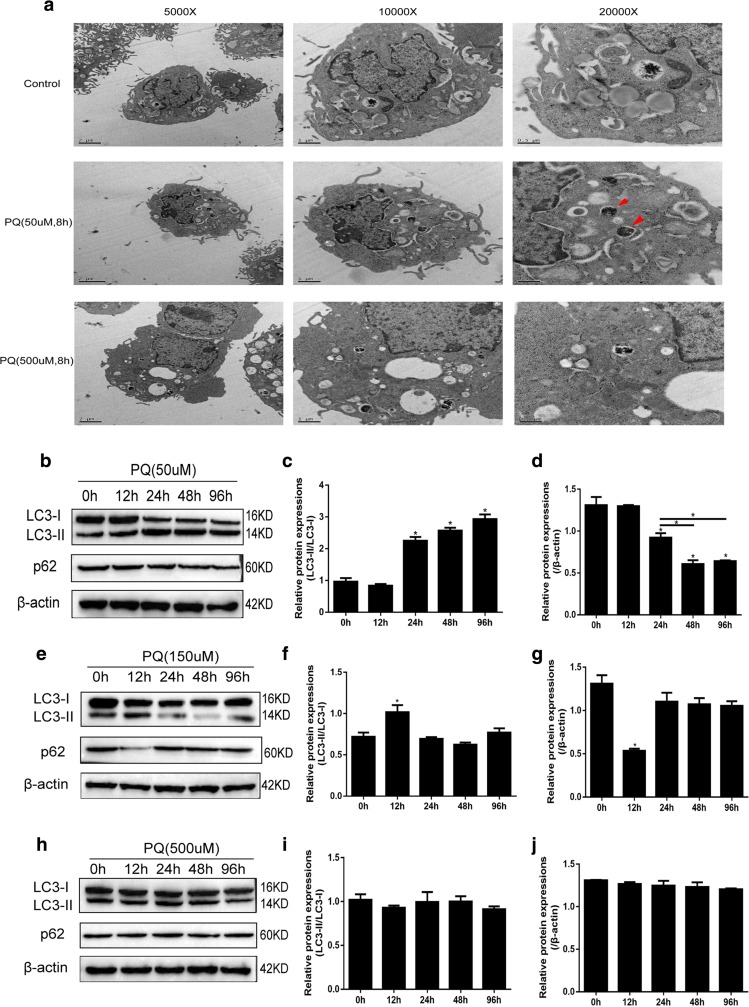
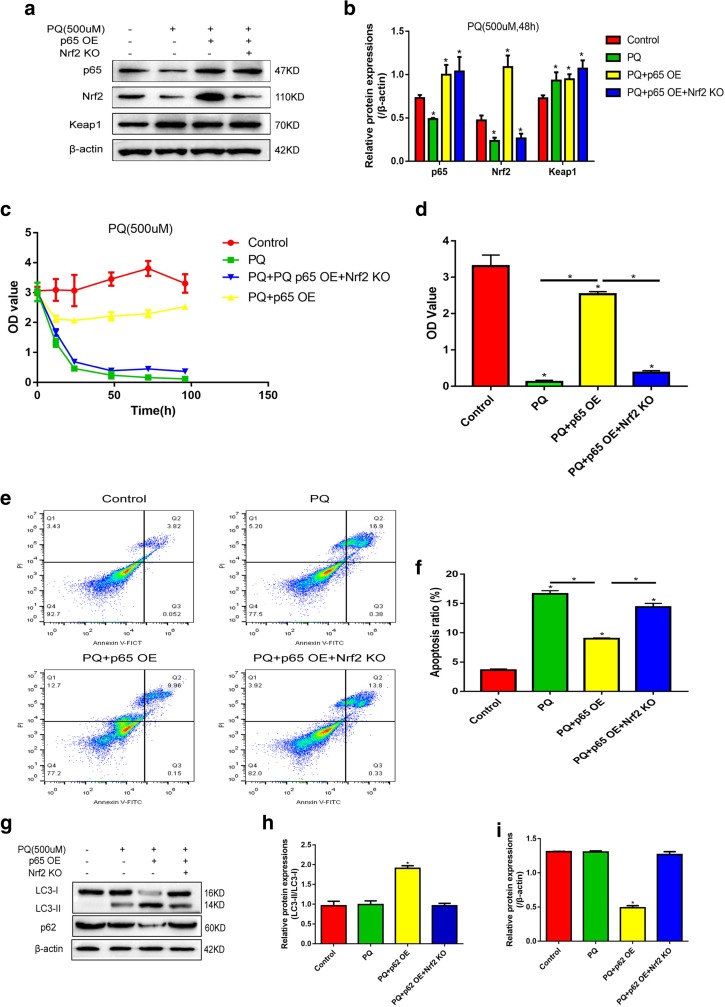
Paraquat (PQ) intoxication seriously endangers human beings' health, however, the underlying mechanisms are still unclear. Here we found that PQ inhibits human bronchial 16HBE cell proliferation and promotes cell apoptosis, necrosis as well as ROS generation in a dose dependent manner. Of note, low-dose PQ (50 μM) induces cell autophagy, increases Nrf2 as well as p65 levels and has little impacts on Keap1, while high-dose PQ (500 μM) inhibits autophagy, upregulates Keap1 as well as downregulates p65 and Nrf2. In addition, we verified that p65 overexpression increases Nrf2 and its downstream targets in 16HBE cells, which are reversed by synergistically knocking down Nrf2. Our further results showed that high-dose PQ's effects on cell proliferation, apoptosis, ROS levels and autophagy are reversed by p65 overexpression. Besides, the protective effects of overexpressed p65 on high-dose PQ (500 μM) treated 16HBE cells are abrogated by synergistically knocking down Nrf2. In vivo experiments also showed that high-dose PQ promotes inflammatory cytokines secretion, lung fibrosis and cell apoptosis, inhibits cell proliferation in mice models by regulating Keap1/p65/Nrf2 signal pathway. Therefore, we concluded that high-dose PQ (500 μM) inhibits 16HBE cell proliferation and autophagy, promotes cell death and mice lung fibrosis by regulating Keap1/p65/Nrf2 signal pathway.
百草枯(PQ)中毒严重危害人类健康,但作用机制尚不清楚。本研究发现,PQ 呈剂量依赖性地抑制人支气管上皮 16HBE 细胞增殖,促进细胞凋亡、坏死和 ROS 生成。值得注意的是,低剂量 PQ(50μM)诱导细胞自噬,增加 Nrf2 和 p65 水平,对 Keap1 影响较小,而高剂量 PQ(500μM)抑制自噬,上调 Keap1,下调 p65 和 Nrf2。此外,我们验证了 p65 过表达增加了 16HBE 细胞中的 Nrf2 及其下游靶标,而协同敲低 Nrf2 则逆转了这一效应。我们的进一步结果表明,高剂量 PQ 对细胞增殖、凋亡、ROS 水平和自噬的影响可被 p65 过表达逆转。此外,过表达的 p65 对高剂量 PQ(500μM)处理的 16HBE 细胞的保护作用可被协同敲低 Nrf2 所消除。体内实验也表明,高剂量 PQ 通过调节 Keap1/p65/Nrf2 信号通路促进炎性细胞因子分泌、肺纤维化和细胞凋亡,抑制小鼠模型中细胞增殖。因此,我们得出结论,高剂量 PQ(500μM)通过调节 Keap1/p65/Nrf2 信号通路抑制 16HBE 细胞增殖和自噬,促进细胞死亡和小鼠肺纤维化。