Department of Anatomy and Anthropology, Sackler School of Medicine, Tel-Aviv University, Tel-Aviv, Israel.
Laboratory of Neurosciences, National Institute on Aging Intramural Research Program, Baltimore, MD, USA.
J Mol Neurosci. 2019 Apr;67(4):613-621. doi: 10.1007/s12031-019-01271-6. Epub 2019 Feb 8.
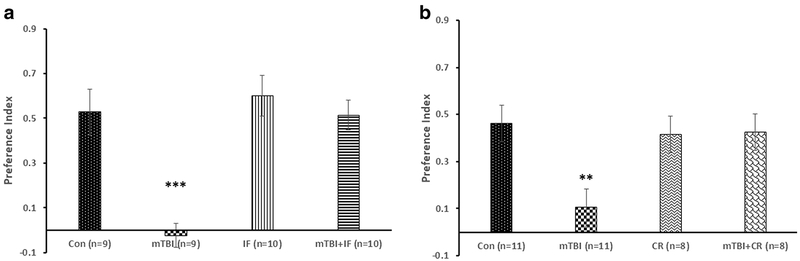
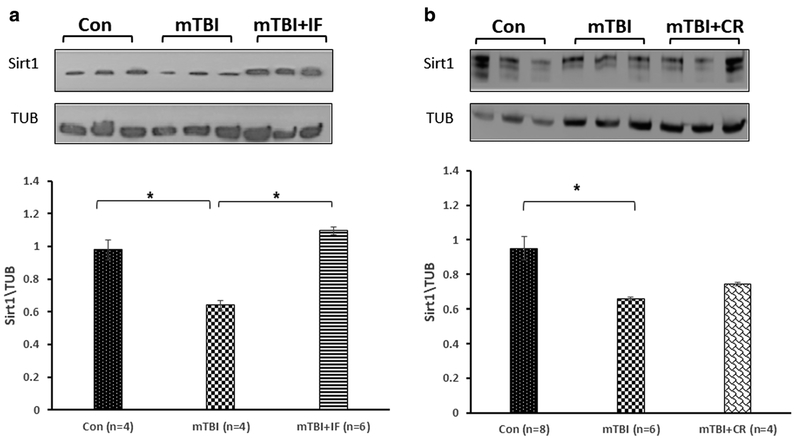
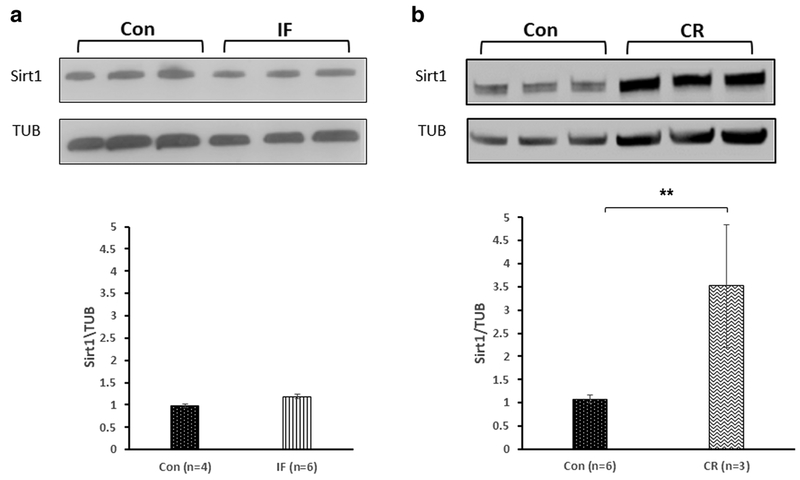
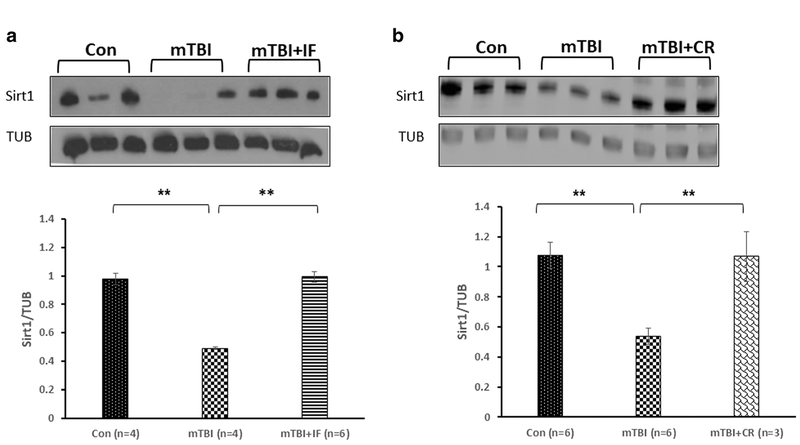
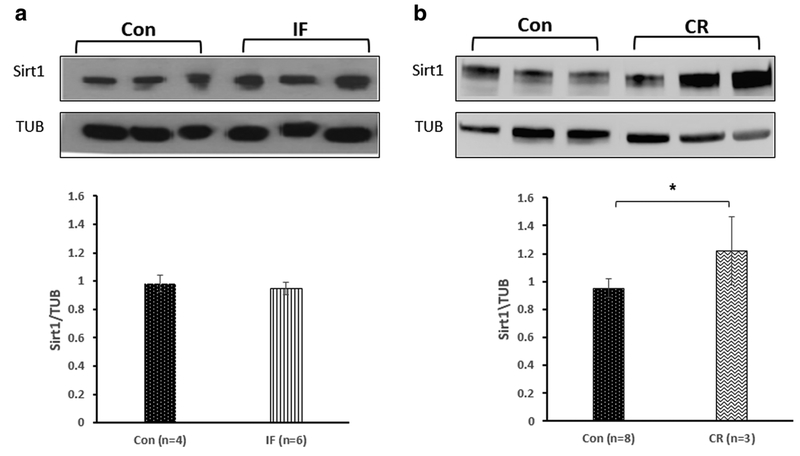
Traumatic brain injury (TBI) is one of the most common causes of neurological damage in young people. It was previously reported that dietary restriction, by either intermittent fasting (IF) or daily caloric restriction (CR), could protect neurons against dysfunction and degeneration in animal models of stroke and Parkinson's disease. Recently, several studies have shown that the protein Sirtuin 1 (SIRT1) plays a significant role in the induced neuroprotection following dietary restriction. In the present study, we found a significant reduction of SIRT1 levels in the cortex and hippocampus in a mouse model of mild weight-drop closed head TBI. This reduction was prevented in mice maintained on IF (alternate day fasting) and CR initiated after the head trauma. Hippocampus-dependent learning and memory (measured using a novel object recognition test) was impaired 30 days post-injury in mice fed ad libitum, but not in mice in the IF and CR groups. These results suggest a clinical potential for IF and/or CR as an intervention to reduce brain damage and improve functional outcome in TBI patients.
创伤性脑损伤(TBI)是年轻人中最常见的神经损伤原因之一。此前有报道称,通过间歇性禁食(IF)或每日热量限制(CR)进行饮食限制,可以保护动物模型中风和帕金森病中的神经元免受功能障碍和退化。最近,几项研究表明,蛋白 Sirtuin 1(SIRT1)在饮食限制后的诱导性神经保护中起着重要作用。在本研究中,我们发现轻度落体闭合性颅脑 TBI 小鼠模型的皮质和海马中的 SIRT1 水平显著降低。在接受隔日禁食(IF)和头部创伤后开始的 CR 的小鼠中,这种降低得到了预防。在自由进食的小鼠中,创伤后 30 天,海马依赖性学习和记忆(通过新物体识别测试测量)受损,但在 IF 和 CR 组的小鼠中没有受损。这些结果表明,IF 和/或 CR 具有作为干预措施的临床潜力,可减少 TBI 患者的脑损伤并改善其功能结局。