Department of Anatomy and Anthropology, Sackler Faculty of Medicine, Tel-Aviv University, Tel-Aviv, 69978,Israel.
Sackler cellular &molecular imaging center, Sackler Faculty of Medicine, Tel-Aviv University, Tel-Aviv, 69978, Israel.
Sci Rep. 2017 Jan 23;7:41269. doi: 10.1038/srep41269.
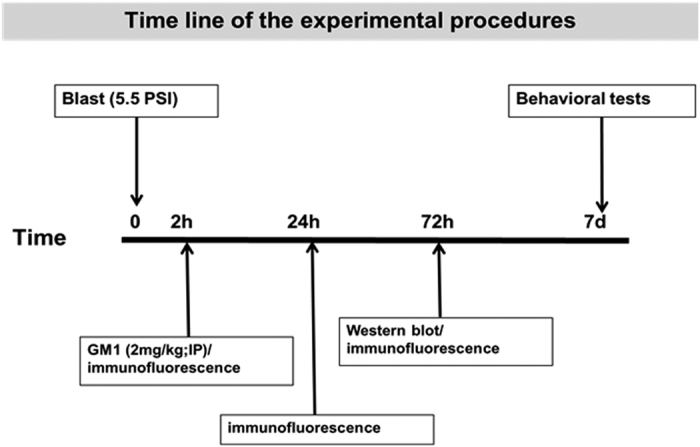
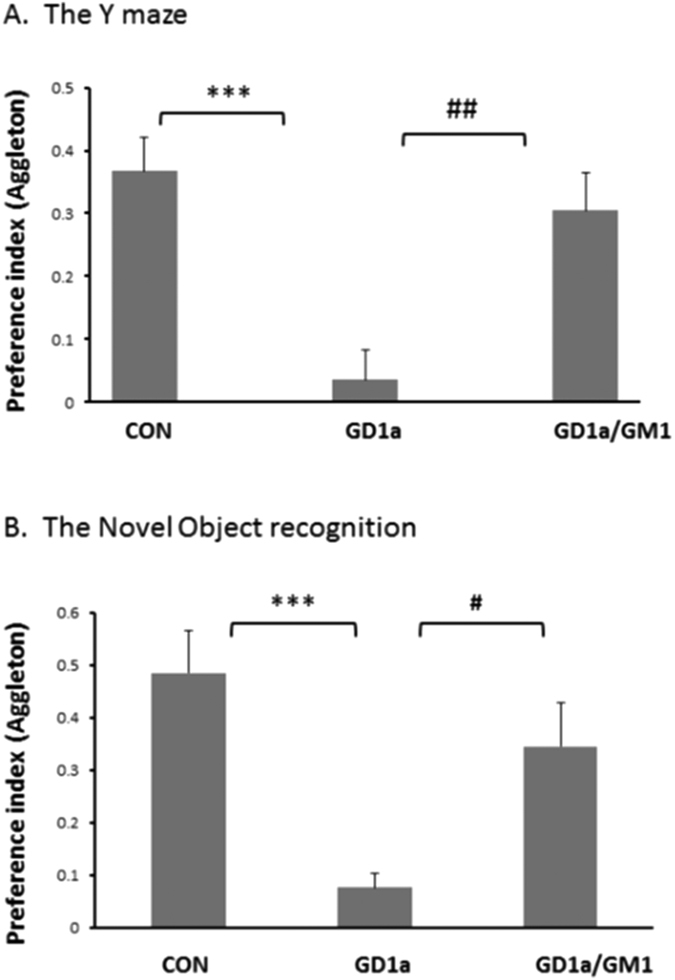
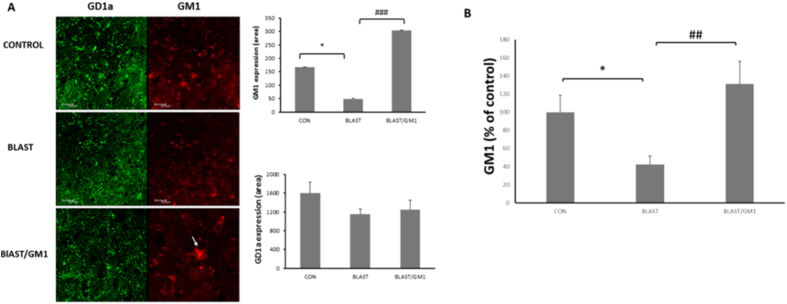
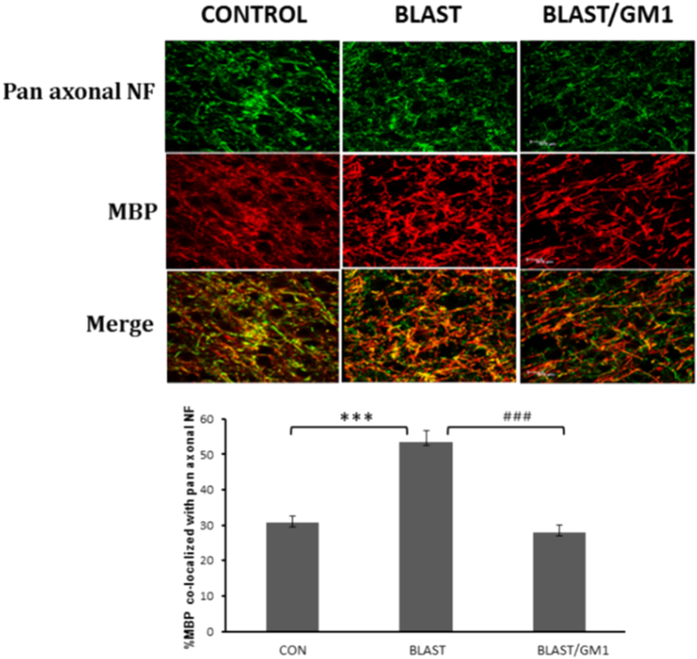
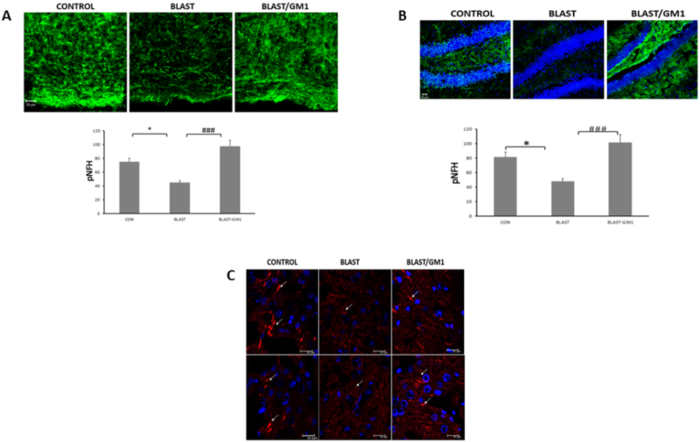
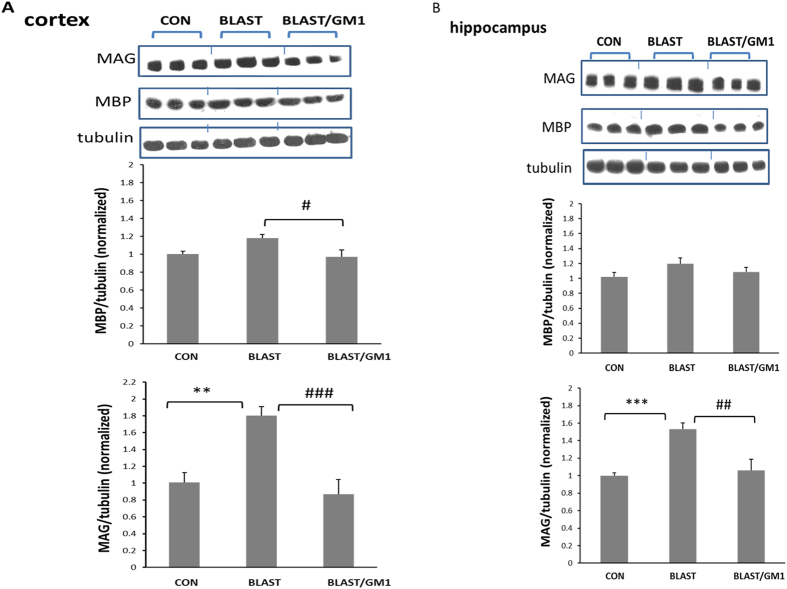
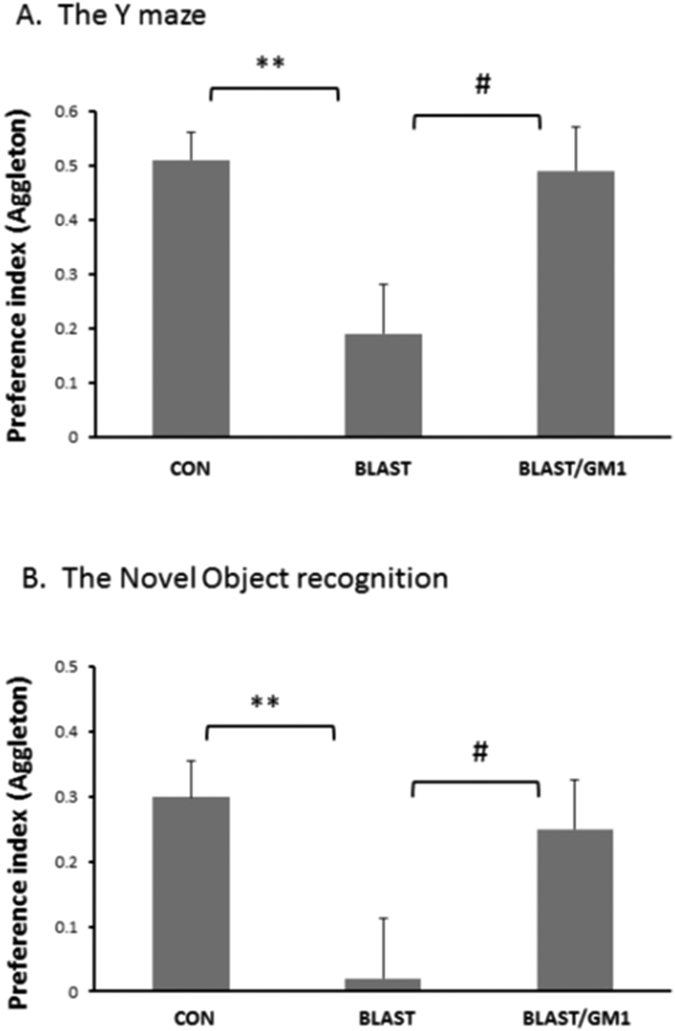
Blast induced traumatic brain injury (B-TBI) may cause various degrees of cognitive and behavioral disturbances but the exact brain pathophysiology involved is poorly understood. It was previously suggested that ganglioside alteration on the axon surface as well as axonal regenerating inhibitors (ARIs) such as myelin associated glycoprotein (MAG) were involved in axonal outgrowth inhibition (AOI), leading to brain damage. GM1 ganglioside content in the brain was significantly reduced while GD1 ganglioside was not affected. The axonal regeneration was also reduced as seen by the phosphorylated NF-H expression. Moreover, B-TBI induced a significant elevation in MAG expression in the brains of the injured mice. The blast injured mice exhibited a significant decline in spatial memory as seen by the Y-maze test. In addition, the injured mice showed pronounced damage to the visual memory (as evaluated by the Novel object recognition test). A single low dose of GM1 (2 mg/kg; IP), shortly after the injury, prevented both the cognitive and the cellular changes in the brains of the injured mice. These results enlighten part of the complicated mechanism that underlies the damage induced by B-TBI and may also suggest a potential new treatment strategy for brain injuries.
爆炸伤导致的创伤性脑损伤(B-TBI)可能导致不同程度的认知和行为障碍,但具体的脑病理生理机制尚不清楚。先前的研究表明,轴突表面神经节苷脂的改变以及轴突再生抑制剂(ARIs),如髓鞘相关糖蛋白(MAG),参与轴突生长抑制(AOI),导致脑损伤。大脑中的 GM1 神经节苷脂含量显著降低,而 GD1 神经节苷脂不受影响。磷酸化 NF-H 表达的减少表明轴突再生也减少。此外,爆炸伤导致损伤小鼠脑中 MAG 表达显著升高。Y 迷宫测试表明,爆炸伤小鼠的空间记忆明显下降。此外,受伤小鼠的视觉记忆(通过新物体识别测试评估)明显受损。伤后立即给予单低剂量 GM1(2mg/kg;腹腔注射)可预防受伤小鼠大脑中的认知和细胞变化。这些结果揭示了 B-TBI 诱导损伤的复杂机制的一部分,也可能提示一种新的脑损伤治疗策略。