Perelman School of Medicine, Children's Hospital of Philadelphia, University of Pennsylvania, Philadelphia, PA, USA.
Kaiser Permanente Los Angeles Medical Center, Los Angeles, CA, USA.
Paediatr Drugs. 2019 Feb;21(1):15-24. doi: 10.1007/s40272-019-00325-x.
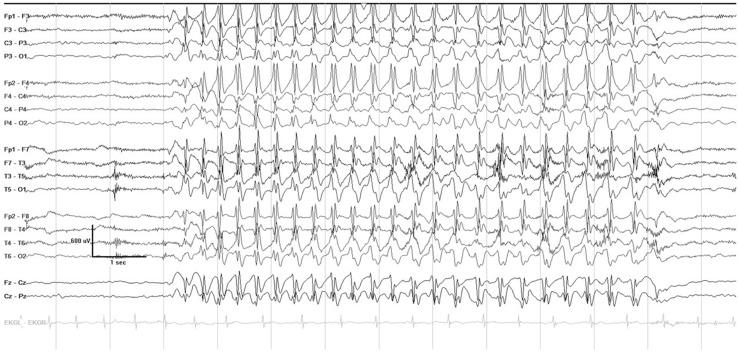
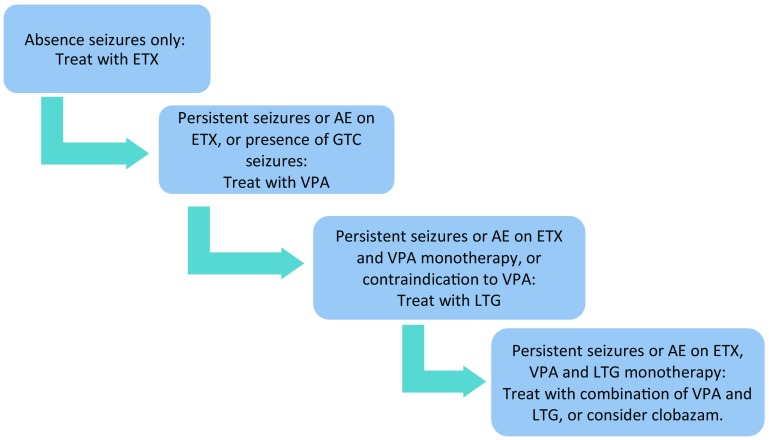
Childhood absence epilepsy (CAE) is a common pediatric epilepsy syndrome with distinct seizure semiology, electroencephalography (EEG) features, and treatment. A diagnosis of CAE can be obtained during an office visit with a careful history, physical exam including prolonged hyperventilation, and a routine EEG. The treatment of choice for CAE with absence seizures only is ethosuximide. Valproic acid and lamotrigine are also effective treatments for many patients, but when compared to ethosuximide, valproic acid has more adverse effects and lamotrigine is less effective. Attention to predictors of response to treatment, including clinical, electrographic, and genetic factors, is increasing. Refractory CAE occurs in fewer than half of patients, and treatment strategies are available, though efficacy data are lacking. Careful assessment and treatment of psychosocial comorbidities is essential in caring for patients with CAE.
儿童失神癫痫(CAE)是一种常见的儿童癫痫综合征,具有独特的发作症候学、脑电图(EEG)特征和治疗方法。通过仔细的病史、包括长时间过度通气的体格检查和常规脑电图,可在就诊时获得 CAE 的诊断。仅失神发作的 CAE 的首选治疗方法是乙琥胺。丙戊酸和拉莫三嗪也是许多患者的有效治疗方法,但与乙琥胺相比,丙戊酸的不良反应更多,而拉莫三嗪的疗效较差。越来越关注治疗反应的预测因素,包括临床、电生理和遗传因素。难治性 CAE 发生在不到一半的患者中,并且有治疗策略可用,尽管缺乏疗效数据。在治疗 CAE 患者时,仔细评估和治疗社会心理共病至关重要。