Molecular Biophysics Group, Institute of Integrative Biology, Faculty of Health and Life Sciences, University of Liverpool, Liverpool, United Kingdom.
Instituto de Química de São Carlos, Universidade de São Paulo, São Carlos, Brazil.
PLoS Biol. 2019 Feb 8;17(2):e3000141. doi: 10.1371/journal.pbio.3000141. eCollection 2019 Feb.
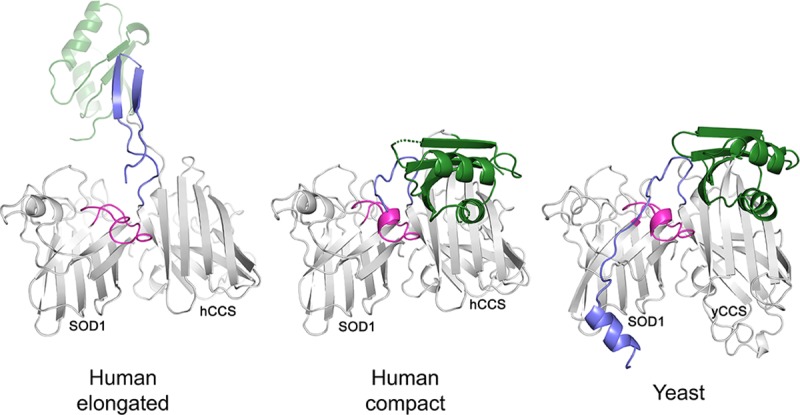
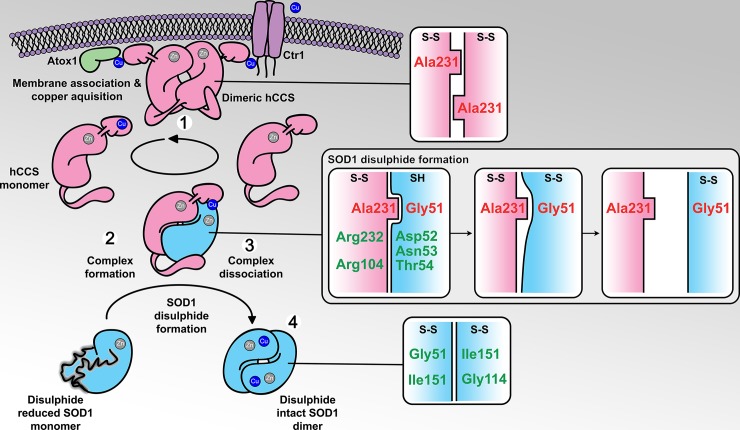
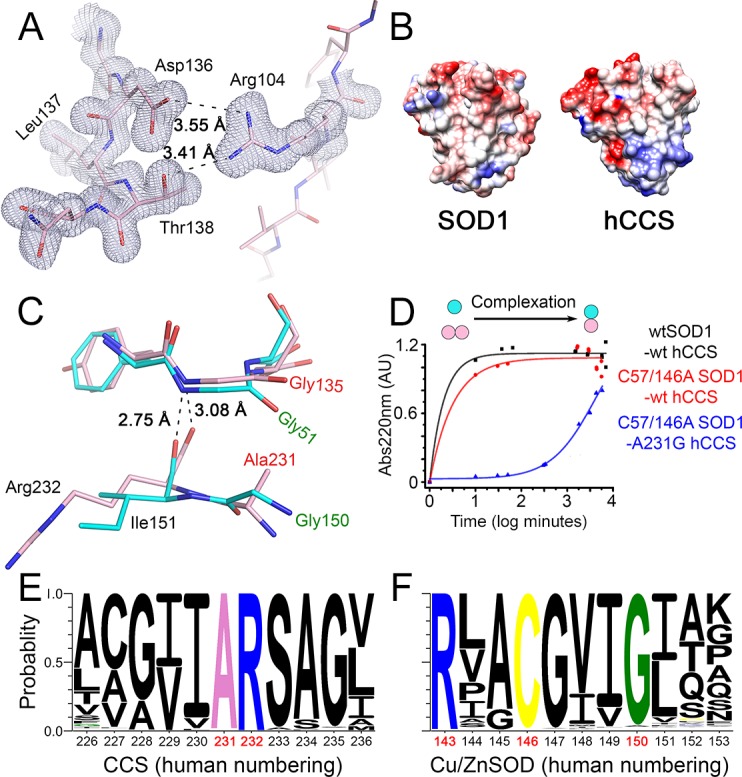
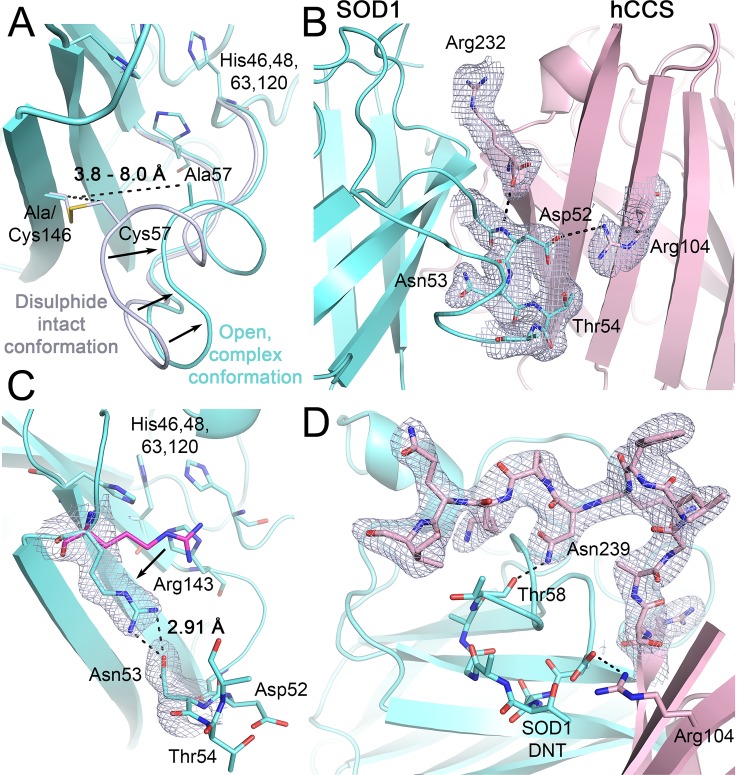
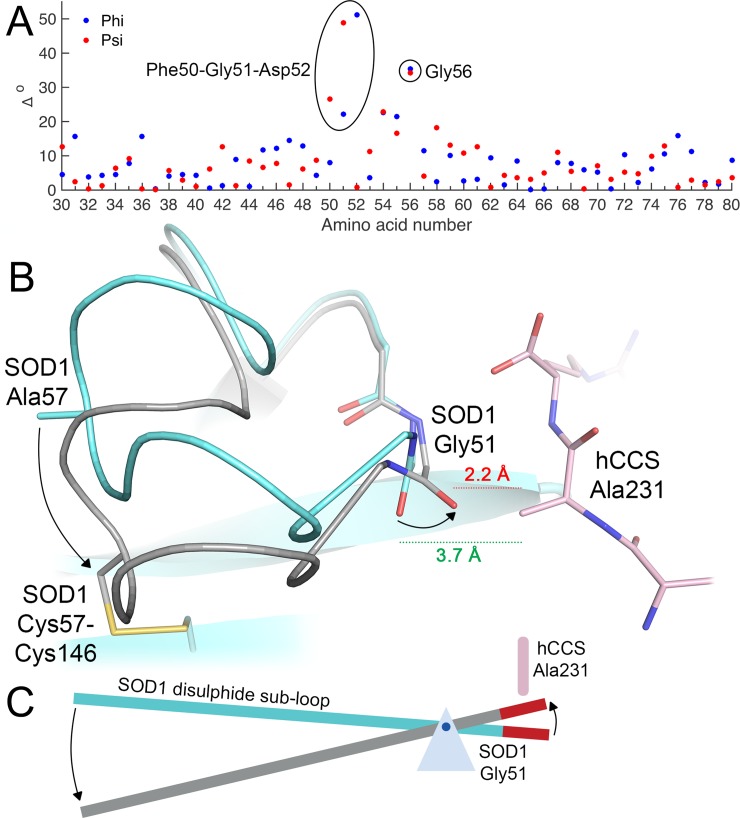
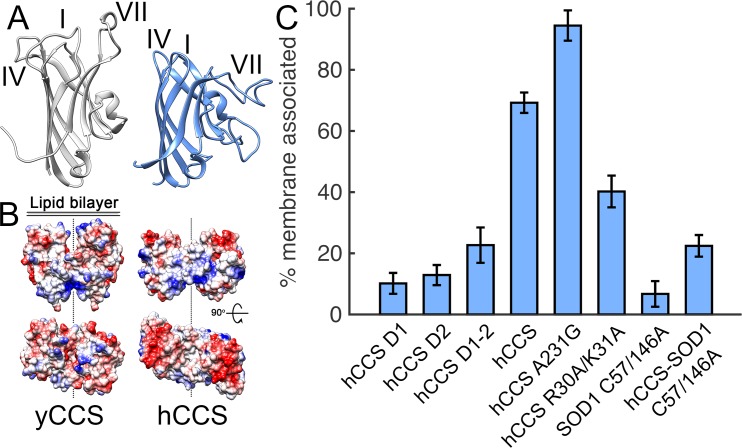
Superoxide dismutase-1 (SOD1) maturation comprises a string of posttranslational modifications which transform the nascent peptide into a stable and active enzyme. The successive folding, metal ion binding, and disulphide acquisition steps in this pathway can be catalysed through a direct interaction with the copper chaperone for SOD1 (CCS). This process confers enzymatic activity and reduces access to noncanonical, aggregation-prone states. Here, we present the functional mechanisms of human copper chaperone for SOD1 (hCCS)-catalysed SOD1 activation based on crystal structures of reaction precursors, intermediates, and products. Molecular recognition of immature SOD1 by hCCS is driven by several interface interactions, which provide an extended surface upon which SOD1 folds. Induced-fit complexation is reliant on the structural plasticity of the immature SOD1 disulphide sub-loop, a characteristic which contributes to misfolding and aggregation in neurodegenerative disease. Complexation specifically stabilises the SOD1 disulphide sub-loop, priming it and the active site for copper transfer, while delaying disulphide formation and complex dissociation. Critically, a single destabilising amino acid substitution within the hCCS interface reduces hCCS homodimer affinity, creating a pool of hCCS available to interact with immature SOD1. hCCS substrate specificity, segregation between solvent and biological membranes, and interaction transience are direct results of this substitution. In this way, hCCS-catalysed SOD1 maturation is finessed to minimise copper wastage and reduce production of potentially toxic SOD1 species.
超氧化物歧化酶 1(SOD1)成熟包括一系列翻译后修饰,这些修饰将新生肽转化为稳定且具有活性的酶。在这个途径中,连续的折叠、金属离子结合和二硫键获得步骤可以通过与 SOD1 的铜伴侣(CCS)直接相互作用来催化。这个过程赋予了酶的活性,并减少了非典型的、易于聚集的状态的进入。在这里,我们根据反应前体、中间体和产物的晶体结构,提出了人源 SOD1 铜伴侣(hCCS)催化的 SOD1 激活的功能机制。hCCS 对不成熟的 SOD1 的分子识别是由几个界面相互作用驱动的,这些相互作用提供了一个扩展的表面,使 SOD1 折叠。诱导配合是依赖于不成熟的 SOD1 二硫键亚环的结构可塑性,这一特征导致了神经退行性疾病中的错误折叠和聚集。配合物特异性地稳定 SOD1 的二硫键亚环,使其和活性位点为铜转移做好准备,同时延迟二硫键的形成和配合物的解离。至关重要的是,hCCS 界面内的单个破坏稳定的氨基酸取代降低了 hCCS 同源二聚体的亲和力,创造了一个可用的 hCCS 池来与不成熟的 SOD1 相互作用。hCCS 的底物特异性、溶剂和生物膜之间的隔离以及相互作用的短暂性都是这种取代的直接结果。通过这种方式,hCCS 催化的 SOD1 成熟被精心设计,以最大限度地减少铜的浪费,并减少潜在毒性的 SOD1 物质的产生。