Department of Hematology and Medical Oncology, Winship Cancer Institute of Emory University, Atlanta, Georgia.
Samuel Oschin Comprehensive Cancer Institute, Los Angeles, California.
J Thorac Oncol. 2019 May;14(5):876-889. doi: 10.1016/j.jtho.2019.01.020. Epub 2019 Feb 5.
Mutations in the KRAS gene are the most common driver oncogenes present in lung adenocarcinomas. We analyzed the largest multi-institutional database available containing patients with metastatic KRAS-mutant lung adenocarcinomas.
The Lung Cancer Mutation Consortium (LCMC) is a multi-institutional collaboration to study the genomic characteristics of lung adenocarcinomas, treat them with genomically directed therapeutic approaches, and assess their outcomes. Since its inception in 2009, the LCMC has enrolled more than 1900 patients and has performed pretreatment, multiplexed, molecular characterization along with collecting clinical data. We evaluated the characteristics of patients with KRAS mutation in the LCMC and the association with overall survival.
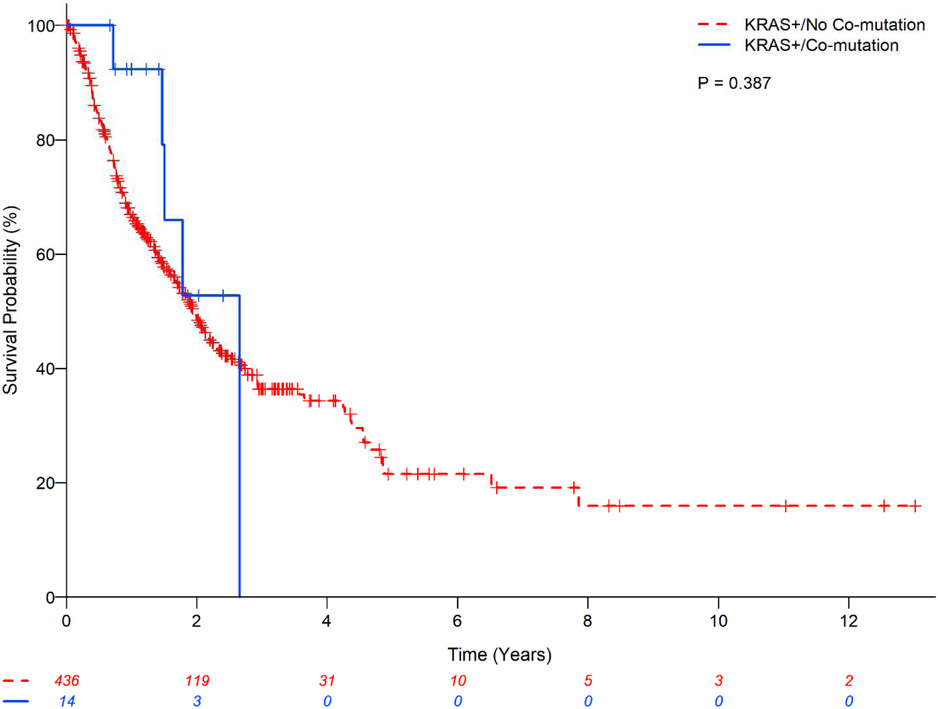
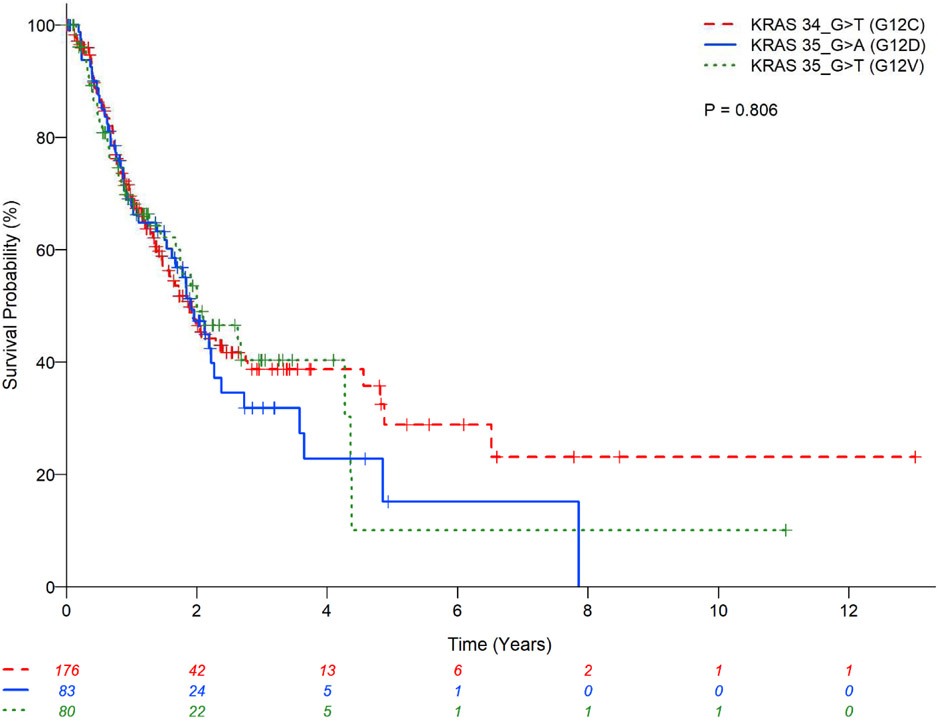
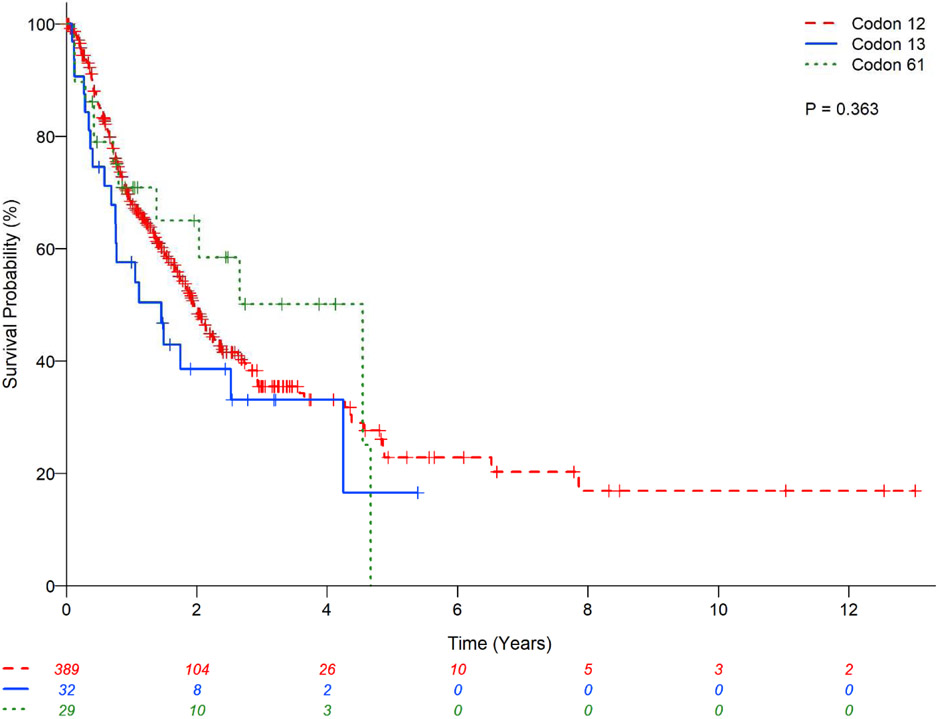
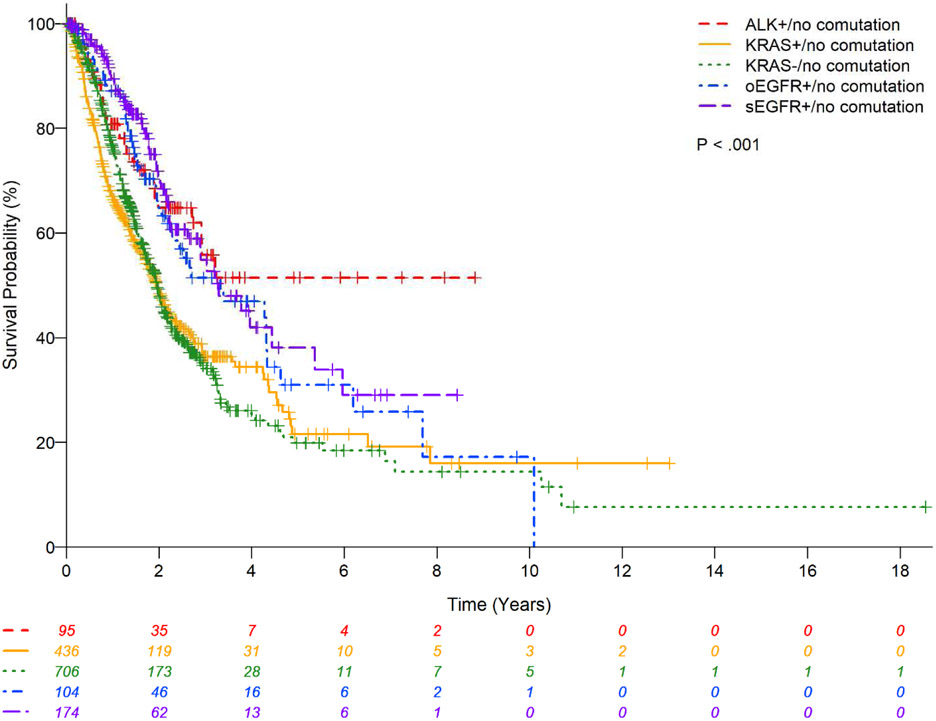
Data from 1655 patients with metastatic lung adenocarcinomas were analyzed. Four hundred fifty (27%) patients had a KRAS mutation, 58% were female, 93% were smokers, and there was a median age of 65 years. Main KRAS subtypes were: G12C 39%; and G12D and G12V at 18% each. Among patients with KRAS mutation, G12D had a higher proportion of never-smokers (22%, p < 0.001). Patients with KRAS-mutant tumors had a trend toward shorter median survival compared to all others in the series (1.96 versus 2.22; P = 0.08) and lower 2-year survival rate (49% [95% confidence interval: 44%-54%] and 55% [95% confidence interval: 52%-58%], respectively).
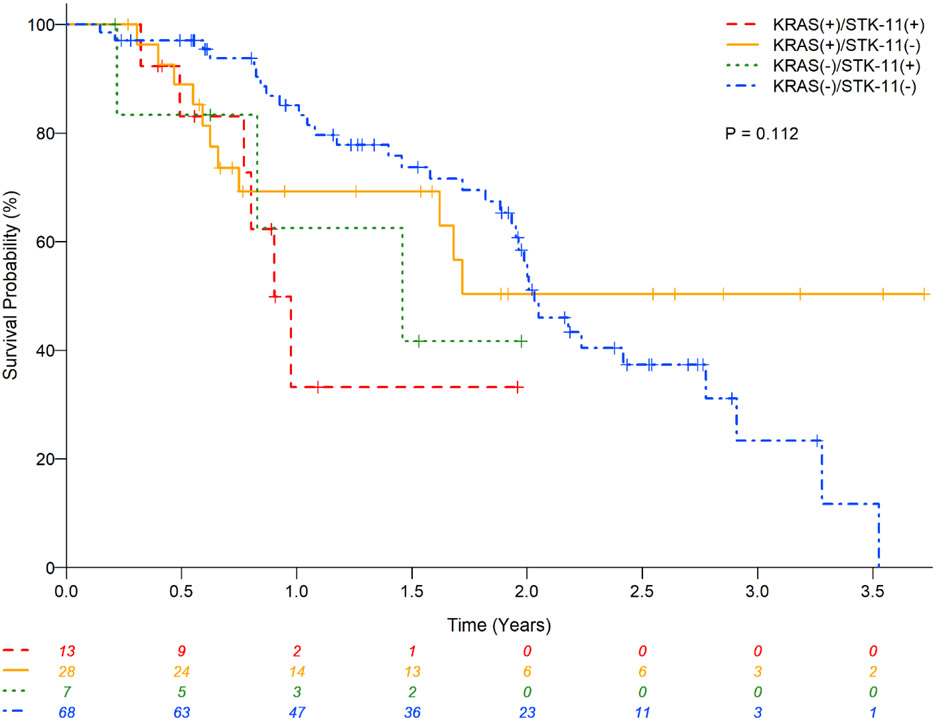
In the LCMC study, 27% of lung adenocarcinomas patients harbored a KRAS mutation and up to one-third of them had another oncogenic driver. Patients with both KRAS and STK11 mutations had a significantly inferior clinical outcome.
KRAS 基因突变是肺腺癌中最常见的驱动致癌基因。我们分析了包含转移性 KRAS 突变型肺腺癌患者的最大多机构数据库。
肺癌突变联盟(LCMC)是一个多机构合作组织,旨在研究肺腺癌的基因组特征,用基因组靶向治疗方法治疗它们,并评估它们的结果。自 2009 年成立以来,LCMC 已经招募了超过 1900 名患者,并进行了预处理、多重、分子特征分析以及收集临床数据。我们评估了 LCMC 中 KRAS 突变患者的特征及其与总生存的关联。
分析了 1655 例转移性肺腺癌患者的数据。450 例(27%)患者存在 KRAS 突变,58%为女性,93%为吸烟者,中位年龄为 65 岁。主要 KRAS 亚型为:G12C 占 39%;G12D 和 G12V 各占 18%。在 KRAS 突变患者中,G12D 组从不吸烟者的比例更高(22%,p < 0.001)。与该系列中的其他所有患者相比,KRAS 突变肿瘤患者的中位总生存期有缩短趋势(1.96 对 2.22;P = 0.08),2 年生存率也较低(49%[95%置信区间:44%-54%]和 55%[95%置信区间:52%-58%])。
在 LCMC 研究中,27%的肺腺癌患者存在 KRAS 突变,其中多达三分之一的患者存在另一种致癌驱动基因。同时存在 KRAS 和 STK11 突变的患者临床结局显著更差。