Center for Ecological Research, Kyoto University, Otsu, Shiga, 520-2133, Japan.
Precursory Research for Embryonic Science and Technology (PRESTO), Japan Science and Technology Agency, Kawaguchi, Saitama, 332-0012, Japan.
Sci Rep. 2019 Feb 11;9(1):1787. doi: 10.1038/s41598-018-38344-2.
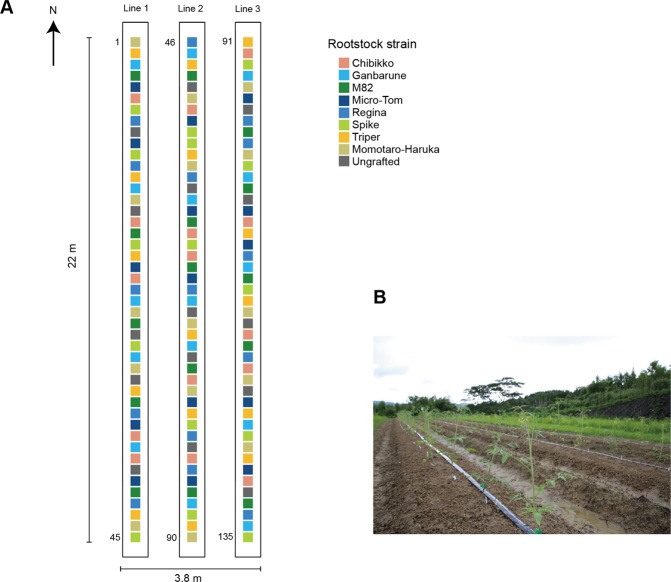
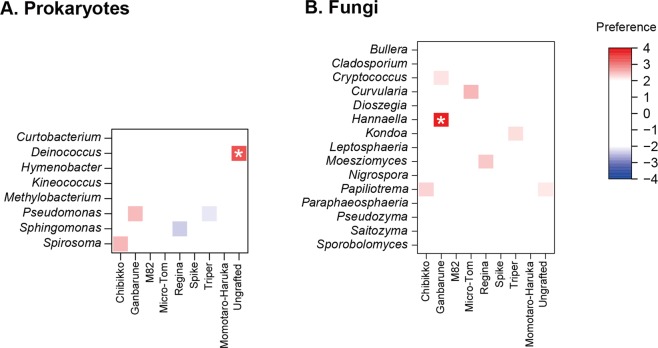
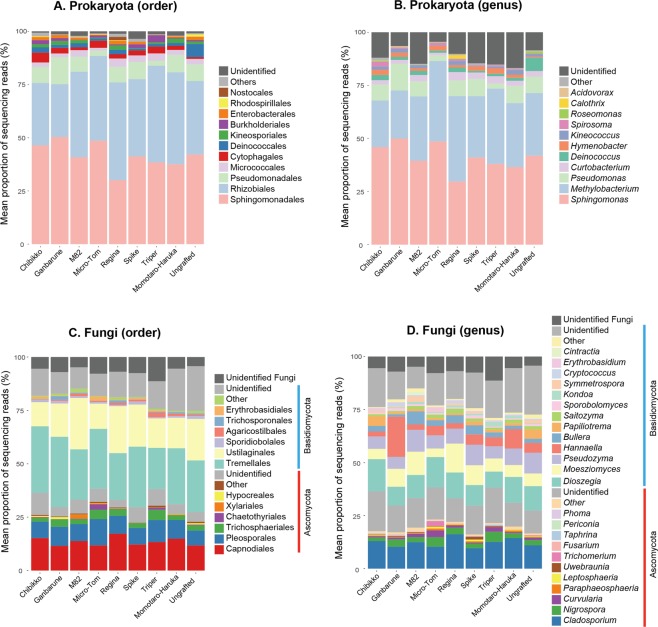
Bacteria and fungi form complex communities (microbiomes) in above- and below-ground organs of plants, contributing to hosts' growth and survival in various ways. Recent studies have suggested that host plant genotypes control, at least partly, plant-associated microbiome compositions. However, we still have limited knowledge of how microbiome structures are determined in/on grafted crop plants, whose above-ground (scion) and below-ground (rootstock) genotypes are different with each other. By using eight varieties of grafted tomato plants, we examined how rootstock genotypes could determine the assembly of leaf endophytic microbes in field conditions. An Illumina sequencing analysis showed that both bacterial and fungal community structures did not significantly differ among tomato plants with different rootstock genotypes: rather, sampling positions in the farmland contributed to microbiome variation in a major way. Nonetheless, a further analysis targeting respective microbial taxa suggested that some bacteria and fungi could be preferentially associated with particular rootstock treatments. Specifically, a bacterium in the genus Deinococcus was found disproportionately from ungrafted tomato individuals. In addition, yeasts in the genus Hannaella occurred frequently on the tomato individuals whose rootstock genotype was "Ganbarune". Overall, this study suggests to what extent leaf microbiome structures can be affected/unaffected by rootstock genotypes in grafted crop plants.
细菌和真菌在植物地上和地下器官中形成复杂的群落(微生物组),以各种方式促进宿主的生长和存活。最近的研究表明,宿主植物基因型至少部分控制着与植物相关的微生物组组成。然而,我们对于接穗作物中微生物组结构是如何决定的仍然知之甚少,因为接穗作物的地上部分(接穗)和地下部分(砧木)基因型彼此不同。通过使用 8 种不同基因型的番茄接穗植物,我们研究了砧木基因型如何在田间条件下决定叶片内生微生物的组装。Illumina 测序分析表明,不同砧木基因型的番茄植物之间细菌和真菌群落结构没有显著差异:相反,农田中的采样位置在很大程度上导致了微生物组的变化。尽管如此,针对特定微生物类群的进一步分析表明,一些细菌和真菌可能优先与特定的砧木处理相关。具体来说,在未嫁接的番茄个体中发现了一种属名为 Deinococcus 的细菌不成比例地存在。此外,在砧木基因型为“Ganbarune”的番茄个体上经常出现汉纳拉属酵母。总的来说,这项研究表明,在接穗作物中,叶片微生物组结构在多大程度上可以受到/不受砧木基因型的影响。