Department of Neurosciences, University of New, Mexico, School of Medicine, Albuquerque, NM.
Department of Psychology, University of New, Mexico.
Neuroscience. 2019 Apr 15;404:338-352. doi: 10.1016/j.neuroscience.2019.01.066. Epub 2019 Feb 8.
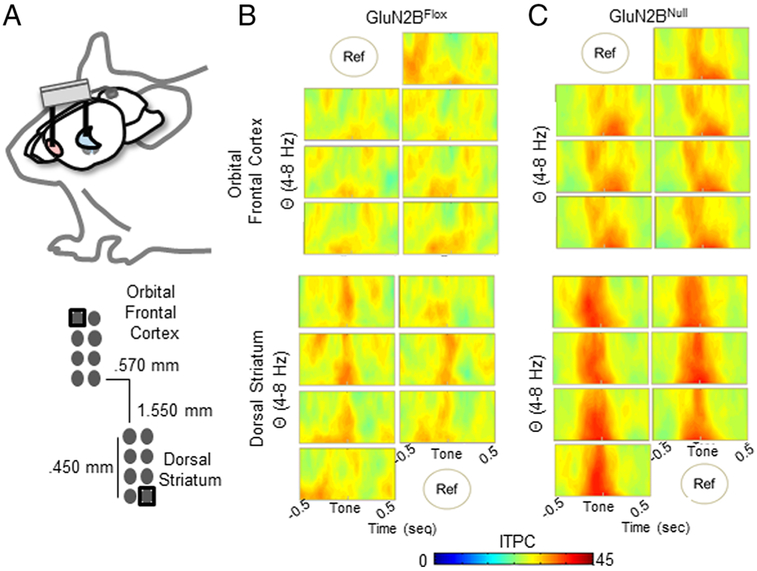
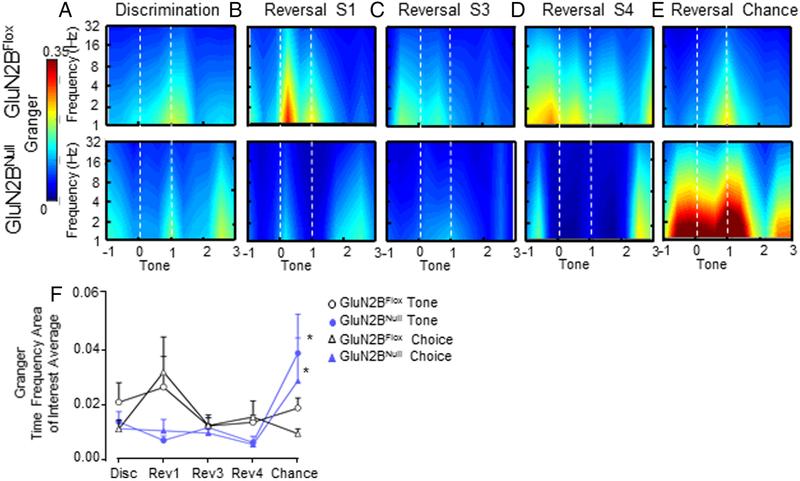
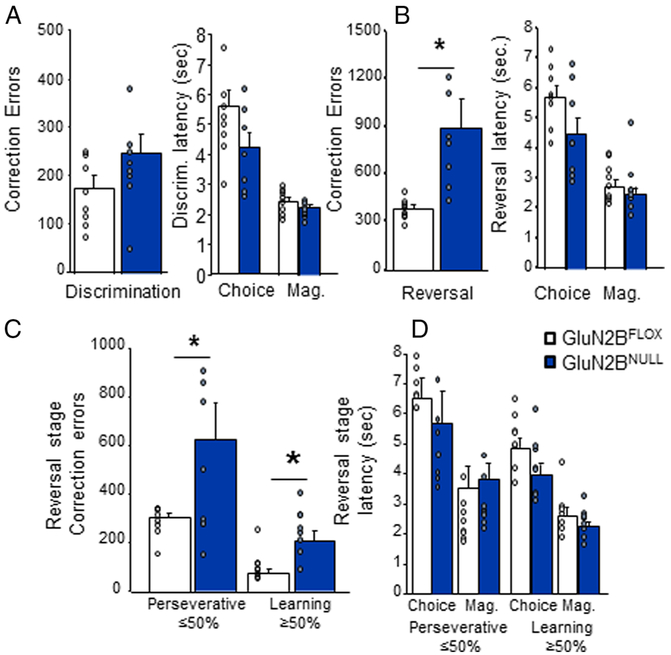
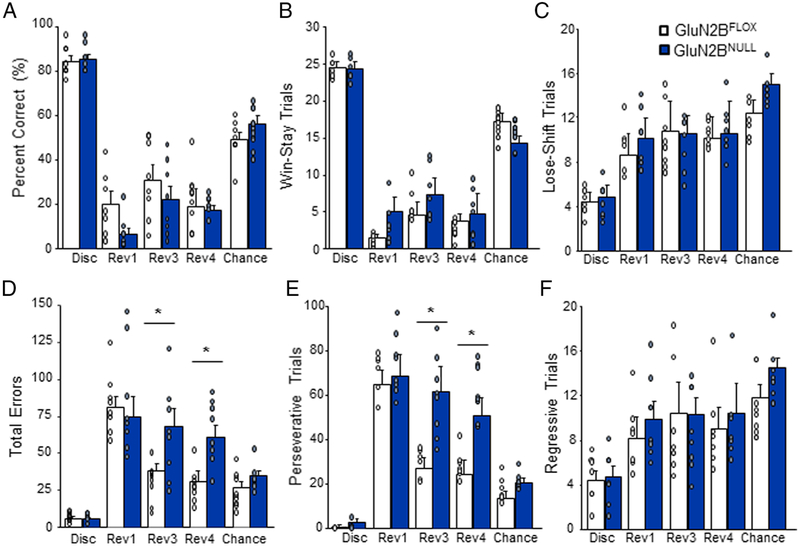
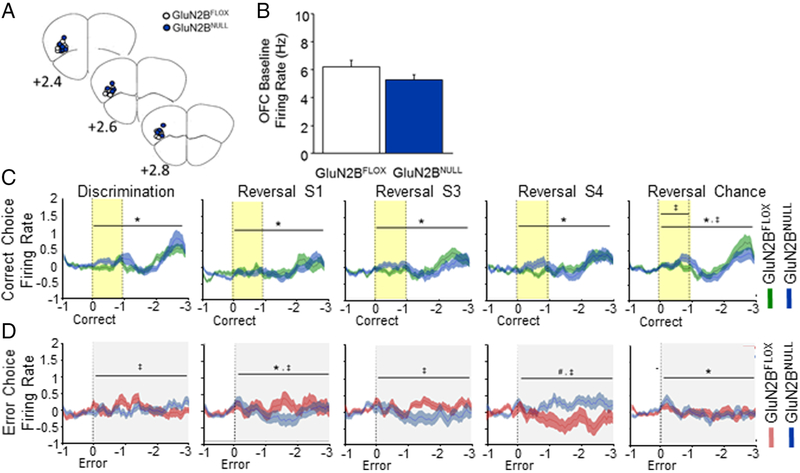
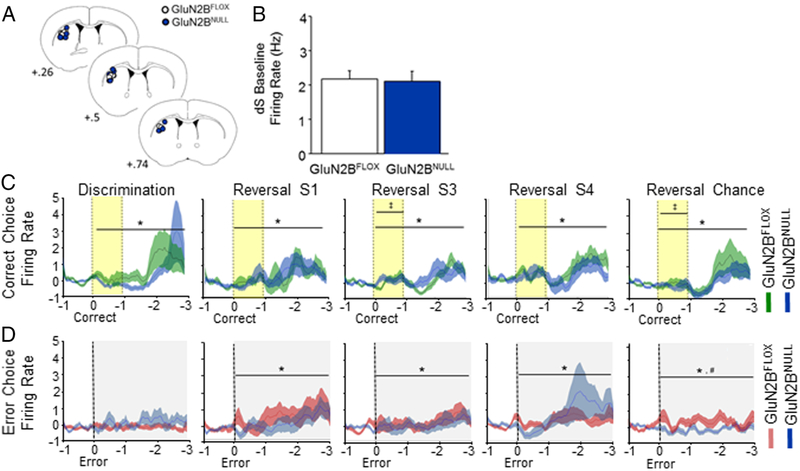
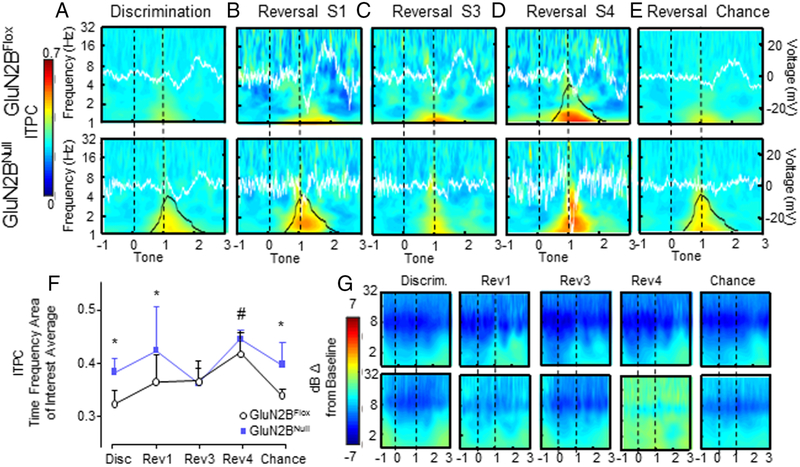
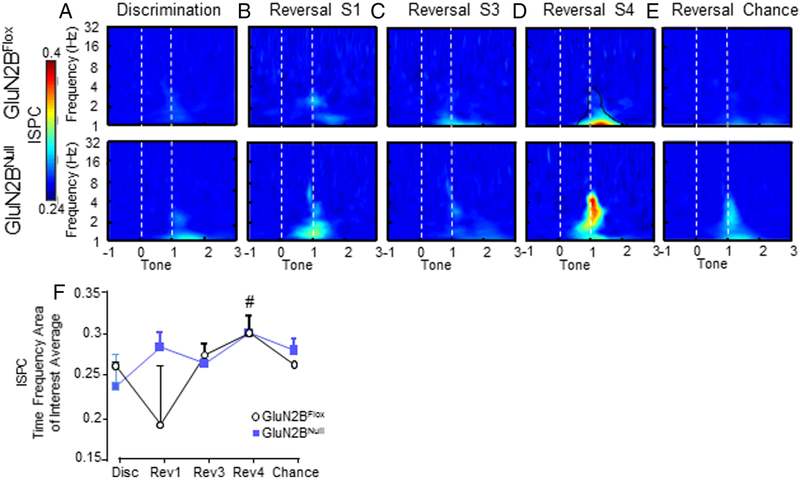
A common feature across neuropsychiatric disorders is inability to discontinue an action or thought once it has become detrimental. Reversal learning, a hallmark of executive control, requires plasticity within cortical, striatal and limbic circuits and is highly sensitive to disruption of N-methyl--aspartate receptor (NMDAR) function. In particular, selective deletion or antagonism of GluN2B containing NMDARs in cortical regions including the orbitofrontal cortex (OFC), promotes maladaptive perseveration. It remains unknown whether GluN2B functions to maintain local cortical activity necessary for reversal learning, or if it exerts a broader influence on the integration of neural activity across cortical and subcortical systems. To address this question, we utilized in vivo electrophysiology to record neuronal activity and local field potentials (LFP) in the orbitofrontal cortex and dorsal striatum (dS) of mice with deletion of GluN2B in neocortical and hippocampal principal cells while they performed touchscreen reversal learning. Reversal impairment produced by corticohippocampal GluN2B deletion was paralleled by an aberrant increase in functional connectivity between the OFC and dS. These alterations in coordination were associated with alterations in local OFC and dS firing activity. These data demonstrate highly dynamic patterns of cortical and striatal activity concomitant with reversal learning, and reveal GluN2B as a molecular mechanism underpinning the timing of these processes.
神经精神疾病的一个共同特征是一旦行动或思维变得有害,就无法停止。反转学习是执行控制的标志,需要皮质、纹状体和边缘回路的可塑性,并且对 N-甲基-D-天冬氨酸受体 (NMDAR) 功能的破坏非常敏感。特别是,皮质区域(包括眶额皮质 (OFC))中含有 GluN2B 的 NMDAR 的选择性缺失或拮抗作用,会促进适应性坚持。目前尚不清楚 GluN2B 是为了维持反转学习所需的局部皮质活动而发挥作用,还是对皮质和皮质下系统中神经活动的整合产生更广泛的影响。为了解决这个问题,我们利用体内电生理学在执行触摸屏反转学习任务时,记录了皮质和背侧纹状体(dS)中神经元活动和局部场电位 (LFP),这些神经元在新皮质和海马主要细胞中缺失了 GluN2B。皮质-海马 GluN2B 缺失引起的反转损伤与 OFC 和 dS 之间功能连接的异常增加平行。这些协调变化与局部 OFC 和 dS 放电活动的变化有关。这些数据表明,与反转学习同时出现的皮质和纹状体活动具有高度动态的模式,并揭示了 GluN2B 作为这些过程定时的分子机制。