Department of Pediatrics, Kaohsiung Chang Gung Memorial Hospital and Chang Gung University College of Medicine, Kaohsiung, Taiwan.
Department of Nursing, Chang Gung University of Science and Technology, Chiayi, Taiwan.
Int J Med Sci. 2019 Jan 1;16(2):212-220. doi: 10.7150/ijms.29930. eCollection 2019.
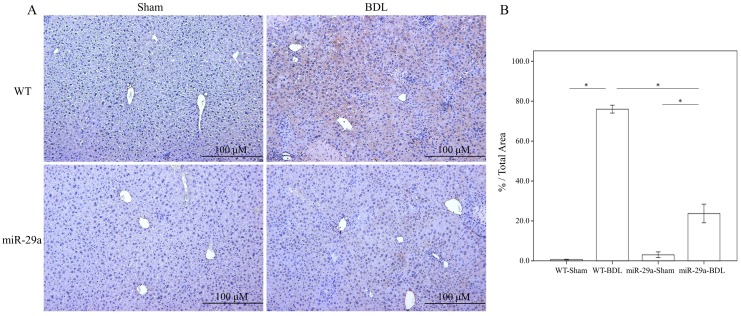
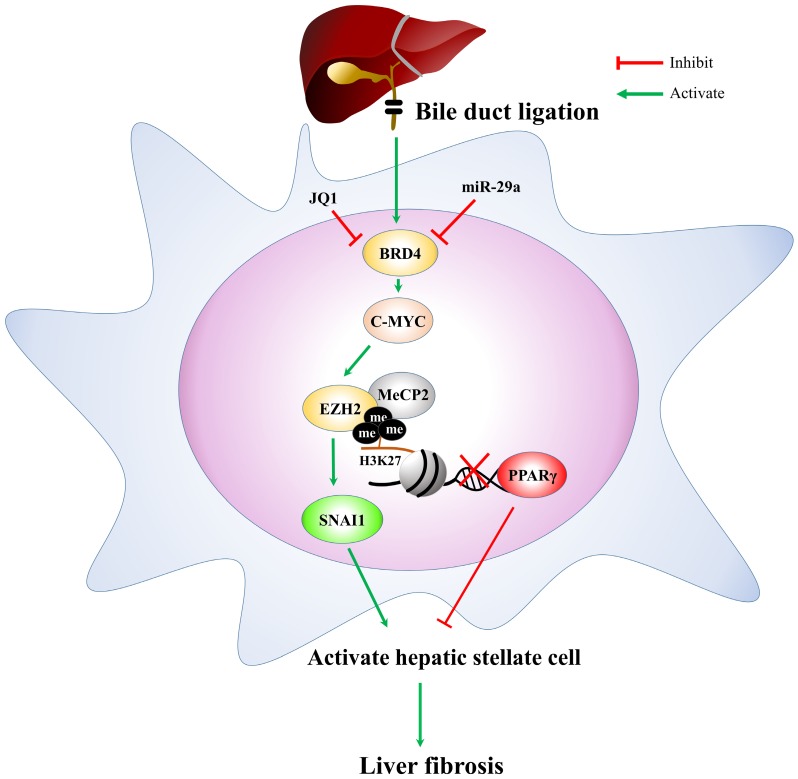
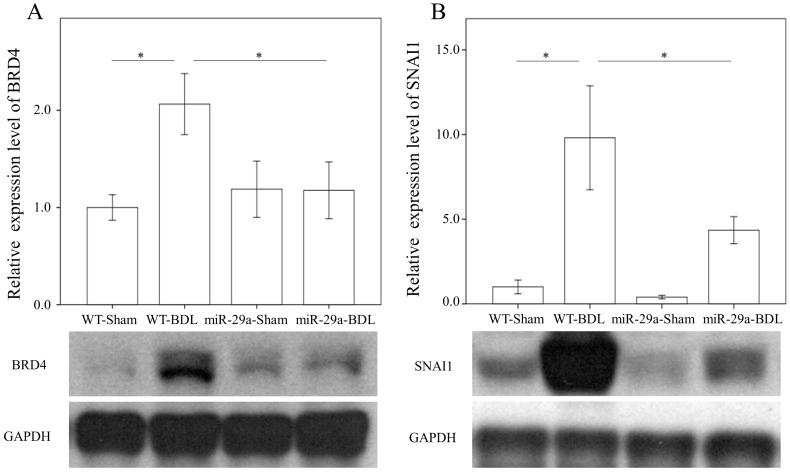
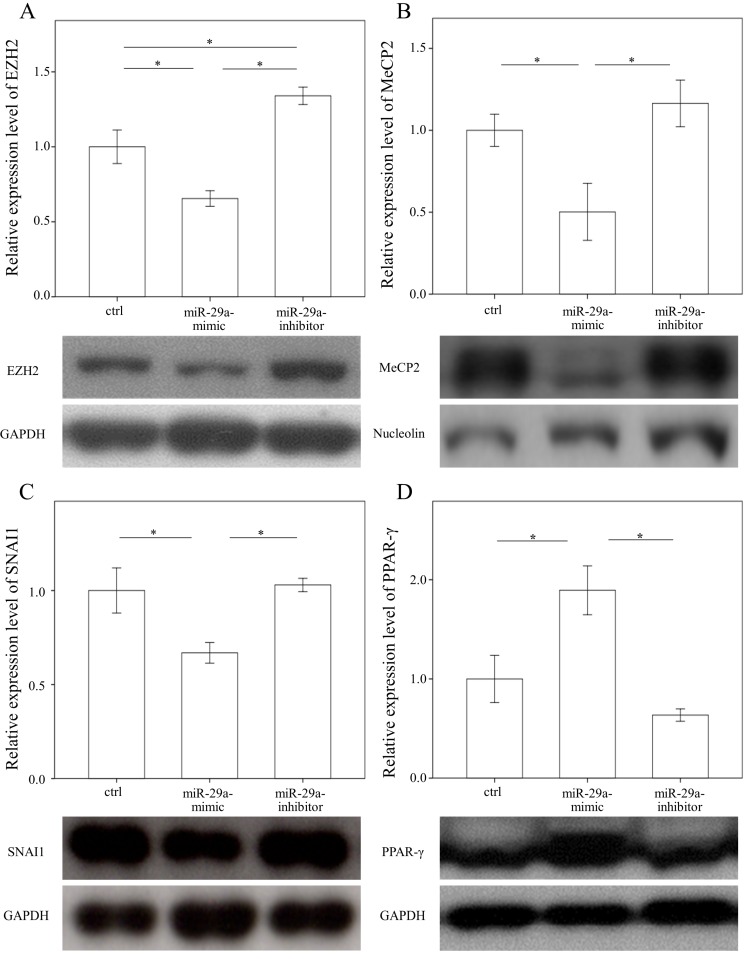
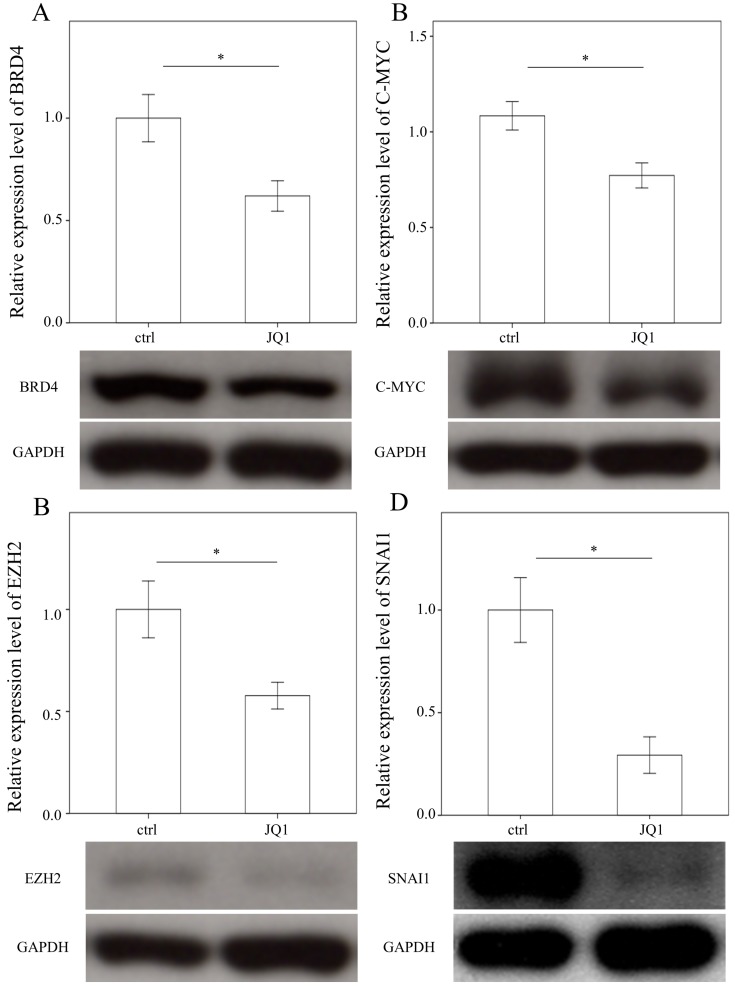
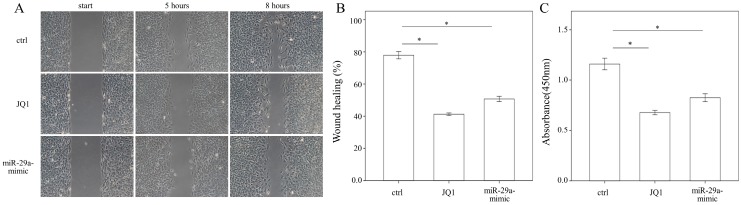
MicroRNA-29a is a key regulon that regulates hepatic stellate cells (HSCs) and mitigates liver fibrosis. However, the mechanism by which it does so remains largely undefined. The inhibition of bromodomain-4 protein (BRD4) represents a novel therapeutic target in hepatic fibrosis. Therefore, the purpose of this study is to investigate the miR-29a regulation of BRD4 signaling in a bile duct-ligation (BDL) animal model with regard to developing cholestatic liver fibrosis. Hepatic tissue in miR-29a transgenic mice (miR-29aTg mice) displayed weak fibrotic matrix, as shown by α-smooth muscle actin staining within affected tissues compared to wild-type mice. miR-29a overexpression reduced the BDL exaggeration of BRD4 and SNAI1 expression. Increased miR-29a signaling caused the downregulation of EZH2, MeCP2, and SNAI1, as well as the upregulation of PPAR-γ expression, in primary HSCs. We further demonstrated that the administration of JQ1, a BRD4 inhibitor, could inhibit BRD4, C-MYC, EZH2, and SNAI1 expression, while both JQ1 and a miR-29a mimic could inhibit the migration and proliferation of HSCs. In short, our research demonstrates that miR-29a negatively regulates HSC activation by inhibiting BRD4 and EZH2 function, thus making it a promising target for the pharmacologic treatment of hepatic fibrosis.
miR-29a 是调节肝星状细胞(HSCs)并减轻肝纤维化的关键调节因子。然而,其具体机制仍未得到充分阐明。抑制溴结构域蛋白 4(BRD4)是肝纤维化的一种新的治疗靶点。因此,本研究旨在探讨 miR-29a 在胆管结扎(BDL)动物模型中对 BRD4 信号的调控作用,以期开发出用于治疗胆汁淤积性肝纤维化的方法。与野生型小鼠相比,miR-29a 转基因小鼠(miR-29aTg 小鼠)的肝组织中 α-平滑肌肌动蛋白染色显示出较弱的纤维基质,表明纤维化基质较弱。miR-29a 的过表达降低了 BDL 对 BRD4 和 SNAI1 表达的夸大作用。增加 miR-29a 信号会导致原发性 HSCs 中 EZH2、MeCP2 和 SNAI1 的下调,以及 PPAR-γ 的表达上调。我们进一步证明,BRD4 抑制剂 JQ1 的给药可以抑制 BRD4、C-MYC、EZH2 和 SNAI1 的表达,而 JQ1 和 miR-29a 模拟物都可以抑制 HSCs 的迁移和增殖。总之,我们的研究表明,miR-29a 通过抑制 BRD4 和 EZH2 的功能来负调控 HSC 的激活,因此成为治疗肝纤维化的有前途的药物靶点。