Department of Gastroenterology, Shanghai General Hospital, Shanghai Jiao Tong University School of Medicine, Shanghai, China.
J Cell Mol Med. 2018 Oct;22(10):5050-5061. doi: 10.1111/jcmm.13787. Epub 2018 Aug 14.
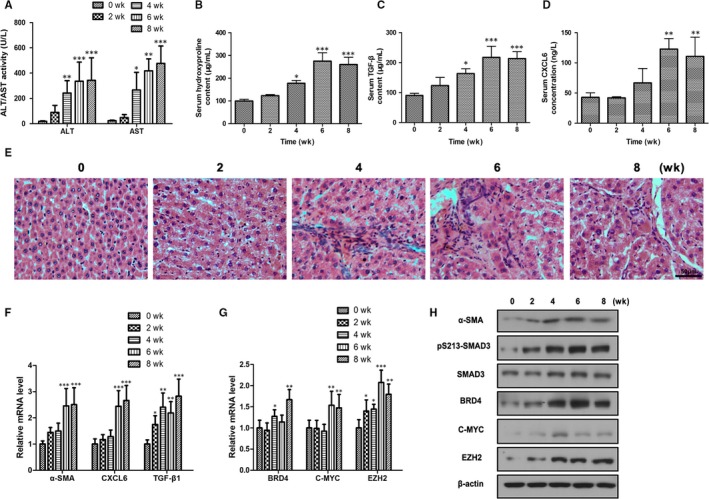
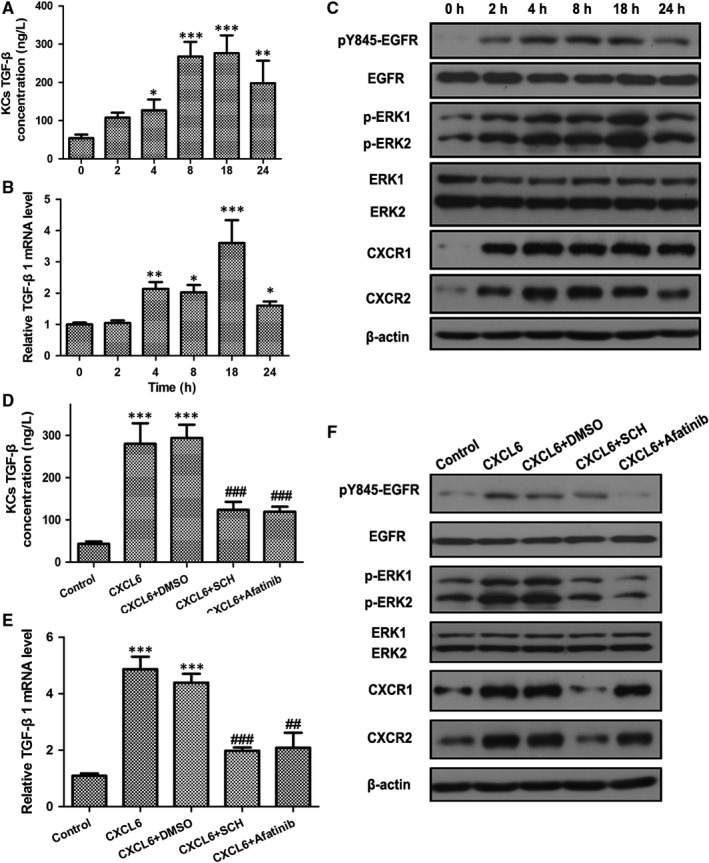
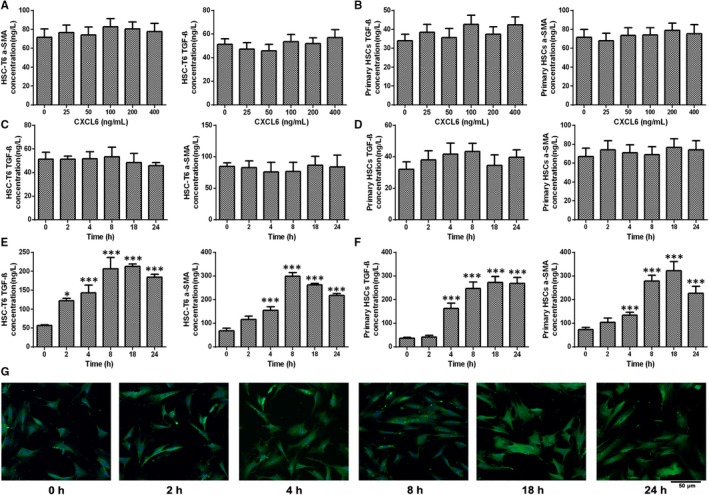
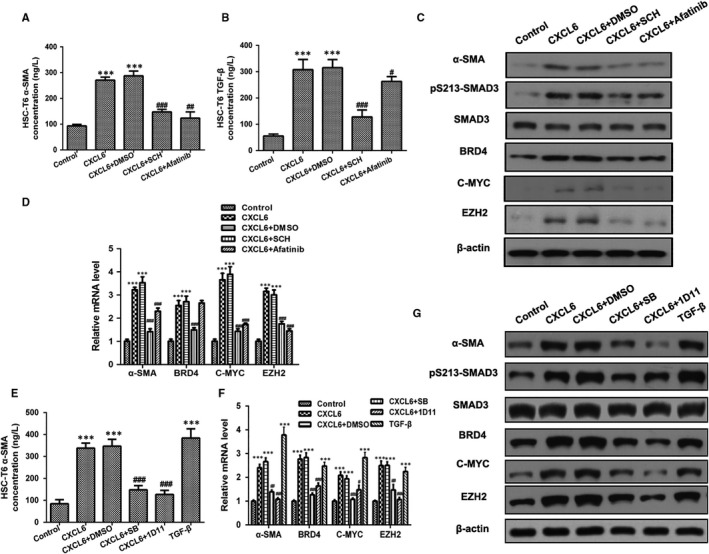
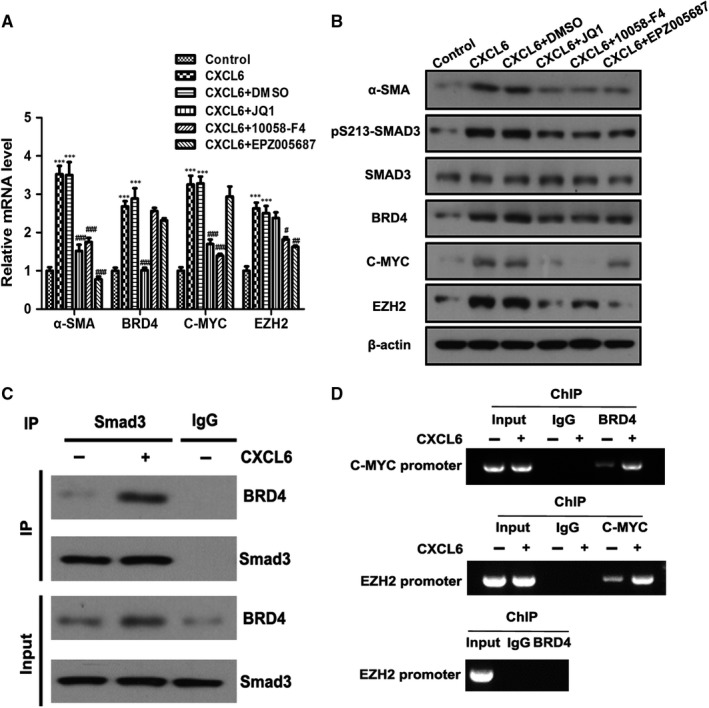
Liver fibrosis is the excessive accumulation of extracellular matrix proteins in response to the inflammatory response that accompanies tissue injury, which at an advanced stage can lead to cirrhosis and even liver failure. This study investigated the role of the CXC chemokine CXCL6 (GCP-2) in liver fibrosis. The expression of CXCL6 was found to be elevated in the serum and liver tissue of high stage liver fibrosis patients. Furthermore, treatment with CXCL6 (100 ng/mL) stimulated the phosphorylation of EGFR and the expression of TGF-β in cultured Kupffer cells (KCs). Although treatment with CXCL6 directly did not activate the hepatic stellate cell (HSC) line, HSC-T6, HSCs cultured with media taken from KCs treated with CXCL6 or TGF-β showed increased expression of α-SMA, a marker of HSC activation. CXCL6 was shown to function via the SMAD2/BRD4/C-MYC/EZH2 pathway by enhancing the SMAD3-BRD4 interaction and promoting direct binding of BRD4 to the C-MYC promoter and CMY-C to the EZH2 promoter, thereby inducing profibrogenic gene expression in HSCs, leading to activation and transdifferentiation into fibrogenic myofibroblasts. These findings were confirmed in a mouse model of CCl -induced chronic liver injury and fibrosis in which the levels of CXCL6 and TGF-β in serum and the expression of α-SMA, SMAD3, BRD4, C-MYC, and EZH2 in liver tissue were increased. Taken together, our results reveal that CXCL6 plays an important role in liver fibrosis through stimulating the release of TGF-β by KCs and thereby activating HSCs.
肝纤维化是细胞外基质蛋白在组织损伤伴随的炎症反应下过度积累的结果,在晚期可导致肝硬化甚至肝衰竭。本研究探讨了 CXC 趋化因子 CXCL6(GCP-2)在肝纤维化中的作用。研究发现,高阶段肝纤维化患者的血清和肝组织中 CXCL6 的表达升高。此外,CXCL6(100ng/mL)处理刺激了培养的枯否细胞(KCs)中 EGFR 的磷酸化和 TGF-β的表达。虽然 CXCL6 直接处理不能激活肝星状细胞(HSC)系 HSC-T6,但用 CXCL6 或 TGF-β处理的 KCs 培养基培养的 HSCs 显示出 α-SMA 的表达增加,α-SMA 是 HSC 激活的标志物。CXCL6 通过增强 SMAD3-BRD4 相互作用并促进 BRD4 直接结合到 C-MYC 启动子和 CMYC 到 EZH2 启动子,从而在 HSCs 中诱导促纤维化基因表达,导致 HSCs 激活和向成纤维肌纤维母细胞转化,从而发挥作用。这些发现在 CCl 诱导的慢性肝损伤和纤维化小鼠模型中得到了证实,该模型中血清中的 CXCL6 和 TGF-β水平以及肝组织中 α-SMA、SMAD3、BRD4、C-MYC 和 EZH2 的表达均增加。综上所述,我们的研究结果表明,CXCL6 通过刺激 KCs 释放 TGF-β来激活 HSCs,从而在肝纤维化中发挥重要作用。