Center for Systems Biology, Soochow University, Suzhou 215006, China.
Department of Oncology, the First Affiliated Hospital of Soochow University, Suzhou 215006, China.
Int J Biol Sci. 2019 Jan 1;15(2):369-385. doi: 10.7150/ijbs.28422. eCollection 2019.
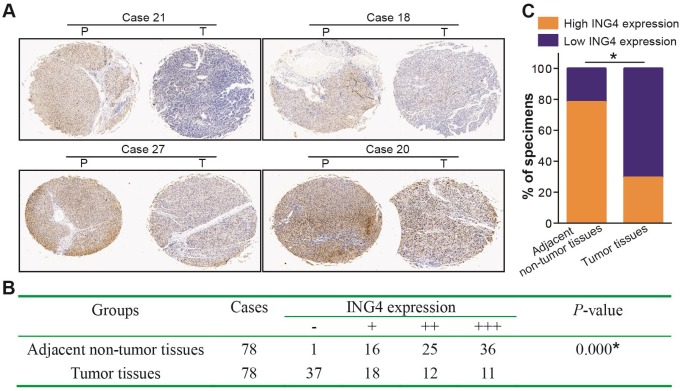
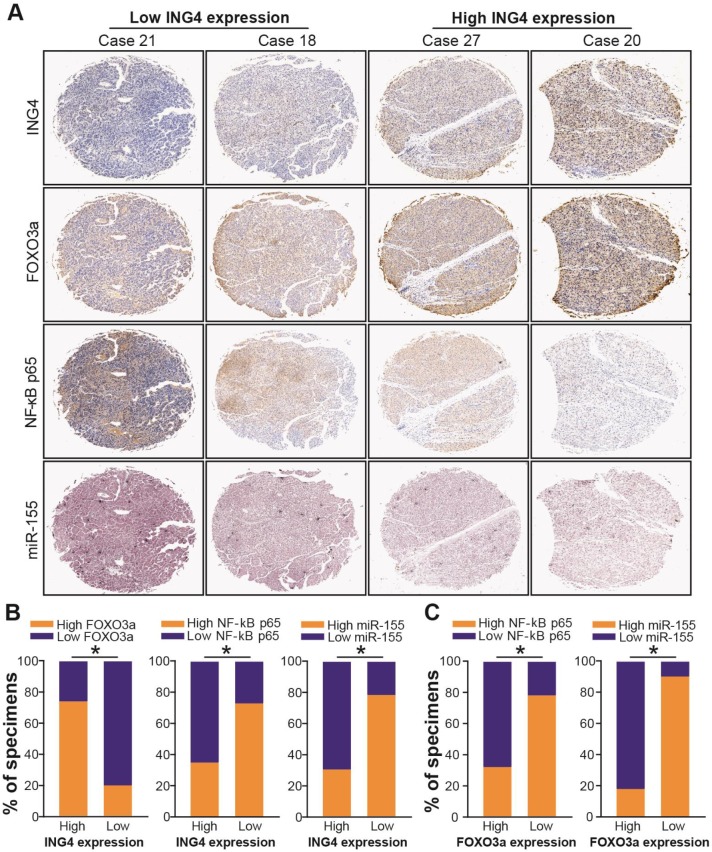
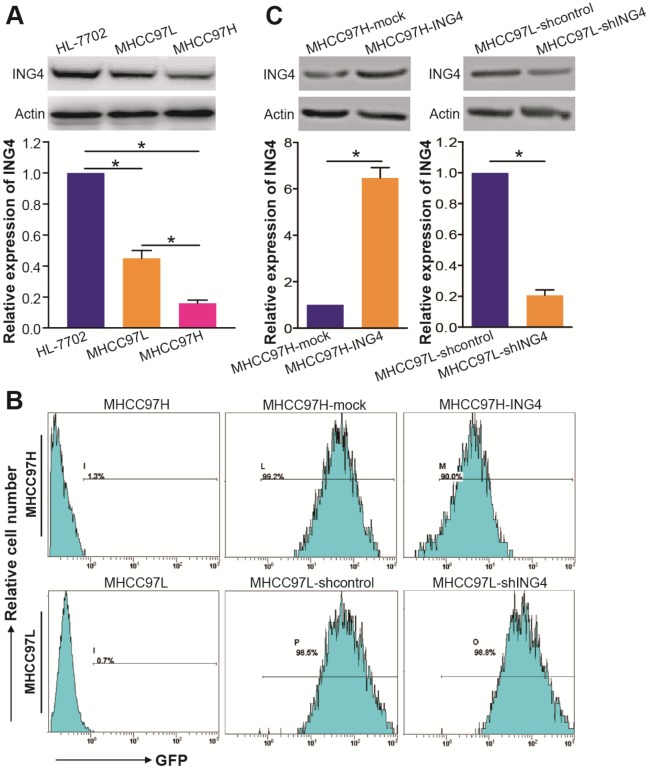
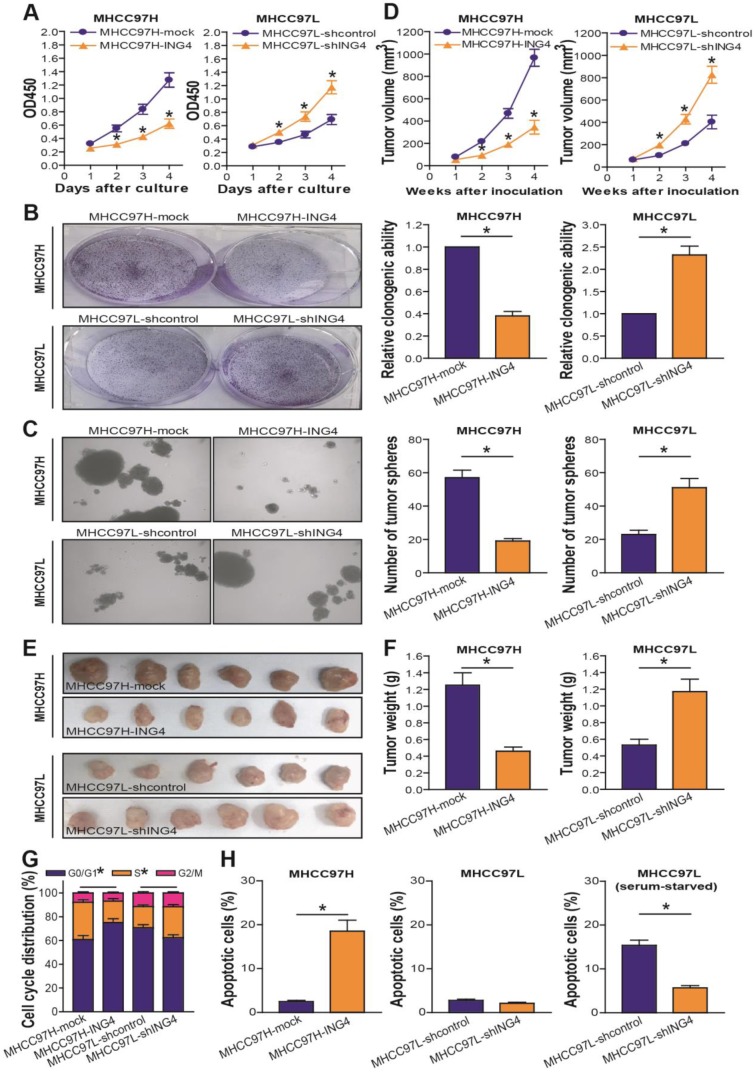
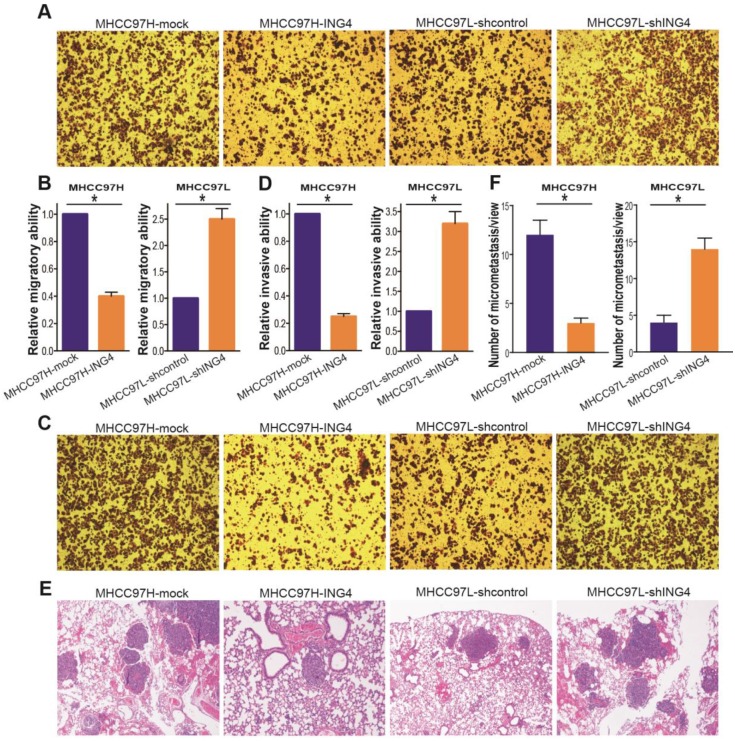
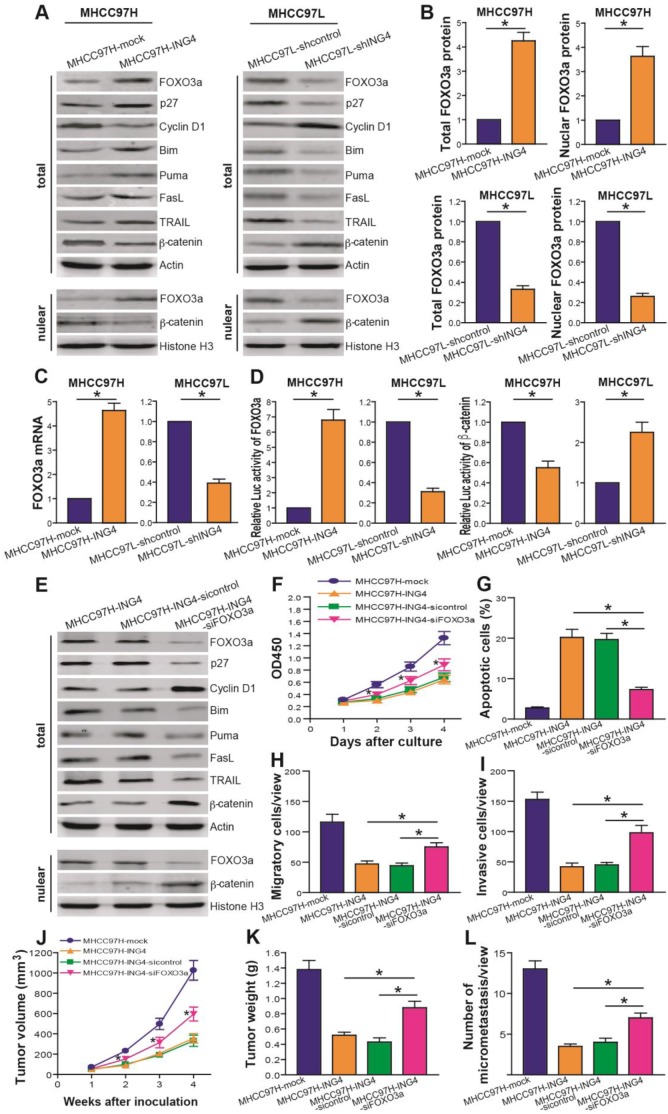
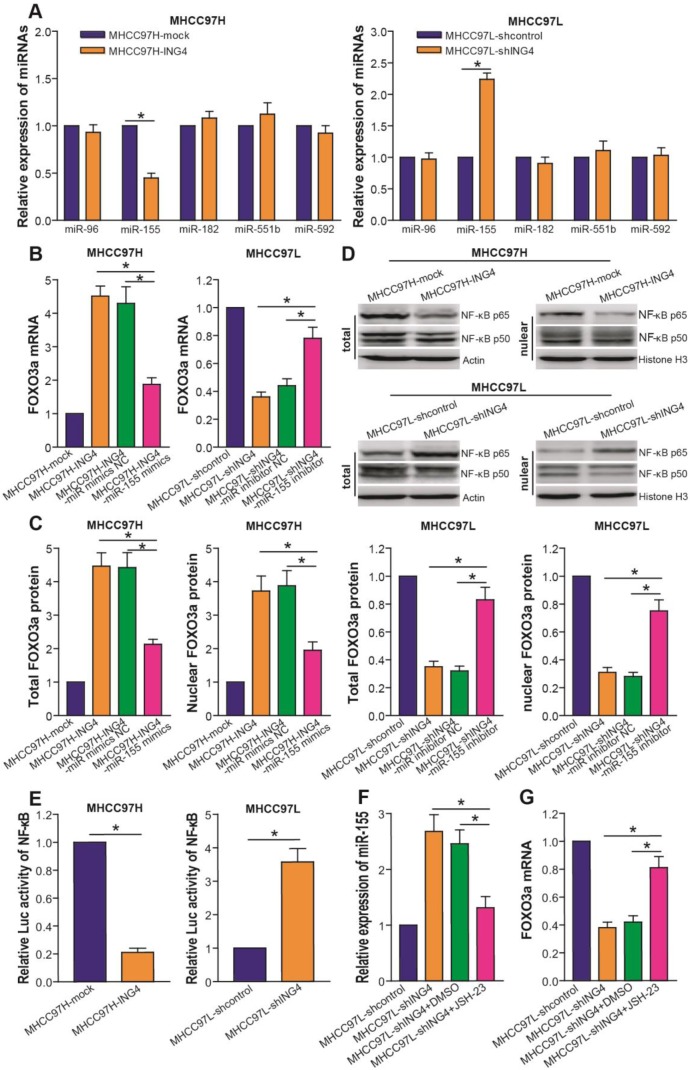
The tumor suppressor ING4 has been shown to be reduced in human HCC. The alteration of ING4 contributes to HCC progression. However, its effect in HCC and the potential mechanism is largely unclear. Herein, we found that downregulation of ING4 in HCC tumor tissues was closely associated with cancer staging, tumor size and vascular invasion. Lentivirus-mediated ING4 overexpression significantly inhibited proliferation, migration and invasion, and induced cell cycle G1 phase arrest and apoptosis in MHCC97H human HCC cells. Moreover, overexpression of ING4 dramatically suppressed MHCC97H tumor cell growth and metastasis to lung in athymic BALB/c nude mice. Mechanistic studies revealed that overexpression of ING4 markedly increased expression of FOXO3a both at the mRNA and protein level as well as enhanced nuclear level and transcriptional activity of FOXO3a in MHCC97H tumor cells. In addition, ING4 repressed transcriptional activity of NF-κB and expression of miR-155 targeting FOXO3a. Knockdown of ING4 exhibited opposing effects in MHCC97L human HCC cells. Interestingly, knockdown of FOXO3a attenuated not only ING4-elicited tumor suppression but also ING4-mediated regulatory effect on FOXO3a downstream targets, confirming that FOXO3a is involved in ING4-directed tumor-inhibitory effect in HCC. Overexpression of miR-155 attenuated ING4-induced upregulation of FOXO3a, whereas inhibition of miR-155 blunted ING4 knockdown-induced reduction of FOXO3a. Furthermore, inhibition of NF-κB markedly impaired ING4 knockdown-induced upregulation of miR-155 and downregulation of FOXO3a. Taken together, our study provided the first compelling evidence that ING4 can suppress human HCC growth and metastasis to a great extent via a NF-κB/miR-155/FOXO3a pathway.
抑瘤基因 ING4 已被证实存在于人类 HCC 中表达降低。ING4 的改变有助于 HCC 的进展。然而,其在 HCC 中的作用及其潜在机制在很大程度上尚不清楚。在此,我们发现 HCC 肿瘤组织中 ING4 的下调与癌症分期、肿瘤大小和血管侵犯密切相关。慢病毒介导的 ING4 过表达可显著抑制 MHCC97H 人 HCC 细胞的增殖、迁移和侵袭,并诱导细胞周期 G1 期阻滞和凋亡。此外,ING4 的过表达可显著抑制裸鼠体内 MHCC97H 肿瘤细胞的生长和转移。机制研究表明,ING4 的过表达可明显增加 MHCC97H 肿瘤细胞中 FOXO3a 的 mRNA 和蛋白水平的表达,增强 FOXO3a 的核水平和转录活性。此外,ING4 抑制 NF-κB 的转录活性和靶向 FOXO3a 的 miR-155 的表达。ING4 的敲低在 MHCC97L 人 HCC 细胞中表现出相反的作用。有趣的是,FOXO3a 的敲低不仅减弱了 ING4 引起的肿瘤抑制作用,而且减弱了 ING4 对 FOXO3a 下游靶标的调节作用,证实 FOXO3a 参与了 HCC 中 ING4 介导的肿瘤抑制作用。miR-155 的过表达减弱了 ING4 诱导的 FOXO3a 上调,而 miR-155 的抑制减弱了 ING4 敲低诱导的 FOXO3a 下调。此外,NF-κB 的抑制显著削弱了 ING4 敲低诱导的 miR-155 上调和 FOXO3a 下调。综上所述,我们的研究首次提供了令人信服的证据,表明 ING4 可通过 NF-κB/miR-155/FOXO3a 通路在很大程度上抑制人 HCC 的生长和转移。