Department of Physical Medicine and Rehabilitation, Mayo Clinic, Rochester, Minnesota.
Sports Medicine Research Institute, The Ohio State University Wexner Medical Center, Columbus, Ohio.
Clin J Sport Med. 2021 Mar 1;31(2):113-119. doi: 10.1097/JSM.0000000000000723.
Athletes who return to sport after anterior cruciate ligament reconstruction (ACLR) demonstrate persistent biomechanical and neuromuscular deficits of the knee. There is limited evidence on what effect a neuromuscular training (NMT) program has on knee biomechanics in a cohort of athletes with ACLR. Therefore, the primary aim of this study was to quantify the effect of an NMT program on knee biomechanics in a cohort of ACLR athletes. Second, the post-training knee biomechanics were compared between the cohort of ACLR and control athletes.
Cohort study.
Controlled laboratory setting.
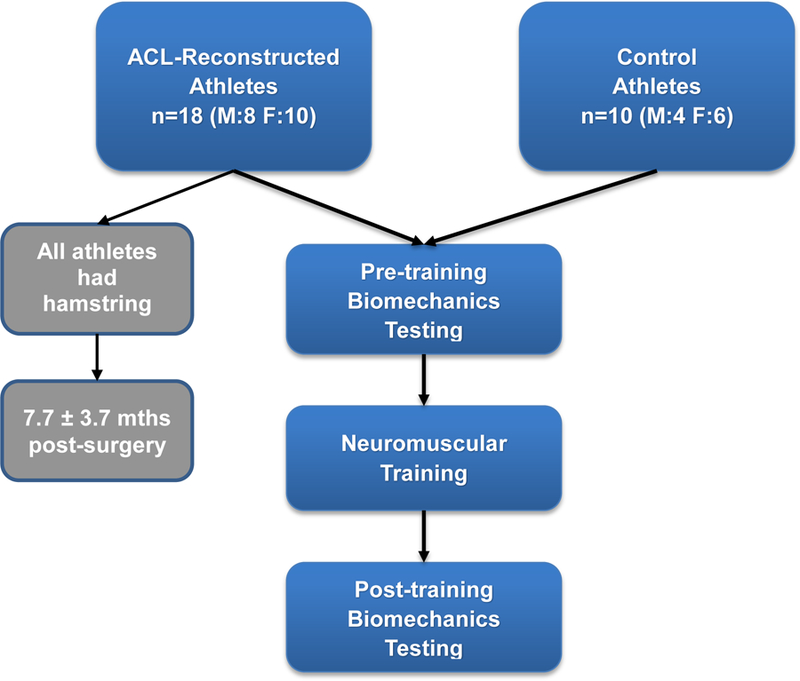
Eighteen athletes with ACLR and 10 control athletes.
Neuromuscular training.
Knee kinematics and kinetics during a double-limb jump-landing task.
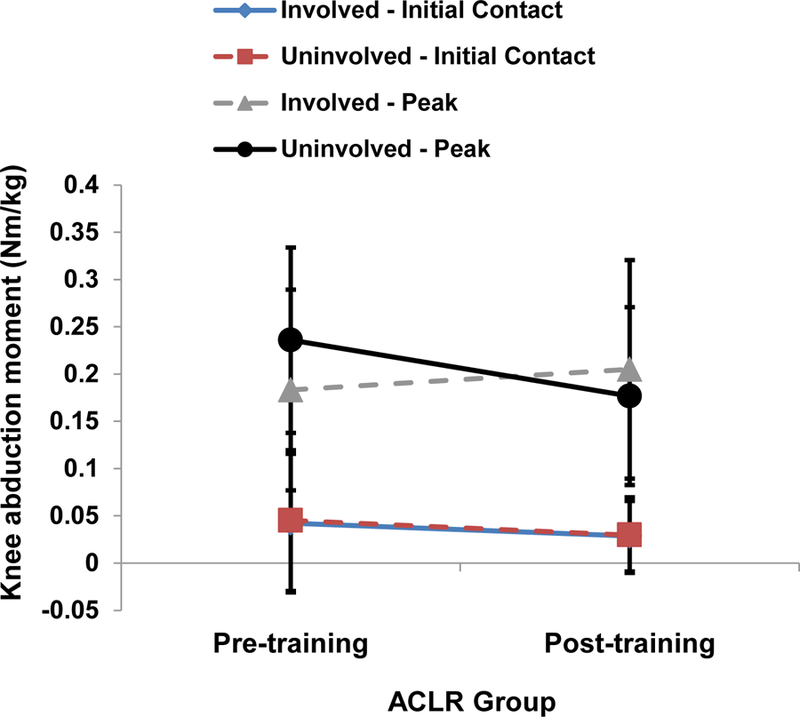
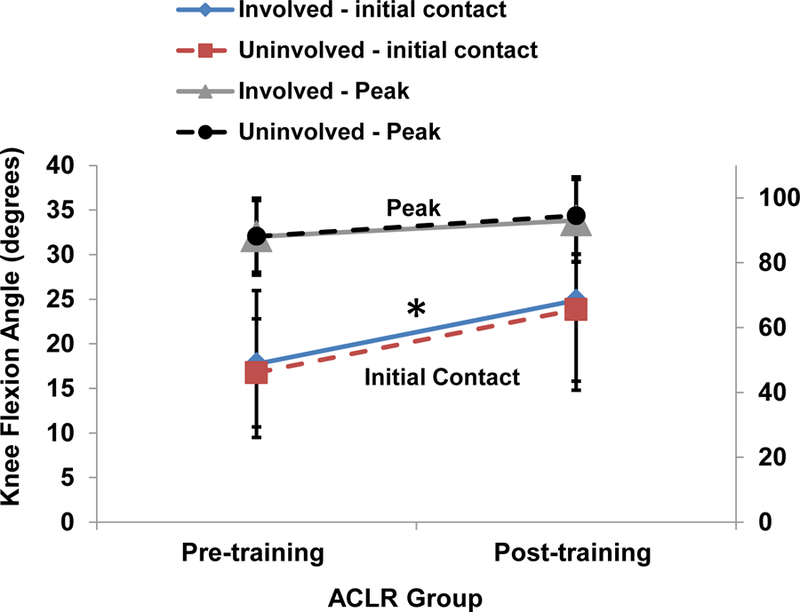
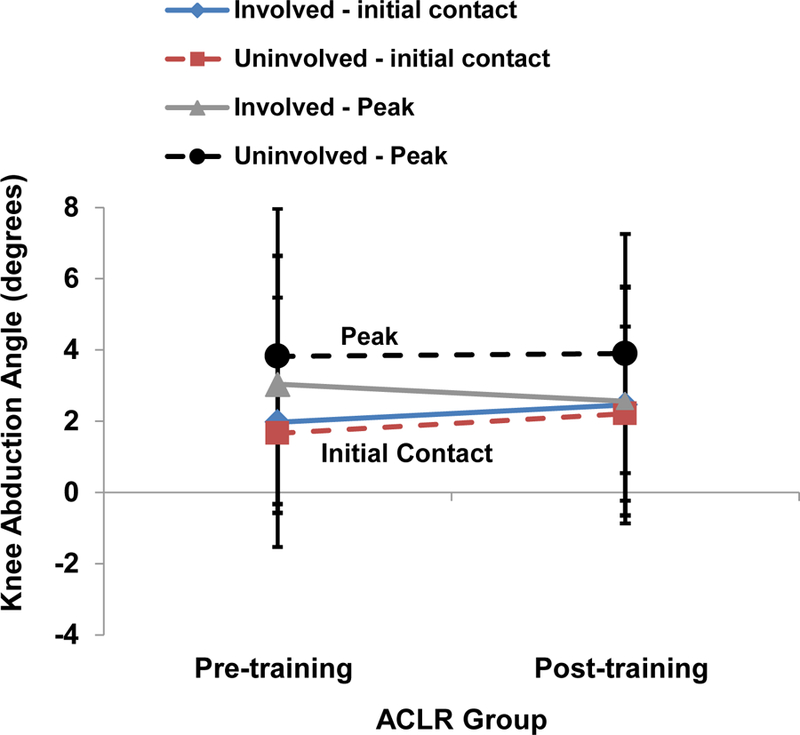
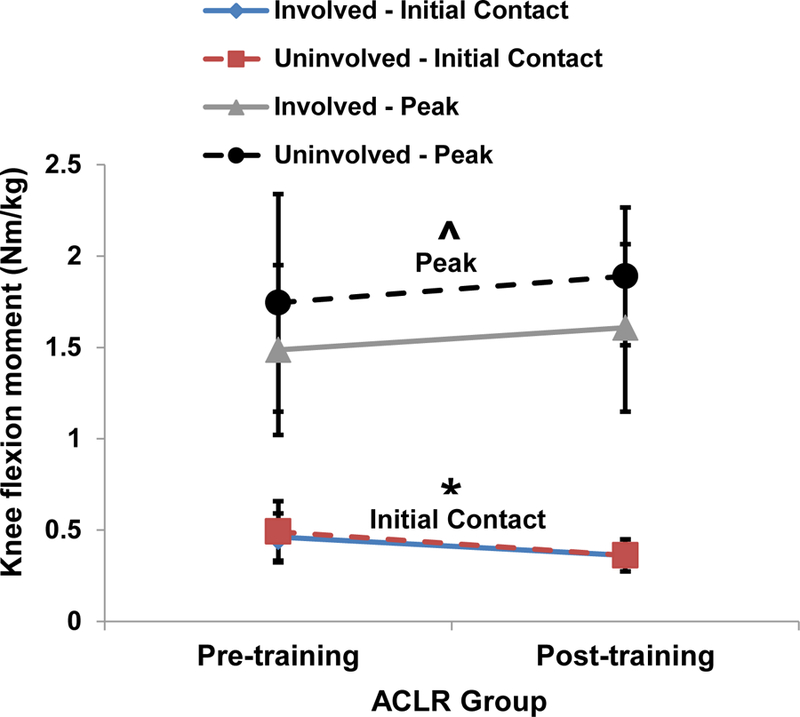
There were no significant interactions (P > 0.05) observed for the athletes with ACLR. However, there was a significant main effect of biomechanics testing session (P < 0.05) for knee flexion angle and moments; athletes with ACLR demonstrated greater knee flexion angle and lower knee flexion moment during the post-training biomechanics testing session. Post-training comparison between the ACLR and control athletes demonstrated no significant interactions (P > 0.05) between the groups. There was a significant main effect of group (P < 0.05) for knee frontal angle, as athletes with ACLR landed with greater knee adduction than the control athletes.
Significant improvements in knee sagittal plane biomechanical measures were observed after the NMT program by the athletes with ACLR. In addition, post-training comparison of the ACLR and control groups demonstrates comparable knee biomechanics.
前交叉韧带重建(ACL)后重返运动的运动员表现出膝关节持续的生物力学和神经肌肉缺陷。关于神经肌肉训练(NMT)计划对 ACL 重建运动员队列的膝关节生物力学有何影响的证据有限。因此,本研究的主要目的是量化 NMT 计划对 ACL 重建运动员队列膝关节生物力学的影响。其次,比较 ACLR 运动员和对照组运动员的训练后膝关节生物力学。
队列研究。
对照实验室环境。
18 名 ACL 重建运动员和 10 名对照组运动员。
神经肌肉训练。
双下肢跳跃着陆任务中的膝关节运动学和动力学。
对于 ACL 重建运动员,未观察到显著的交互作用(P > 0.05)。然而,对于膝关节屈曲角度和力矩,存在生物力学测试阶段的显著主要影响(P < 0.05);ACL 重建运动员在训练后生物力学测试阶段表现出更大的膝关节屈曲角度和更低的膝关节屈曲力矩。ACL 重建运动员与对照组运动员之间的训练后比较,两组之间没有显著的交互作用(P > 0.05)。对于膝关节额状面角度,存在显著的组间主要效应(P < 0.05),因为 ACL 重建运动员的膝关节内收角度大于对照组运动员。
ACL 重建运动员在 NMT 计划后观察到膝关节矢状面生物力学测量的显著改善。此外,ACL 重建运动员和对照组运动员的训练后比较表明膝关节生物力学具有可比性。