Neurobiology of Social Behavior Laboratory, Department of Psychology, Boston College, Chestnut Hill, MA, United States.
Neurobiology of Social Behavior Laboratory, Department of Psychology, Boston College, Chestnut Hill, MA, United States.
Front Neuroendocrinol. 2019 Apr;53:100737. doi: 10.1016/j.yfrne.2019.02.001. Epub 2019 Feb 10.
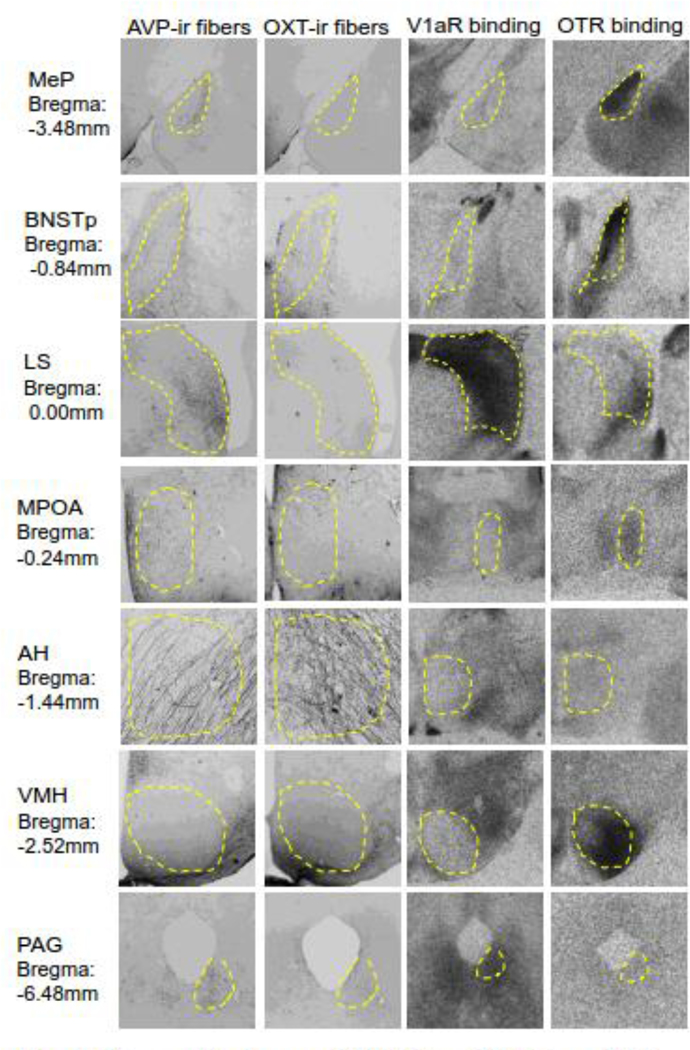
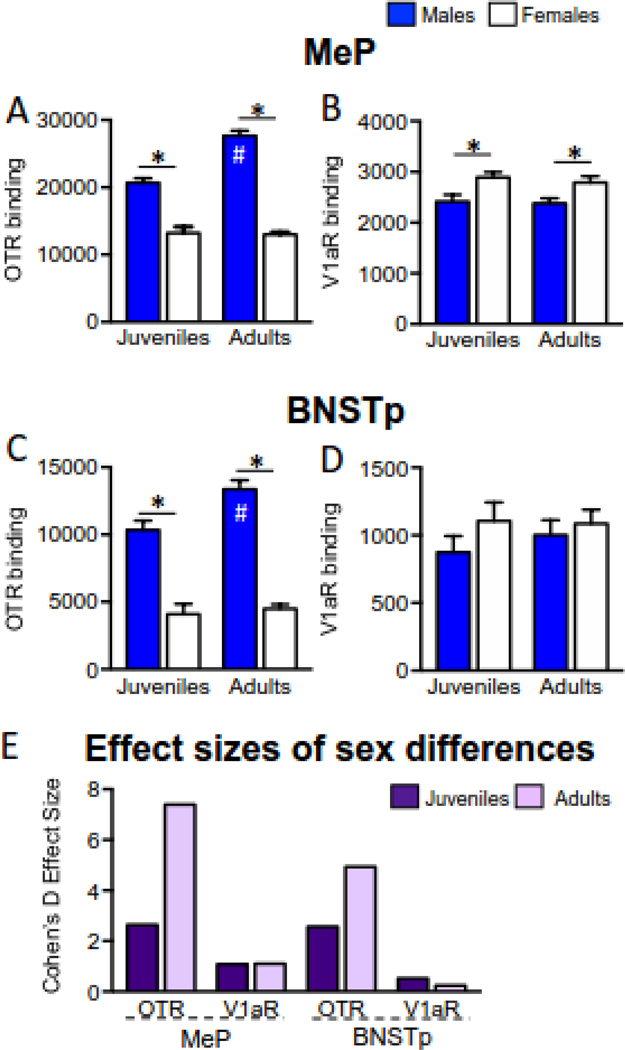
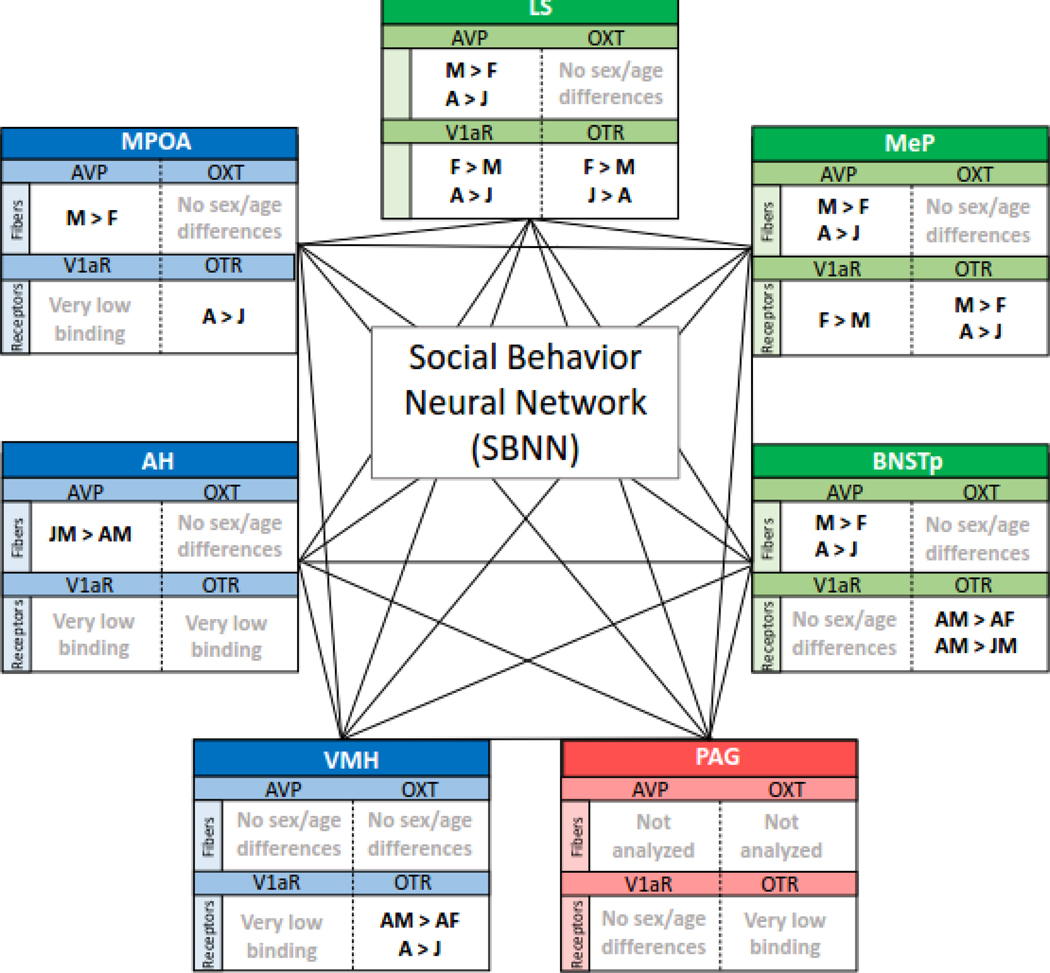
Vasopressin (AVP) and oxytocin (OXT) regulate social behavior by binding to their canonical receptors, the vasopressin V1a receptor (V1aR) and oxytocin receptor (OTR), respectively. Recent studies suggest that these neuropeptides may also signal via each other's receptors. The extent to which such cross-system signaling occurs likely depends on anatomical overlap between AVP/OXT fibers and V1aR/OTR expression. By comparing AVP/OXT fiber densities with V1aR/OTR binding densities throughout the rat social behavior neural network (SBNN), we propose the potential for cross-system signaling in four regions: the medial amygdala (MeA), bed nucleus of the stria terminalis (BNSTp), medial preoptic area, and periaqueductal grey. We also discuss possible implications of corresponding sex (higher in males versus females) and age (higher in adults versus juveniles) differences in AVP fiber and OTR binding densities in the MeA and BNSTp. Overall, this review reveals the need to unravel the consequences of potential cross-system signaling between AVP and OXT systems in the SBNN for the regulation of social behavior.
加压素 (AVP) 和催产素 (OXT) 通过与各自的经典受体,即血管加压素 V1a 受体 (V1aR) 和催产素受体 (OTR) 结合来调节社会行为。最近的研究表明,这些神经肽也可能通过彼此的受体发出信号。这种跨系统信号传递的程度可能取决于 AVP/OXT 纤维和 V1aR/OTR 表达之间的解剖重叠。通过比较大鼠社会行为神经网络 (SBNN) 中 AVP/OXT 纤维密度与 V1aR/OTR 结合密度,我们提出了四个区域中可能存在跨系统信号传递的观点:杏仁内侧核 (MeA)、终纹床核 (BNSTp)、内侧视前区和中脑导水管周围灰质。我们还讨论了 MeA 和 BNSTp 中 AVP 纤维和 OTR 结合密度的对应性别(雄性高于雌性)和年龄(成年高于幼年)差异的可能影响。总的来说,这篇综述揭示了需要阐明 SBNN 中 AVP 和 OXT 系统之间潜在的跨系统信号传递对社会行为调节的后果。