Graduate Institute of Medicine, College of Medicine, Kaohsiung Medical University, Kaohsiung, 807, Taiwan.
Department of Medical Research, Kaohsiung Medical University Hospital, Kaohsiung, 807, Taiwan.
Breast Cancer Res. 2019 Feb 12;21(1):23. doi: 10.1186/s13058-019-1114-3.
Metastasis is the major cause of death from breast cancer. Colonization and adaption of metastatic cells in distant organs is a rate-limiting step of the cancer spreading. The underlying mechanisms responsible for the colonization of breast cancer to lung metastatic niches are not fully understood.
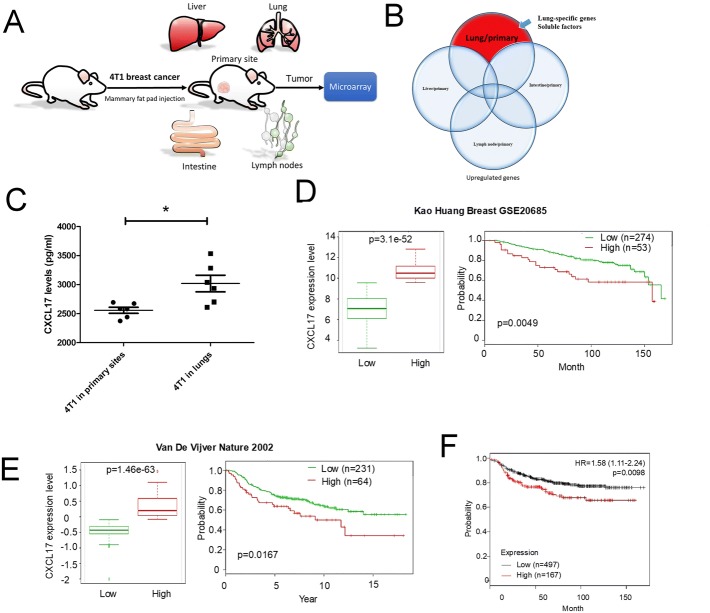
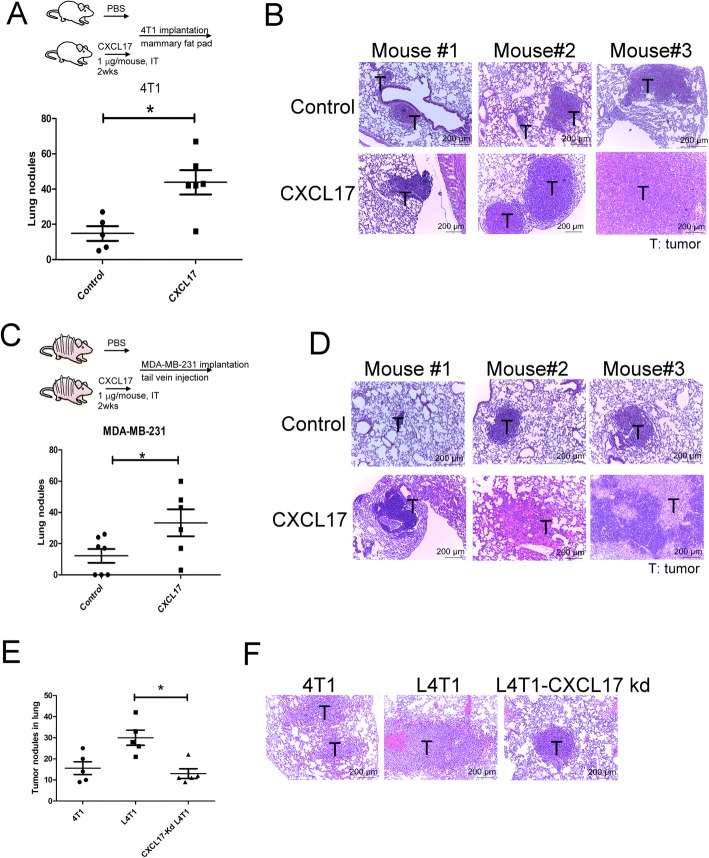
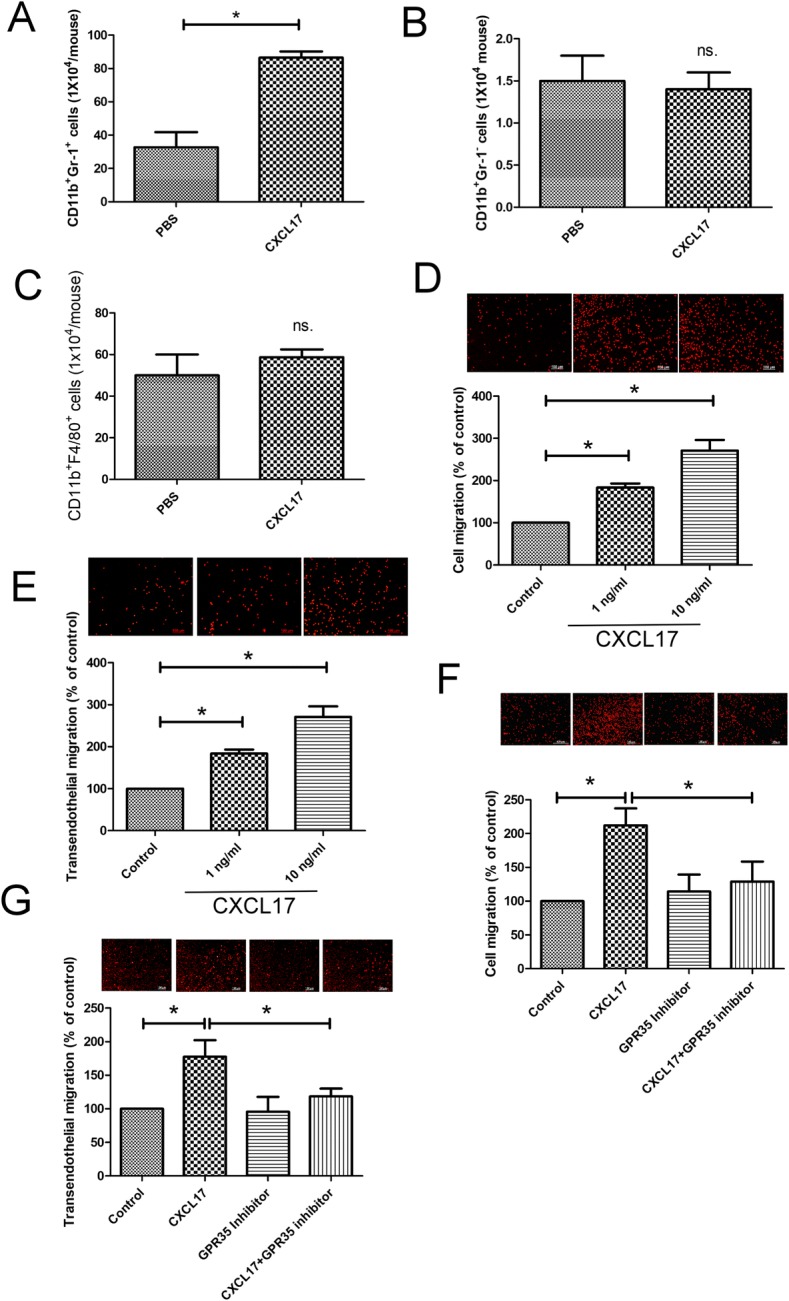
Specific gene contributions to lung metastasis were identified by comparing gene profiles of 4T1 tumors metastasizing to various organs via microarray. The oncogenic properties CXCL17 were examined by in vivo spontaneous metastasis mouse model. The chemotactic activity of CXCL17 on CD11bGr-1 myeloid-derived suppressor cells (MDSCs) was examined by both in vitro and in vivo models. The therapeutic effects of MDSC depletion and platelet-derived growth factor-BB (PDGF-BB) inhibition were examined by orthotic models.
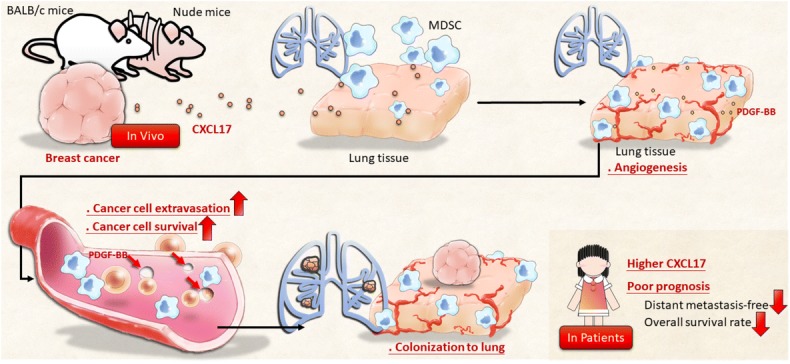
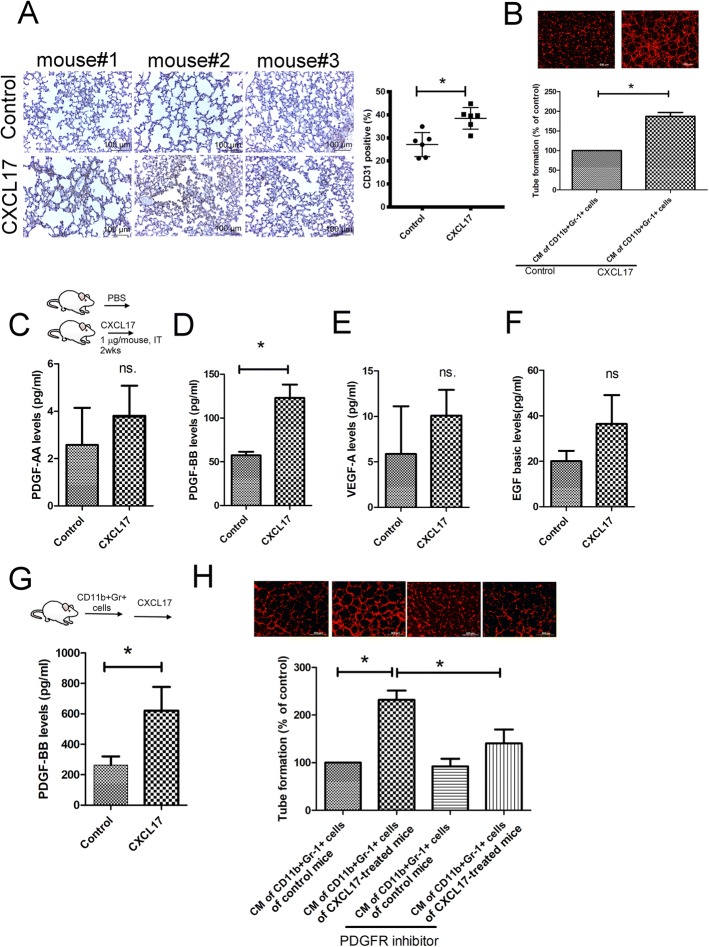
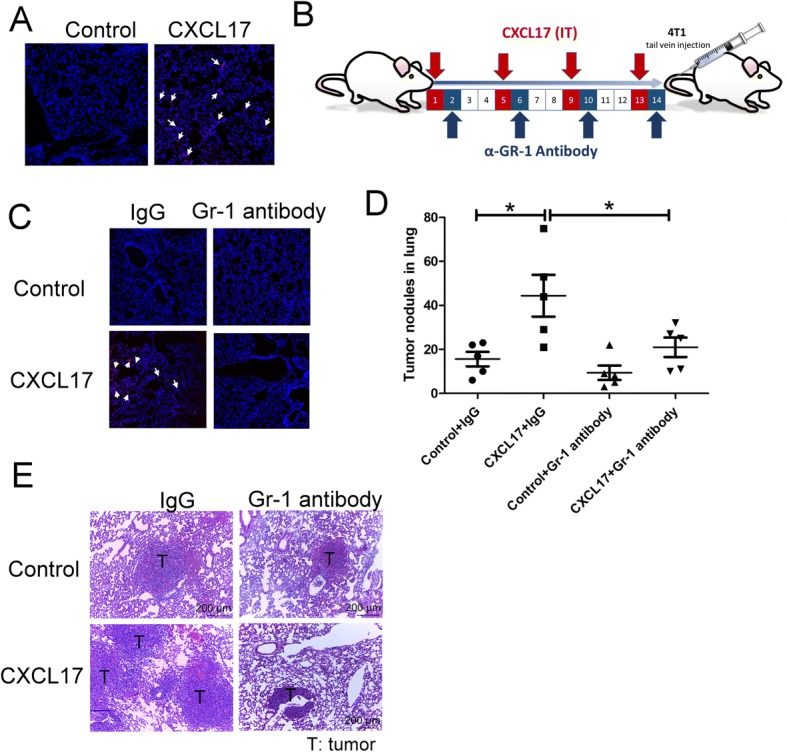
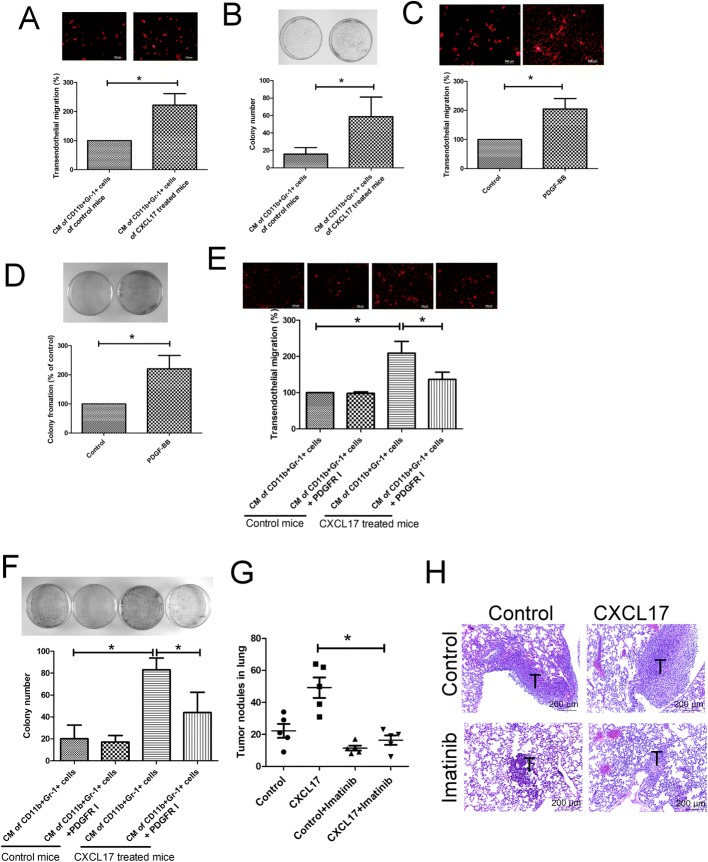
Here, we demonstrate that breast cancer cells secrete CXCL17, which increases the accumulation of CD11bGr-1 MDSCs in the lungs. Metastatic lung-infiltrating CD11bGr-1 MDSCs induce angiogenesis in the lungs and facilitate cancer extravasation and survival that ultimately promote lung metastases. CXCL17 increases CD11bGr-1 MDSCs to express PDGF-BB, which not only contributes to CD11bGr-1 MDSC-mediated angiogenesis in the lung metastatic niche, but is also involved in the colonization of breast cancer. Consequently, both CD11bGr-1 MDSC depletion and PDGF receptor inhibitor effectively prevents CXCL17-driven lung metastasis in breast cancer. More importantly, patients with high levels of CXCL17 have shorter distant metastasis-free and overall survival rates, indicators of poor prognosis.
Our study reveals that MDSCs derived by CXCL17 contribute to the establishment of a lung metastatic niche by PDGF-BB secretion and provide a rationale for development of CXCL17 or PDGF-BB antagonists to inhibit or prevent lung metastasis in cases of breast cancer.
转移是乳腺癌死亡的主要原因。转移性细胞在远处器官的定植和适应是癌症扩散的限速步骤。乳腺癌向肺转移灶定植的潜在机制尚未完全阐明。
通过微阵列比较转移到不同器官的 4T1 肿瘤的基因谱,确定导致肺转移的特定基因贡献。通过体内自发转移小鼠模型研究了 CXCL17 的致癌特性。通过体外和体内模型研究了 CXCL17 对 CD11bGr-1 髓源抑制细胞(MDSC)的趋化活性。通过异体模型研究了 MDSC 耗竭和血小板衍生生长因子-BB(PDGF-BB)抑制的治疗效果。
在这里,我们证明乳腺癌细胞分泌 CXCL17,增加了 CD11bGr-1 MDSC 在肺部的积累。转移性肺浸润 CD11bGr-1 MDSC 诱导肺部血管生成,并促进癌症外渗和存活,最终促进肺转移。CXCL17 增加 CD11bGr-1 MDSC 表达 PDGF-BB,这不仅有助于肺转移灶中 CD11bGr-1 MDSC 介导的血管生成,而且还参与乳腺癌的定植。因此,CD11bGr-1 MDSC 耗竭和 PDGF 受体抑制剂均可有效阻止 CXCL17 驱动的乳腺癌肺转移。更重要的是,CXCL17 水平高的患者具有更短的无远处转移和总生存期,这是预后不良的指标。
我们的研究表明,CXCL17 衍生的 MDSC 通过 PDGF-BB 分泌有助于建立肺转移灶,为开发 CXCL17 或 PDGF-BB 拮抗剂以抑制或预防乳腺癌肺转移提供了依据。