Department of Energy, Environmental, and Chemical Engineering, Washington University in St. Louis, St. Louis, MO, 63130, USA.
Department of Ophthalmology and Visual Sciences, Washington University in St. Louis, St. Louis, MO, 63110, USA.
Sci Rep. 2019 Feb 12;9(1):1870. doi: 10.1038/s41598-019-38803-4.
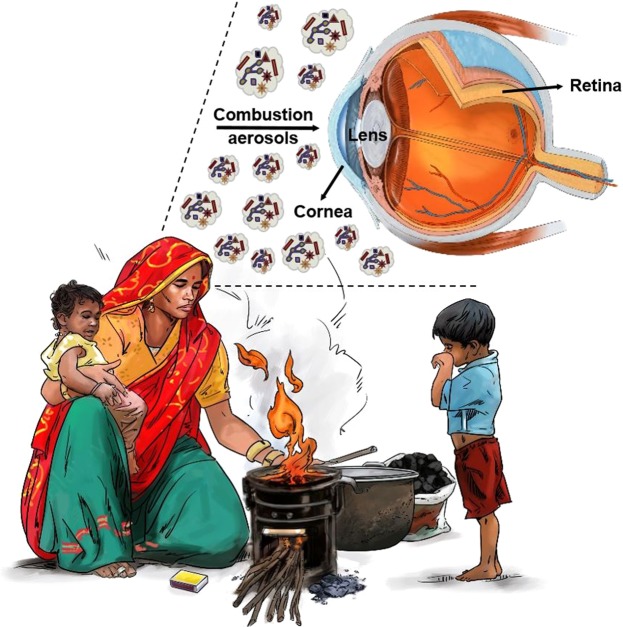
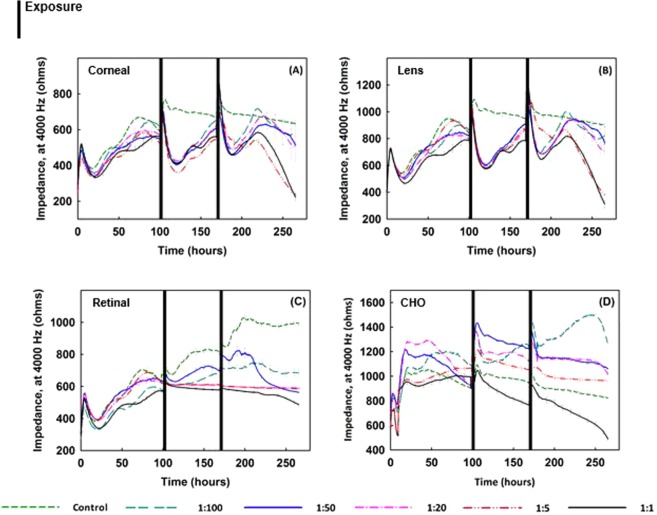
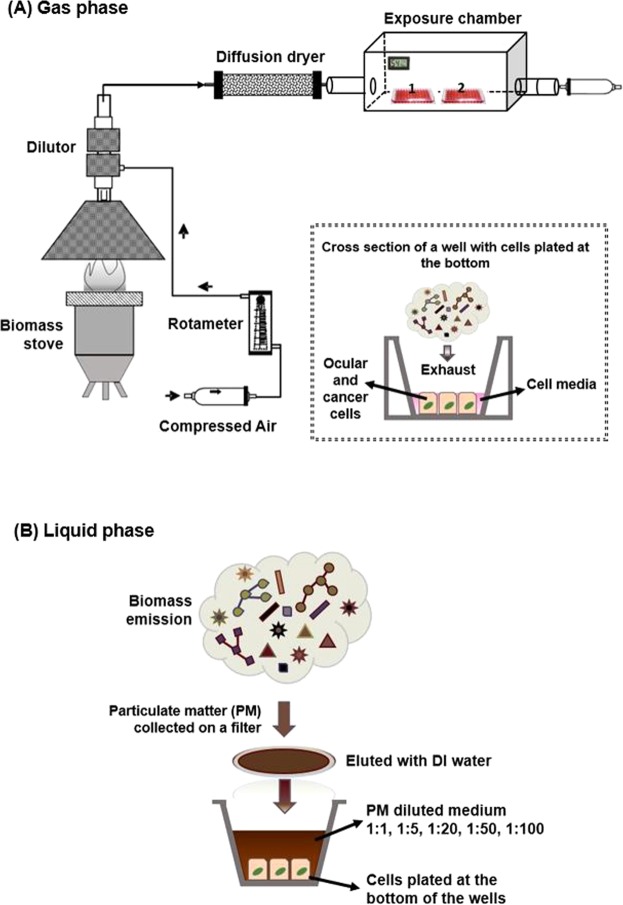
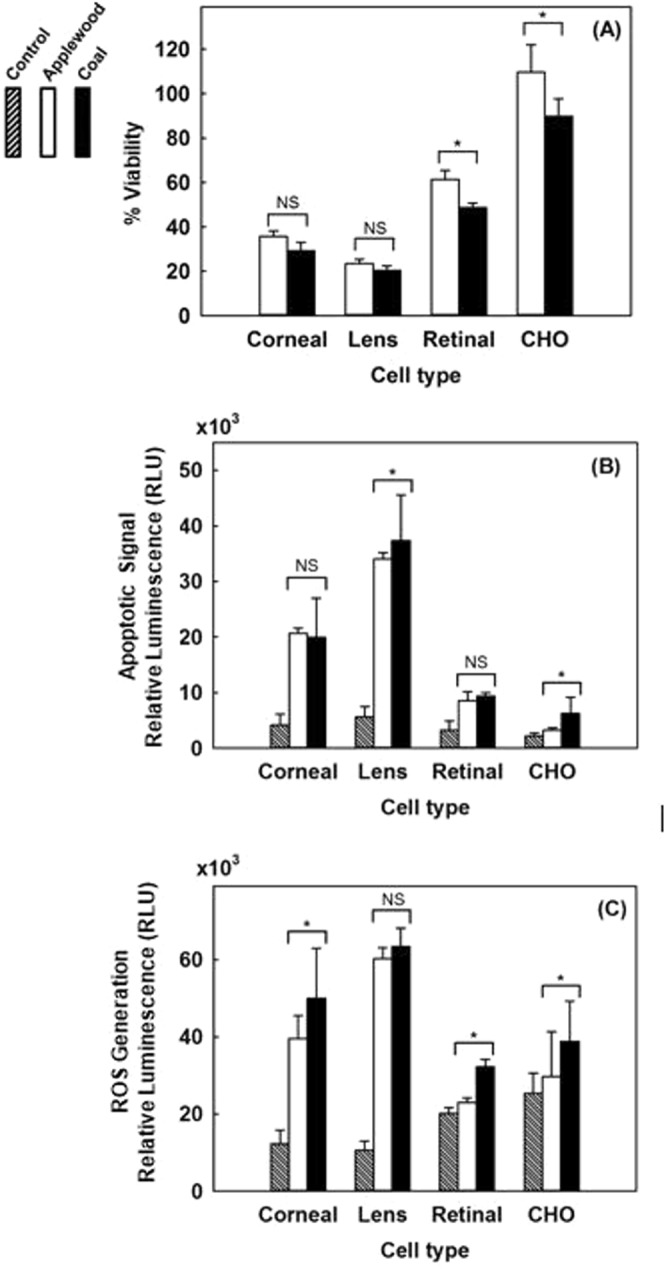
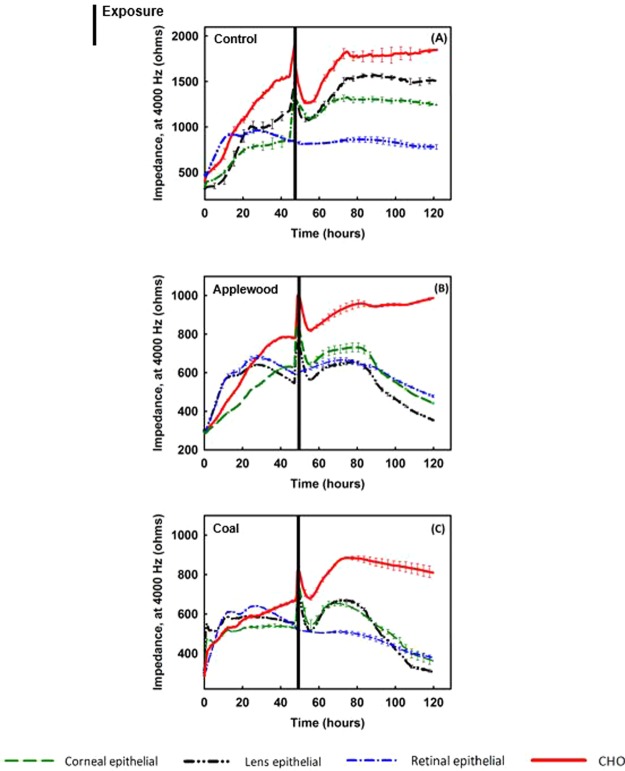
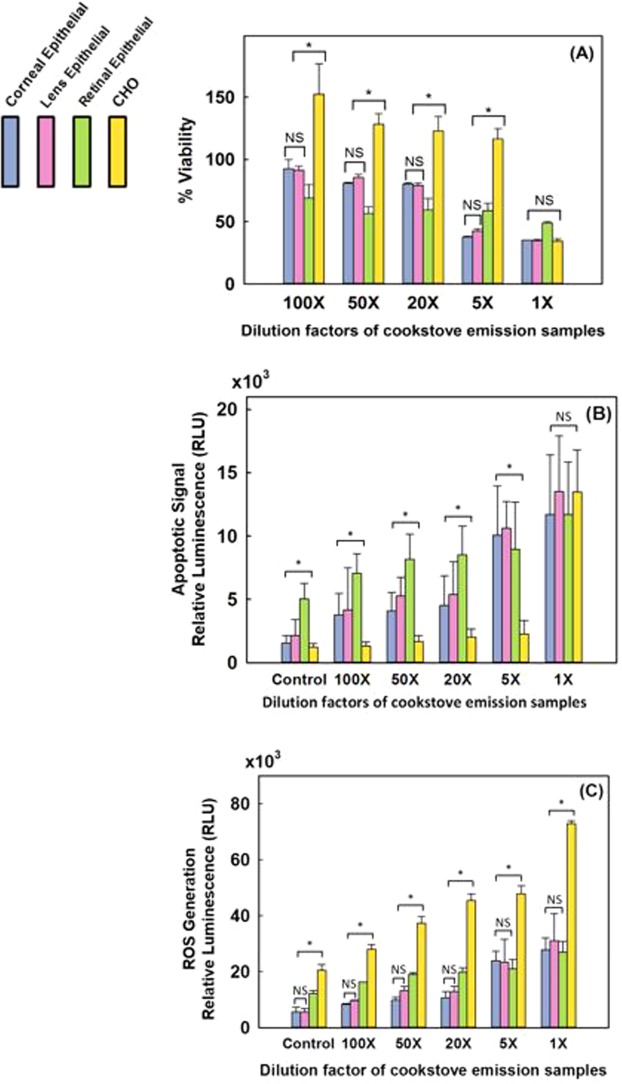
More than a third of the world's population relies on solid fuels for cooking and heating, with major health consequences. Although solid fuel combustion emissions are known to increase the prevalence of illnesses such as chronic obstructive pulmonary disease and lung cancer, however, their effect on the eyes is underexplored. This study assesses the acute toxicity of solid fuel combustion emissions on healthy ocular cells and a cancer cell line. Three healthy ocular cell lines (corneal, lens, and retinal epithelial cells) and a cancer cell line (Chinese hamster ovary cells) were exposed to liquid and gas phase emissions from applewood and coal combustion. Following the exposure, real-time cell attachment behavior was monitored for at least 120 hours with electrical cell impedance spectroscopy. The viability of the cells, amount of apoptotic cells, and generation of reactive oxygen species (ROS) were quantified with MTT, ApoTox-Glo, and ROS-Glo HO assays, respectively. The results showed that coal emissions compromised the viability of ocular cells more than applewood emissions. Interestingly, the cancer cells, although their viability was not compromised, generated 1.7 to 2.7 times more ROS than healthy cells. This acute exposure study provides compelling proof that biomass combustion emissions compromise the viability of ocular cells and increase ROS generation. The increased ROS generation was fatal for ocular cells, but it promoted the growth of cancer cells.
世界上超过三分之一的人口依赖固体燃料来烹饪和取暖,这对健康造成了重大影响。虽然固体燃料燃烧排放物已被证实会增加慢性阻塞性肺病和肺癌等疾病的发病率,但它们对眼睛的影响仍未得到充分研究。本研究评估了固体燃料燃烧排放物对健康眼细胞和癌细胞系的急性毒性。三种健康眼细胞系(角膜、晶状体和视网膜上皮细胞)和一种癌细胞系(中国仓鼠卵巢细胞)暴露于苹果木和煤燃烧的液相和气相排放物中。暴露后,通过电细胞阻抗谱至少 120 小时监测细胞实时附着行为。用 MTT、ApoTox-Glo 和 ROS-Glo HO 测定法分别定量细胞活力、凋亡细胞数量和活性氧物种(ROS)的生成。结果表明,与苹果木排放物相比,煤排放物更能损害眼细胞的活力。有趣的是,癌细胞虽然其活力没有受到损害,但产生的 ROS 比健康细胞多 1.7 至 2.7 倍。这项急性暴露研究提供了令人信服的证据,证明生物质燃烧排放物会损害眼细胞的活力并增加 ROS 的生成。增加的 ROS 生成对眼细胞是致命的,但它促进了癌细胞的生长。