Treskes R W, Koole M, Kauw D, Winter M M, Monteiro M, Dohmen D, Abu-Hanna A, Schijven M P, Mulder B J, Bouma B J, Schuuring M J
Department of Cardiology, Leiden University Medical Centre, Leiden, The Netherlands.
Department of Cardiology, Academic Medical Centre, Amsterdam, The Netherlands.
Neth Heart J. 2019 Mar;27(3):152-160. doi: 10.1007/s12471-019-1237-2.
Mobile health (mHealth) could improve the outcome of grown-up patients with congenital heart disease (GUCH) and reduce their emergency care utilisation. Inappropriate use of mHealth, however, can lead to data overload for professionals and unnecessary data collection for patients, increasing the burden for both. We aimed to determine the clinical characteristics of patients with high emergency care utilisation and to test whether these patients were willing to start using mHealth.
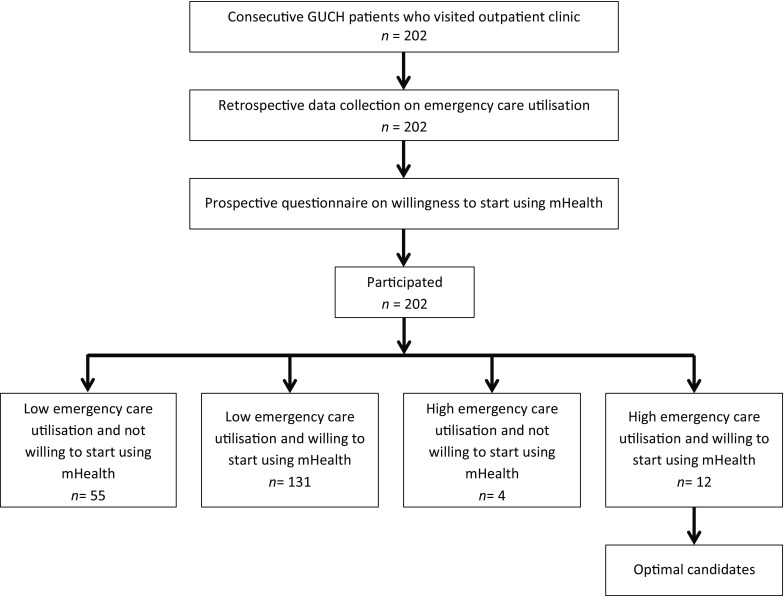
Clinical characteristics and emergency care utilisation of consecutive GUCH patients who visited one of the two participating cardiologists at the outpatient clinic of the Academic Medical Centre in Amsterdam were studied retrospectively. All patients were approached to fill in an mHealth questionnaire. A frequency of three or more emergency visits in 5 years was defined as high emergency care utilisation.
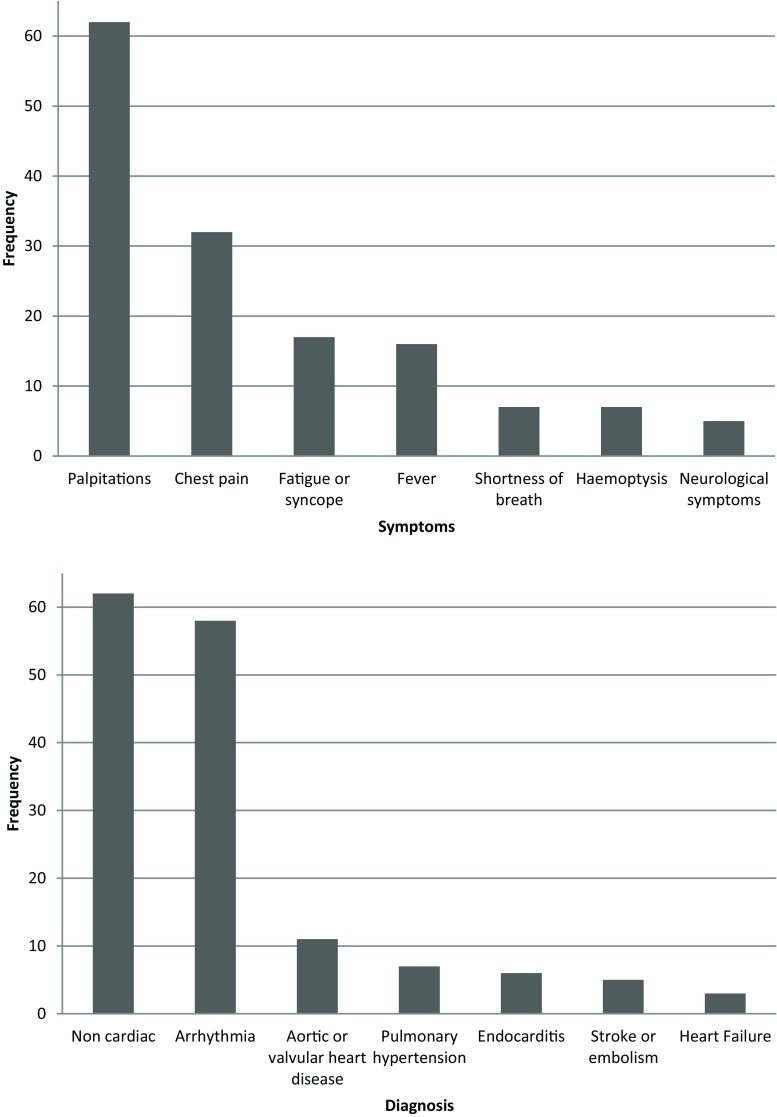
In total, 202 consecutive GUCH patients who visited one of the two participating cardiologists were studied. Median age was 41 years, 47% were male, and 51% were symptomatic. In the previous 5 years, 134 emergency visits were identified. Of all patients, 8% had high emergency care utilisation. High emergency care utilisation was associated with patients being symptomatic, using antiarrhythmic drugs or diuretics. In total, 75% of all patients with high emergency care utilisation were willing to start using mHealth.
GUCH patients who are symptomatic, those on antiarrhythmic drug therapy and those on diuretics are suitable candidates for enrolment in future mHealth initiatives because of both high care utilisation and high motivation to start using mHealth.
移动健康(mHealth)可改善成年先天性心脏病(GUCH)患者的治疗效果,并减少他们对急诊护理的使用。然而,mHealth使用不当可能导致专业人员数据过载以及患者不必要的数据收集,增加双方的负担。我们旨在确定急诊护理高使用率患者的临床特征,并测试这些患者是否愿意开始使用mHealth。
对在阿姆斯特丹学术医疗中心门诊就诊于两位参与研究的心脏病专家之一的连续性GUCH患者的临床特征和急诊护理使用情况进行回顾性研究。所有患者均被邀请填写一份mHealth问卷。将5年内急诊就诊次数达到或超过3次定义为急诊护理高使用率。
共研究了202例连续就诊于两位参与研究的心脏病专家之一的GUCH患者。中位年龄为41岁,47%为男性,51%有症状。在过去5年中,共发现134次急诊就诊。所有患者中,8%有急诊护理高使用率。急诊护理高使用率与患者有症状、使用抗心律失常药物或利尿剂有关。所有急诊护理高使用率患者中,75%愿意开始使用mHealth。
有症状的GUCH患者、接受抗心律失常药物治疗的患者以及使用利尿剂的患者,因其高护理使用率和开始使用mHealth的高积极性,是未来mHealth计划的合适入选对象。