Nederend Marieke, Zandstra Tjitske E, Kiès Philippine, Jongbloed Monique R M, Vliegen Hubert W, Treskes Roderick W, Schalij Martin J, Atsma Douwe E, Egorova Anastasia D
CAHAL, Center for Congenital Heart Disease Amsterdam Leiden, Leiden University Medical Center, Albinusdreef 2, 2333 ZA Leiden, the Netherlands.
Department of Cardiology, Leiden University Medical Center, Albinusdreef 2, 2333 ZA Leiden, the Netherlands.
Eur Heart J Digit Health. 2021 Feb 22;2(2):215-223. doi: 10.1093/ehjdh/ztab028. eCollection 2021 Jun.
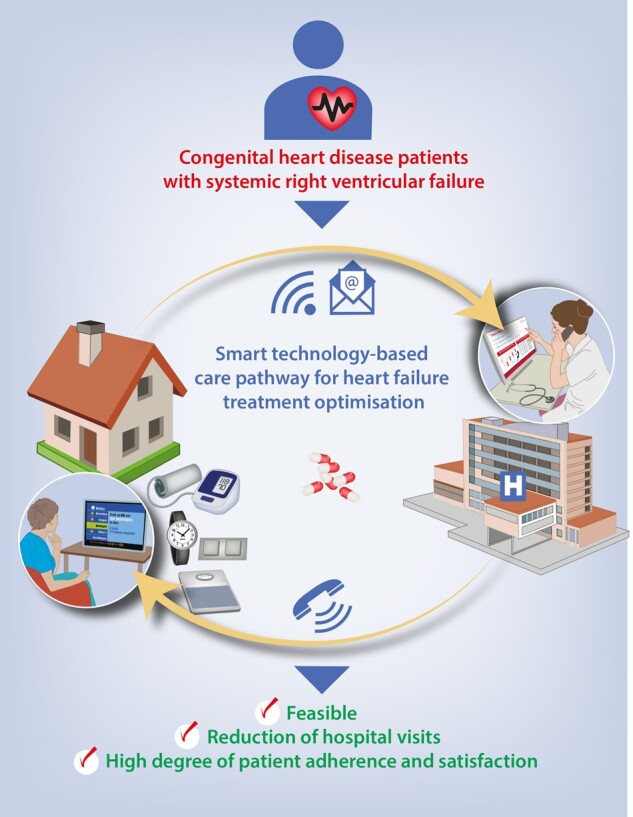
Patients with a systemic right ventricle (sRV) in the context of transposition of the great arteries (TGA) after atrial switch or congenitally corrected TGA are prone to heart failure and arrhythmias. This study evaluated feasibility, patient adherence, and satisfaction of a smart technology-based care pathway for heart failure treatment optimization in these patients.
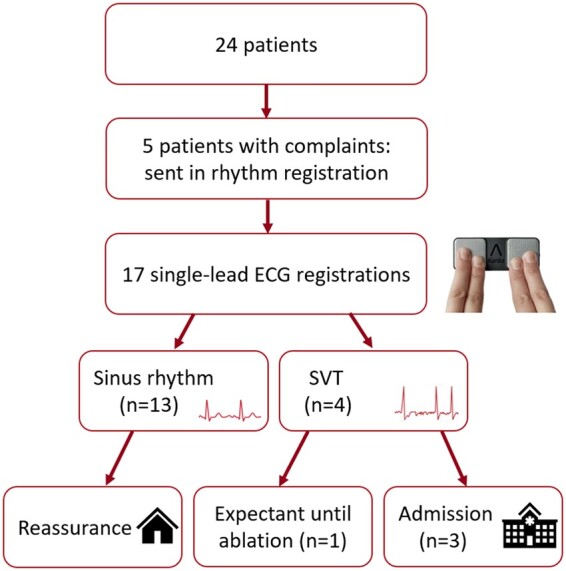
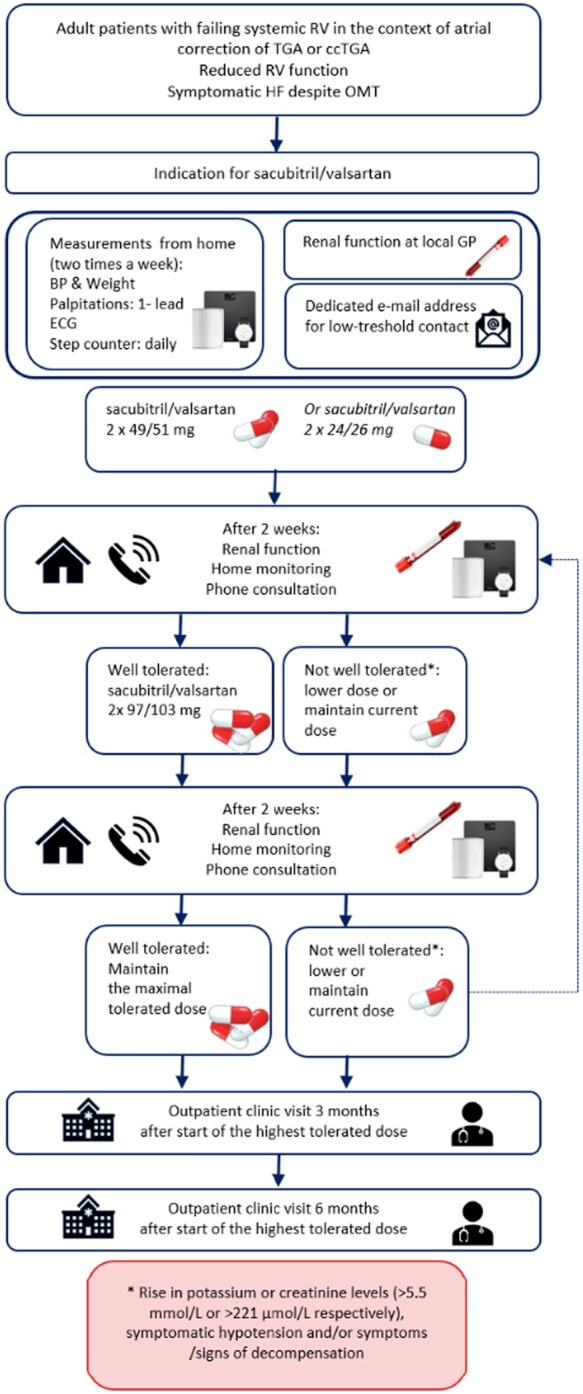
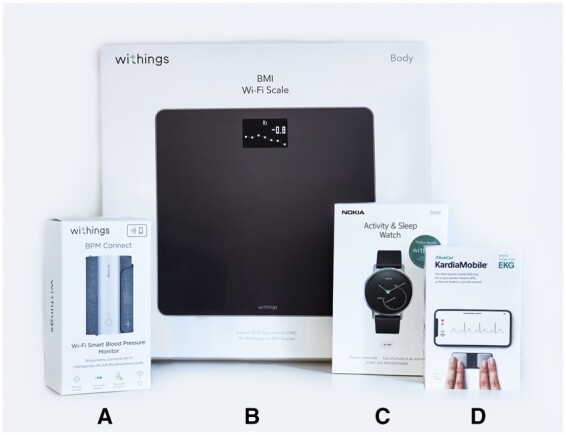
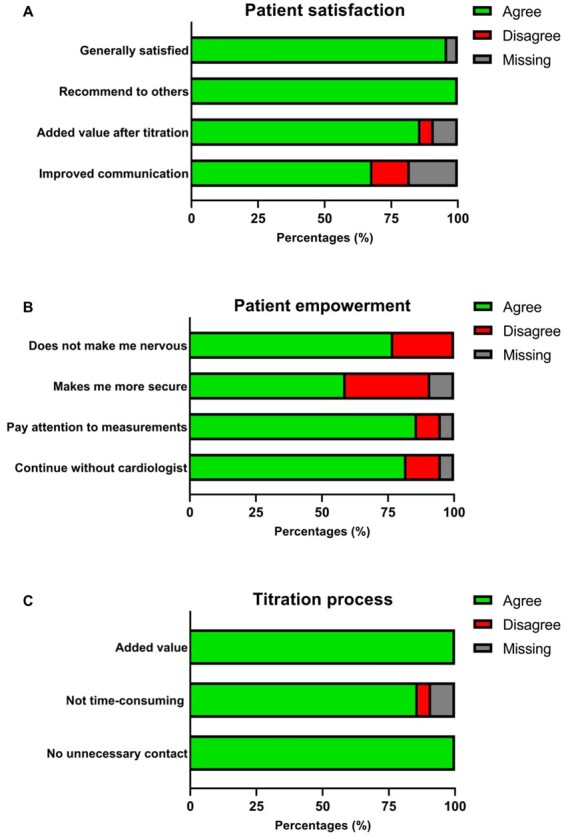
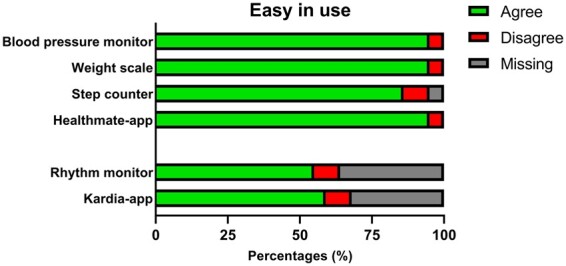
Patients with symptomatic sRV failure eligible for initiation of sacubitril/valsartan were provided with four smartphone compatible devices (blood pressure monitor, weight scale, step counter, and rhythm monitor) and were managed according to a smart technology-based care pathway. Biweekly sacubitril/valsartan titration visits were replaced by electronical visits, patients were advised to continue measurements at least weekly after titration. Data of 24 consecutive sRV patients (median age 47 years, 50% female) who participated in the smart technology-based care pathway were analysed. Median home-hospital distance was 65 km (maximum 227 km). Most patients (20, 83.3%) submitted weekly measurements; 100% submitted prior to electronical visits. Titration conventionally occurs during a hospital visit. By implementing eHealth smart technology, 68 such trips to hospital were replaced by virtual visits facilitated by remote monitoring. An eHealth questionnaire was completed by 22 patients (92%), and 96% expressed satisfaction. After titration, 30 instances of remote adjustment of heart failure medication in addition to scheduled outpatient clinic visits occurred, one (4%) heart failure admission followed, despite ambulant adjustments. Five patients (21%) sent in rhythm registrations ( = 17), of these 77% showed sinus rhythm, whereas supraventricular tachycardia was detected in the remaining four registrations.
These data suggest that implementation of a smart technology-based care pathway for optimization of medical treatment sRV failure is feasible with high measurement adherence and patient satisfaction.
大动脉转位(TGA)心房调转术后或先天性矫正型TGA患者出现的系统性右心室(sRV)容易发生心力衰竭和心律失常。本研究评估了基于智能技术的护理路径在优化这些患者心力衰竭治疗方面的可行性、患者依从性和满意度。
符合启动沙库巴曲缬沙坦治疗的有症状sRV衰竭患者配备了四种与智能手机兼容的设备(血压计、体重秤、计步器和心律监测器),并按照基于智能技术的护理路径进行管理。每两周一次的沙库巴曲缬沙坦滴定访视被电子访视取代,建议患者在滴定后至少每周继续进行测量。对连续参与基于智能技术护理路径的24例sRV患者(中位年龄47岁,50%为女性)的数据进行了分析。家庭与医院的中位距离为65公里(最大227公里)。大多数患者(20例,83.3%)每周提交测量数据;100%在电子访视前提交。滴定通常在医院访视期间进行。通过实施电子健康智能技术,68次此类医院之行被远程监测促成的虚拟访视所取代。22例患者(92%)完成了电子健康问卷,96%表示满意。滴定后,除了预定的门诊就诊外,还进行了30次心力衰竭药物的远程调整,尽管进行了门诊调整,仍有1例(4%)患者因心力衰竭入院。5例患者(21%)发送了心律记录(共17次),其中77%显示窦性心律,其余4次记录中检测到室上性心动过速。
这些数据表明,实施基于智能技术的护理路径以优化sRV衰竭的药物治疗是可行的,测量依从性高且患者满意度高。