Department of Pathology, University of Kansas Medical Center, Kansas City, KS 66160, USA.
Department of Obstetrics and Gynecology, Oregon Health and Science University, Portland, OR 97239, USA.
Genes (Basel). 2019 Feb 12;10(2):134. doi: 10.3390/genes10020134.
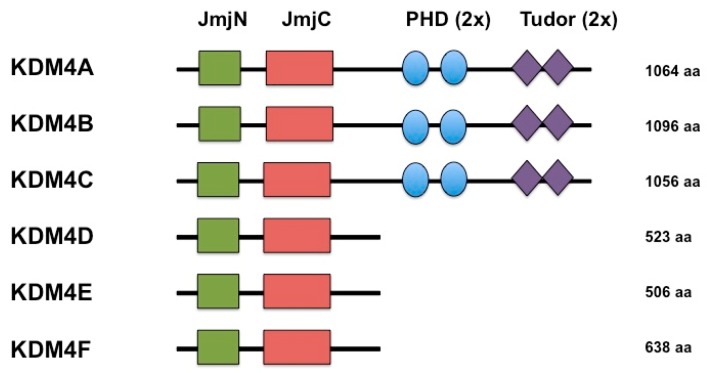
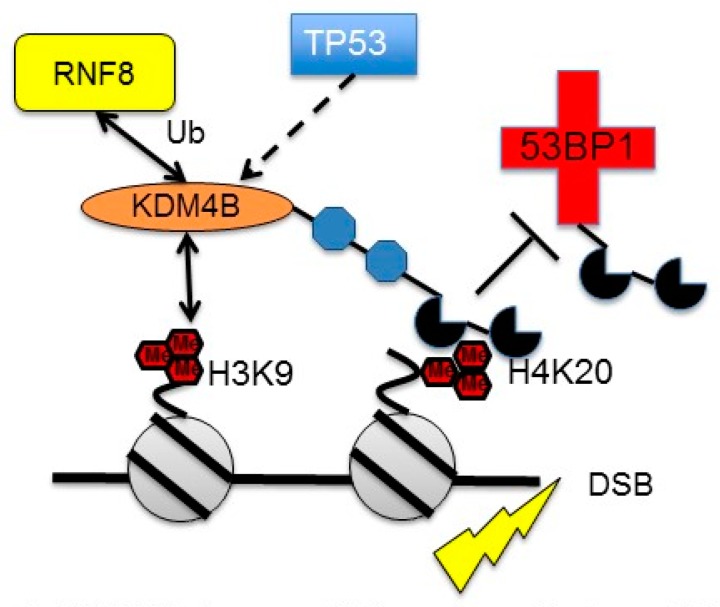
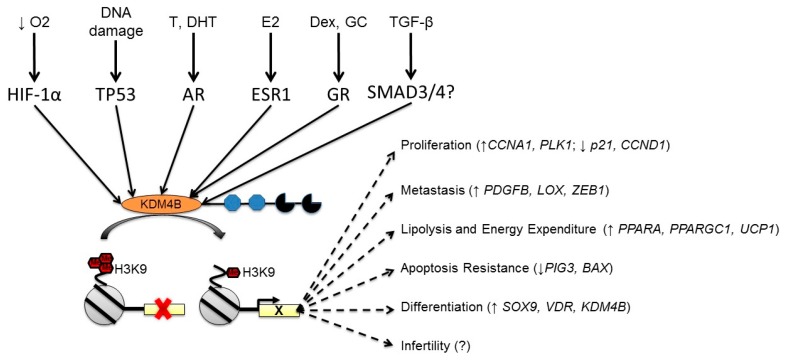
Epigenetic changes are well-established contributors to cancer progression and normal developmental processes. The reversible modification of histones plays a central role in regulating the nuclear processes of gene transcription, DNA replication, and DNA repair. The KDM4 family of Jumonj domain histone demethylases specifically target di- and tri-methylated lysine 9 on histone H3 (H3K9me3), removing a modification central to defining heterochromatin and gene repression. KDM4 enzymes are generally over-expressed in cancers, making them compelling targets for study and therapeutic inhibition. One of these family members, KDM4B, is especially interesting due to its regulation by multiple cellular stimuli, including DNA damage, steroid hormones, and hypoxia. In this review, we discuss what is known about the regulation of KDM4B in response to the cellular environment, and how this context-dependent expression may be translated into specific biological consequences in cancer and reproductive biology.
表观遗传变化是癌症进展和正常发育过程的重要贡献者。组蛋白的可逆修饰在调节基因转录、DNA 复制和 DNA 修复的核过程中起着核心作用。Jumonj 结构域组蛋白去甲基酶的 KDM4 家族特异性靶向组蛋白 H3 上的二甲基和三甲基赖氨酸 9(H3K9me3),去除了定义异染色质和基因抑制的关键修饰。KDM4 酶在癌症中通常过度表达,使其成为研究和治疗抑制的有吸引力的靶点。该家族的一个成员 KDM4B 尤其有趣,因为它受到多种细胞刺激的调节,包括 DNA 损伤、类固醇激素和缺氧。在这篇综述中,我们讨论了已知的 KDM4B 对细胞环境的调节,以及这种上下文相关的表达如何转化为癌症和生殖生物学中的特定生物学后果。