AgResearch Ruakura Research Centre, Hamilton, New Zealand.
Animal Science Institute, Guangxi University, Nanning, P.R. China.
Sci Rep. 2017 Aug 8;7(1):7514. doi: 10.1038/s41598-017-06569-2.
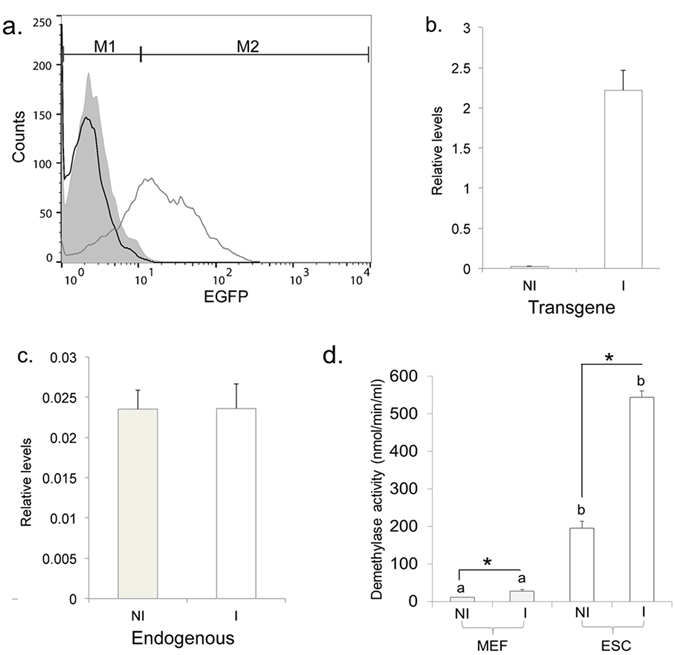
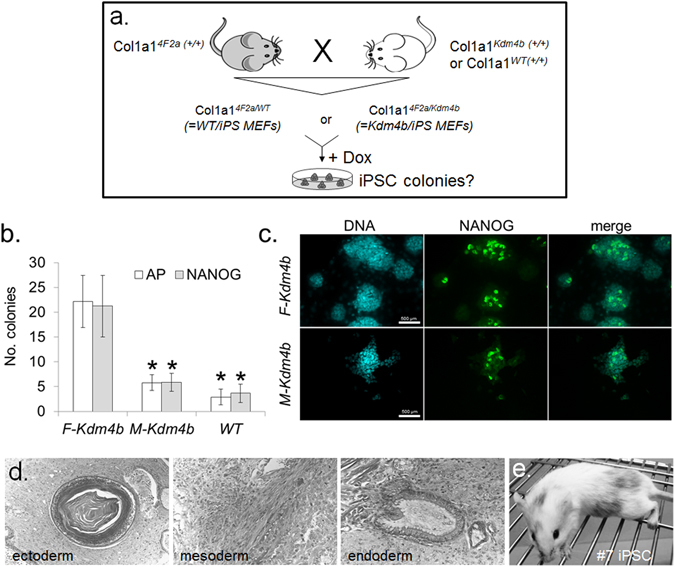
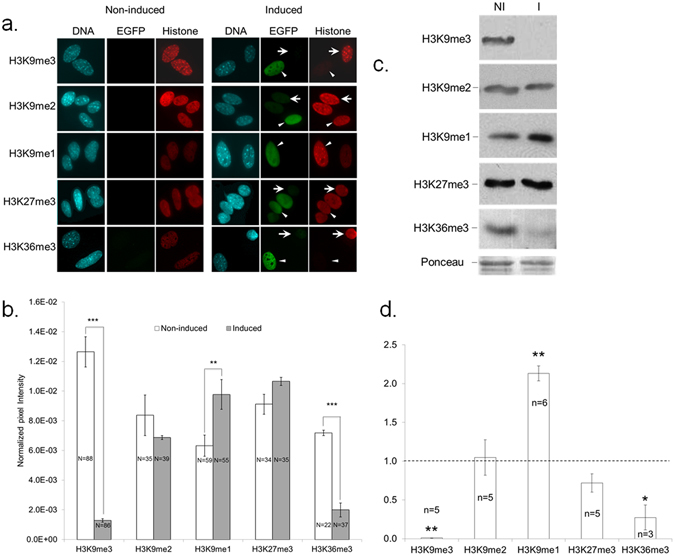
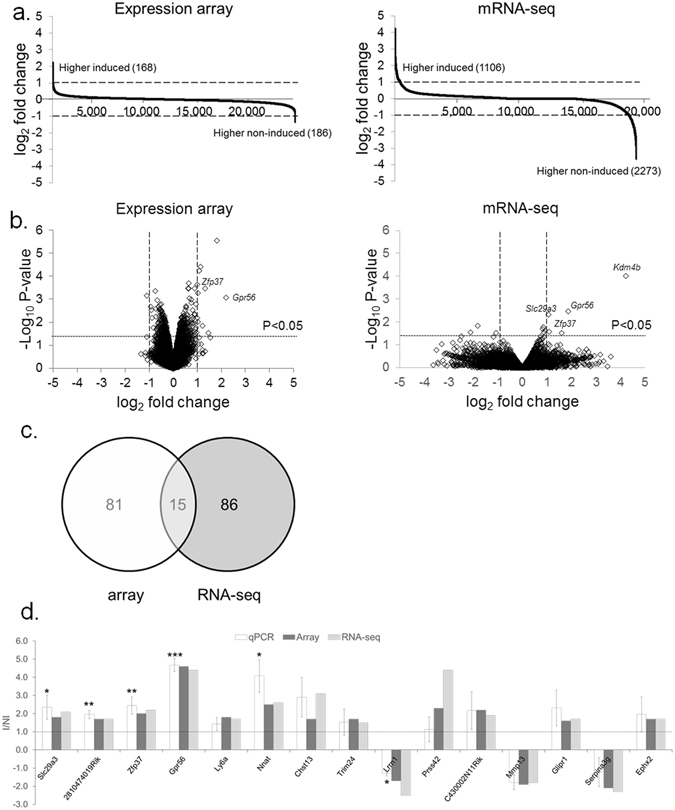
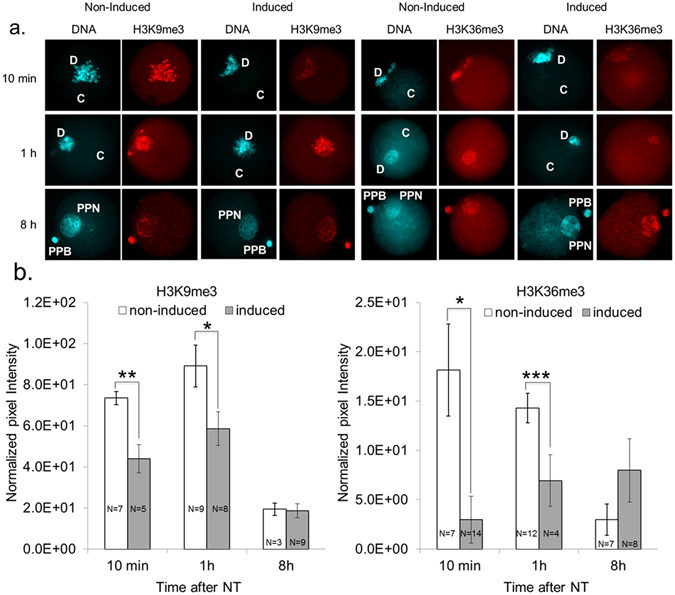
Correct reprogramming of epigenetic marks is essential for somatic cells to regain pluripotency. Repressive histone (H) lysine (K) methylation marks are known to be stable and difficult to reprogram. In this study, we generated transgenic mice and mouse embryonic fibroblasts (MEFs) for the inducible expression of KDM4B, a demethylase that removes H3 K9 and H3K36 trimethylation (me3) marks (H3K9/36me3). Upon inducing Kdm4b, H3K9/36me3 levels significantly decreased compared to non-induced controls. Concurrently, H3K9me1 levels significantly increased, while H3K9me2 and H3K27me3 remained unchanged. The global transcriptional impact of Kdm4b-mediated reduction in H3K9/36me3 levels was examined by comparative microarray analysis and mRNA-sequencing of three independent transgenic MEF lines. We identified several commonly up-regulated targets, including the heterochromatin-associated zinc finger protein 37 and full-length endogenous retrovirus repeat elements. Following optimized zona-free somatic nuclear transfer, reduced H3K9/36me3 levels were restored within hours. Nevertheless, hypo-methylated Kdm4b MEF donors reprogrammed six-fold better into cloned blastocysts than non-induced donors. They also reprogrammed nine-fold better into induced pluripotent stem cells that gave rise to teratomas and chimeras. In summary, we firmly established H3K9/36me3 as a major roadblock to somatic cell reprogramming and identified transcriptional targets of derestricted chromatin that could contribute towards improving this process in mouse.
正确重编程表观遗传标记对于体细胞恢复多能性至关重要。已知抑制性组蛋白(H)赖氨酸(K)甲基化标记稳定且难以重编程。在这项研究中,我们生成了可诱导表达 KDM4B 的转基因小鼠和小鼠胚胎成纤维细胞(MEF),KDM4B 是一种去除 H3 K9 和 H3K36 三甲基化(me3)标记(H3K9/36me3)的去甲基酶。在诱导 Kdm4b 后,与未诱导对照相比,H3K9/36me3 水平显著降低。同时,H3K9me1 水平显著增加,而 H3K9me2 和 H3K27me3 保持不变。通过对三个独立的转基因 MEF 系进行比较微阵列分析和 mRNA 测序,研究了 Kdm4b 介导的 H3K9/36me3 水平降低对全局转录的影响。我们鉴定了几个共同上调的靶标,包括异染色质相关锌指蛋白 37 和全长内源性逆转录病毒重复元件。经过优化的无透明带体细胞核移植后,H3K9/36me3 水平在数小时内得到恢复。尽管如此,低甲基化的 Kdm4b MEF 供体在克隆胚泡中比非诱导供体重编程的效率高六倍。它们在诱导多能干细胞中重编程的效率也高九倍,这些细胞产生了畸胎瘤和嵌合体。总之,我们明确将 H3K9/36me3 确定为体细胞重编程的主要障碍,并鉴定了去限制染色质的转录靶标,这些靶标可能有助于改善小鼠中的这一过程。