Division of Pulmonology, Department of Internal Medicine, Seoul St. Mary's Hospital, College of Medicine, The Catholic University of Korea, 222, Banpo-daero, Seocho-gu, Seoul, 06591, Republic of Korea.
The Cancer Research Institute, College of Medicine, The Catholic University of Korea, 222, Banpo-daero, Seocho-gu, Seoul, 06591, Republic of Korea.
BMC Cancer. 2019 Feb 13;19(1):148. doi: 10.1186/s12885-019-5360-7.
A hypoxic microenvironment leads to an increase in the invasiveness and the metastatic potential of cancer cells within tumors via the epithelial-mesenchymal transition (EMT) and cancer stemness acquisition. However, hypoxia-induced changes in the expression and function of candidate stem cell markers and their possible molecular mechanism is still not understood.
Lung cell lines were analyzed in normoxic or hypoxic conditions. For screening among the stem cell markers, a transcriptome analysis using next-generation sequencing was performed. For validation, the EMT and stem cell characteristics were analyzed. To determine whether an epigenetic mechanism was involved, the cell lines were treated with a DNA methyltransferase inhibitor (AZA), and methylation-specific PCR and bisulfite sequencing were performed.
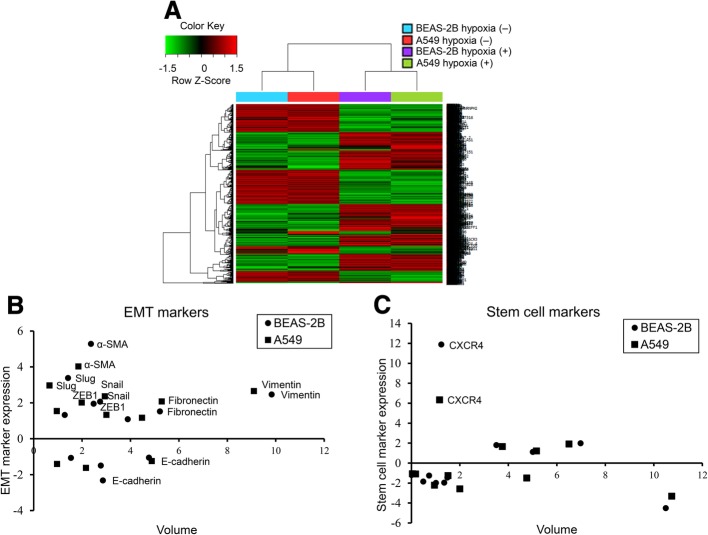
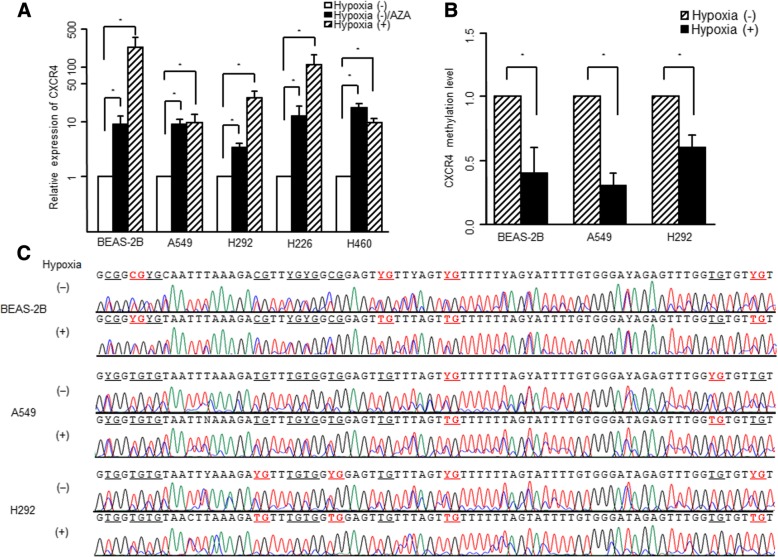
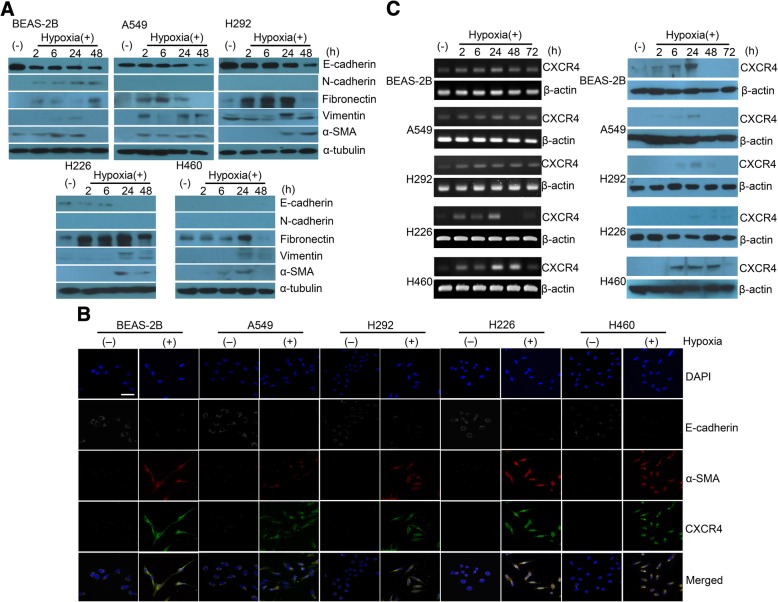
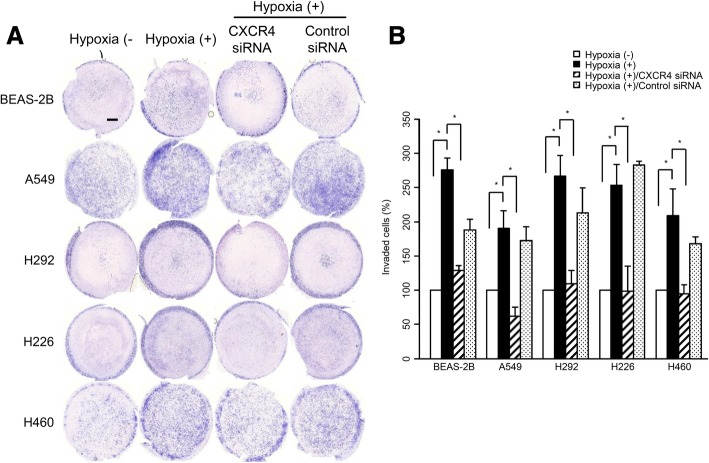
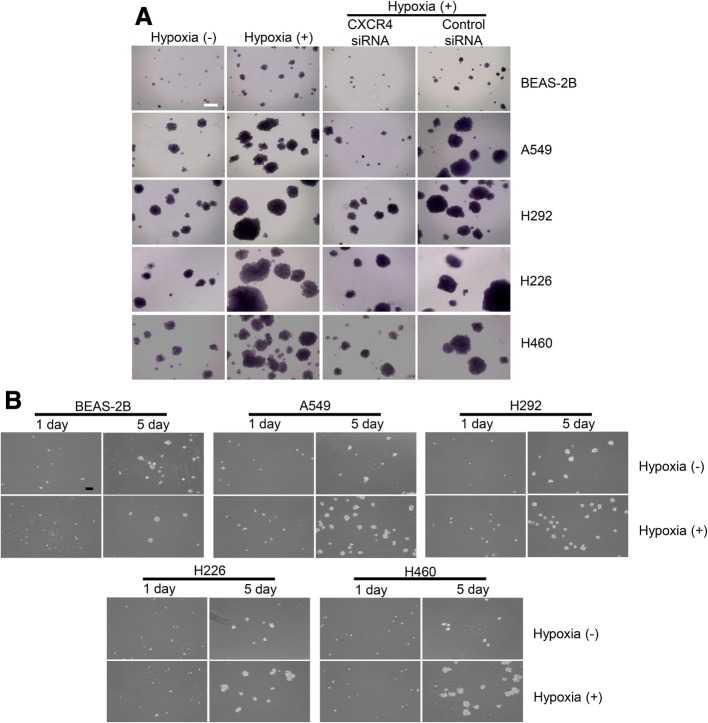
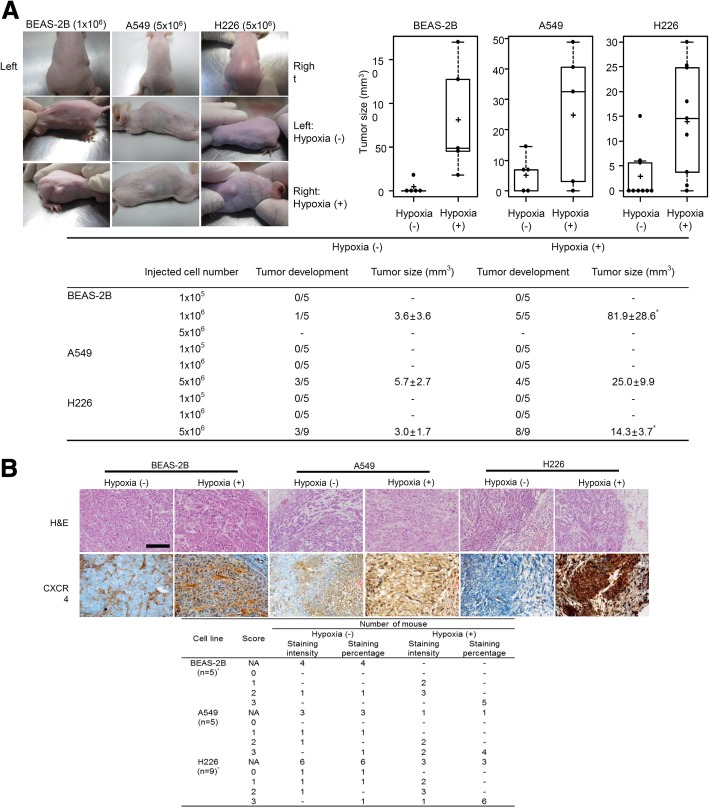
Next-generation sequencing revealed that the CXCR4 expression was significantly higher after the hypoxic condition, which functionally resulted in the EMT and cancer stemness acquisition. The acquisition of the EMT and stemness properties was inhibited by treatment with CXCR4 siRNA. The CXCR4 was activated by either the hypoxic condition or treatment with AZA. The methylation-specific PCR and bisulfite sequencing displayed a decreased CXCR4 promoter methylation in the hypoxic condition.
These results suggest that hypoxia-induced acquisition of cancer stem cell characteristics was associated with CXCR4 activation by its aberrant promoter demethylation.
缺氧微环境通过上皮间质转化(EMT)和获得癌症干细胞特性,导致肿瘤内癌细胞的侵袭性和转移潜能增加。然而,缺氧诱导的候选干细胞标志物的表达和功能变化及其可能的分子机制尚不清楚。
在常氧或缺氧条件下分析肺细胞系。为了在干细胞标志物中进行筛选,使用下一代测序进行了转录组分析。为了验证,分析了 EMT 和干细胞特征。为了确定是否涉及表观遗传机制,用 DNA 甲基转移酶抑制剂(AZA)处理细胞系,并进行甲基化特异性 PCR 和亚硫酸氢盐测序。
下一代测序显示,缺氧后 CXCR4 表达显著升高,其功能导致 EMT 和癌症干细胞特性获得。用 CXCR4 siRNA 处理可抑制 EMT 和干细胞特性的获得。CXCR4 被缺氧条件或 AZA 处理激活。甲基化特异性 PCR 和亚硫酸氢盐测序显示,缺氧条件下 CXCR4 启动子甲基化减少。
这些结果表明,缺氧诱导的癌症干细胞特性的获得与 CXCR4 通过异常启动子去甲基化的激活有关。