He Guiqiang, Huang Jun, Zhou Rongqing, Wu Chongde, Jin Yao
College of Light Industry, Textile and Food Engineering, Sichuan University, Chengdu, China.
Key Laboratory of Leather Chemistry and Engineering, Ministry of Education, Sichuan University, Chengdu, China.
Front Microbiol. 2019 Jan 29;10:56. doi: 10.3389/fmicb.2019.00056. eCollection 2019.
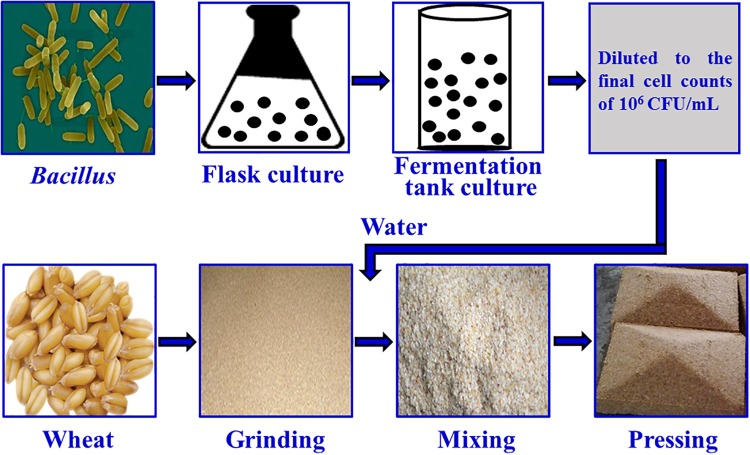
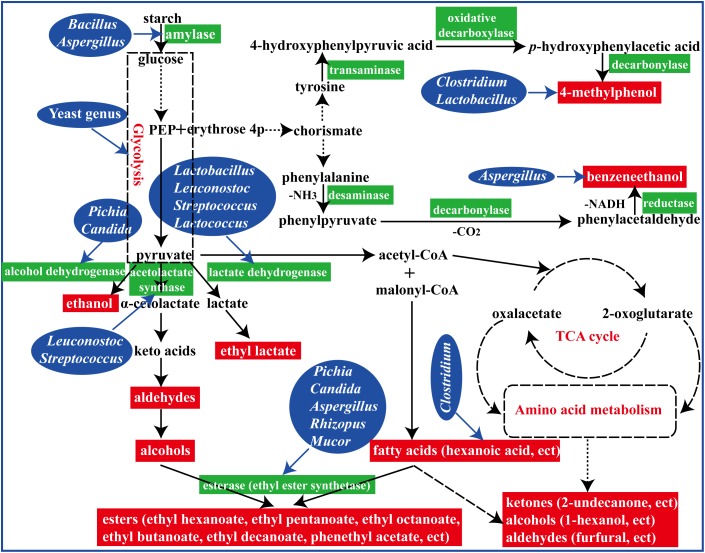
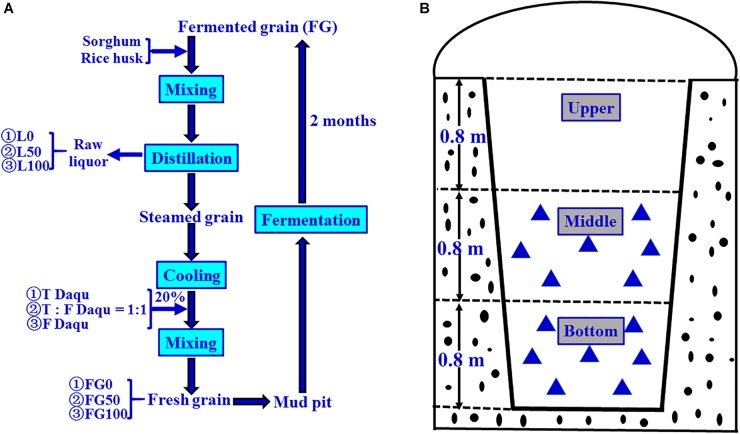
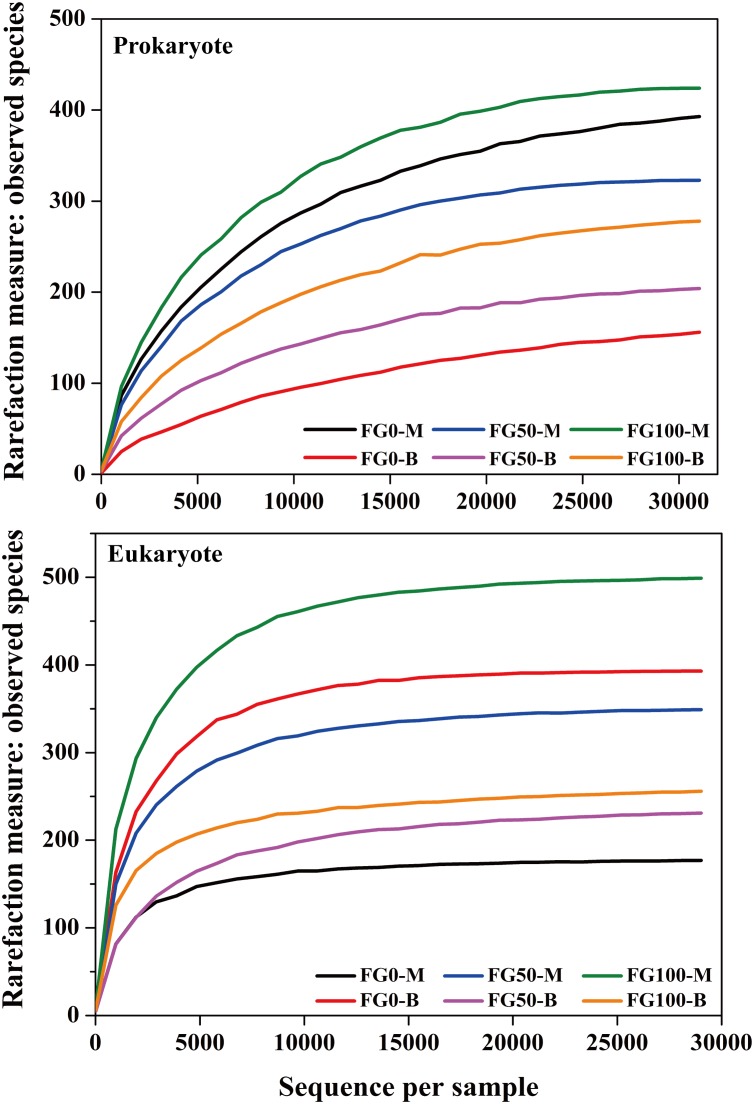
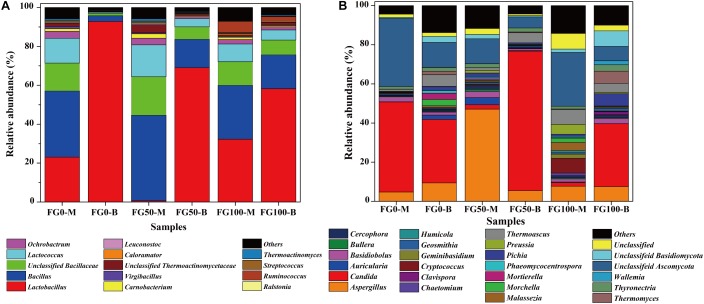
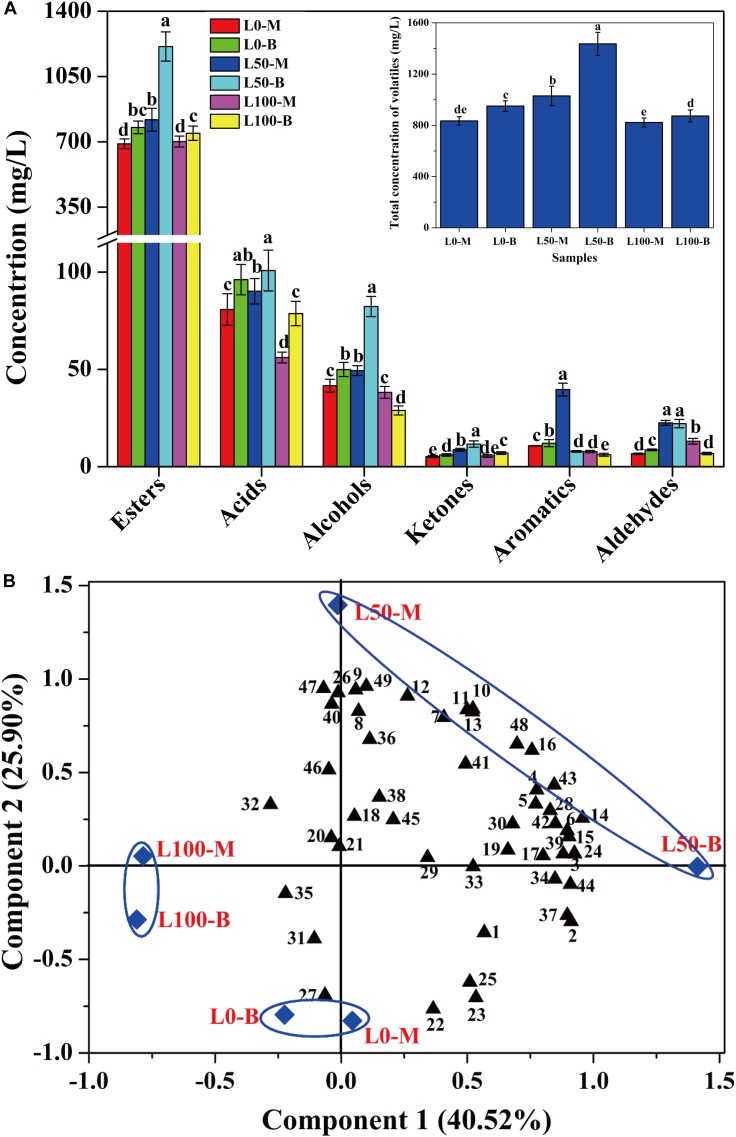
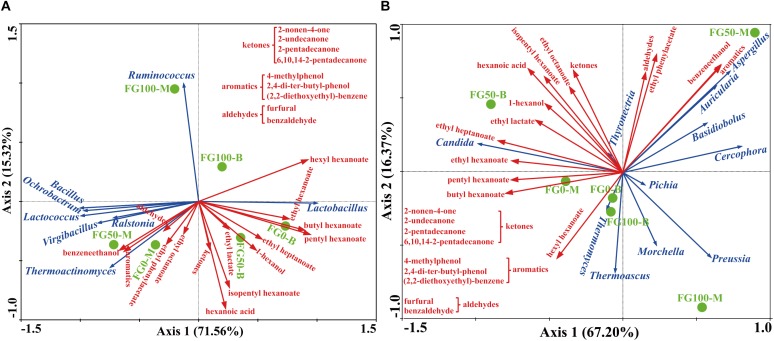
, an important fermentation starter for the production of Chinese liquor, as used in the current study included traditional and fortified inoculated with and . To evaluate the effect of fortified on strong-flavor liquor production, the differences of microbial communities among three inoculation patterns of fermented grains (FG) were analyzed by the Illumina MiSeq platform. A higher relative abundance of dominant genera including , , , and , and lower relative abundance of , were observed in FG50, in which mixed (traditional: fortified = 1: 1, w/w, 50% fortified ) was used as the starter. Then, volatile compounds of their distillations were also examined by HS-SPME-GC-MS. The results showed that the contents of skeleton flavor components, mainly including important esters and aromatic compounds, were higher in the corresponding liquor L50, which distillated from FG50. Moreover, most esters mainly positively correlated with and in the bottom layer of FG fermented with 50% fortified (FG50-B). Aromatic compounds were strongly positively correlated with and in the middle layer of FG with 50% fortified used (FG50-M). In particular, hexyl hexanoate showed a positive correlation with higher abundances of in the FG with addition of 100% fortified (FG100). This study observed microbial compositions in the FG with fortified addition, and it further revealed the correlations between pivotal microbes and main flavor compounds. These results may help to develop effective strategies to regulate microbes for the brewing process and further improve the flavors of Chinese liquor.
本研究中使用的用于生产中国白酒的重要发酵剂包括传统大曲和接种了[具体菌种1]和[具体菌种2]的强化大曲。为了评估强化大曲对浓香型白酒生产的影响,通过Illumina MiSeq平台分析了三种发酵粮醅接种模式下微生物群落的差异。在使用混合大曲(传统大曲:强化大曲 = 1:1,w/w,50%强化大曲)作为发酵剂的粮醅50(FG50)中,观察到包括[优势属1]、[优势属2]、[优势属3]和[优势属4]在内的优势属相对丰度较高,而[某属]的相对丰度较低。然后,还通过顶空固相微萃取-气相色谱-质谱联用(HS-SPME-GC-MS)对其蒸馏酒中的挥发性化合物进行了检测。结果表明,从FG50蒸馏得到的相应白酒L50中,主要包括重要酯类和芳香族化合物的骨架风味成分含量较高。此外,在使用50%强化大曲发酵的粮醅(FG50)底层,大多数酯类主要与[菌种1]和[菌种2]呈正相关。在使用50%强化大曲的粮醅中间层(FG50-M),芳香族化合物与[菌种3]和[菌种4]呈强正相关。特别是,己酸己酯与添加100%强化大曲的粮醅(FG100)中较高丰度的[菌种5]呈正相关。本研究观察了添加强化大曲的粮醅中的微生物组成,并进一步揭示了关键微生物与主要风味化合物之间的相关性。这些结果可能有助于制定有效的策略来调控酿造过程中的微生物,进而改善中国白酒的风味。