de Haan Lianne, van der Lely Sarah J, Warps Anne-Loes K, Hofsink Quincy, Olthof Pim B, de Keijzer Mark J, Lionarons Daniël A, Mendes-Dias Lionel, Bruinsma Bote G, Uygun Korkut, Jaeschke Hartmut, Farrell Geoffrey C, Teoh Narci, van Golen Rowan F, Li Tiangang, Heger Michal
Department of Experimental Surgery, Academic Medical Center, University of Amsterdam, Amsterdam, the Netherlands.
Oncogene Biology Laboratory, Francis Crick Institute, London, United Kingdom.
J Clin Transl Res. 2018 May 28;4(1):1-46. doi: 10.18053/jctres.04.201801.001. Epub 2018 Feb 16.
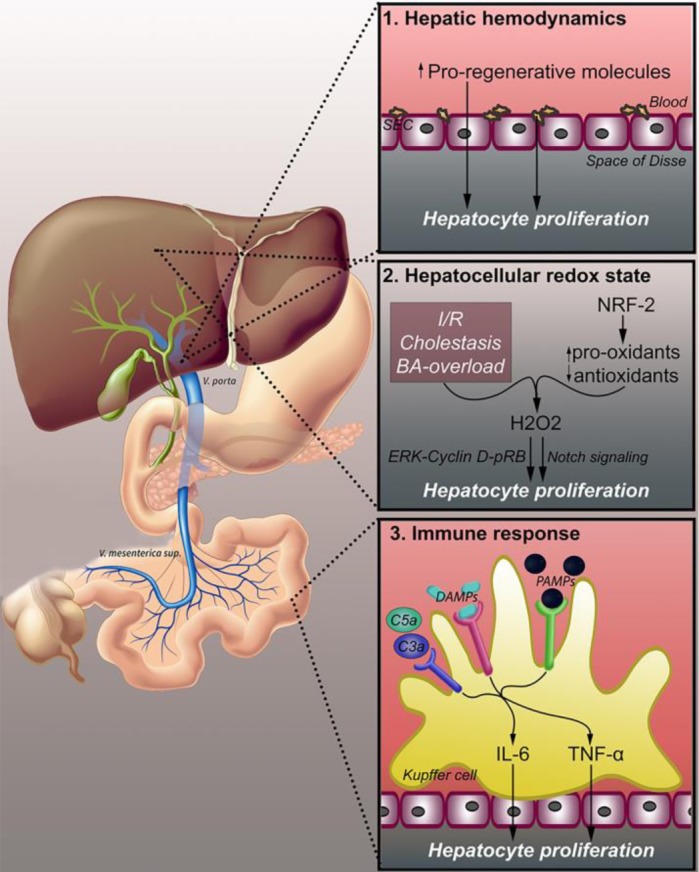
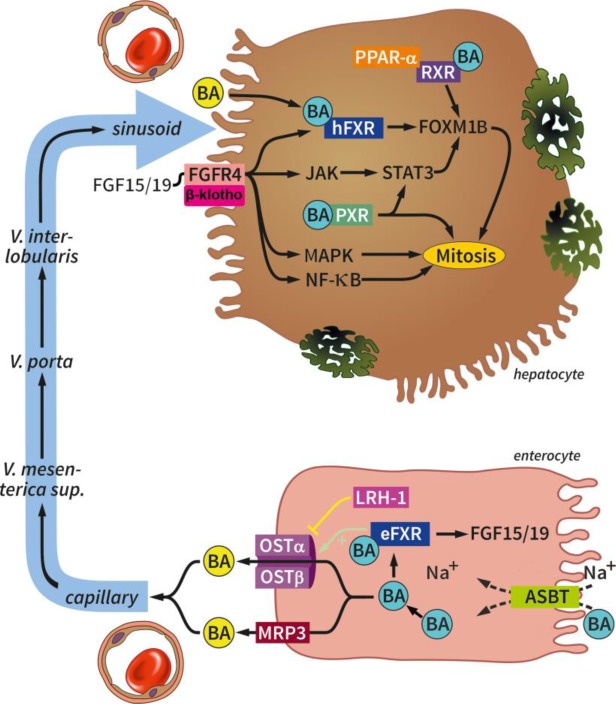
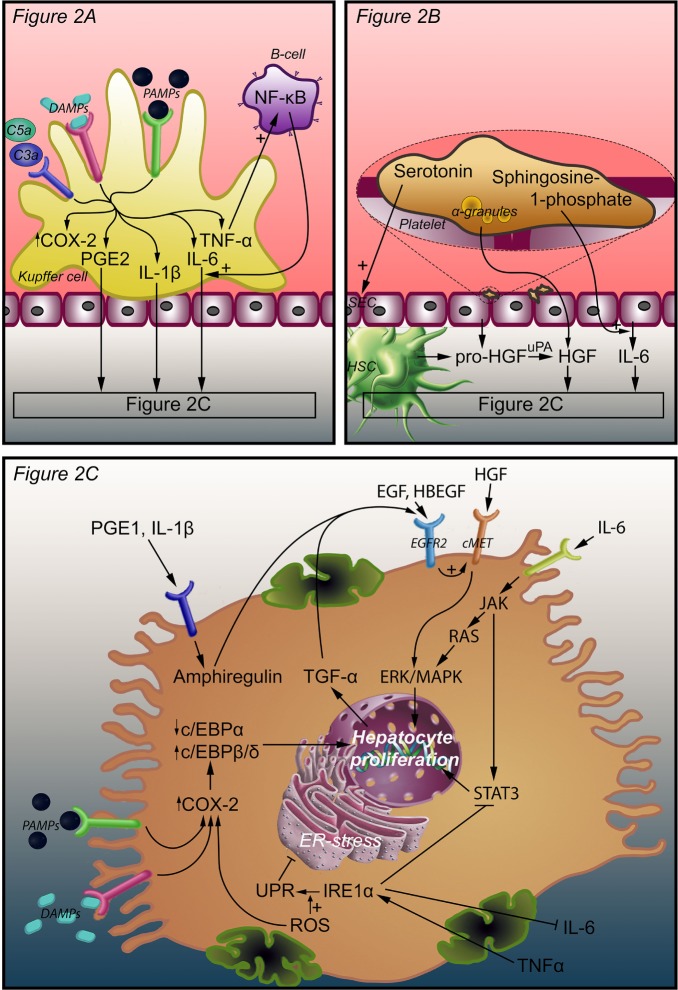
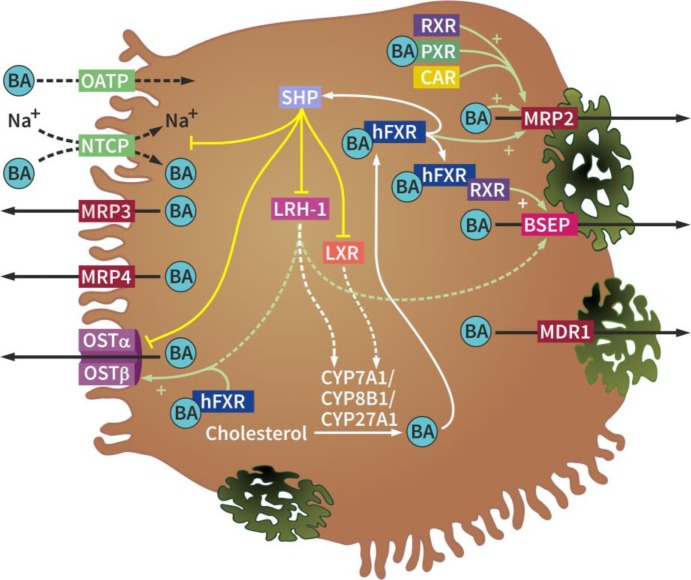
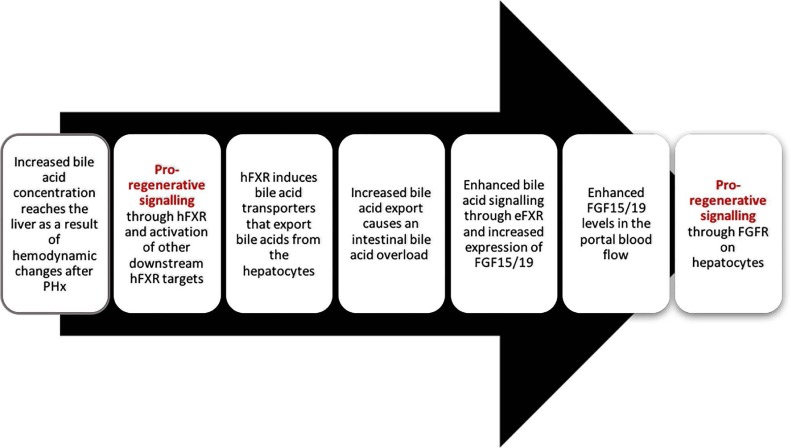
Liver regeneration following partial hepatectomy (PHx) is a complicated process involving multiple organs and several types of signaling networks. The bile acid-activated metabolic pathways occupy an auxiliary yet important chapter in the entire biochemical story. PHx is characterized by rapid but transient bile acid overload in the liver, which constitutes the first wave of proliferative signaling in the remnant hepatocytes. Bile acids trigger hepatocyte proliferation through activation of several nuclear receptors. Following biliary passage into the intestines, enterocytes reabsorb the bile acids, which results in the activation of farnesoid X receptor (FXR), the consequent excretion of fibroblast growth factor (FGF)19/FGF15, and its release into the enterohepatic circulation. FGF19/FGF15 subsequently binds to its cognate receptor, fibroblast growth factor receptor 4 (FGFR4) complexed with β-klotho, on the hepatocyte membrane, which initiates the second wave of proliferative signaling. Because some bile acids are toxic, the remnant hepatocytes must resolve the potentially detrimental state of bile acid excess. Therefore, the hepatocytes orchestrate a bile acid detoxification and elimination response as a protective mechanism in concurrence with the proliferative signaling. The response in part results in the excretion of (biotransformed) bile acids into the canalicular system, causing the bile acids to end up in the intestines.
Recently, FXR agonists have been shown to promote regeneration via the gut-liver axis. This type of pharmacological intervention may prove beneficial for patients with hepatobiliary tumors undergoing PHx. In light of these developments, the review provides an in-depth account of the pathways that underlie post-PHx liver regeneration in the context of bile acid homeostasis in the liver and the gut-liver signaling axis.
部分肝切除术后的肝脏再生是一个复杂的过程,涉及多个器官和多种信号网络。胆汁酸激活的代谢途径在整个生化过程中占据着辅助但重要的篇章。部分肝切除的特点是肝脏中胆汁酸迅速但短暂地过载,这构成了残余肝细胞中增殖信号的第一波。胆汁酸通过激活几种核受体触发肝细胞增殖。胆汁进入肠道后,肠上皮细胞重新吸收胆汁酸,这导致法尼醇X受体(FXR)激活,随后成纤维细胞生长因子(FGF)19/FGF15排泄,并释放进入肠肝循环。FGF19/FGF15随后与其同源受体,即与β-klotho复合的成纤维细胞生长因子受体4(FGFR4),在肝细胞膜上结合,从而启动增殖信号的第二波。由于一些胆汁酸具有毒性,残余肝细胞必须解决胆汁酸过量的潜在有害状态。因此,肝细胞协调胆汁酸解毒和消除反应,作为与增殖信号同时发生的一种保护机制。该反应部分导致(生物转化后的)胆汁酸排泄到胆小管系统中,使胆汁酸最终进入肠道。
最近,FXR激动剂已被证明可通过肠-肝轴促进再生。这种类型的药物干预可能对接受部分肝切除的肝胆肿瘤患者有益。鉴于这些进展,本综述深入阐述了在肝脏胆汁酸稳态和肠-肝信号轴背景下部分肝切除术后肝脏再生的潜在途径。