Pio Carolina Santiago de Araújo, Chaves Gabriela, Davies Philippa, Taylor Rod, Grace Sherry
School of Kinesiology and Health Science, York University, 4700 Keele St, Toronto, ON M3J 1P3, Canada.
Department of Physical Therapy, Federal University of Minas Gerais, Av. Pres. Antônio Carlos, 6627-Pampulha, Belo Horizonte, MG 31270-901, Brazil.
J Clin Med. 2019 Feb 5;8(2):189. doi: 10.3390/jcm8020189.
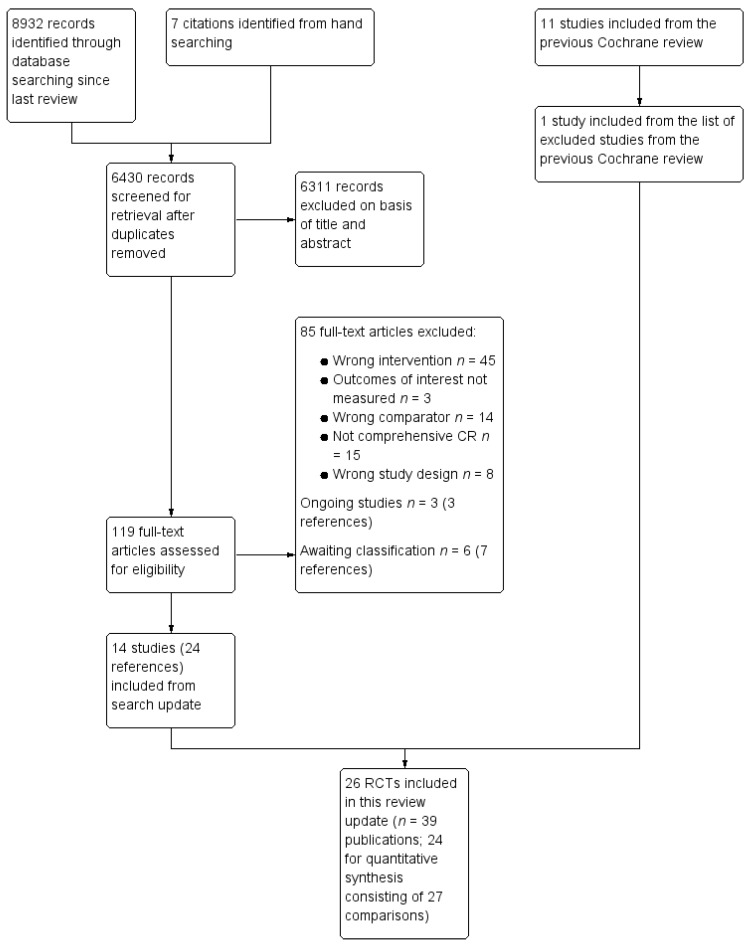
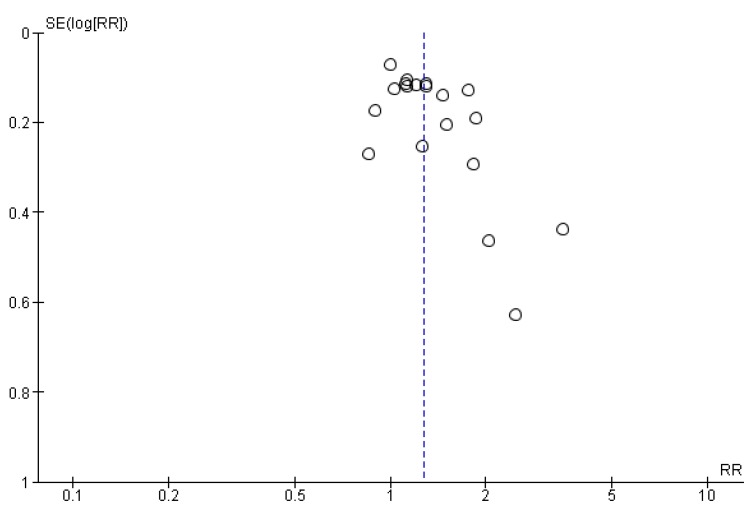
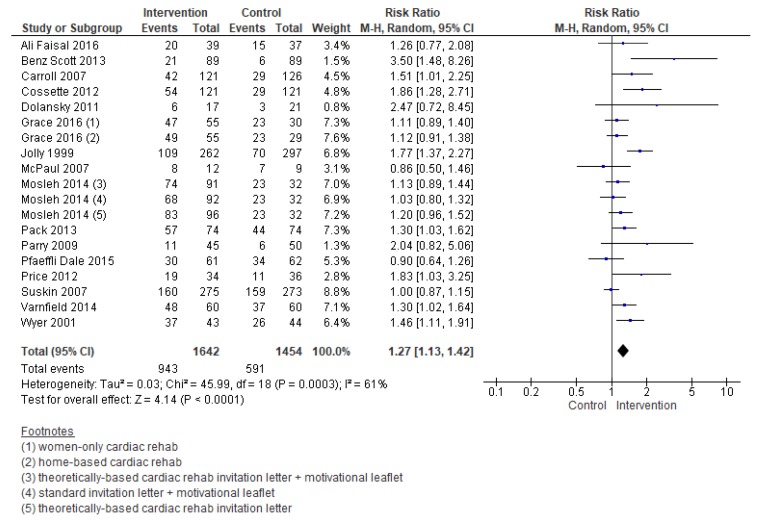
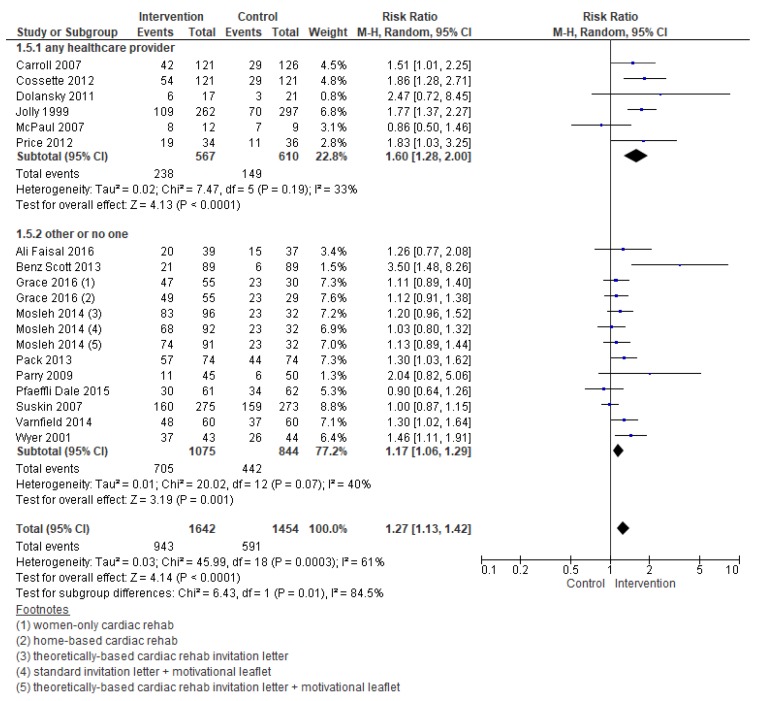
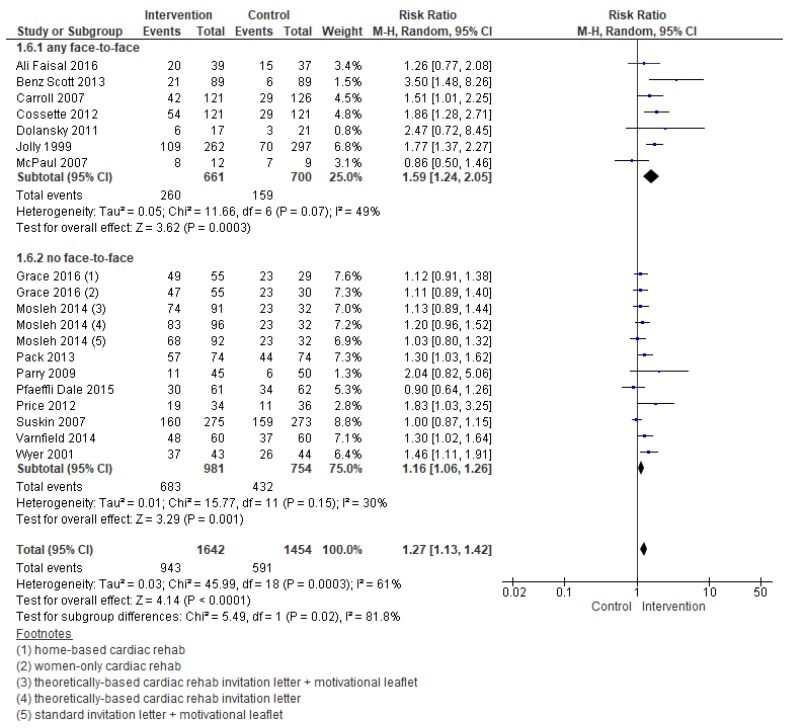
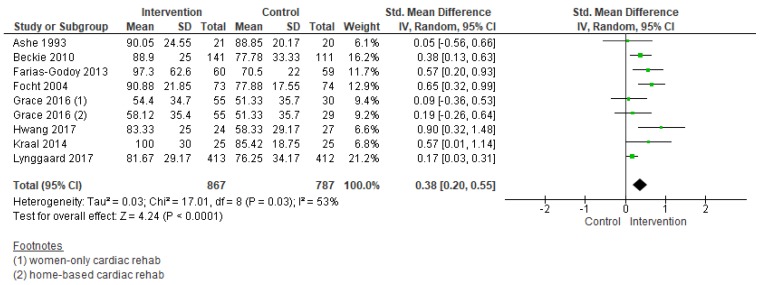
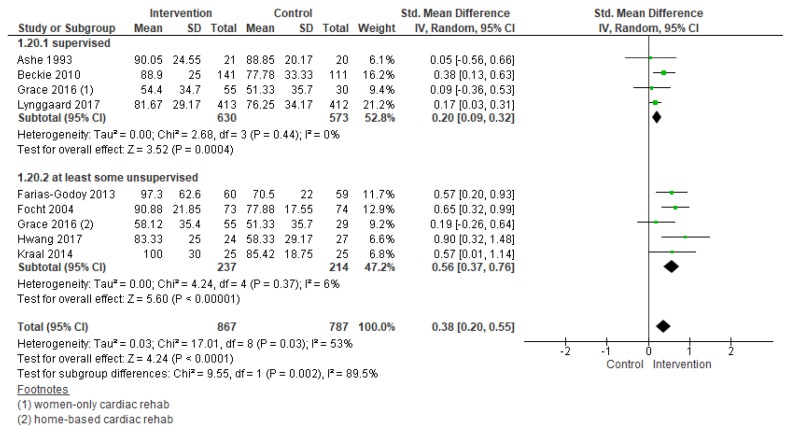
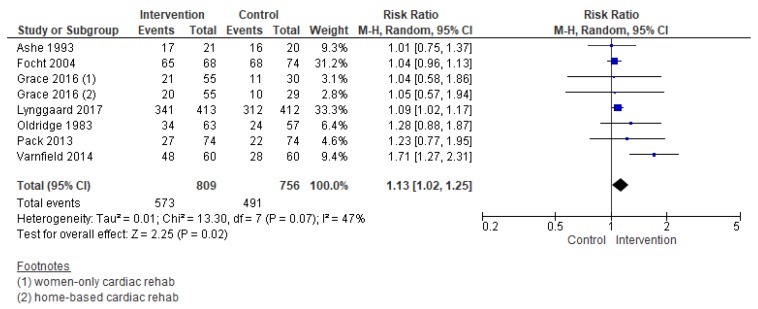
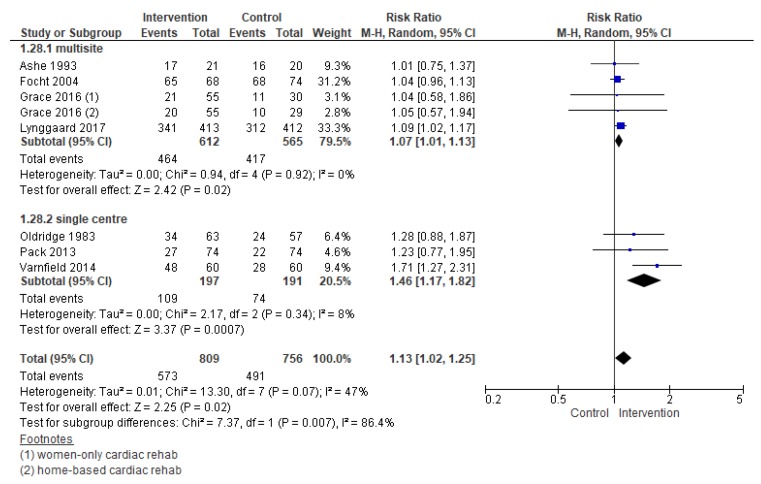
Too few patients utilize cardiac rehabilitation (CR), despite its benefits. The Cochrane review assessing the effectiveness of interventions to increase CR utilization (enrolment, adherence, and completion) was updated. A search was performed through July 2018 of the Cochrane and MEDLINE (Medical Literature Analysis and Retrieval System Online) databases, among other sources. Randomized controlled trials in adults with myocardial infarction, angina, revascularization, or heart failure were included. Interventions had to aim to increase utilization of comprehensive phase II CR. Two authors independently performed all stages of citation processing. Following the random-effects meta-analysis, meta-regression was undertaken to explore the impact of pre-specified factors. Twenty-six trials with 5299 participants were included (35.8% women). Low-quality evidence showed an effect of interventions in increasing enrolment (risk ratio (RR) = 1.27, 95% confidence interval (CI) = 1.13⁻1.42). Meta-regression analyses suggested that the intervention deliverer (nurse or allied healthcare provider, = 0.02) and delivery format (face-to-face, = 0.01) were influential in increasing enrolment. There was low-quality evidence that interventions to increase adherence were effective (standardized mean difference (SMD) = 0.38, 95% CI = 0.20⁻0.55), particularly where remotely-offered (SMD = 0.56, 95% CI = 0.36⁻0.76). There was moderate-quality evidence that interventions to increase program completion were effective (RR = 1.13, 95% CI = 1.02⁻1.25). There are effective interventions to increase CR utilization, but more research is needed to establish specific, implementable materials and protocols, particularly for completion.
尽管心脏康复(CR)有诸多益处,但利用该康复项目的患者却少之又少。评估旨在提高CR利用率(登记、依从性和完成率)的干预措施有效性的Cochrane综述已更新。检索截至2018年7月的Cochrane和MEDLINE(医学文献分析与联机检索系统)数据库等来源。纳入了针对患有心肌梗死、心绞痛、血运重建或心力衰竭的成年人的随机对照试验。干预措施必须旨在提高综合II期CR的利用率。两位作者独立完成了文献处理的所有阶段。在随机效应荟萃分析之后,进行了荟萃回归以探讨预先设定因素的影响。纳入了26项试验,共5299名参与者(35.8%为女性)。低质量证据表明干预措施在增加登记方面有效果(风险比(RR)=1.27,95%置信区间(CI)=1.13⁻1.42)。荟萃回归分析表明,干预实施者(护士或专职医疗保健人员,P=0.02)和实施形式(面对面,P=0.01)对增加登记有影响。有低质量证据表明提高依从性的干预措施是有效的(标准化均数差(SMD)=0.38,95%CI=0.20⁻0.55),特别是远程提供干预措施时(SMD=0.56,95%CI=0.36⁻0.76)。有中等质量证据表明提高项目完成率的干预措施是有效的(RR=1.13,95%CI=1.02⁻1.25)。有有效的干预措施来提高CR利用率,但需要更多研究来确定具体的、可实施的材料和方案,尤其是针对项目完成方面。