Department of Infection, Immunity and Cardiovascular Disease, University of Sheffield, Sheffield, United Kingdom.
Florey Institute, University of Sheffield, Sheffield, United Kingdom.
Front Immunol. 2019 Jan 31;10:45. doi: 10.3389/fimmu.2019.00045. eCollection 2019.
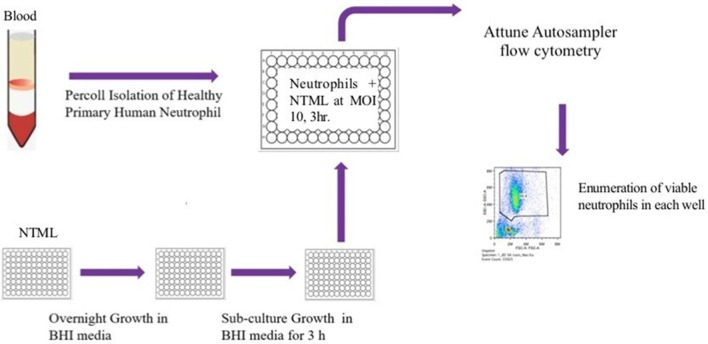
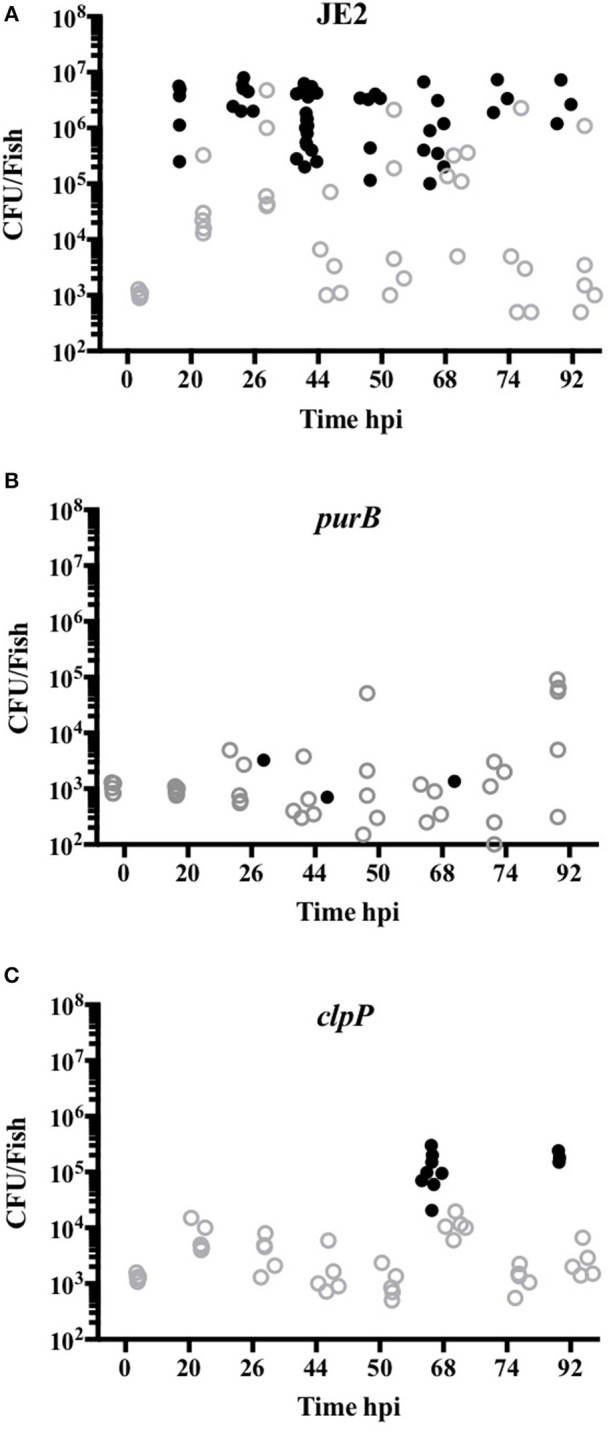
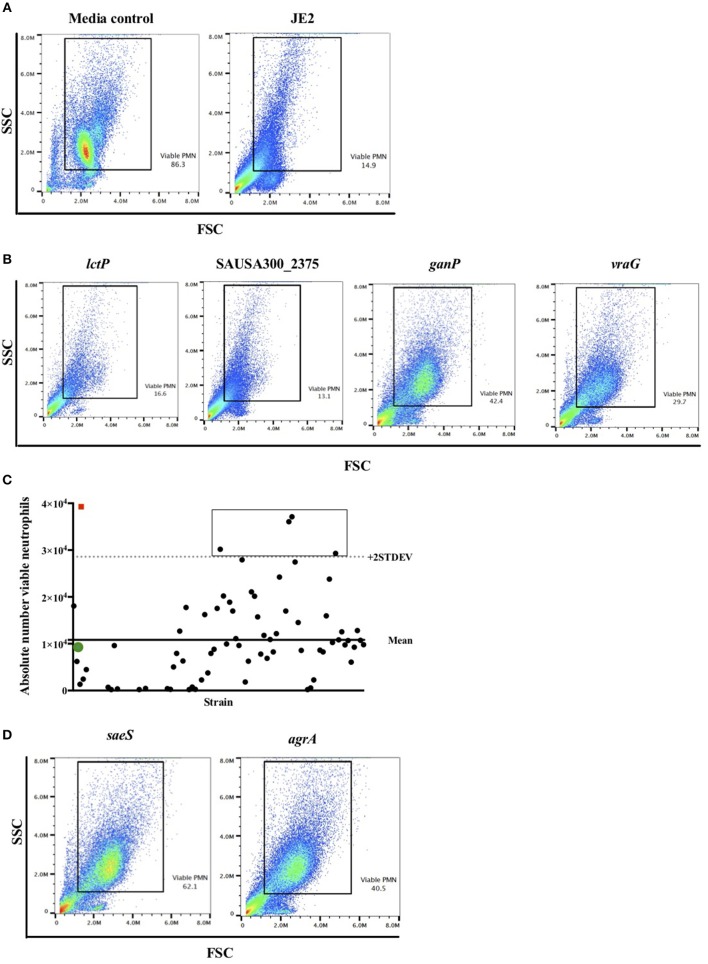
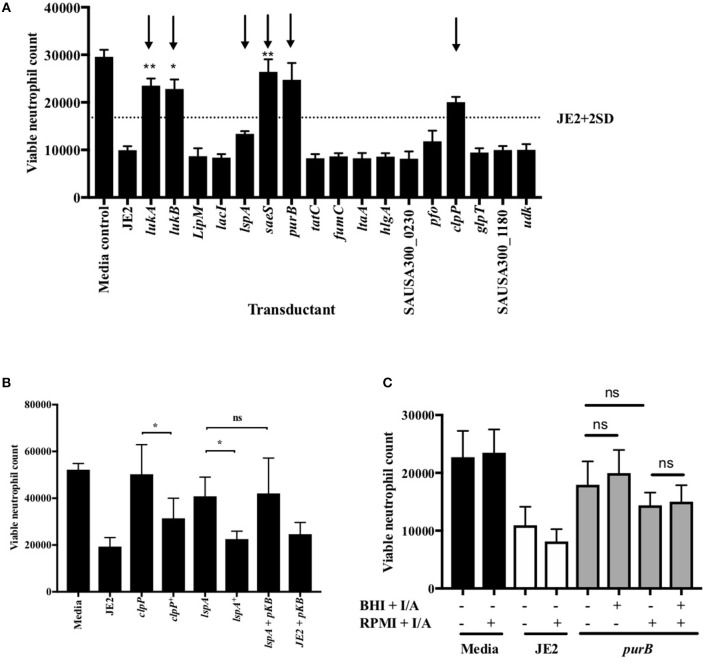
is a commensal organism in approximately 30% of the human population and colonization is a significant risk factor for invasive infection. As a result of this, there is a great need to better understand how overcomes human immunity. Neutrophils are essential during the innate immune response to , yet this microorganism uses multiple evasion strategies to avoid killing by these immune cells, perhaps the most catastrophic of which is the rapid induction of neutrophil cell death. The aim of this study was to better understand the mechanisms underpinning induced neutrophil lysis, and how this contributes to pathogenesis in a whole organism model of infection. To do this we screened the genome-wide Nebraska Transposon Mutant Library (NTML) in the community acquired methicillin resistant strain, USA300, for decreased ability to induce neutrophil cell lysis. Out of 1,920 mutants, a number of known regulators of cell lysis (including the master regulators accessory gene regulator A, and Staphylococcus exoprotein expression protein S, ) were identified in this blinded screen, providing validity to the experimental system. Three gene mutations not previously associated with cell death: , and were found to be significantly attenuated in their ability to induce neutrophil lysis. These phenotypes were verified by genetic transductants and complemented strains. and were subsequently found to be necessary for bacterial replication and pathogenesis in a zebrafish embryo infection model. The virulence of the mutant was restored in a neutrophil-depleted zebrafish model, suggesting the importance of ClpP in mechanisms underpinning neutrophil immunity to . In conclusion, our work identifies genetic components underpinning pathogenesis, and may provide insight into how this commensal organism breaches innate immune barriers during infection.
是约 30%人类人群中的共生生物,定植是侵袭性感染的重要危险因素。因此,我们非常需要更好地了解 如何克服人体免疫。中性粒细胞在 对先天免疫反应中至关重要,但这种微生物使用多种逃避策略来避免被这些免疫细胞杀死,其中最具灾难性的可能是中性粒细胞迅速诱导细胞死亡。本研究旨在更好地了解导致中性粒细胞溶解的机制,以及这如何在感染的全机体模型中导致发病机制。为此,我们在社区获得性耐甲氧西林 菌株 USA300 中筛选了全基因组内布拉斯加转座子突变体文库 (NTML),以寻找降低诱导中性粒细胞溶解能力的突变体。在 1920 个突变体中,在这个盲筛中鉴定出了一些已知的细胞溶解调节剂 (包括主要调节剂辅助基因调节剂 A、 和葡萄球菌外蛋白表达蛋白 S),为实验系统提供了有效性。在以前与细胞死亡无关的三个基因突变中: 、 和 ,发现它们诱导中性粒细胞溶解的能力显著减弱。这些表型通过遗传转导子和互补菌株得到验证。 随后发现 和 在斑马鱼胚胎感染模型中对于细菌复制和发病机制是必需的。在中性粒细胞耗竭的斑马鱼模型中, 突变体的毒力得以恢复,这表明 ClpP 在支持中性粒细胞对 的免疫机制中是必要的。总之,我们的工作确定了发病机制的遗传成分,这可能为了解这种共生生物在感染过程中如何突破先天免疫屏障提供了线索。