Bonello Maria, Sims Andrew Harvey, Langdon Simon Peter
Cancer Research UK Edinburgh Center and Division of Pathology Laboratory, MRC Institute of Genetics and Molecular Medicine, University of Edinburgh, Edinburgh, EH4 2XU, UK.
Cancer Biol Med. 2018 Nov;15(4):375-388. doi: 10.20892/j.issn.2095-3941.2018.0062.
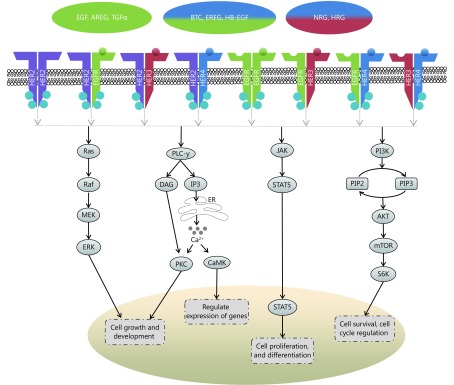
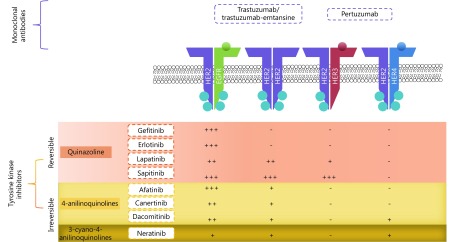
Ovarian cancer is the second most lethal gynecological cancer worldwide and while most patients respond to initial therapy, they often relapse with resistant disease. Human epidermal growth factor receptors (especially HER1/EGFR and HER2/ERBB2) are involved in disease progression; hence, strategies to inhibit their action could prove advantageous in ovarian cancer patients, especially in patients resistant to first line therapy. Monoclonal antibodies and tyrosine kinase inhibitors are two classes of drugs that act on these receptors. They have demonstrated valuable antitumor activity in multiple cancers and their possible use in ovarian cancer continues to be studied. In this review, we discuss the human epidermal growth factor receptor family; review emerging clinical studies on monoclonal antibodies and tyrosine kinase inhibitors targeting these receptors in ovarian cancer patients; and propose future research possibilities in this area.
卵巢癌是全球第二大致命性妇科癌症,虽然大多数患者对初始治疗有反应,但他们常常会复发并产生耐药性疾病。人类表皮生长因子受体(尤其是HER1/EGFR和HER2/ERBB2)参与疾病进展;因此,抑制其作用的策略可能对卵巢癌患者有利,尤其是对一线治疗耐药的患者。单克隆抗体和酪氨酸激酶抑制剂是作用于这些受体的两类药物。它们在多种癌症中已显示出有价值的抗肿瘤活性,并且它们在卵巢癌中的可能应用仍在继续研究。在本综述中,我们讨论人类表皮生长因子受体家族;回顾针对卵巢癌患者中这些受体的单克隆抗体和酪氨酸激酶抑制剂的新兴临床研究;并提出该领域未来的研究可能性。