Department of Surgery & Cancer, Imperial College London, Hammersmith Hospital, Du Cane Road, W120NN, London, UK.
Cancer Gene Ther. 2023 Jul;30(7):955-963. doi: 10.1038/s41417-023-00589-z. Epub 2023 Feb 20.
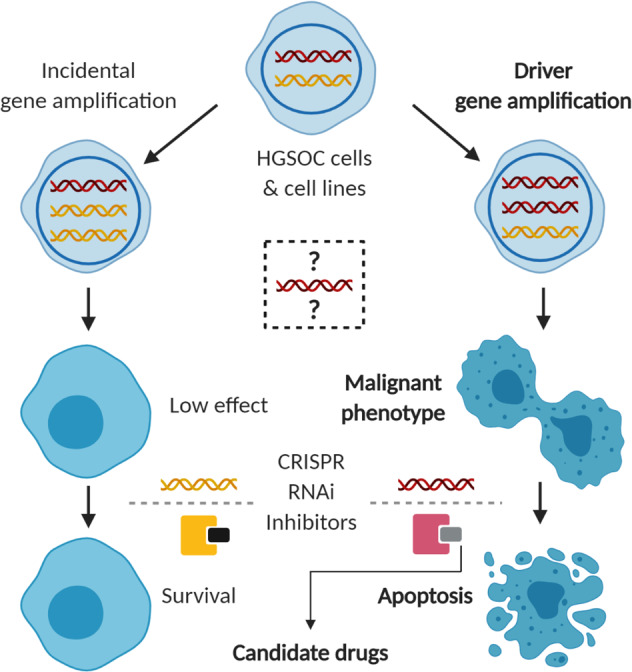
High-grade serous ovarian carcinoma is a unique cancer characterised by universal TP53 mutations and widespread copy number alterations. These copy number alterations include deletion of tumour suppressors and amplification of driver oncogenes. Given their key oncogenic roles, amplified driver genes are often proposed as therapeutic targets. For example, development of anti-HER2 agents has been clinically successful in treatment of ERBB2-amplified tumours. A wide scope of preclinical work has since investigated numerous amplified genes as potential therapeutic targets in high-grade serous ovarian carcinoma. However, variable experimental procedures (e.g., choice of cell lines), ambiguous phenotypes or lack of validation hinders further clinical translation of many targets. In this review, we collate the genes proposed to be amplified therapeutic targets in high-grade serous ovarian carcinoma, and quantitatively appraise the evidence in support of each candidate gene. Forty-four genes are found to have evidence as amplified therapeutic targets; the five highest scoring genes are CCNE1, PAX8, URI1, PRKCI and FAL1. This review generates an up-to-date list of amplified therapeutic target candidates for further development and proposes comprehensive criteria to assist amplified therapeutic target discovery in the future.
高级别浆液性卵巢癌是一种独特的癌症,其特征为普遍存在 TP53 突变和广泛的拷贝数改变。这些拷贝数改变包括肿瘤抑制因子的缺失和驱动癌基因的扩增。鉴于它们关键的致癌作用,扩增的驱动基因经常被提议作为治疗靶点。例如,抗 HER2 药物的开发在治疗 ERBB2 扩增肿瘤方面已在临床上取得成功。此后,广泛的临床前研究已经研究了许多扩增基因作为高级别浆液性卵巢癌的潜在治疗靶点。然而,可变的实验程序(例如,细胞系的选择)、不明确的表型或缺乏验证,阻碍了许多靶点的进一步临床转化。在这篇综述中,我们整理了被提议为高级别浆液性卵巢癌中扩增治疗靶点的基因,并对每个候选基因的支持证据进行定量评估。发现有 44 个基因有证据表明是扩增的治疗靶点;得分最高的五个基因是 CCNE1、PAX8、URI1、PRKCI 和 FAL1。该综述生成了一份最新的扩增治疗靶点候选列表,以供进一步开发,并提出了综合标准,以协助未来扩增治疗靶点的发现。