School of Biological Sciences, Washington State University, Pullman, WA, USA.
Department of Crop Sciences, University of Illinois Urbana-Champaign, Urbana, IL, USA.
BMC Genomics. 2019 Feb 15;20(1):138. doi: 10.1186/s12864-019-5522-7.
Carbonic anhydrase (CA) catalyzes the hydration of CO in the first biochemical step of C photosynthesis, and has been considered a potentially rate-limiting step when CO availability within a leaf is low. Previous work in Zea mays (maize) with a double knockout of the two highest-expressed β-CA genes, CA1 and CA2, reduced total leaf CA activity to less than 3% of wild-type. Surprisingly, this did not limit photosynthesis in maize at ambient or higher COconcentrations. However, the ca1ca2 mutants exhibited reduced rates of photosynthesis at sub-ambient CO, and accumulated less biomass when grown under sub-ambient CO (9.2 Pa). To further clarify the importance of CA for C photosynthesis, we assessed gene expression changes in wild-type, ca1 and ca1ca2 mutants in response to changes in pCO from 920 to 9.2 Pa.
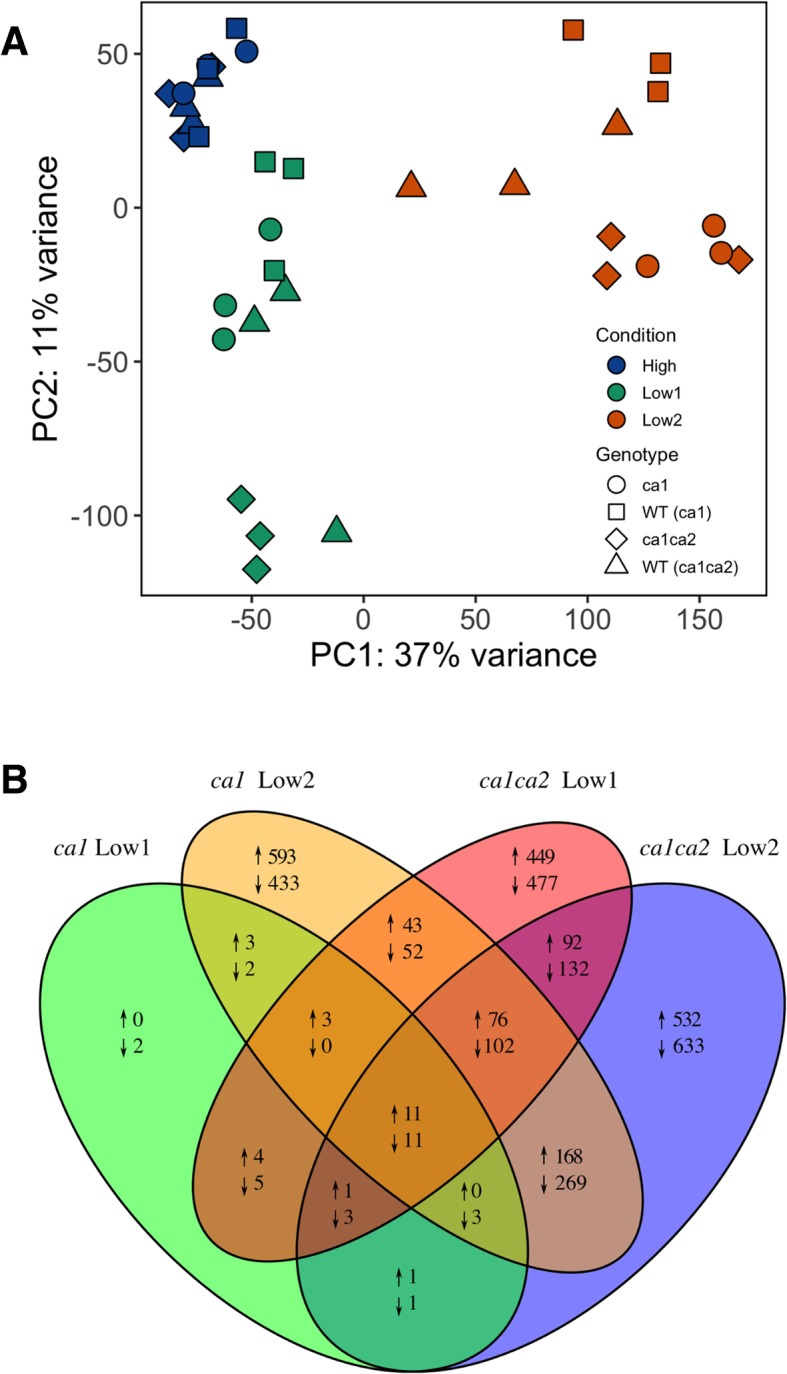
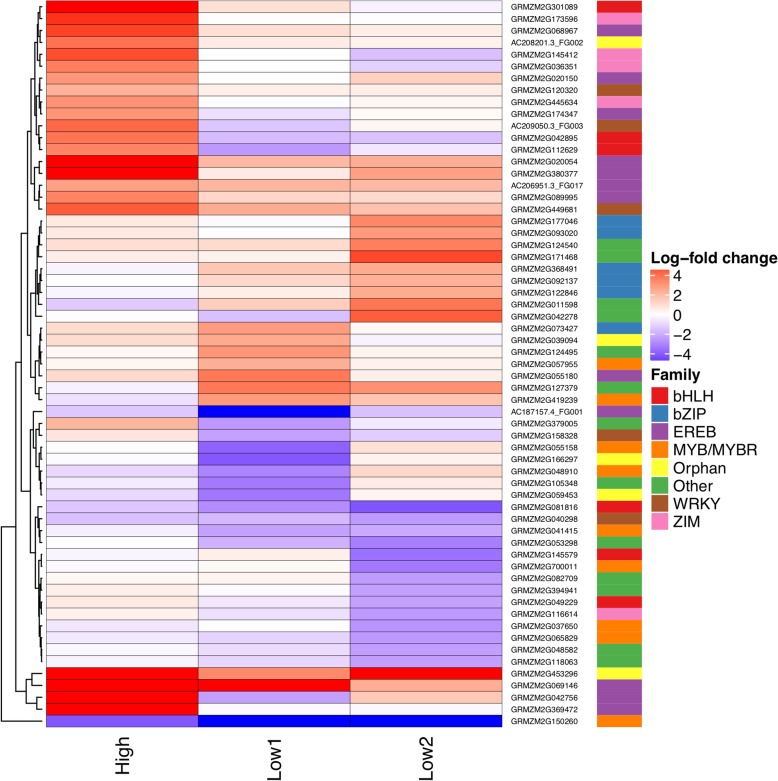
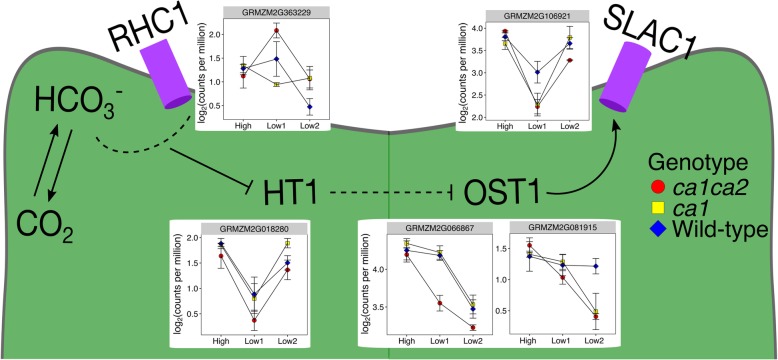
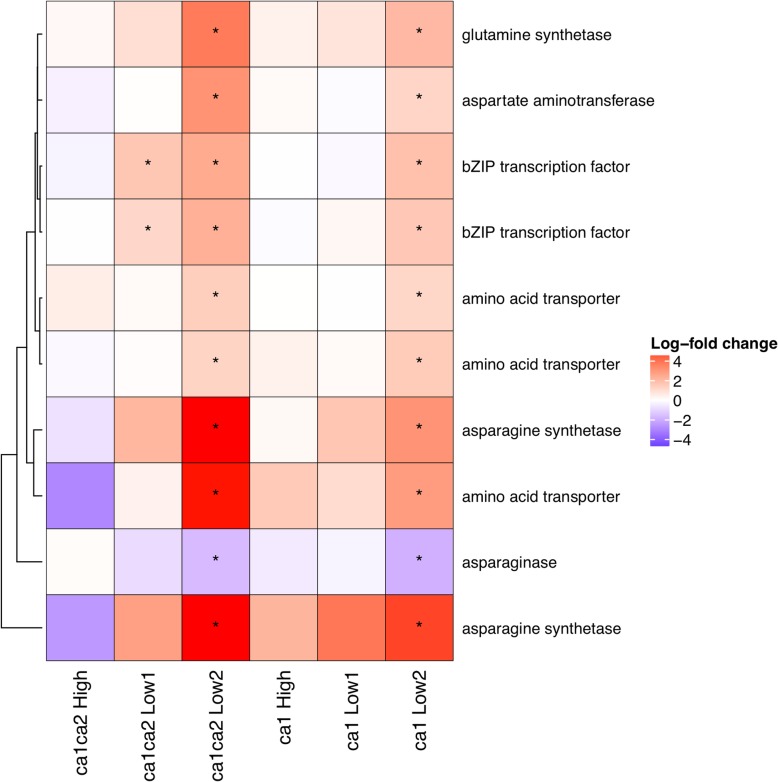
Leaf samples from each genotype were collected for RNA-seq analysis at high CO and at two time points after the low CO transition, in order to identify early and longer-term responses to CO deprivation. Despite the existence of multiple isoforms of CA, no other CA genes were upregulated in CA mutants. Although photosynthetic genes were downregulated in response to low CO, differential expression was not observed between genotypes. However, multiple indicators of carbon starvation were present in the mutants, including amino acid synthesis, carbohydrate metabolism, and sugar signaling. In particular, multiple genes previously implicated in low carbon stress such as asparagine synthetase, amino acid transporters, trehalose-6-phosphate synthase, as well as many transcription factors, were strongly upregulated. Furthermore, genes in the CO stomatal signaling pathway were differentially expressed in the CA mutants under low CO.
Using a transcriptomic approach, we showed that carbonic anhydrase mutants do not compensate for the lack of CA activity by upregulating other CA or photosynthetic genes, but rather experienced extreme carbon stress when grown under low CO. Our results also support a role for CA in the CO stomatal signaling pathway. This study provides insight into the importance of CA for C photosynthesis and its role in stomatal signaling.
碳酸酐酶(CA)在 C 光合作用的第一个生化步骤中催化 CO 的水合作用,并且当叶片内 CO 的可用性较低时,被认为是潜在的限速步骤。先前在 Zea mays(玉米)中对两个表达最高的β-CA 基因 CA1 和 CA2 的双敲除研究表明,总叶 CA 活性降低到野生型的不到 3%。令人惊讶的是,这并没有限制玉米在环境或更高 CO 浓度下的光合作用。然而,ca1ca2 突变体在亚环境 CO 下表现出较低的光合作用速率,并且在亚环境 CO(9.2 Pa)下生长时积累的生物量较少。为了进一步阐明 CA 对 C 光合作用的重要性,我们评估了野生型、ca1 和 ca1ca2 突变体在 pCO 从 920 到 9.2 Pa 变化时基因表达的变化。
在高 CO 下和低 CO 转换后的两个时间点收集每个基因型的叶片样本进行 RNA-seq 分析,以鉴定对 CO 剥夺的早期和长期响应。尽管存在多种 CA 同工酶,但 CA 突变体中没有其他 CA 基因上调。尽管光合作用基因对低 CO 有下调作用,但基因型之间没有观察到差异表达。然而,在突变体中存在多种碳饥饿的指标,包括氨基酸合成、碳水化合物代谢和糖信号。特别是,许多先前与低碳胁迫相关的基因,如天冬酰胺合成酶、氨基酸转运体、海藻糖-6-磷酸合酶以及许多转录因子,被强烈上调。此外,在低 CO 下,CA 突变体中 CO 气孔信号通路的基因表达存在差异。
使用转录组学方法,我们表明碳酸酐酶突变体不能通过上调其他 CA 或光合作用基因来补偿 CA 活性的缺乏,而是在低 CO 下生长时经历了极端的碳饥饿。我们的结果还支持 CA 在 CO 气孔信号通路中的作用。这项研究为 CA 对 C 光合作用的重要性及其在气孔信号中的作用提供了新的见解。