Department of Geography & Environmental Sciences, University of Colorado Denver, Denver, Colorado, United States of America.
Department of Community and Behavioral Health, Colorado School of Public Health, University of Colorado Anschutz Medical Campus, Aurora, Colorado, United States of America.
PLoS One. 2019 Feb 15;14(2):e0212305. doi: 10.1371/journal.pone.0212305. eCollection 2019.
Data collection and integrated reporting between the multiple health facilities for supporting more efficient care linkages is an indispensable element for prevention of mother-to-child transmission of HIV (PMTCT) by fostering continuity of patient care and improving the treatment cascade for HIV-infected pregnant women. mHealth potentially presents timely solutions to the data challenges related to efficient and effective care delivery in resource-constrained settings, particularly in low- and middle-income countries.
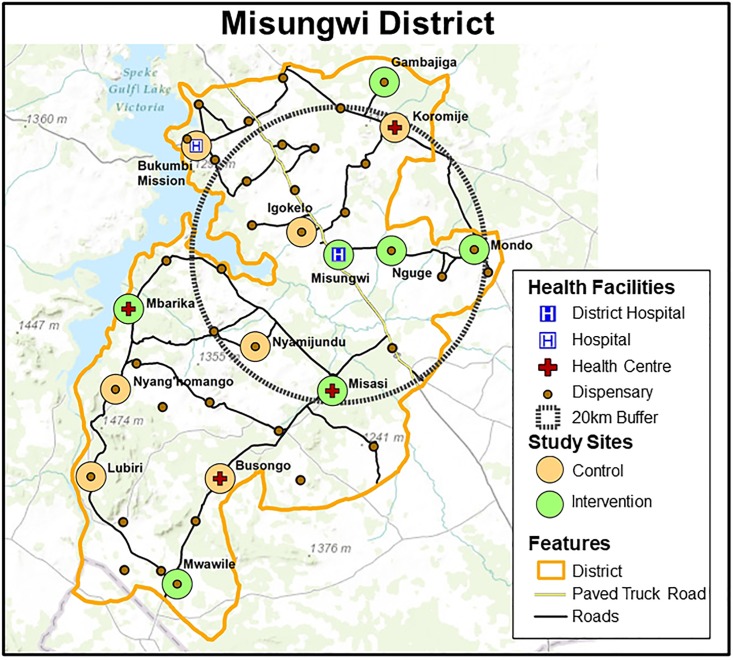
This randomized controlled pilot study used stratified random sampling for the selection of seven intervention and seven control sites in Misungwi, Tanzania, a rural district in the northwestern region. Twenty-eight health workers at seven intervention health facilities used the Tanzania Health Information Technology (T-HIT) system during a 3-month period from February 23, 2015, through May 23, 2015, to capture antenatal, delivery, and postnatal patient visits.
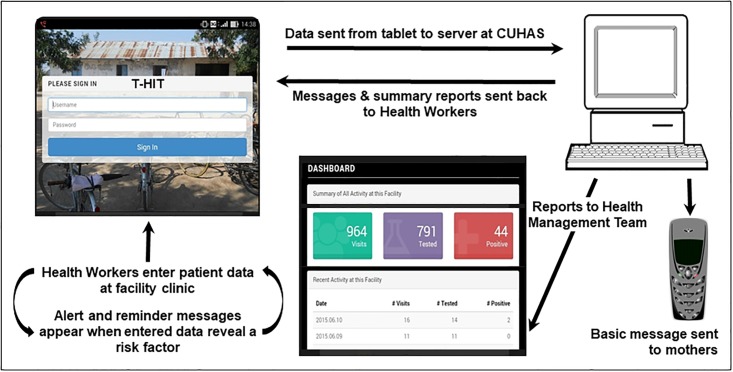
T-HIT was designed for use on tablets with the goal to improve reporting, surveillance and monitoring of HIV rates and care delivery in the remote and rural settings. Health workers successfully recorded 2,453 visits. Of these, 1,594 were antenatal visits, 484 deliveries were recorded, and 375 were postnatal visits. Within the antenatal visits, 96% of women had a single visit (1474). Healthcare workers were unable to test 6.7% of women antenatally for HIV.
The T-HIT pilot demonstrated the feasibility for implementing an mHealth integrated solution in a rural, low-resource setting that links tablet-based surveillance, health worker capacity-building and patient reminders into a single robust and responsive system. Although the implementation phase was only three months, the pilot generated evidence that T-HIT has potential for improving patient outcomes by providing more comprehensive, linked, and timely PMTCT care data at the individual and clinic levels.
在多个医疗机构之间收集和整合数据,以支持更有效的护理衔接,这对于通过促进患者护理的连续性和改善艾滋病毒感染孕妇的治疗环节来预防母婴传播艾滋病毒(PMTCT)是不可或缺的。移动医疗技术(mHealth)为资源有限环境中高效、有效的护理提供了及时的解决方案,特别是在中低收入国家。
这项随机对照试点研究采用分层随机抽样,在坦桑尼亚西北部米松格威县选择了七个干预和七个对照地点。2015 年 2 月 23 日至 5 月 23 日的三个月期间,来自七个干预医疗设施的 28 名卫生工作者使用坦桑尼亚卫生信息技术(T-HIT)系统记录产前、分娩和产后的患者就诊情况。
T-HIT 设计用于平板电脑,旨在改善偏远和农村地区的 HIV 发病率和护理提供的报告、监测和监控。卫生工作者成功记录了 2453 次就诊。其中,1594 次是产前就诊,484 次分娩,375 次是产后就诊。在产前就诊中,96%的妇女仅进行了一次就诊(1474 次)。卫生工作者无法在产前对 6.7%的妇女进行 HIV 检测。
T-HIT 试点表明,在农村、资源匮乏的环境中实施移动医疗综合解决方案是可行的,该方案将基于平板电脑的监测、卫生工作者能力建设和患者提醒整合到一个单一的强大和响应迅速的系统中。虽然实施阶段仅三个月,但该试点产生了证据表明,T-HIT 有可能通过在个人和诊所层面提供更全面、更有联系和更及时的 PMTCT 护理数据来改善患者的结果。