CAS Key Laboratory of Separation Science for Analytical Chemistry, Scientific Research Center for Translational Medicine, Dalian Institute of Chemical Physics, Chinese Academy of Sciences, Dalian, 116023, China.
School of Life Science, Dalian University, Dalian, 116023, China.
J Exp Clin Cancer Res. 2019 Feb 15;38(1):83. doi: 10.1186/s13046-019-1082-6.
The bromodomain and extra-terminal domain (BET) inhibitor is a type of anti-tumor agent, currently being evaluated in phase I and II clinical trials for cancer therapy. It can decrease MYC expression levels and cause effective anti-tumor effects in diverse human cancers. However, its cytotoxic effect and related mechanisms of drug resistance are poorly understood in hepatocellular carcinomas (HCC). Here, we investigated the anti-tumor effects of BET inhibitor on HCC and the molecular mechanisms involved in its associated drug resistance.
We assessed the cytotoxicity of BET inhibitor on HCC cells compared with sorafenib by cell viability assay, metastasis assay and reproduced the anti-tumor effect in xenograft mouse model. In addition, the molecular mechanisms involved in drug resistance on JQ1-resistant HCC cells were revealed by western blotting, qRT-PCR, whole exome-sequencing and gene-editing technology. Finally, with specific inhibition of EGFR or ERK activity by interference RNAs or inhibitors, the efficacy of the synergistic treatment was investigated using cell viability assay, colony formation, apoptosis and xenograft mouse model.
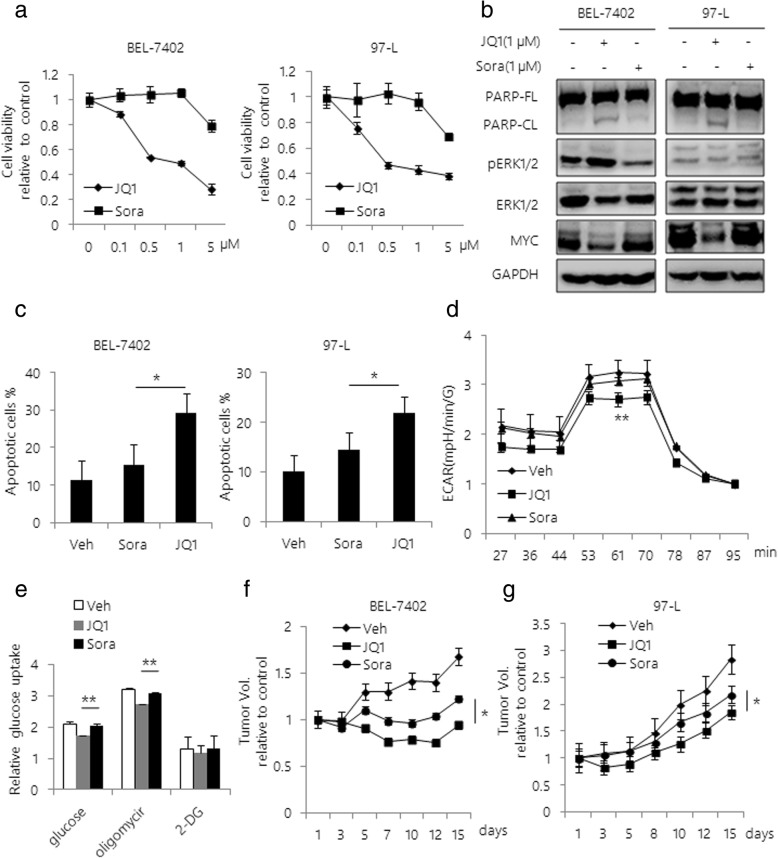
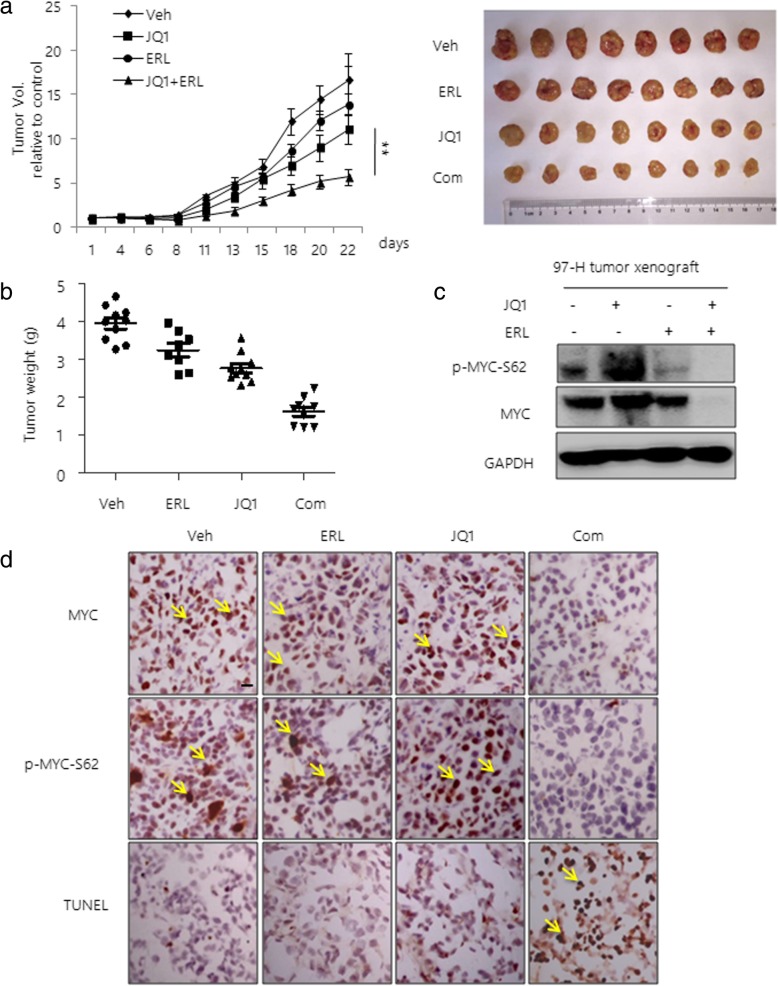
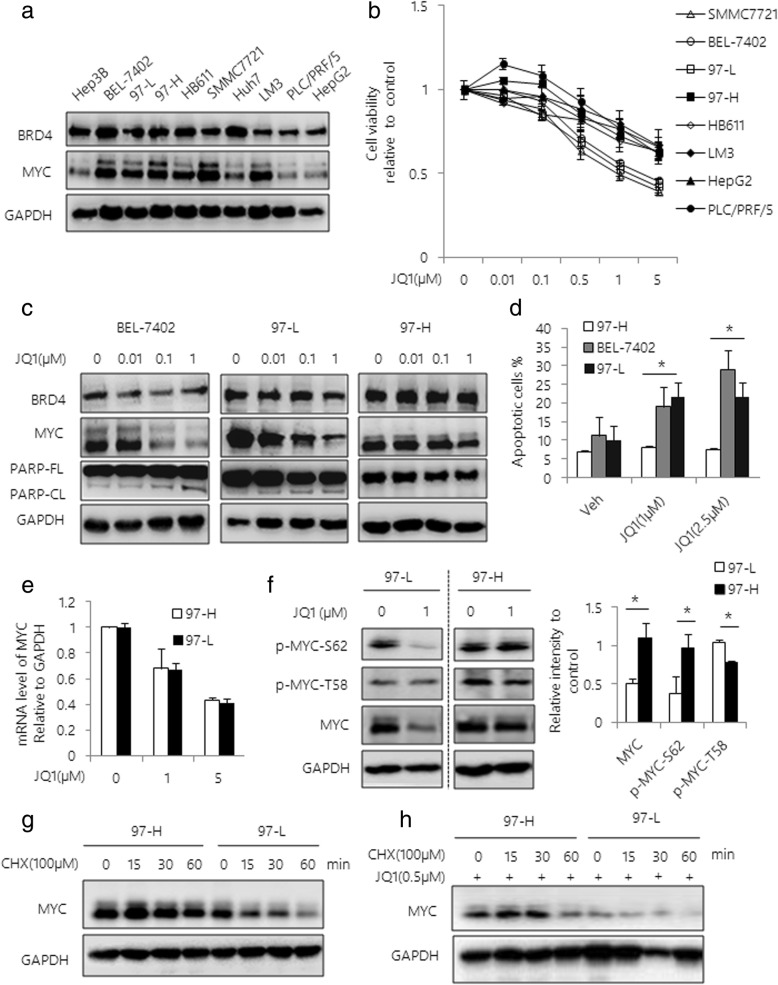
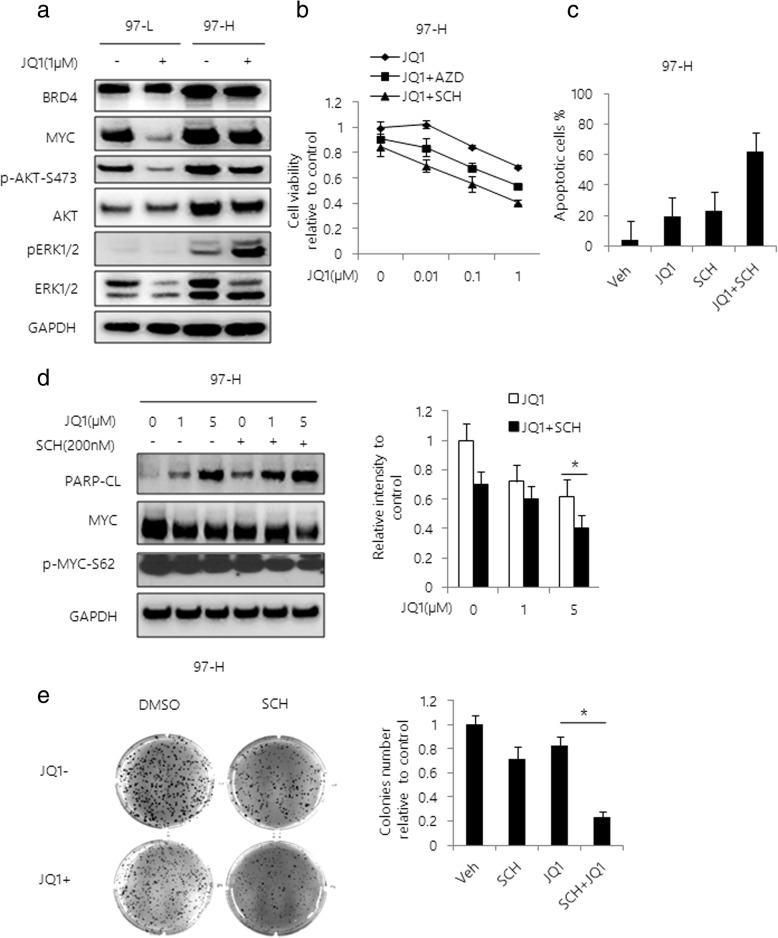
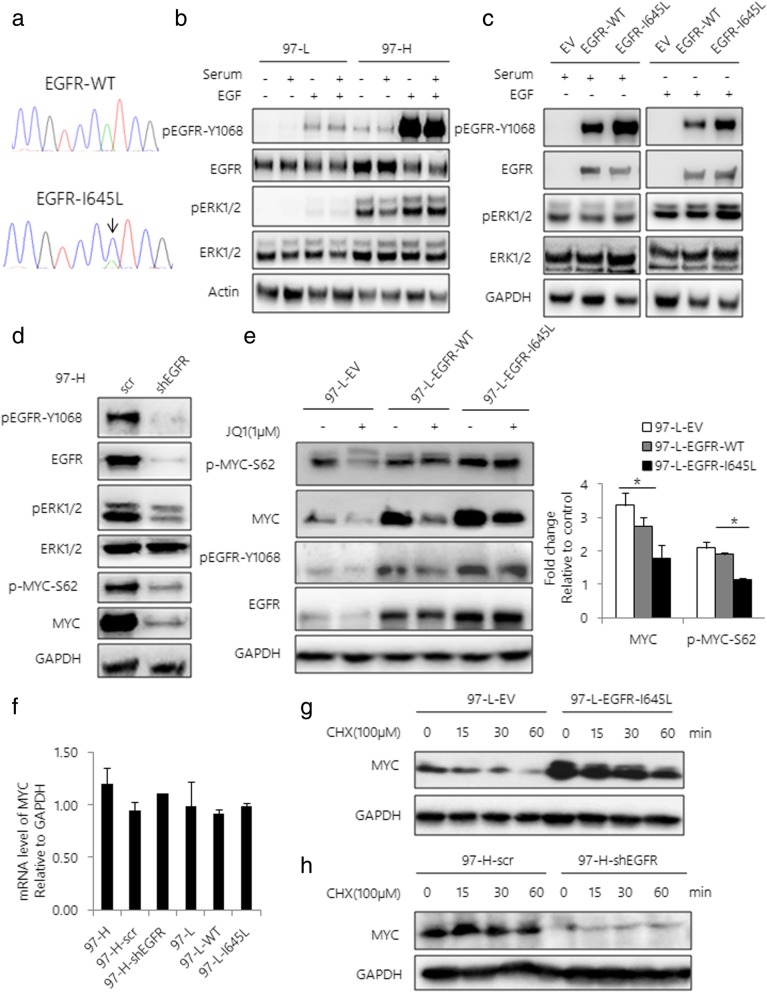
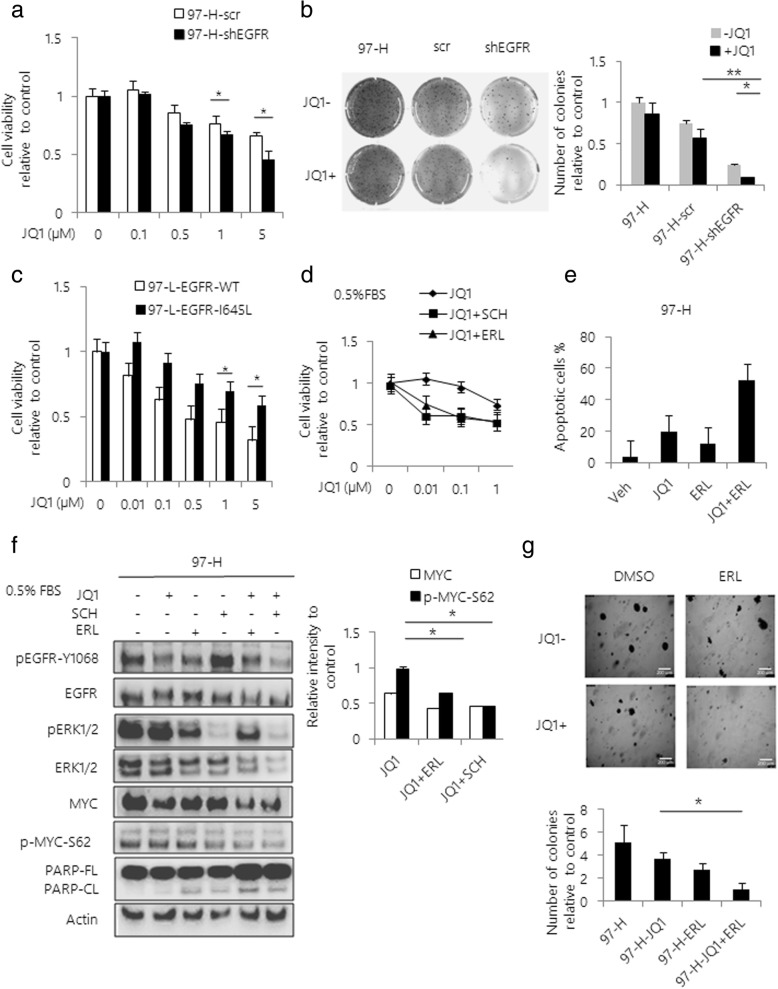
We found that JQ1, a commonly used BET bromo-domain inhibitor, offered a better anti-tumor response than sorafenib in MYC-positive HCC cells by inducing apoptosis in vitro and in vivo. Unlike sorafenib, JQ1 treatment significantly impaired mitochondrial respiration and glycolysis in HCC cells. Importantly, we revealed that MAPK activation by a previously undescribed activating mutation of EGFR-I645L, was critical for JQ1 sensitivity through stabilizing oncogenic MYC protein in JQ1-resistant HCC cells. Inhibition of either EGFR or ERK activity overcame the JQ1 resistance and significantly decreased MYC protein level in vitro and in vivo.
Since MYC amplification is frequently identified in HCC, co-occurring with EGFR amplification, our findings suggest that targeting EGFR signaling might be essential for JQ1 therapy in advanced HCC.
溴结构域和末端外结构域(BET)抑制剂是一种抗肿瘤药物,目前正在进行 I 期和 II 期临床试验,用于癌症治疗。它可以降低 MYC 的表达水平,并在多种人类癌症中产生有效的抗肿瘤作用。然而,其细胞毒性作用及其相关的耐药机制在肝细胞癌(HCC)中知之甚少。在这里,我们研究了 BET 抑制剂对 HCC 的抗肿瘤作用及其相关耐药机制。
我们通过细胞活力测定、转移测定和在异种移植小鼠模型中重现抗肿瘤作用来评估 BET 抑制剂对 HCC 细胞的细胞毒性作用,与索拉非尼进行比较。此外,通过 Western blot、qRT-PCR、全外显子测序和基因编辑技术揭示了 JQ1 耐药 HCC 细胞中涉及耐药的分子机制。最后,通过干扰 RNA 或抑制剂特异性抑制 EGFR 或 ERK 活性,使用细胞活力测定、集落形成、凋亡和异种移植小鼠模型研究了协同治疗的疗效。
我们发现,常用的 BET 溴结构域抑制剂 JQ1 通过体外和体内诱导细胞凋亡,在 MYC 阳性 HCC 细胞中提供了比索拉非尼更好的抗肿瘤反应。与索拉非尼不同,JQ1 处理显著损害了 HCC 细胞中的线粒体呼吸和糖酵解。重要的是,我们揭示了 EGFR-I645L 的先前未描述的激活突变导致 MAPK 激活,通过稳定 JQ1 耐药 HCC 细胞中的致癌 MYC 蛋白,对 JQ1 敏感性至关重要。EGFR 或 ERK 活性的抑制在体外和体内克服了 JQ1 耐药性,并显著降低了 MYC 蛋白水平。
由于 MYC 扩增在 HCC 中经常被发现,同时伴有 EGFR 扩增,我们的研究结果表明,在晚期 HCC 中,针对 EGFR 信号通路可能是 JQ1 治疗的关键。