Department of Surgery Fujita Health University, 1-98 Dengakugakubo Kutsukake-cho, Toyoake City, Aichi, 470-1192, Japan.
College of Pharmacy, Kinjo Gakuin University, 2-1723 Oomori Moriyama, Nagoya City, Aichi, 463-8521, Japan.
World J Surg Oncol. 2019 Feb 15;17(1):33. doi: 10.1186/s12957-019-1575-y.
Although hepatectomy for metastatic colorectal cancer (mCRC) prolongs survival in up to 40% of people, recurrence rates approach 70%. We used a multidisciplinary approach to treat recurrent liver metastases, including chemotherapy, surgery, and palliative care. On the other hand, development of chemotherapeutic agents is remarkable and improves long-term survival. However, whether chemotherapy and repeat hepatectomy combination therapy improve survival or not is still unclear. The aim of this study was to analyze the outcomes of repeat hepatectomy with systemic chemotherapy for mCRC.
Following Institutional Review Board approval, we reviewed the records of all patients who underwent hepatectomy for mCRC between 1974 and 2015 at Fujita Health University Hospital. We used the Kaplan-Meier method to estimate overall survival from the first and last hepatectomy in multi hepatectomy cases after 2005 and compared outcomes between groups using the log-rank test.
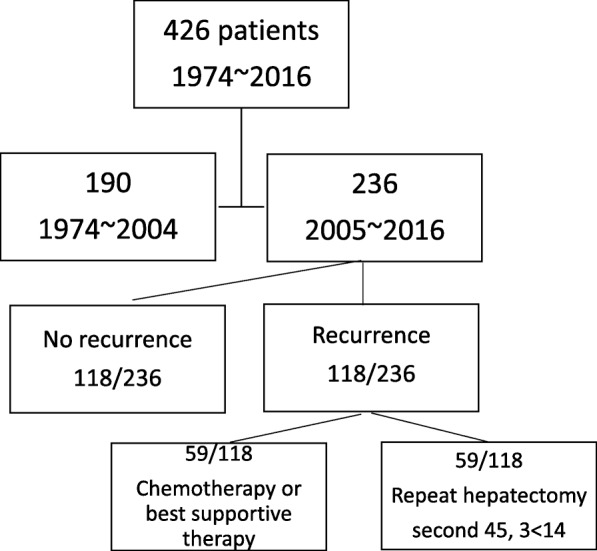
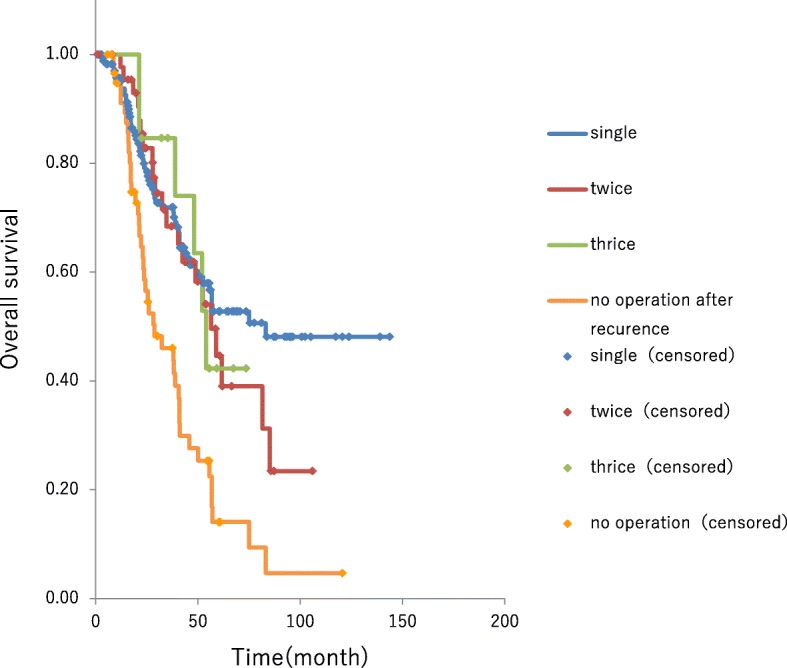
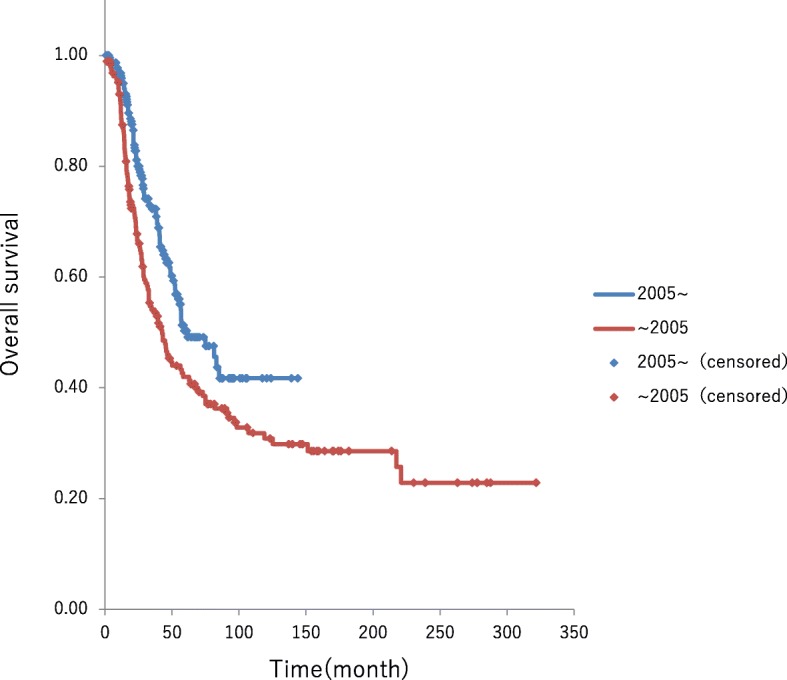
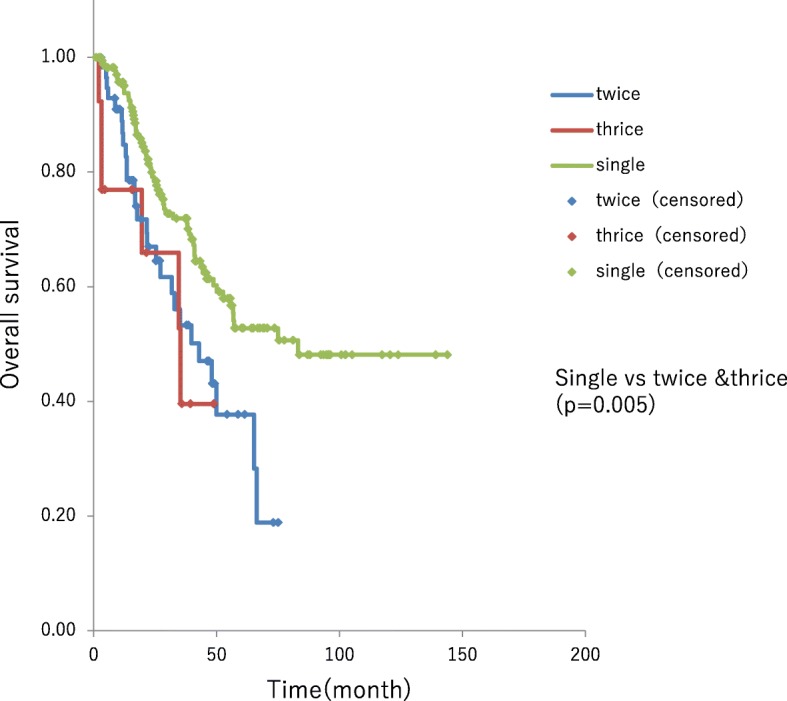
A total of 426 liver resections were performed for mCRC; of these, 236 cases were performed after 2005 (late group). In 118 (50%) cases, the site of recurrence was the liver, 59 (50%) underwent repeat hepatectomy, and 14 cases had ≥ 2 repeat hepatectomies. Overall survival (OS) before and after 2005 was 42.2 and 64.1 months, respectively, with the late group having better OS compared to the early (1974-2004) group. OS for single hepatectomy cases was 83.2 months, for two hepatectomies was 42.9 months, and for three hepatectomies was 35.3 months. In total, 59 patients did not undergo surgery after recurrence with an OS of 28.7 months. Mortality of the second and third repeat hepatectomy was 1.7% and 15.3%, respectively.
Repeat hepatectomy with systemic chemotherapy for mCRC is feasible and might achieve improved survival in carefully selected patients.
尽管肝切除术可使多达 40%的转移性结直肠癌(mCRC)患者的生存时间延长,但复发率仍接近 70%。我们采用多学科方法治疗复发性肝转移,包括化疗、手术和姑息治疗。另一方面,化疗药物的发展非常显著,可改善长期生存。但是,化疗和重复肝切除术联合治疗是否可以提高生存率尚不清楚。本研究旨在分析 mCRC 患者重复肝切除联合全身化疗的结果。
在获得机构审查委员会批准后,我们回顾了 1974 年至 2015 年期间在藤田保健卫生大学医院接受 mCRC 肝切除术的所有患者的记录。我们使用 Kaplan-Meier 法从 2005 年后的多次肝切除中的第一次和最后一次肝切除术估计总生存率,并使用对数秩检验比较组间的结果。
共进行了 426 例 mCRC 肝脏切除术;其中 236 例在 2005 年后进行(晚期组)。在 118 例(50%)病例中,复发部位为肝脏,59 例接受了重复肝切除术,14 例进行了≥2 次重复肝切除术。2005 年前和 2005 年后的总生存率(OS)分别为 42.2 和 64.1 个月,晚期组的 OS 明显优于早期(1974-2004 年)组。单次肝切除术病例的 OS 为 83.2 个月,两次肝切除术的 OS 为 42.9 个月,三次肝切除术的 OS 为 35.3 个月。总的来说,59 例复发后未行手术患者的 OS 为 28.7 个月。第二次和第三次重复肝切除术的死亡率分别为 1.7%和 15.3%。
对 mCRC 患者进行重复肝切除联合全身化疗是可行的,并且可以为精心挑选的患者带来生存获益。